


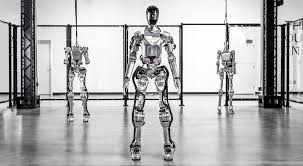
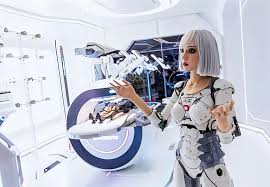
In the past two years, the robotics industry has reached a consensus that the next phase of robotics is to become increasingly human-like. Companies are focusing on developing robots that can mimic human bodies and movements, aiming for integration into human production and daily life. Yujian's foray into hyper-biomimetic creatures, showcased at CES, includes lifelike models like a walking Chinese dinosaur and a breathing dinosaur hatchling, emphasizing interaction and realism.
This shift is significant as it moves beyond traditional biomimicry, which primarily addresses appearance and movement fluidity, to a new paradigm that emphasizes the replication of life behaviors. Yujian aims to redefine hyper-biomimetic organisms as embodied intelligent agents capable of perception, decision-making, and action, rather than mere mechanical constructs. This approach opens up new markets and applications beyond consumer toys, targeting larger intellectual property opportunities.
Looking ahead, Yujian's focus on cognitive reenactment raises questions about what qualifies as a hyper-biomimetic organism. Their innovative approach integrates embodied cognition, allowing these creatures to respond dynamically to their environment, thus creating a closed loop of perception, understanding, decision-making, and action. No further timeline was disclosed at the time of publication.
Editor's Note
Yujian's advancements in hyper-biomimetic robotics highlight a significant evolution in the industry, moving from static models to dynamic, intelligent systems. This shift could reshape consumer expectations and applications in various sectors, including entertainment and education. As companies explore embodied cognition, the competitive landscape may shift, prompting traditional manufacturers to adapt or innovate.























Leave a comment