Advancements in Embodied Intelligence: Robots Learning Through Experience
- Published
- Source
- leaderobot.com
A robot in a warehouse near Austin has fallen for the 4,000th time without assistance, showcasing the progress of embodied intelligence. This technology allows machines to physically interact with the world, fundamentally changing how they learn. Instead of merely processing information, these robots learn through experience, such as understanding gravity by knocking over objects.
Embodied intelligence is gradually integrating into daily life, with humanoid robots working on assembly lines and assisting police in Hangzhou. In Malaysia, the Prime Minister introduced an AI digital twin to handle citizen inquiries autonomously. However, in Europe, there is growing concern about job displacement, with unions negotiating wage structures in anticipation of humanoid robot deployment.
The societal divide is evident: while Asian countries view robots as helpful assistants, Europeans express fears of job loss. The future of embodied intelligence will depend on societal acceptance, highlighting a complex relationship between technology and human values. No further timeline was disclosed at the time of publication.
Original report
Resilience in Robotics: Redefining Learning Through Embodied Intelligence
leaderobot.com · LeaderobotThis briefing is an independently written summary based on publicly available reporting and is provided for industry information and news discovery. The original report and source publication are credited and linked where applicable. RobotToday does not claim ownership of third-party source material.
Rights concerns? Contact [email protected] with the relevant URL and details. We will review the matter and take appropriate action where warranted.
More related news
- 1
- 2
- 3
- 4
- 5
- 6
- 7
- 8
- 9
-
10
RO-MAN 2027 – Waterloo, Aug 23–27, 2027 RobotToday · 1 week ago
-
11
ACIRS 2027 – Hong Kong, Jul 23–25, 2027 RobotToday · 1 week ago
- 12
Related Suppliers
The Robot Learning Company
United States
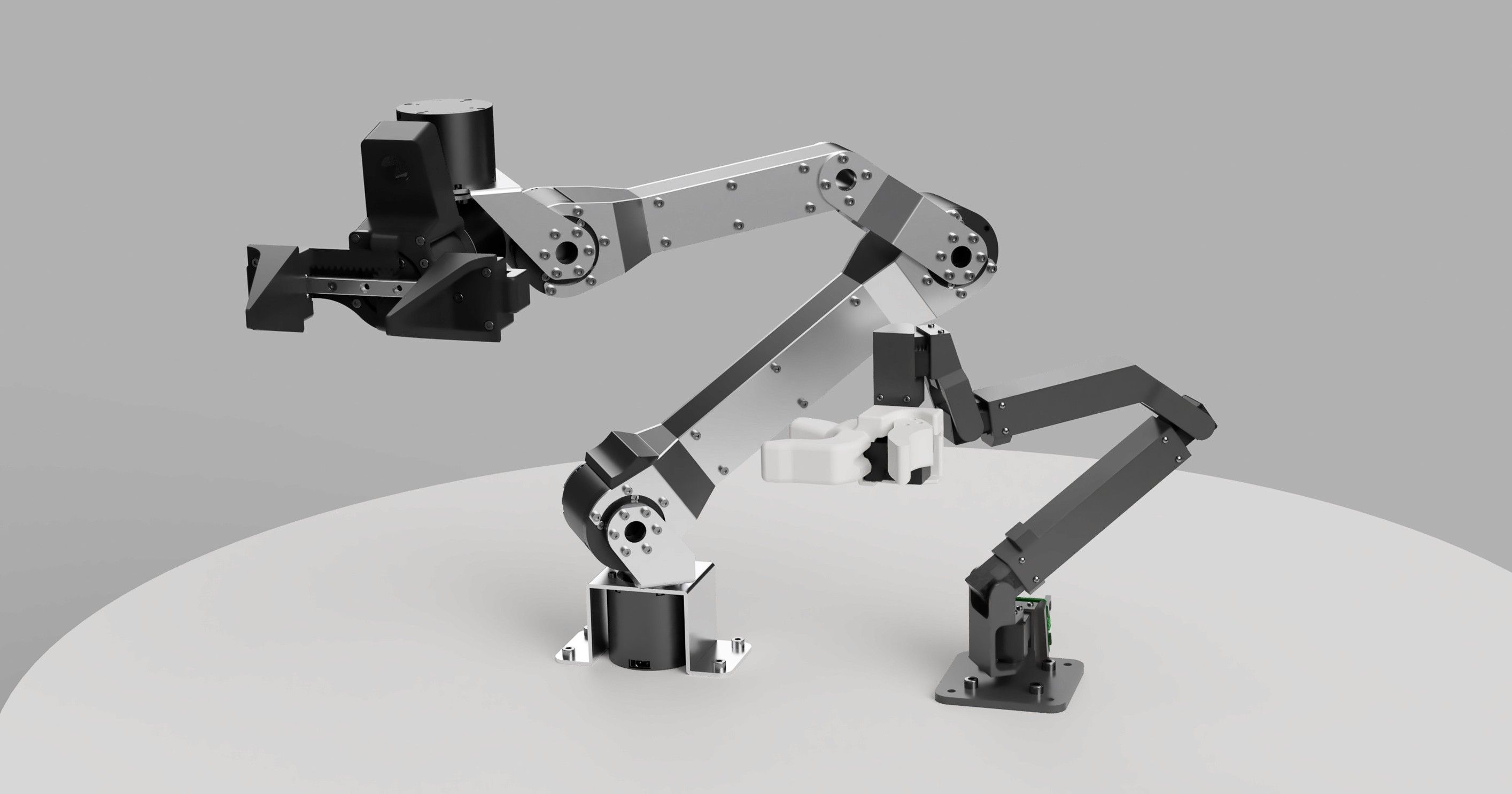
YC X25 startup building open-source AI-native robot arms; TRLC-DK1 bimanual dev kit enables imitation learning and teleoperation for around USD 1,200.
Assured Robot Intelligence
United States
San Diego robot-AI start-up founded by Lerrel Pinto and Xiaolong Wang, building humanoid foundation models; acquired by Meta in May 2026.

CITRIS and the Banatao Institute
United States
University of California multi-campus research institute applying IT and robotics to societal challenges.

AUVSI - Association for Uncrewed Vehicle Systems International
United States
World's largest nonprofit association advancing uncrewed systems, autonomy, and robotics across air, ground, and maritime domains.
Reimagine Robotics
United Kingdom
London start-up founded 2025 by ex-Google DeepMind robotics leads; its AI platform lets factory staff teach and correct robots by demonstration.

Fujita Corporation
Japan
Daiwa House Group contractor behind the ROBO QS excavator teleoperation robot, SWAN column-welding robot and a multi-function mobile robot for job sites.

Industrial Technology Research Institute (ITRI) 工業技術研究院
Taiwan
Hsinchu County, Taiwan applied-technology research institute founded 1973; over 6,500 staff developing autonomous mobile robots and AI perception systems.
Genki Robotics
Japan
Tokyo humanoid robotics startup founded by Android creator Andy Rubin, valued near $1 billion after an April 2026 Series A round.
Hubei Optics Valley Dongzhi Embodied Intelligence Technology Co., Ltd. 湖北光谷东智具身智能技术有限公司
China
Wuhan, China embodied-intelligence firm founded 2025, backed by HEC Group, Zhiyuan Robotics, and Peking University; makes Lumen humanoid and service robots.
Insight Intelligence 具识智能
China
Shanghai developer of insightOS, an embodied-AI robot operating system spanning dev, runtime and fleet ops; HIT spin-out with deployments at BYD.

Twinsity
Germany
Kassel, Germany software company founded 2020; its TWINSPECT platform turns drone imagery into AI-analyzed digital twins for infrastructure inspection.

UDMTEK Co., Ltd.
Korea, Republic of (South)
South Korean KOSDAQ-listed company providing AI-powered digital twin and PLC diagnostics solutions for smart manufacturing since 2007.
Robotics needs a service framework.
RSF defines a common language for robot service capability, lifecycle operations, certification pathways, and service-provider networks.
Join the RobotToday community on LinkedIn
Daily robotics news, in-depth analysis, conference highlights, and discussions with professionals worldwide.