

Understanding the Distinction Between Embodied Intelligence and Generalization in Robotics
- Published
- Source
- leaderobot.com
Recent discussions at technology forums have highlighted the disparity between demonstrations of robotic capabilities and the reality of embodied intelligence. While large models can achieve a 50% task success rate, physical robots struggle to deliver similar results, revealing a fundamental gap between digital and physical realms. Xu Huazhe, founder of Breakthrough Robotics, emphasized two distinct commercialization paths: the post-training route, which offers short-term cash flow but limited generalization, and the large model approach, which aims for broader capabilities but lacks immediate economic returns.
The significance of these insights lies in understanding that successful demonstrations in controlled environments do not equate to the commercial viability of general embodied intelligence. The post-training approach can yield high success rates in specific scenarios but requires extensive reconfiguration for new tasks, while the large model route faces challenges in achieving acceptable performance in the unpredictable physical world. This highlights a critical misconception: achieving near-perfect results in closed environments does not guarantee success in open, real-world applications.
Moving forward, it is essential to recognize the resource conflicts between these two paths. Companies often find themselves in a dilemma, trying to balance short-term revenue from customized projects with the long-term goal of developing general intelligence. The industry must focus on advancing foundational models to handle diverse, non-predefined tasks, rather than relying solely on tailored solutions for immediate survival. No further timeline was disclosed at the time of publication.
Original report
Don't Be Misled by Demos: Embodied Intelligence and True Generalization Are Two Different Things
leaderobot.com · LeaderobotThis briefing is an independently written summary based on publicly available reporting and is provided for industry information and news discovery. The original report and source publication are credited and linked where applicable. RobotToday does not claim ownership of third-party source material.
Rights concerns? Contact [email protected] with the relevant URL and details. We will review the matter and take appropriate action where warranted.
More related news
-
1
ROBOTTODAY Weekly October 19 – 23, 2026 RobotToday · 2 days ago
- 2
- 3
- 4
- 5
- 6
- 7
- 8
- 9
- 10
- 11
- 12
Related Suppliers
Sagebot Intelligent Medical 哈尔滨思哲睿智能医疗设备股份有限公司
China
Harbin-based Sagebot makes the Kando multi-arm laparoscopic surgical robot, NMPA-approved for urology in 2022, and is pursuing a STAR Market IPO.

TIER IV, Inc.
Japan
Tokyo autonomous-driving company founded in December 2015 by Shinpei Kato, creator of Autoware; employed 404 people as of May 2026.
Shenzhen Moqi Intelligent Technology Co., Ltd. 深圳墨奇智能技术有限公司
China
Shenzhen embodied-intelligence startup building home-service robots, backed by a 2026 angel round led by Alibaba and Tencent.
MagicLab 魔法原子机器人技术(无锡)有限公司
China
Wuxi-based Chinese startup founded January 2024 building the MagicBot humanoid (42 DOF, 5-hr runtime) for multi-robot collaborative industrial manufacturing.
Generalist AI
United States
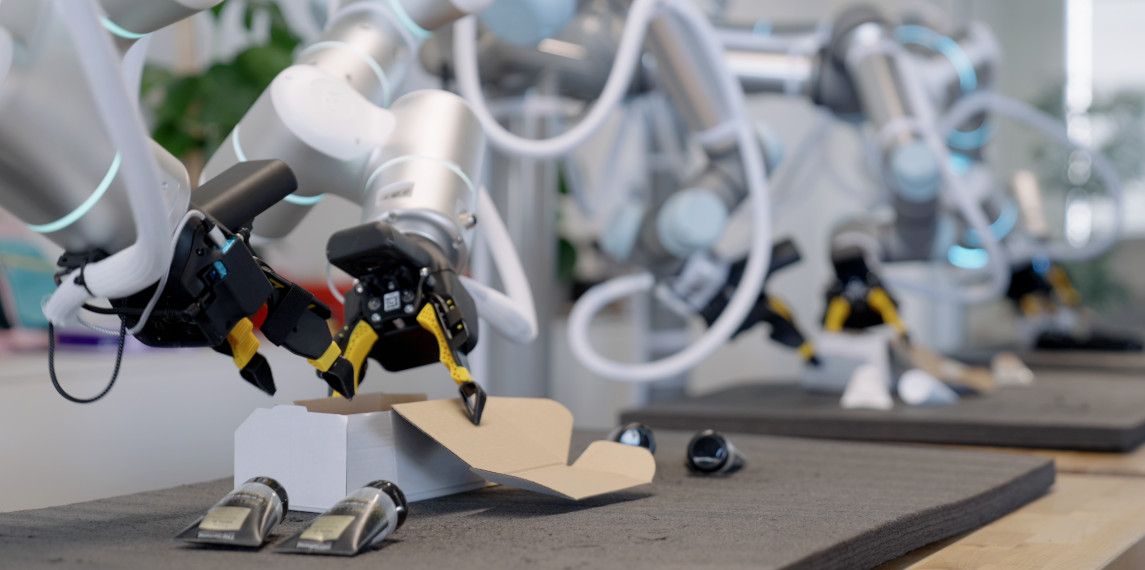
Frontier AI research company building embodied foundation models for general-purpose robots, with GEN-1 achieving 99% task success rates.
Intelligence Factory
United States
New York startup founded 2026 (YC P26) training robot manipulation foundation models on human demonstration data recorded with custom sensing gloves.

Robotics Education & Competition Foundation
United States
The REC Foundation is a US nonprofit that runs VEX-based robotics and drone competitions reaching 1.1 million students across 70 countries.

AI, Data and Robotics Association (Adra, asbl)
Belgium
European public-private partnership association driving AI, data, and robotics research and innovation under Horizon Europe.

Matrix Robotics 矩阵超智能
China
Chinese developer of general-purpose humanoid robots, with flagship MATRIX-3 and MATRIX-1 driven by embodied AI.
Noitom Robotics Technology (Shenzhen) Co., Ltd. 诺亦腾机器人
China
Shenzhen embodied-AI data company building motion-capture and teleoperation datasets for humanoid robots.
Hubei Optics Valley Dongzhi Embodied Intelligence Technology Co., Ltd. 湖北光谷东智具身智能技术有限公司
China
Wuhan, China embodied-intelligence firm founded 2025, backed by HEC Group, Zhiyuan Robotics, and Peking University; makes Lumen humanoid and service robots.
Insight Intelligence 具识智能
China
Shanghai developer of insightOS, an embodied-AI robot operating system spanning dev, runtime and fleet ops; HIT spin-out with deployments at BYD.
Robotics needs a service framework.
RSF defines a common language for robot service capability, lifecycle operations, certification pathways, and service-provider networks.
Join the RobotToday community on LinkedIn
Daily robotics news, in-depth analysis, conference highlights, and discussions with professionals worldwide.


