Yann LeCun Envisions Major Robotics Paradigm Shift by 2027, Critiques LLMs
- Published
- Source
- HumanoidsDaily
Yann LeCun, a prominent figure in AI, recently expressed his concerns about the robotics industry's dependence on Large Language Models (LLMs) during an interview on the Unsupervised Learning podcast. He predicts that by early 2027, the need for a fundamental shift in robotics will be evident, as current methods are deemed a 'dead end' for achieving true physical intelligence.
LeCun's critique highlights the inefficiencies of relying on massive datasets and imitation learning, drawing parallels to the unresolved challenges in autonomous driving. He argues that true intelligence requires rapid generalization, unlike current systems that demand extensive data for narrow tasks. His rejection of Vision-Language-Action models stems from their unreliability and data constraints, pushing him to advocate for the Joint Embedding Predictive Architecture (JEPA) through his startup, AMI Labs.
Looking ahead, LeCun aims to refine JEPA and demonstrate methodologies for training hierarchical world models within the next 12 to 18 months. He warns that LLMs are 'intrinsically unsafe' for high-stakes environments, emphasizing the need for systems that genuinely understand the physical world rather than merely responding to it. No further timeline was disclosed at the time of publication.
Original report
Yann LeCun Predicts "Paradigm Shift" in Robotics by 2027, Dismisses LLMs as "Intrinsically Unsafe"
HumanoidsDaily · [email protected] (Humanoids Daily Staff)This briefing is an independently written summary based on publicly available reporting and is provided for industry information and news discovery. The original report and source publication are credited and linked where applicable. RobotToday does not claim ownership of third-party source material.
Rights concerns? Contact [email protected] with the relevant URL and details. We will review the matter and take appropriate action where warranted.
More related news
- 1
- 2
- 3
- 4
- 5
- 6
- 7
-
8
RobotToday Weekly October 26 – 30, 2026 RobotToday · 1 week ago
- 9
- 10
-
11
ROBOTTODAY Weekly October 19 – 23, 2026 RobotToday · 2 weeks ago
- 12
Related Suppliers
AMI Labs
France
AMI Labs is a Paris AI startup founded by Yann LeCun in 2025, building JEPA-based world models trained on real-world sensor data, not language.
Anyscale
United States
Anyscale is a San Francisco AI infrastructure firm behind Ray, the open-source engine for large-scale model training; Nscale agreed to buy it for $1.65B.
AI2 Robotics 智平方(深圳)科技有限公司
China
Develops autonomous wheeled-humanoid robots powered by the AlphaBrain embodied AI platform, targeting manufacturing, logistics, and commercial service.

NAVER LABS Europe
France
NAVER's AI research lab in Grenoble, France, specializing in computer vision, NLP, robot learning, and 3D spatial AI since 2017.
Paradigm Robotics
United States
Austin-based startup developing FireBot, an explosion-rated UGV for firefighter safety in hazardous environments.
Physical Intelligence
United States
San Francisco AI robotics company founded 2024; its pi0 vision-language-action models direct many robot types, backed by billions in venture funding.

Astribot (Stardust Intelligence) 星尘智能
China
Shenzhen, China humanoid-robot maker founded late 2022; its dual-arm S1 platform reaches over 10 meters per second with 0.1 mm repeatability.
The Robot Learning Company
United States
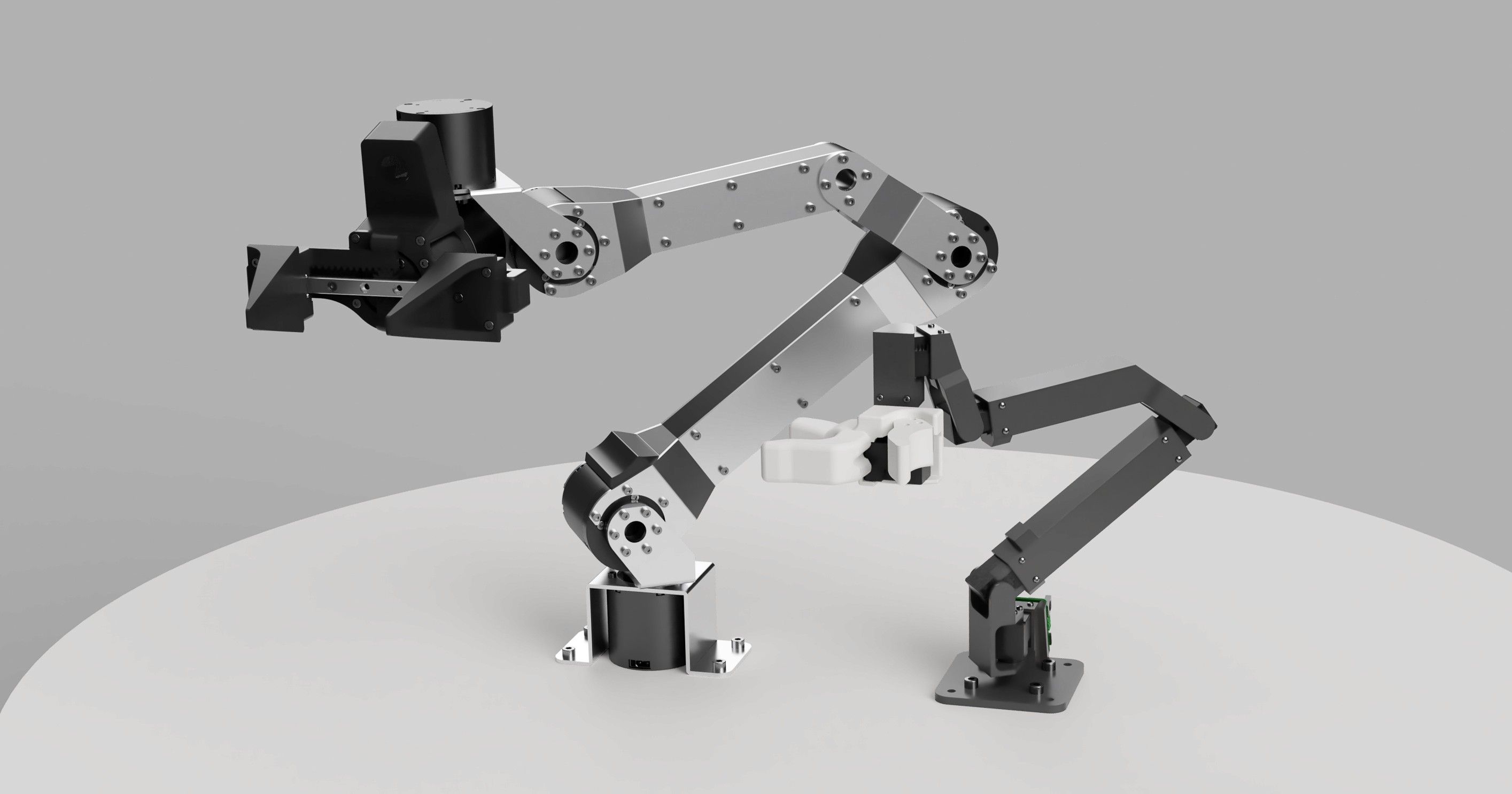
YC X25 startup building open-source AI-native robot arms; TRLC-DK1 bimanual dev kit enables imitation learning and teleoperation for around USD 1,200.
Robocurve
United States
San Francisco public benefit corporation founded 2026 that benchmarks frontier AI models on real robot arms and maintains the Inspect Robots framework.

ASO Safety Solutions Inc.
United States
Manufacturer of tactile safety sensors (edges, bumpers, mats, relays, radar) protecting AGVs, AMRs and industrial automation from contact hazards.

Anthropic
United States
AI safety and research company and public benefit corporation that builds the Claude family of large language models.
Mentee Robotics
Israel
Israeli AI-first humanoid robotics company building MenteeBot, a vertically integrated bipedal robot that learns from human demonstration.
Robotics needs a service framework.
RSF defines a common language for robot service capability, lifecycle operations, certification pathways, and service-provider networks.
Join the RobotToday community on LinkedIn
Daily robotics news, in-depth analysis, conference highlights, and discussions with professionals worldwide.