

RoboFly.D—A Bio‐Inspired Hover‐Capable Flapping Wing Robot
- Published
- Source
- JournalofFieldRobotics
In a recent publication in the Journal of Field Robotics, researchers have unveiled significant advancements in robotic navigation systems, particularly focusing on enhancing the accuracy and efficiency of autonomous vehicles. This study, released in May 2026, highlights innovative algorithms that enable robots to better interpret complex environments, thereby improving their decision-making capabilities.
Conducted by a team of experts in robotics and artificial intelligence, the research aims to address the growing need for reliable navigation solutions in various applications, from urban transportation to agricultural automation. The findings suggest that by integrating advanced sensor technologies and machine learning techniques, robots can now navigate challenging terrains with unprecedented precision.
The study was carried out in diverse settings, including urban landscapes and rural fields, to test the algorithms under real-world conditions. The motivation behind this research stems from the increasing reliance on autonomous systems in everyday life, necessitating improvements in their operational reliability and safety.
Through extensive field trials and simulations, the researchers demonstrated that the new navigation systems significantly reduce the likelihood of errors, thereby enhancing the overall performance of autonomous vehicles. This work not only contributes to the field of robotics but also paves the way for future innovations in automated systems, ultimately aiming to facilitate safer and more efficient transportation solutions.
Original report
RoboFly.D—A Bio‐Inspired Hover‐Capable Flapping Wing Robot
JournalofFieldRobotics · Shengjie Xiao, Cao Li, Yuhong Sun, Kai Hu, Huichao Deng, Xilun DingThis briefing is an independently written summary based on publicly available reporting and is provided for industry information and news discovery. The original report and source publication are credited and linked where applicable. RobotToday does not claim ownership of third-party source material.
Rights concerns? Contact [email protected] with the relevant URL and details. We will review the matter and take appropriate action where warranted.
More related news
- 1
- 2
- 3
- 4
- 5
- 6
- 7
- 8
- 9
- 10
- 11
- 12
Related Suppliers

Drone Delivery Canada
Canada
Vaughan, Ontario drone logistics developer merged with Volatus Aerospace in August 2024; the combined company trades as FLT in Toronto.
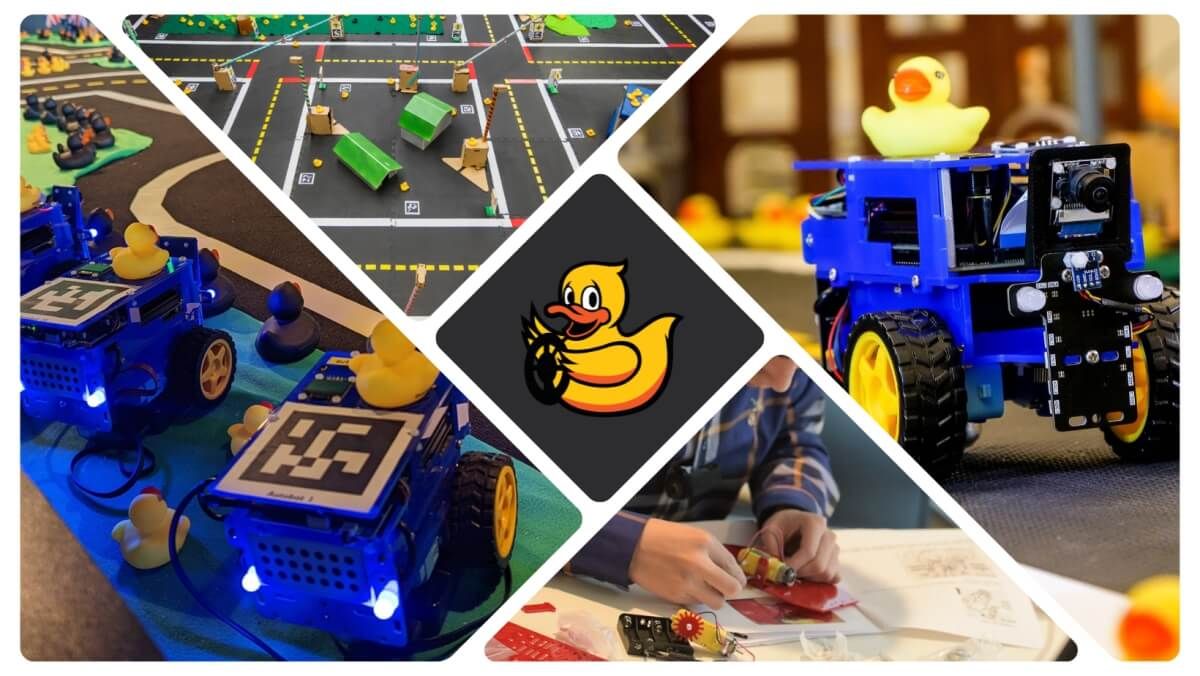
Duckietown Robotics
United States
Educational robotics platform provider offering autonomous vehicle kits and AI curricula used by 250+ universities worldwide.
EasyMile
France
Toulouse, France autonomous-vehicle software company founded 2014; EZTow and EZDolly systems automate industrial tow tractors and cargo movers at airports.

BioRobotics Laboratory, Korea University of Technology and Education
Korea, Republic of (South)
South Korean university research laboratory focusing on haptics, exoskeletons, rehabilitation robotics, and autonomous ground vehicles.

McMaster Manufacturing Research Institute
Canada
Hamilton, Ontario applied manufacturing research center at McMaster University; runs a 21,000 sq ft facility with seven research labs.

Robotics Education & Competition Foundation
United States
The REC Foundation is a US nonprofit that runs VEX-based robotics and drone competitions reaching 1.1 million students across 70 countries.

Vicon Motion Systems
United Kingdom
UK motion capture technology leader; Valkyrie & Vantage camera systems for robotics, life sciences, entertainment & engineering.
Pendulum Systems
United States
Seattle AI software company delivering device-native alt-PNT navigation for GPS-denied environments across drones, defense, and supply chains.

Physik Instrumente (PI) GmbH
Germany
Karlsruhe, Germany precision motion maker founded 1970; builds piezo actuators, nanopositioning stages, and hexapod robots; being acquired by HOERBIGER in 2026.
Yuanqi Innovation (Xiamen) Robot Co., Ltd. 元启创新(厦门)机器人有限公司
China
Xiamen-based AgiBot VAP partner founded 2025; resells and customises AgiBot humanoids, Genie wheeled robots and D1 quadrupeds with turnkey service.

OM Robot Technology Co. Ltd. 东莞全向机械科技有限公司
China
Chinese manufacturer of mecanum wheels, omnidirectional wheel bases, and mobile robotic platforms for AGV applications.
Techman Robot Inc. (TM Robot) 達明機器人股份有限公司
Taiwan
Techman Robot is a Taiwanese cobot maker producing AI-powered collaborative robots with integrated built-in vision for manufacturing automation.
Robotics needs a service framework.
RSF defines a common language for robot service capability, lifecycle operations, certification pathways, and service-provider networks.
Join the RobotToday community on LinkedIn
Daily robotics news, in-depth analysis, conference highlights, and discussions with professionals worldwide.


