

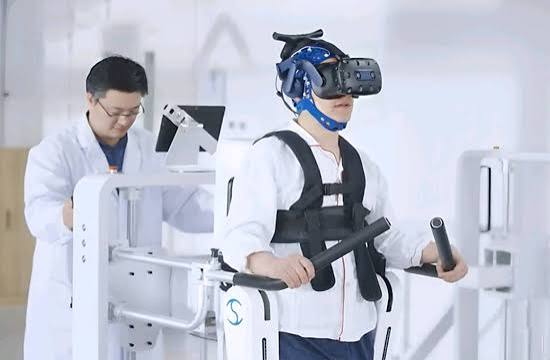
At the Boao Forum for Asia Global Health Forum on September 15, Zuo Nianming, a researcher at the Institute of Automation of the Chinese Academy of Sciences, stated that brain-computer interfaces (BCIs) could empower 10% to 15% of those requiring medical resources. However, he outlined four significant challenges: inconvenience, instability, lack of intelligence, and non-necessity. These issues highlight the gap between the increasing number of BCI companies and the actual usability of the technology in real-world scenarios.
Despite the rapid growth of the BCI sector, with over 200 companies in China and a projected market size of 120 billion yuan by 2040, experts emphasize that the technology has not yet reached maturity. Tao Hu, founder and chief scientist of Shanghai Brain Tiger Technology, noted that while research is driven by interest, industry success hinges on meeting system-level and product-level demands. The focus should be on addressing real patient needs rather than merely technological capabilities.
Regulatory frameworks are being developed to ensure the safety and efficacy of BCIs, with attention to aspects like biocompatibility and signal processing. Zuo Nianming identified three evolution directions for BCIs: healthcare, natural interaction, and brain-computer intelligence. While healthcare represents the strongest immediate need, significant public education is required to clarify the boundaries of BCI technology. Currently, there is a mismatch between policy-driven growth and the actual technological readiness to meet real-world demands.
Editor's Note
The brain-computer interface sector is experiencing rapid growth, yet significant challenges remain in terms of technology maturity and real-world applicability. As companies proliferate and market forecasts rise, the focus must shift towards ensuring that these technologies meet genuine patient needs. Regulatory frameworks are crucial for guiding this development, but they must evolve in tandem with technological advancements.
































Leave a comment