

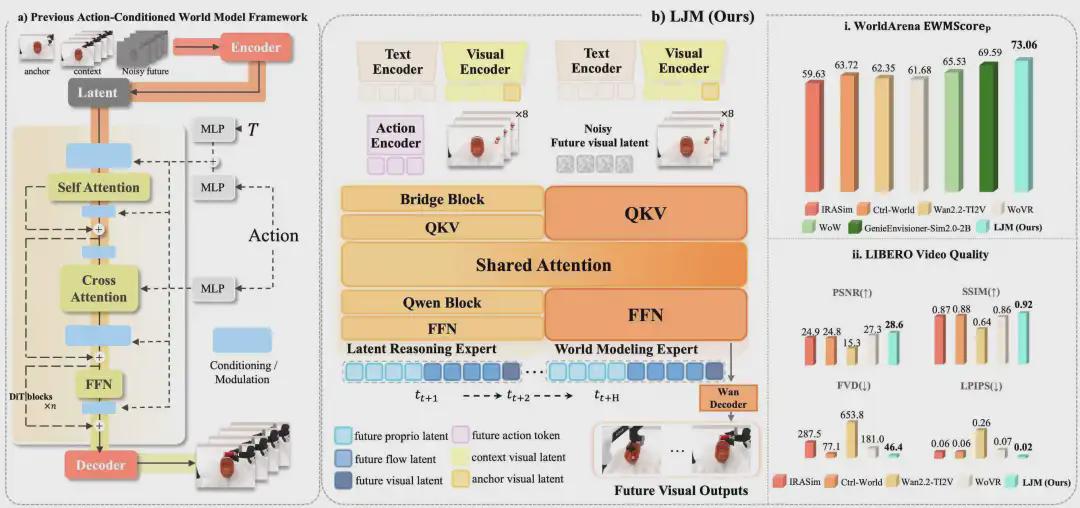
Moke Robotics has recently secured the second position in the WorldArena rankings with its LJM (Latent Joint-conditional Model), achieving a score of 73.06, just 0.58 points behind the leader. This model represents a significant advancement in embodied world modeling, addressing the gap between realistic video generation and causal reasoning in physical interactions.
The importance of this achievement lies in Moke Robotics' approach to overcoming the limitations of existing models, which often fail to accurately represent the causal relationships in robotic interactions. By focusing on understanding interaction causality before generating visual outputs, Moke Robotics is paving the way for a new path in domestic autonomous research and development.
Looking ahead, the implications of the LJM model could reshape how robots interact with the physical world, emphasizing the need for a unified interaction latent space. No further timeline was disclosed at the time of publication.
Editor's Note
Moke Robotics' recent advancements highlight a critical shift in the robotics industry towards models that prioritize causal reasoning over mere visual fidelity. This could influence future developments in robotic applications, particularly in areas requiring precise physical interactions and decision-making capabilities.



























Leave a comment