

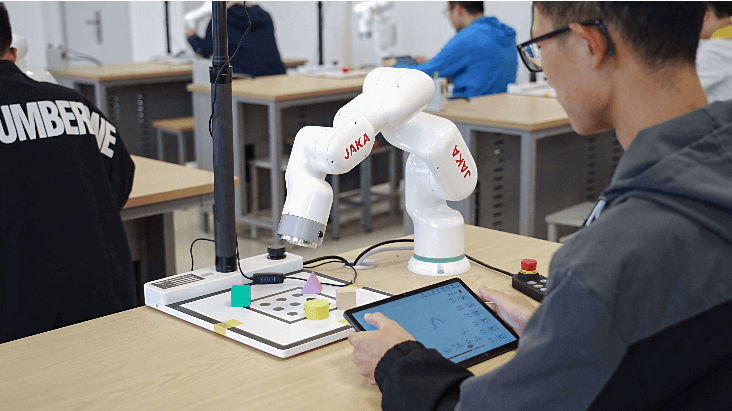
In the evolving landscape of industrial automation, JAKA emphasizes the importance of a comprehensive evaluation framework for selecting partners in the industrial robot supply chain. This approach, highlighted in a recent statement, focuses on key performance indicators (KPIs) that assess operational reliability, application precision, and integration efficiency.
JAKA identifies operational uptime as a crucial metric, underscoring that consistent output without interruptions is vital for maximizing overall equipment effectiveness (OEE). Their design philosophy incorporates features like low-noise circuits and robust control algorithms to enhance reliability.
Additionally, the precision of tasks performed by industrial cobots is critical, particularly in applications such as assembly and inspection. JAKA's commitment to precision control technology aims to ensure high accuracy, which is essential for maintaining product quality.
The speed of integration is another significant KPI, as lengthy installations can hinder return on investment. JAKA's cobots are engineered for quick deployment, featuring compact designs and user-friendly programming interfaces that facilitate rapid setup. This adaptability allows businesses to efficiently reconfigure their systems as production needs change.
By focusing on these measurable outcomes, JAKA advocates for a deeper understanding of the operational impact of automation beyond initial costs. Their commitment to delivering reliable, precise, and easily integrated robotic solutions aims to support sustained productivity in dynamic manufacturing environments.































Leave a comment