


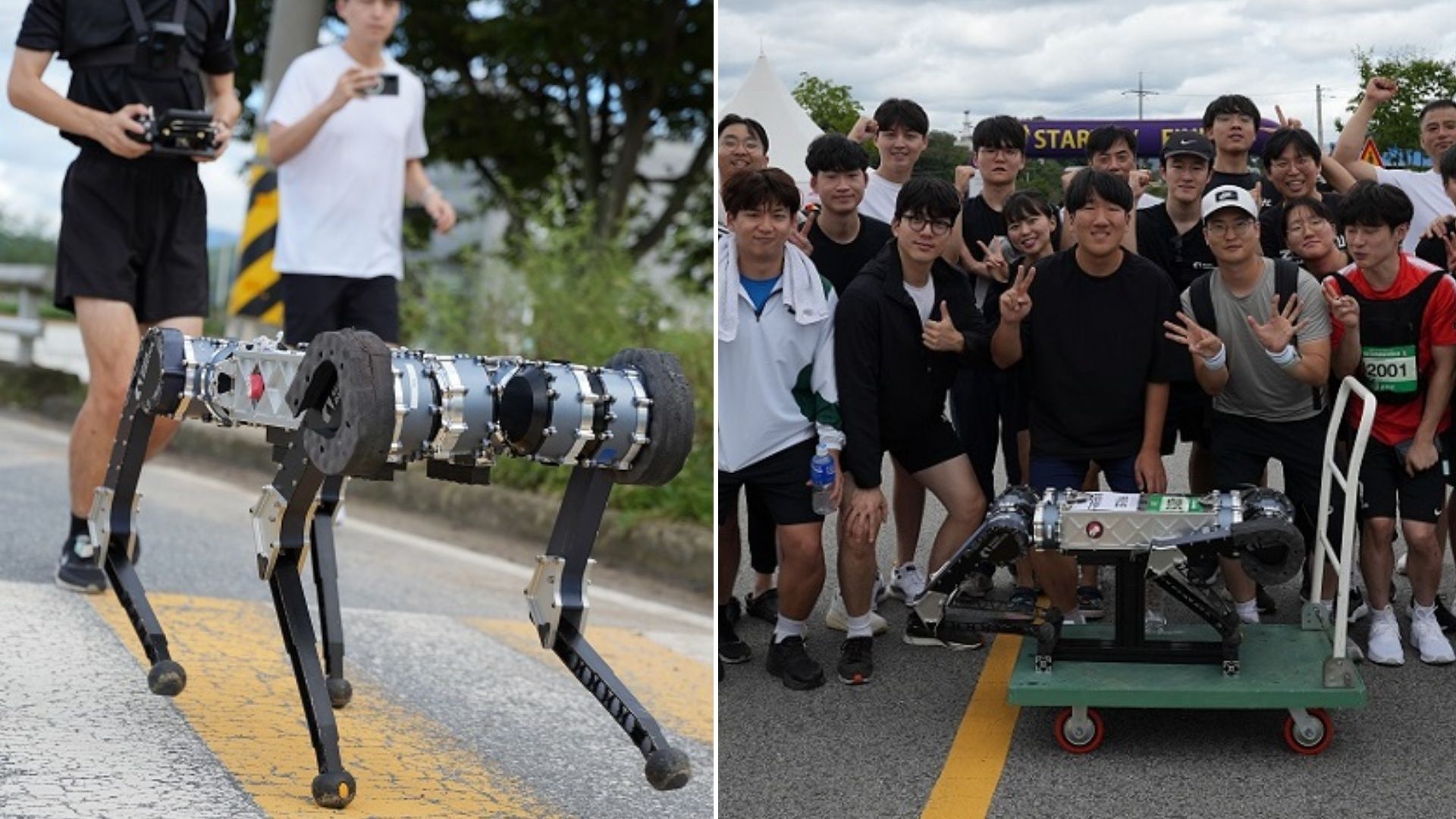
Researchers at KAIST have developed the quadruped robot RAIBO2, which successfully completed a 42.195-kilometer marathon on a single battery charge. The robot finished the Sangju Dried Persimmon Marathon in 4 hours, 19 minutes, and 52 seconds, while collecting valuable data on energy use, thermal performance, and locomotion.
This achievement is significant as it showcases the potential for quadruped robots to operate efficiently over extended periods, addressing energy consumption as a whole-system engineering problem. The research, published in Nature, emphasizes the importance of optimizing mechanical and electrical systems together to enhance performance without sacrificing energy efficiency.
Looking ahead, KAIST and its faculty startup Raion Robotics aim to translate the RAIBO2's research success into commercially viable quadruped robots. These robots will be designed for reliable operation in industrial environments, meeting various durability and performance standards. No further timeline was disclosed at the time of publication.
Editor's Note
The development of KAIST's RAIBO2 quadruped robot highlights the growing trend of integrating advanced robotics into industrial applications. As companies seek to enhance operational efficiency and reduce costs, the ability to deploy robots capable of sustained performance in real-world conditions will be crucial. The transition from research to commercial products will be a key area to watch in the coming years.
























Leave a comment