

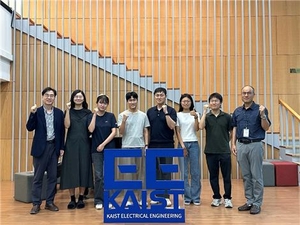
KAIST's Urban Robotics Lab secured first and second place in two prestigious international robot navigation challenges. The team developed an AI system that enables robots to self-verify their decisions, ensuring they reach the correct destination. This innovative self-checking technology was instrumental in their success at the competitions held in Malmo, Sweden, and Sydney.
The significance of this achievement lies in the advancement of embodied artificial intelligence, which allows robots to better understand human instructions and navigate complex environments. By addressing common navigation errors, such as misidentifying destinations, KAIST's technology enhances the reliability of robotic systems in real-world applications. The competitions were part of the European Conference on Computer Vision 2026 and Robotics: Science and Systems 2026, highlighting the importance of AI in robotics.
Looking ahead, the focus will be on further refining the CoRe-VLN system, which utilizes AI to analyze visual and textual data for improved navigation accuracy. No further timeline was disclosed at the time of publication.
Editor's Note
KAIST's recent successes in international robotics competitions underscore the growing importance of self-verifying AI systems in enhancing robotic navigation capabilities. As robots become more integrated into everyday environments, the ability to accurately interpret and respond to complex instructions will be crucial for their deployment in various sectors, including service and logistics.


























Leave a comment