



Health, deep tech and robotics founders spent two days pitching accredited investors in Oakland and at Carnegie Mellon. Local venture funds in Pittsburgh have less uncommitted money than at any point in ten years.
At a glance
| Event | Venture Expo 2026 (with AI & Robotics Venture Day) |
| Organizer | Innovation Works, as part of StartUP PGH (CMU Startup Week) |
| Dates | Tuesday–Wednesday, September 15–16, 2026 |
| Venues | The Oaklander Hotel, 5130 Bigelow Blvd, Pittsburgh (main program); Phipps Conservatory (invite-only dinner); Carnegie Mellon University (AI & Robotics Venture Day) |
| Audience | Accredited investors (SEC Regulation D) and press; invitation only |
| Startups | 29 pitched on Sept 15 and 30 on Sept 16. Pierogi Therapeutics appeared both days, so 58 companies in total |
| Sectors | Diagnostics, drug development, medical devices, health software, energy and materials, AI infrastructure, robotics and automation |
What happened
Innovation Works held Venture Expo 2026 on September 15 and 16 as part of StartUP PGH, the Carnegie Mellon-led startup week that this year runs alongside EXPlore: Pittsburgh Tech Week. The first day, at The Oaklander Hotel in Oakland, was limited to accredited investors and press. It opened with a keynote fireside, broke for a lunch session, and ran three blocks of pitches from 29 companies.
On the second day, founders and investors met one-on-one in deal rooms at the hotel. In the afternoon, shuttles took the group to Carnegie Mellon for AI & Robotics Venture Day, where 30 more startups presented. Innovation Works helped pick that cohort.
Of the 29 day-one presenters, 21 work in diagnostics, therapeutics, medical devices or health software. The day-two cohort was weighted toward AI and physical systems, including airport baggage robots, greenhouse harvesting robots, electrostatic brakes for robot joints and valves for spacecraft, plus two companies working on data center power and cooling.
Program
Keynote fireside (Sept 15): Kevin Dowling, PhD, Managing Director of Robotics Factory & Hardware at Innovation Works, in conversation with John Thornton, Executive Vice President at Voyager Technologies and founder of Astrobotic, which Voyager acquired.
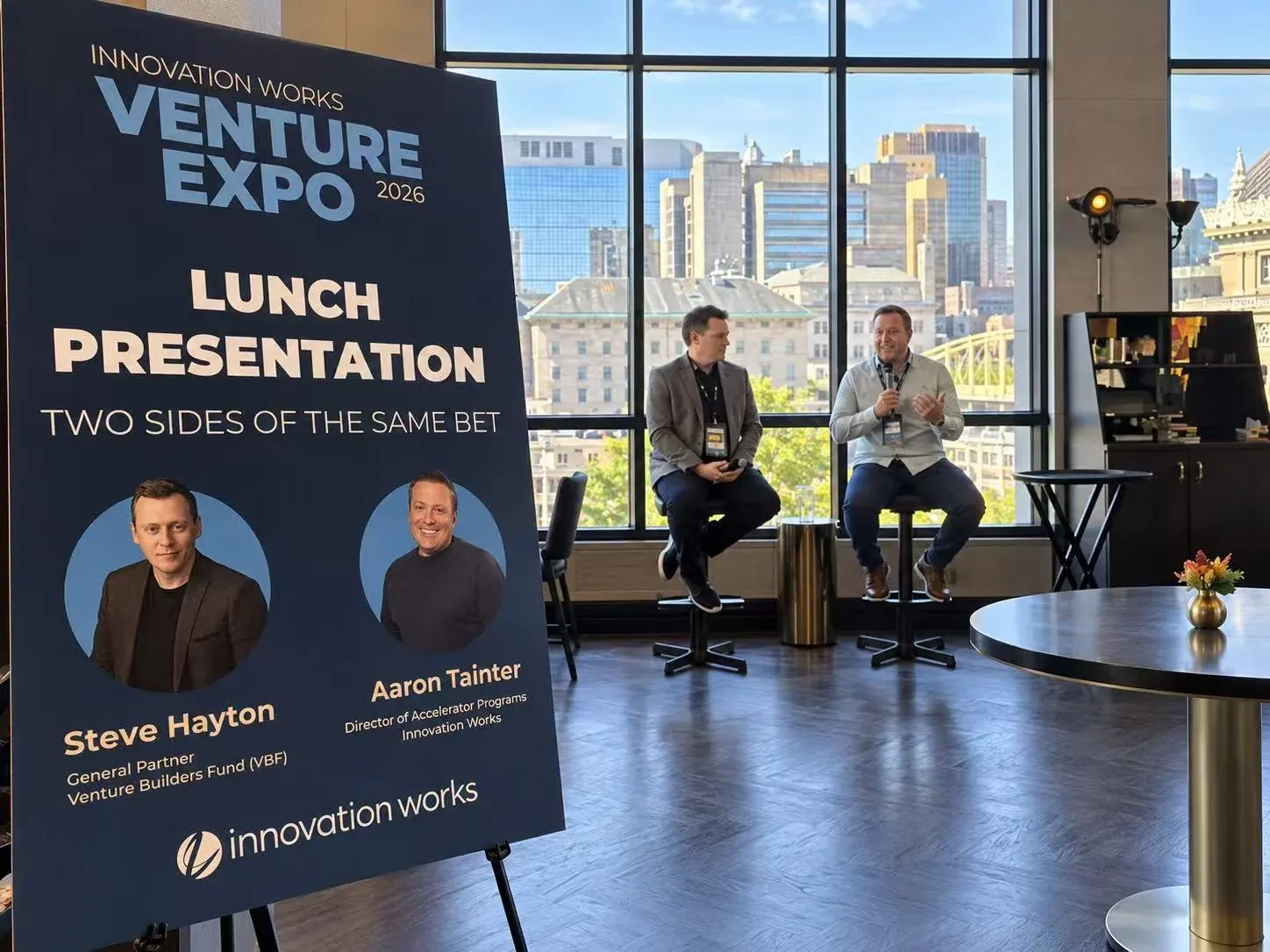
Lunch presentation, “Two Sides of the Same Bet”: Steve Hayton, General Partner, Venture Builders Fund, and Aaron Tainter, Director of Accelerator Programs, Innovation Works.
Pitch sessions: 1:00 PM Energy, Materials & Automation Advancement (7 companies); 1:30 PM Diagnostics & Drug Development (7); 3:30 PM Software & Medical Devices in Healthcare (15).
Evening: Glasshouse Gathering welcome dinner at Phipps Conservatory, by invitation.
Sept 16: Investor Concierge 8:00 AM–1:00 PM; Deal Rooms and Investor Exchange Lounge 8:00 AM–3:00 PM; AI & Robotics Venture Day at CMU 4:00–6:00 PM.
The funding backdrop
Innovation Works handed out printed copies of its 2025 investment report, produced with Ernst & Young. Key figures:
$2.29 billion was invested in 124 Pittsburgh technology companies in 2025.
Venture capital rose from $999.0 million in 2024 to $2.06 billion, the region’s highest institutional VC total on record.
Deal count fell to 148 from 205, and funded companies fell from 182 to 124. Average VC deal size nearly doubled.
Hardware and robotics accounted for 51.8% of dollars invested, mostly from rounds for Skild AI, Gecko Robotics and Agility Robotics. Life sciences accounted for 34.3%, including Abridge.
Uncommitted capital at Pittsburgh-based VC firms was an estimated $23.2 million in 2025, the lowest in ten years. The 2016 figure was $140.8 million.
56 investors made their first Pittsburgh investment in 2025. More than 300 VC firms have backed Pittsburgh companies over the past decade.
The region recorded 10 exits in 2025, all acquisitions with no disclosed value.
Most of the 2025 money went into a few large rounds for later-stage companies. Local funds have little left for seed and Series A, which is where most of the companies on this list are raising, so many of them will need investors from outside the region. Ven Raju, president and CEO of Innovation Works, told Technical.ly that combining the week’s events is “more efficient for out-of-town visitors — out-of-town investors — to come here and see what’s happening.”
Presenting companies
Company names link to each company’s website. Descriptions are based on event materials.
Sept 15 · 1:00 PM · Energy, Materials & Automation Advancement
| Company | Introduction |
|---|---|
High-voltage gallium nitride power devices that cut the roughly 10 percent of data center electricity lost as heat during voltage conversion. Sold to the companies building electrical equipment for data centers. | |
Working to make diamond, the best-performing thermal material known, cheap enough to bond directly onto high-power computing chips. The target is the energy and water that data centers currently spend on cooling. | |
SilkHat is an AI workforce platform built around Friday, an AI operator that executes multi-step knowledge work autonomously rather than waiting for step-by-step instructions. Sold to enterprise teams, small businesses and individual operators. | |
A self-improving simulation engine that moves materials development off the lab bench, using machine learning interatomic potentials and graph neural networks to simulate thousands of atoms. Demonstrated across mining, polymer and semiconductor applications. | |
A voice biometric platform that confirms who is actually speaking from seconds of audio, matches voices against known voiceprints under spoofing attempts, and flags AI-generated speech. Built on more than twenty years of voice research; initial customer is the US federal government. | |
A proctored coding arena where engineers steer an AI model through repo-level challenges graded at hidden decision points, producing a skill report that a polished take-home cannot fake. Buyers are engineering leaders and technical recruiters. | |
An employer platform that matches small groups of employees by shared interest and sends them to real-world events, then reports back on participation and connection. Aimed at large employers with no internal event planning function. |
Sept 15 · 1:30 PM · Diagnostics & Drug Development
| Company | Introduction |
|---|---|
A non-invasive device that delivers a controlled puff of air to the nasal cavity timed to the patient's own swallow, draining middle-ear fluid without surgery. Aimed at parents of children aged 2 to 12 with glue ear or Eustachian tube dysfunction. | |
Prodrug chemistry that shields healthy organs and releases two or more cancer drugs only inside the tumor. Its lead asset replaces a standard two-drug chemotherapy regimen with a single infusion, aiming for stronger response at lower toxicity. | |
Prenactive is a methylation-based liquid biopsy that screens for fetal chromosomal abnormalities and first-trimester preeclampsia risk from a single maternal blood draw. Sold to obstetricians, maternal fetal medicine specialists and reference labs. | |
Developing a therapy for trigeminal neuralgia, a rare facial pain condition with few tolerable treatment options. The approach came out of a co-founder's own experience with the condition and his prior work treating related nerve pain. | |
A synthetic human yolk sac platform that restores regenerative function to aged or damaged blood stem cells without gene editing. Lead programs target bone marrow transplant, acute radiation syndrome and age-related blood decline. | |
Also pitched Sept 15 | Combines AI models with physics-based simulation to predict how strongly drug candidates bind to their targets, focused on radiopharmaceuticals for cancer. Sold to pharma and biotech teams that want to narrow candidates computationally before lab work. Founded by CMU chemistry researchers. |
Developing oral small molecules that modulate the endothelin A receptor through a different binding site than existing drugs, with the goal of keeping the kidney benefit while avoiding the fluid-retention side effects that have limited the class. Partnering target is pharma and biotech companies working in kidney and cardiometabolic disease. |
Sept 15 · 3:30 PM · Software & Medical Devices in Healthcare
| Company | Introduction |
|---|---|
The SpaceIQ platform turns spatial, pathology and multi-omic tissue data into reproducible decision models. Life science teams use it for patient stratification, biomarker strategy and diagnostic development. | |
Combines neurology-led care with migraine prediction: one minute of daily tracking forecasts attacks up to two weeks out, paired with coaching and in-app telehealth. Built for the 50 million-plus Americans living with migraine. | |
Converts a clinical trial protocol PDF into a single structured, machine-readable model so study teams stop rebuilding the same protocol by hand for every operational tool. Sold first to trial sites, which carry the heaviest share of that work. | |
A multimodal model that fuses CT imaging, vitals, labs and clinical notes to tell vascular surgeons which patients will deteriorate and how fast. Wrapped in workflow tools that surface at-risk patients from the health record and prioritize the surgical worklist. | |
Brings primary care, urgent care and care coordination into a single employer-paid benefit delivered at home, at work or virtually. Sold to self-funded employers, school districts and municipalities. | |
AI that reads a standard ECG and returns per-vessel coronary artery disease results in about a minute, delivered straight into the patient record. Built for hospital emergency departments and cardiology practices to triage patients without sending everyone through invasive testing. | |
WAVEFRONT detects the electrical biomarker of impending secondary brain injury from routine scalp EEG and alerts neuro ICU teams automatically. Built for clinicians caring for patients with severe traumatic brain injury. | |
An FDA-cleared surgical calibration tube with near-infrared light built in, giving surgeons real-time visualization during gastrointestinal procedures with no new capital equipment. Used in more than 13,000 procedures to date, with a colorectal indication launching in 2026. | |
The G-Guard is a securement device for gastrostomy feeding tubes, addressing the leakage, skin breakdown and accidental dislodgement that remain common after surgery. Initial customers are pediatric hospitals and children's health systems. | |
Alveonix is a portable, battery-powered artificial lung that rests the lungs and lets patients stay awake and mobile instead of on a ventilator in the ICU. Aimed at hospital critical care units treating severe COPD exacerbations and other respiratory failure. | |
The Aspirometer is a neck-worn sensor and handheld device that gives clinicians an objective read on a patient's aspiration risk during a routine bedside swallow screen. Initial customers are US acute care hospitals, starting with emergency departments and stroke centers. | |
Associan is an autonomous robotic cell culture platform that handles incubation, liquid handling, imaging and monitoring in one system. Scientists describe a workflow in plain language and an AI agent layer runs it, for pharma and biotech R&D teams, CROs and academic core facilities. | |
Sensing-based medication management for health system and clinic pharmacies, enabling grab-and-go workflows and automated inventory. Addresses the lack of digital visibility in pharmacy operations. | |
A hydrogel dressing that holds dissolved oxygen and releases it into a wound bed over the course of wear, with no chamber, hardware or power required. Aimed at the hospital wound centers and podiatry and vascular clinics treating chronic non-healing wounds. | |
A challenge-based youth enrichment program delivered through schools and after-school partners, built around a proprietary curriculum and a pipeline of community coaches. Families are the paying customer in a fragmented $26B market of mostly independent operators. |
Sept 16 · 4:00 PM · AI & Robotics Venture Day, Carnegie Mellon University
| Company | Introduction |
|---|---|
Also pitched Sept 15 | Combines AI models with physics-based simulation to predict how strongly drug candidates bind to their targets, focused on radiopharmaceuticals for cancer. Sold to pharma and biotech teams that want to narrow candidates computationally before lab work. Founded by CMU chemistry researchers. |
A managed billing service for injury-care practices, covering the workers' comp, no-fault auto and personal injury payers that standard billing systems handle poorly. Runs on AI workflows with a human queue for judgment calls, priced at a percentage of collections. | |
Touchless robotic systems for airport ground operations, starting with baggage handling and extending toward under-wing servicing and ramp work. Customers are airlines, ground handlers and airports facing labor shortages and rising injury rates. | |
ReliaPlay is a drop-in replacement for traditional forward error correction in real-time video, adapting redundancy to network conditions to recover more lost frames on less bandwidth. Built for defense, robotics, teleoperation and live streaming. | |
A domestic supply of high-purity branched carbon nanotubes that reinforce polymers, coatings, batteries, composites and cement at low loading levels. Works with industrial manufacturers to match the nanotube form and processing route to their material. | |
Electrostatic brakes for robots that the company reports are ten times lighter and far more energy efficient than conventional versions. Sold to robotics companies working in mobility, manufacturing, medical robotics and human-interactive systems. | |
Licenses a NASA-patented electrodynamic dust shield and pairs it with its own electronics to clear dust from solar panels, vehicle and aircraft sensors and agricultural systems. Near-term focus is utility-scale solar operators and panel manufacturers. | |
A per-acre software service that turns drone survey imagery into a GPS-accurate weed map identified down to the species, flagging hazards like power lines and valuable trees. Customers are ranchers and commercial drone applicators, starting in Texas. | |
AI infrastructure for battery engineering from the creators of PyBaMM, the standard open-source battery modeling library. Parameterizes physics-based cell models in seconds instead of weeks and runs thousands of virtual experiments in place of physical testing. | |
A wearable muscle-sensing kit and clinician dashboard that shows how individual muscles are firing during rehab exercise, including differences between the injured and healthy limb. First application is ACL rehabilitation with sports and orthopedic physical therapists. | |
An automated organ-chip service that models diseases in lab-grown human tissue, using robotics, 3D-printed tissue engineering and AI. Aimed at biotech and pharma teams trying to catch toxicity and efficacy problems before clinical trials. | |
Building a family of space-qualified precision mechanisms, starting with a high-pressure valve that uses a proprietary metal seal to reduce leakage under launch and cryogenic conditions. Also developing gimbals, reaction wheels and modular robotic drives. | |
An autonomous ML engineer: a domain expert describes a prediction problem in plain English and connects their data, and a multi-agent system runs the full modeling workflow. Built for the process engineers and analysts who own the data but cannot build a model. | |
A racket sensor and phone-camera vision system that together capture swing mechanics, ball tracking and match patterns for tennis players. Aimed at serious amateurs priced out of regular private coaching. | |
Uses liquid air energy storage so one compressor train can supply both peak power and mechanical cooling for a data center, and extracts its own distilled water from humidity in the air. Sold to data center developers. | |
A neutral data layer for the electric grid that consolidates fragmented public data into one model, resolves records across sources and links every claim back to its evidence. Lets developers and their advisors find comparable projects and queue history in seconds instead of weeks. | |
A patient app and provider dashboard for outpatient physical therapy, built to keep patients from dropping out of their plan of care and to automate remote therapeutic monitoring billing. Sold to independent small and mid-sized PT practices. | |
A governance layer for AI agents running in production operations: scrubs inputs, scans AI outputs for leaked secrets, gates actions behind human approval and keeps tamper-evident audit logs. Built for SRE and security teams at banks, fintechs and healthcare IT. | |
The OnPoint platform analyzes building automation data that commercial buildings already produce, finds the root causes of HVAC waste and returns engineer-reviewed, prioritized fixes. No new sensors required; developed from Carnegie Mellon research. | |
Autonomous harvesting robots that identify ripe fruit, navigate dense plant canopies and pick continuously in commercial greenhouses. Initial customers grow vine crops such as tomatoes, cucumbers and peppers. | |
Open-source software infrastructure for controlling and deploying robots, including a Python framework for real-time control, teleoperation and moving trained behaviors between different robot hardware. Aimed at companies automating hazardous or repetitive work without a robotics team. | |
An AI platform that searches across scientific and technical fields to find solutions to a problem that already exist in unrelated domains. Built for corporate and academic R&D teams and for organizations looking for new applications of patents they hold. CMU spinout and winner of the 2026 McGinnis Venture Competition. | |
Designs custom AI chips tuned to a single computing workload rather than general-purpose processors, currently focused on risk modeling. Sold to hedge funds and financial institutions, with an on-site simulator so buyers can test before committing. | |
An AI learning and upskilling product whose continuity feature carries a person's learning progress and context with them across different AI tools. Aimed at early-career workers and the employers training them. | |
Nexus turns scattered enterprise data, metrics and business rules into a governed layer that AI agents and staff can work from reliably. Built for enterprises deploying AI agents against internal data. | |
Building a large-scale foundation model for physics, described by the company as world-aware AI for the physical world, intended for engineering and simulation work. | |
Applies a patented ultra-thin nanocomposite coating to battery electrodes to slow degradation and extend usable battery life without changing the cell chemistry. Aimed at robotic fleets, grid and commercial storage, defense systems and electric vehicles. CMU spinout funded by ARPA-E and the Department of Energy. | |
Uses vision-language models to walk manufacturing technicians through complex maintenance and repair procedures step by step. Aimed at industrial operations keeping equipment running with a less experienced workforce. | |
A noninvasive at-home neurostimulation device that adapts its stimulation pattern to an individual patient's brain activity and symptoms. Early work focuses on chronic pain from fibromyalgia and knee osteoarthritis. | |
Software that pairs physics-based models with AI to optimize how data centers run their cooling systems, freeing electrical capacity for additional computing without new construction. Penn State spinout based in State College, PA. |
RobotToday view
At this week’s sessions, the question that kept coming up was how to get the technology to customers: which market to enter first, how to prove demand, how to build a product that can be manufactured, and which investors will stay through a long deployment cycle. Analogical Engines, SeaLion Energy and Glacian Technologies are university spinouts from Carnegie Mellon and Penn State. Journey Robotics and Four Growers sell robots into airport ramps and greenhouses, where operators already have trouble hiring.
A CMU lab manager told us this week: “If you have an idea, Pittsburgh has the talent, the funding, and the connections to help make it real.” The Innovation Works report adds a qualification on funding: in 2025, local VC firms had $23.2 million left to commit.
About Innovation Works
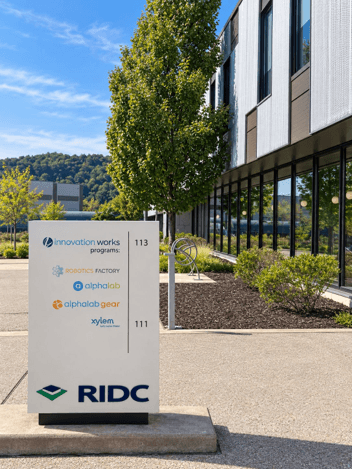
Innovation Works is one of the most active early-stage investors in the United States and the most active in Pennsylvania. Since its seed fund started in 1999, it has invested in more than 760 companies, which have gone on to raise $3.3 billion in follow-on funding and have generated or retained more than 20,000 jobs in the state. It is part of the Ben Franklin Technology Partners network. Its programs include AlphaLab, AlphaLab Gear and Robotics Factory.






Leave a comment