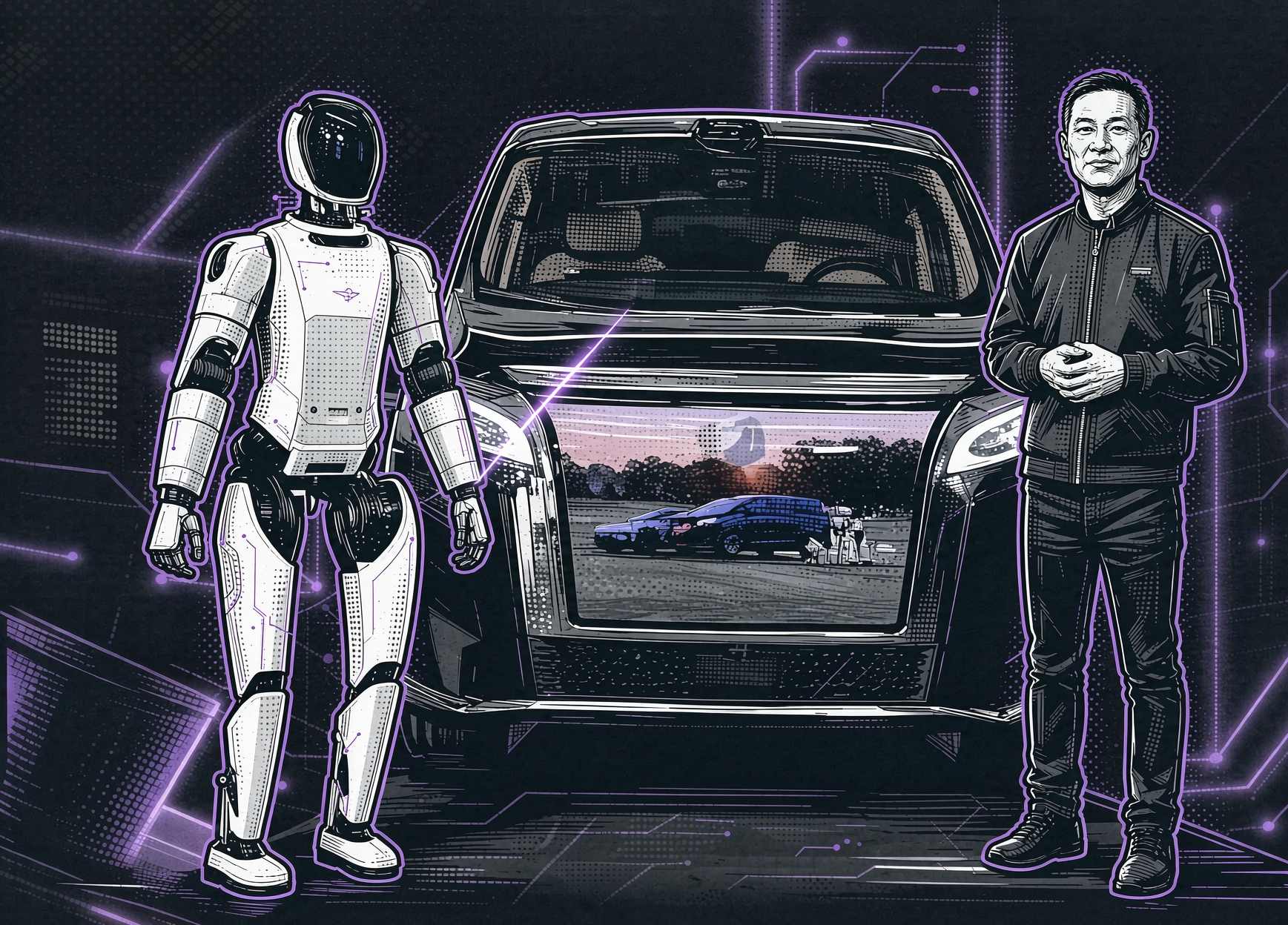
In recent months, the concept of "World Model" has gained significant traction within the AI and robotics sectors, driven by underlying industry anxieties. As AI technology has rapidly evolved over the past two years, limitations in embodied intelligence have become apparent, revealing that while robots can recognize objects, they struggle to understand physical interactions and causal relationships. The World Model aims to bridge this gap by enabling robots to learn the laws of the physical world. At the forefront of this exploration is Wang Zhongyuan, the director of the Beijing Academy of Artificial Intelligence, who identifies four distinct paths in the development of World Models. These include language-centered models, pixel-centered models, 3D structure-centered models, and visual representation-centered models. The Beijing Academy is pioneering a fifth approach that integrates language and visual data into a unified latent space representation, allowing for more complex interactions and predictions. Wang emphasizes that the World Model's potential lies in its ability to enhance embodied intelligence, enabling robots to understand and predict physical interactions over time. He envisions a future where World Models serve as the foundational brain for robots, capable of complex reasoning and decision-making in real-world scenarios. However, he cautions that achieving this goal will require significant advancements in data collection and model training, with a timeline of three to five years anticipated for substantial progress. As the field continues to evolve, the competition will focus on the ability to create models that accurately reflect the complexities of the physical world.

Company Profile
Joint University of Pittsburgh and US Department of Veterans Affairs laboratory conducting rehabilitation engineering research. Develops mobility devices, assistive technologies, and medical-grade products for people with disabilities.
Company Profile
Joanneum Research Institute for Robotics and Flexible Production conducts applied R&D in industrial robot systems, production automation and robot safety, offering feasibility analysis, consulting and testing in a robotics solution centre.
Russian leading research university (ITMO University) specializing in information technology, optical engineering, and photonics. Active research programs in AI, robotics, computer vision, and cyber-physical systems.
Company Profile
Independent embedded software provider delivering RTOS, compilers, IDEs, and debuggers for safety- and security-critical systems. Serves automotive, avionics, defence, and industrial domains with certified real-time operating system platforms since 1982.
Norwegian-based 2D and 3D industrial machine vision software platform (marketed under Tordivel AS). Offers sub-pixel and micron-level non-contact measurement, configurable inspection tools, and advanced calibration capabilities without programming.
Company Profile
Provides systems engineering, embedded software development, automation integration, and cybersecurity services for government and commercial defense clients. Capabilities include OT/IT convergence, edge computing, and mission-critical system integration across a 28-year operational history.
Company Profile
Patten Studio is an interactive design studio based at MIT Media Lab roots, creating technology-driven art installations and experiential environments for brands and public spaces. Work involves sensing, embedded computing, and responsive physical interfaces, with peripheral relevance to human-machine interaction.
Macrotellect develops BrainLink EEG headsets and brainwave sensing devices for consumer and research applications. The company focuses on brain-computer interface technology enabling non-invasive neural signal acquisition and human-machine interaction.
New Zealand AI company (now in receivership as of February 2026) that developed lifelike digital human avatars powered by large language models for customer service and enterprise deployment. Created Digital Workers and Workforce Connect platforms.
Company Profile
Australian research centre focused on robotic vision systems, operating under university auspices. Conducts research in computer vision and perception for autonomous robots. Website was inaccessible at time of scrape; inferred from name and known public profile as a vision-focused robotics institute.
US developer of Vision Factory, a 3D machine vision platform enabling industrial robots to locate parts in six degrees of freedom from a single camera image. Targets automated manufacturing lines requiring high-speed, accurate part location without structured environments.
Excepteur sint occaecat cupidatat non proident
Leave a comment