


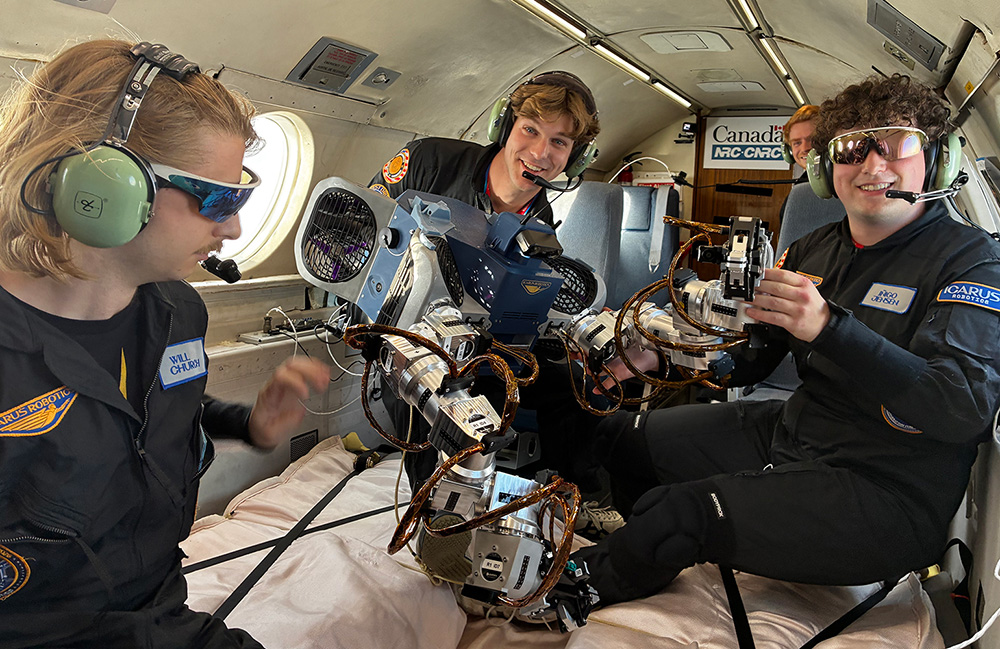
Icarus Robotics is conducting four parabolic flights from September 9 to 11 to test JOY, its free-flying robot designed for the International Space Station (ISS). This marks the first operation of JOY in true microgravity, allowing for critical assessments of its capabilities.
The significance of this testing lies in JOY's role in alleviating the workload of astronauts, who are currently limited in number and time. With NASA valuing astronaut time at approximately $130,000 per hour, optimizing robotic assistance for cargo handling and logistics is crucial as the demand for operations in space increases.
Looking ahead, JOY is scheduled to launch to the ISS in 2027 as part of the JOYRIDE-1 mission. The data collected from these parabolic flights will be instrumental in refining JOY's systems before its hardware is handed over to NASA in January. No further timeline was disclosed at the time of publication.
Editor's Note
The ongoing development of robotic systems like JOY highlights the urgent need for automation in space operations, especially as human resources remain limited. As commercial space stations and lunar missions evolve, the integration of advanced robotics will be essential to meet the growing operational demands in microgravity environments.


























Leave a comment