The growing field of soft robotics and smart electronic devices is creating a heightened demand for innovative materials capable of movement and adaptability while ensuring minimal environmental impact. As these advanced technologies are being developed for various applications, including healthcare, environmental monitoring, infrastructure inspection, and security, they are designed to function in areas that are often inaccessible to humans. This includes narrow pipes, sealed spaces, underground facilities, and hazardous environments. The push for these capabilities is driven by the need for efficient and sustainable solutions in challenging conditions, highlighting the importance of material science in the evolution of robotics and smart devices.



Dual-mode magnetic elastomer moves on command, vanishes on demand
Robotics needs a service framework.
RSF defines a common language for robot service capability, lifecycle operations, certification pathways, and service-provider networks.
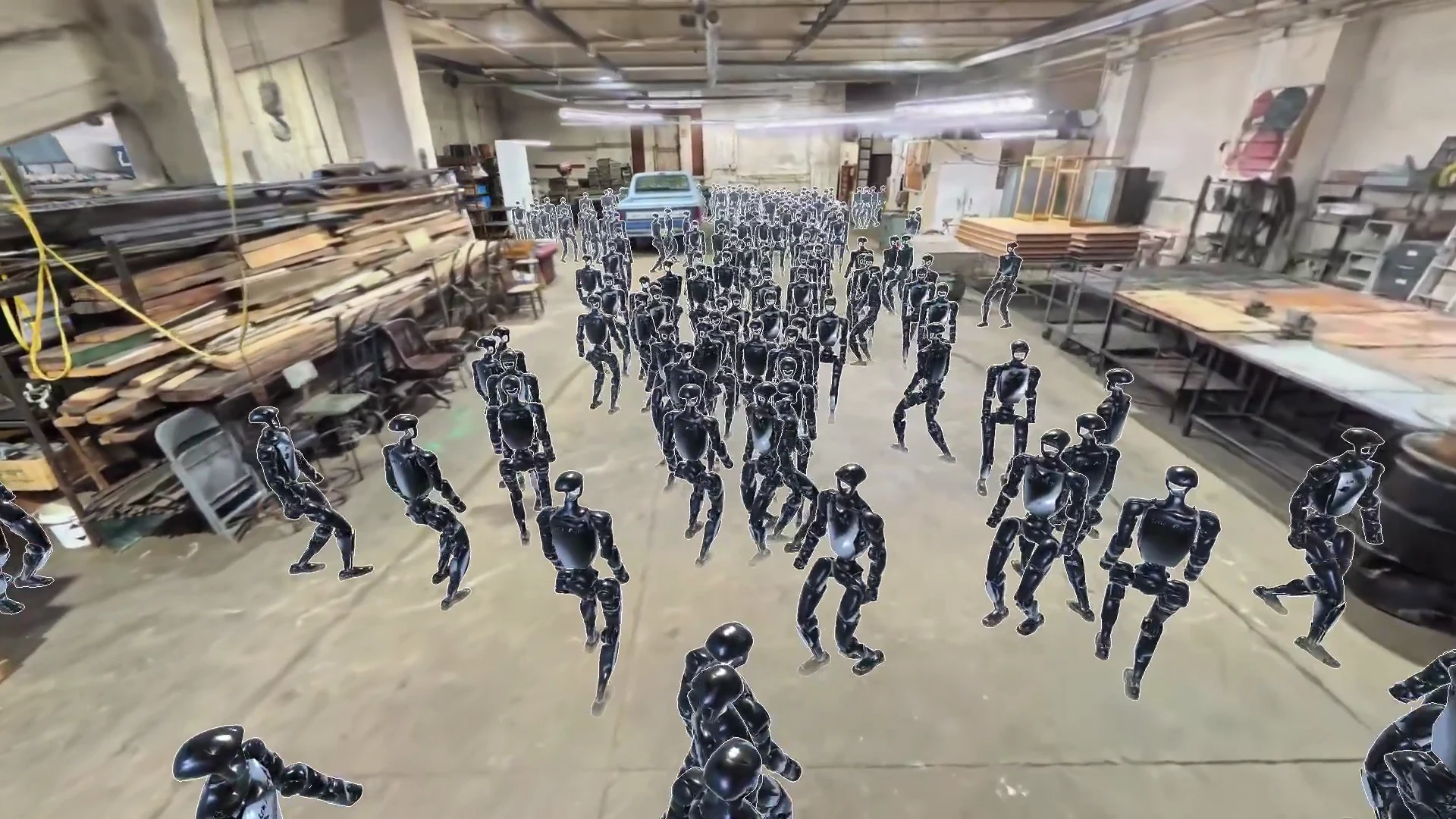
Niantic Spatial Introduces Places Library Featuring 100 Real Environments for Robot Training
Niantic Spatial has launched its Places Library, providing robotics developers with a catalog of 100 real environments for training and evaluation. The assets, available as USDZ files, include two representations for each environment: a Gaussian splat for visual appearance and a mesh for collision detection. This initiative aims to enhance embodied AI tra...
Niantic Spatial Flexion
Blue Cross Blue Shield Association Reports AI Increased Healthcare Costs by $942 Million
An analysis by the Blue Cross Blue Shield Association revealed that the use of artificial intelligence tools in hospitals has resulted in an additional $942 million in healthcare spending over two years. The report highlights a significant rise in the documentation of patients with complex conditions, yet it notes a disconnect between medical coding and a...
AI Biotech & Health Blue Cross Blue Shield
Specialized Robots Demonstrate Advanced Functions in Extreme Environments
Recently, several domestic specialized robots have gained attention online for their remarkable capabilities. These include a robotic wolf that can withstand temperatures of 500°C and a flying rescue device from Hangzhou police that autonomously reaches water rescue points at a speed of 14 meters per second. Many observers noted that science fiction scena...
Specialized Robots Firefighting Robots Rescue Technology
Enhancing Military Logistics Networks with Software and Edge AI for Contested Environments
The article discusses the role of software, edge AI, and resilient connectivity in bolstering military logistics in contested environments. These technologies are essential for ensuring that logistics networks can operate effectively even under challenging conditions. Strengthening military logistics is crucial for maintaining operational readiness and ef...
Networks & Digital Warfare artificial intelligence AI contested logistics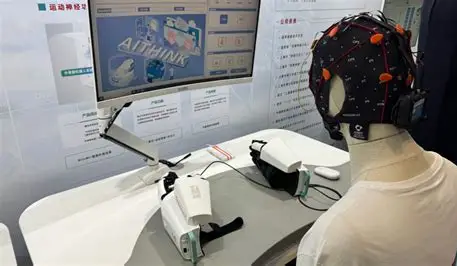
CITIC Securities Identifies Turning Point in Medical Device Sector with Focus on Brain-Computer Interfaces and AI Healthcare
CITIC Securities has reported that the medical device sector is reaching a turning point, with opportunities for performance and valuation recovery expected by 2026. The report emphasizes the importance of focusing on companies that are improving their performance and exploring international markets, particularly those listed in Hong Kong. The long-term o...
Medical Devices AI Healthcare Brain-Computer Interfaces
Thales Introduces HexaForce AI Command Platform for NATO and Allied Forces
Thales has unveiled HexaForce, a cutting-edge command and control (C2) digital platform aimed at enhancing military operations across various domains. This innovative platform is designed to improve integration and coordination among NATO and allied forces, ensuring more effective collaboration during missions. The introduction of HexaForce is significant...
News
FTS Introduces TAHR, a New Air-Droppable Light Combat Vehicle for German Special Forces
FTS has unveiled the TAHR, a light combat vehicle designed for German Special Forces. This innovative vehicle can be air-dropped, with two units fitting inside a Chinook helicopter, enhancing operational flexibility. The introduction of the TAHR is significant as it addresses the need for versatile and deployable combat solutions in modern warfare. Its ai...
Global Land Warfare Army
GPT-6 Astra Surpasses Specialist Robotics Models in Recent Evaluations
GPT-6 Astra's performance in robotics evaluations has shown significant advancements, surpassing open-source models in a recent MolmoSpaces assessment. The model achieved a score of 70.5%, outperforming competitors like Cosmos3 and MolmoAct-2, which scored 53.0% and 38.6%, respectively. This progress highlights the potential of general-purpose reasoning i...
OpenAI Benchmark Research
Sichuan's Investment in Exoskeleton Robots Enhances Healthcare and Tourism Sectors
Sichuan's Buffalo Robotics has developed a lower limb exoskeleton that improves mobility for individuals with spinal injuries, achieving a 50% sales increase last year. The device, weighing 2.2 kg and made of carbon fiber, incorporates AI and brain-machine interface technology to enhance rehabilitation training. The significance of this development lies i...
Exoskeleton Robots Rehabilitation Technology AI in Healthcare
Japan to Develop Drone-Mounted Quantum Magnetic Sensors for Submarine Detection by 2031
Japan is set to develop compact quantum magnetic sensors for drones to enhance submarine detection capabilities. This initiative is part of Tokyo's fiscal 2027 defense budget request, with a target completion date of fiscal 2031, as reported by the Nikkei newspaper. The sensors aim to identify subtle magnetic changes associated with submerged vessels, com...
Military
Healthcare Bureau Urges Caution in Surgical Robot Operations to Prevent Misuse
The installation of surgical robots in China is projected to rise significantly, with 97 units expected in 2025 and 136 in 2026, marking a 40% increase. The market size is anticipated to grow from 3.9 billion to 4.4 billion. Notably, domestic systems have surpassed 41% of new installations, with prices 30-40% lower than imported models. The Healthcare Bur...
Surgical Robots Medical Training Healthcare Innovation
Humanoid Robots Enhanced by AI Controller for Translating Commands into Actions
Humanoid robots, designed to mimic human limbs and body structures, are being enhanced by an AI controller that translates virtual reality, video, and language commands into actionable movements. This advancement aims to simplify the teaching process for these robots, which often struggle with executing humanlike movements reliably. The significance of th...
Robotics
DRT Co.,Ltd.
Korea, Republic of (South)
South Korean drone manufacturer specializing in cleaning drones, defense drones, and drone software for safety-critical environments.

Easy Aerial
United States
US drone-in-a-box maker delivering NDAA-compliant tethered and free-flight autonomous UAS for defense, security, and critical infrastructure.

Eelume
Norway
Norwegian AUV startup offering snake-like autonomous underwater robots for subsea inspection, maintenance, and mine countermeasures.
Aiyuwencheng 江苏艾雨文承养老机器人有限公司
China
Chinese eldercare robot maker behind 'Datou A Liang', China's first home-based companion robot for seniors with active patrol and sleep monitoring.

Blue Frog Robotics
France
French social robotics company developing Buddy, an emotional AI companion robot for education, eldercare, inclusion, and hospitality.

Bodyfriend 바디프랜드
Korea, Republic of (South)
Seoul-based massage and wellness chair maker founded 2007; builds the Falcon, Familie, and 733 chair lines using its patented ROVO bipedal leg-massage system.

BioRobotics Laboratory, Korea University of Technology and Education
Korea, Republic of (South)
South Korean university research laboratory focusing on haptics, exoskeletons, rehabilitation robotics, and autonomous ground vehicles.

McMaster Manufacturing Research Institute
Canada
Hamilton, Ontario applied manufacturing research center at McMaster University; runs a 21,000 sq ft facility with seven research labs.

Robotics Education & Competition Foundation
United States
The REC Foundation is a US nonprofit that runs VEX-based robotics and drone competitions reaching 1.1 million students across 70 countries.

Janome Industrial Equipment Europe GmbH
Germany
German sales subsidiary of Janome Industrial Equipment (Japan), distributing servo presses and desktop/Cartesian robots in Europe since 1984.

Industrial Technology Research Institute (ITRI) 工業技術研究院
Taiwan
Hsinchu County, Taiwan applied-technology research institute founded 1973; over 6,500 staff developing autonomous mobile robots and AI perception systems.
ROS-Industrial
United States
Open-source consortium managed by SwRI extending ROS to industrial manufacturing automation, with global hubs in Americas, Europe, and Asia-Pacific.
Join the RobotToday community on LinkedIn
Daily robotics news, in-depth analysis, conference highlights, and discussions with professionals worldwide.









Leave a comment