Education & Research
7 Ways New Engineers Can Flourish in the Age of AI
Original from IEEESpectrumAI: 7 Ways New Engineers Can Flourish in the Age of AI

7 Ways New Engineers Can Flourish in the Age of AI

As new graduates enter the workforce, they are navigating a landscape where artificial intelligence (AI) is essential rather than optional. Successful engineers are learning to leverage AI as a tool rather than viewing it as competition. To remain competitive in this rapidly evolving field, experts recommend several strategies for young professionals.

First, mastering fundamental skills in data structures, algorithms, and core programming languages like C++, Java, and Python is crucial. Understanding these basics enables engineers to effectively debug and optimize their work, even when using AI tools. Additionally, engineers should learn to collaborate with AI by crafting clear prompts, reviewing AI-generated code, and using AI to enhance productivity while exercising critical judgment.

Building projects that demonstrate comprehensive system design is increasingly important, as employers seek candidates who can define requirements and deliver scalable, maintainable products. Early development of system design skills is also vital, as even junior engineers are expected to discuss responsible AI integration and system reliability.

Strong communication skills are essential, as engineers must articulate design choices and collaborate within teams—an area where AI cannot replace human input. Continuous learning and curiosity about industry developments, new tools, and community engagement are also emphasized as key to staying relevant.

Finally, engineers are encouraged to think beyond coding, focusing on problem-framing, architectural judgment, and ethical considerations in AI use. For ongoing career insights, professionals can subscribe to the IEEE Spectrum Career Alert Newsletter, which offers biweekly updates on jobs, education, and the engineering workplace.

RobotToday Initiative

Robotics needs a service framework.

RSF defines a common language for robot service capability, lifecycle operations, certification pathways, and service-provider networks.

Share

Related Articles/News

Army Establishes New Command and Acquisition Office for Autonomous Technology

Army Establishes New Command and Acquisition Office for Autonomous Technology

The U.S. Army is launching a new command and acquisition office focused on autonomous technology, as announced by Acting Army Secretary Adam Telle. This initiative follows Defense Secretary Pete Hegseth's plans for a four-star command, Autonomous Warfare Command (AUTOWARCOM), aimed at enhancing drone and autonomous capabilities within the Army. This strat...

Land Warfare Army autonomy
German Army to Begin Training with New Attack Drones Developed by Helsing and Stark Defence

German Army to Begin Training with New Attack Drones Developed by Helsing and Stark Defence

German defense startups Helsing and Stark Defence are advancing in the development of attack drones. The German government announced plans to initiate training for the army on these new drones starting in November. This training is significant as it marks a step forward in enhancing the capabilities of the German military. The integration of advanced dron...

Exploring New Technologies and Challenges in Manufacturing at Rheem North America

Exploring New Technologies and Challenges in Manufacturing at Rheem North America

In October, IndustryWeek highlights the stories of passionate individuals in manufacturing, including a Director at Rheem North America. Based in Dallas-Fort Worth, Texas, this leader emphasizes the importance of innovation and collaboration in the HVAC and water heating industry. Their role involves developing and executing product strategies that align ...

Industry Events / Manufacturing Day
ACUASI Utilizes Supercooled Water Experimental Arctic Tower for Drone Icing Research

ACUASI Utilizes Supercooled Water Experimental Arctic Tower for Drone Icing Research

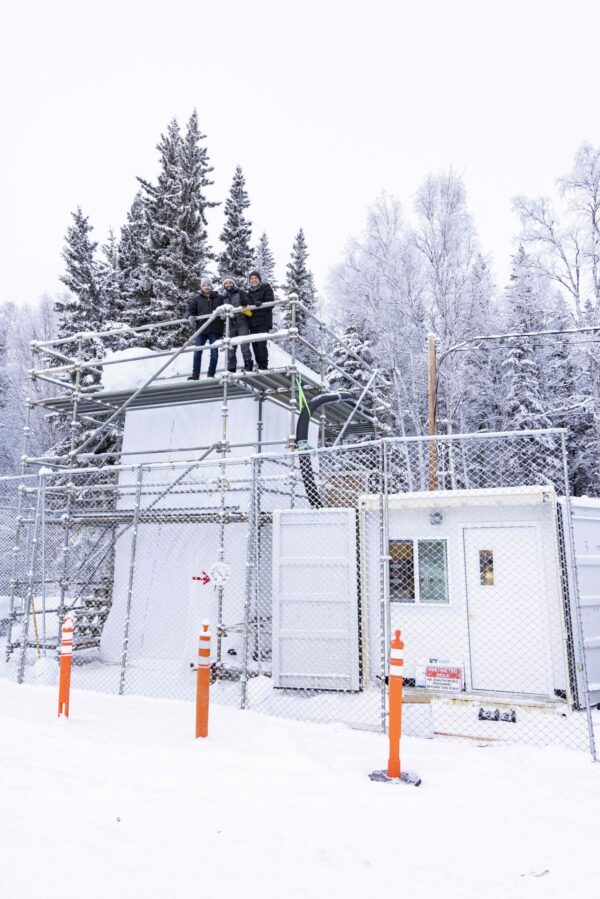
The Alaska Center for Unmanned Aircraft Systems Integration (ACUASI) has established the Supercooled Water Experimental Arctic Tower (SWEAT) to facilitate research on drone icing. Opened in early 2025, this facility allows researchers and students to examine how ice accumulation impacts drone lift and performance in Arctic conditions. The significance of ...

Drone News Drone News Feeds Environmental Research
Boston Dynamics Introduces New Four-Finger Hand for Atlas Humanoid Robot's Industrial Tasks

Boston Dynamics Introduces New Four-Finger Hand for Atlas Humanoid Robot's Industrial Tasks

Boston Dynamics, the robotics division of Hyundai Motor Group, revealed a new four-finger hand for its Atlas humanoid robot on Thursday. This advanced hand is designed to enable Atlas to perform complex and continuous tasks, enhancing its versatility in environments where human tools are used. With 13 degrees of freedom, the hand features pressure-based t...

All News
Honda Investigates Robotics Solutions for Future Commercial Space Station Research

Honda Investigates Robotics Solutions for Future Commercial Space Station Research

Honda is developing a multi-fingered robotic hand integrated with Redwire's STAARK robotic arm to automate experiment handling and research operations in space. This robotics solution is designed to enhance research capacity while minimizing the time crew members spend on laboratory tasks. The collaboration between Honda and Redwire is significant as it a...

Stanford Researcher Develops Robot 'Electronic Skin' in China, Secures Billion-Yuan Funding

Stanford Researcher Develops Robot 'Electronic Skin' in China, Secures Billion-Yuan Funding

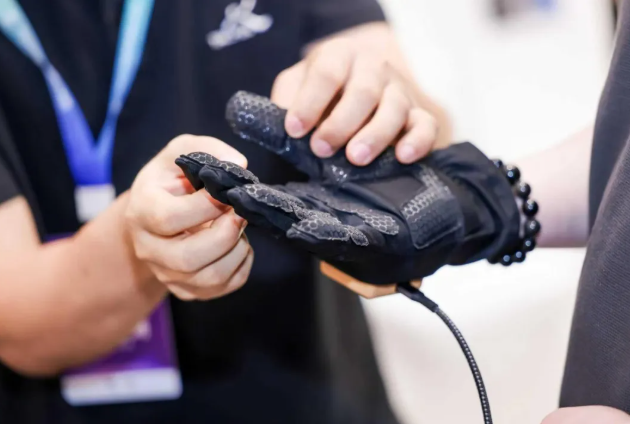
A postdoctoral researcher from Stanford University has returned to China to develop an innovative 'electronic skin' for robots. This technology aims to enhance the sensory capabilities of robots, allowing them to better interact with their environments. The project has successfully secured financing at the billion-yuan level, indicating strong investor co...

Robotics Automation AI
Research Highlights Risks of Smart Systems Including AI, Robotics, and Bioweapons

Research Highlights Risks of Smart Systems Including AI, Robotics, and Bioweapons

Recent discussions have highlighted the risks associated with advanced technologies, including industrial robots, drones, and AI systems. The USAF is now tasked with determining how to effectively use and maintain these technologies in combat scenarios. Meanwhile, ANYbotics has developed robot dogs capable of navigating secured facilities while adhering t...

AI and Robotics
PAL Robotics Unveils TIAGo Pro Arm for Advanced Manipulation and AI Research

PAL Robotics Unveils TIAGo Pro Arm for Advanced Manipulation and AI Research

PAL Robotics has launched the TIAGo Pro Arm, a standalone robotic manipulation platform designed for researchers in robot learning and physical AI. This new system is being showcased at IROS 2026 in Pittsburgh, running from September 27 to October 1. The arm features seven degrees of freedom and is built on ROS 2 and ros_control, incorporating Series Elas...

Siemens on Robots, Agentic AI and the "Last 3%" Problem

Siemens on Robots, Agentic AI and the "Last 3%" Problem

Siemens tells RobotToday at IMTS 2026 why AI robot demos are only the tip of the iceberg, and why agentic AI depends on PLM data and business context.

Industrial Robots
China’s Dexterous Hand Industry, 2026 Part 3 — The Players

China’s Dexterous Hand Industry, 2026 Part 3 — The Players

Five vendor archetypes, MIR’s composite top ten, eight company profiles and six field deployments — every firm linked to the RobotToday supplier directory.

Components and Hardware Humanoids
China’s Dexterous Hand Industry, 2026 Part 1 — The Demand Picture

China’s Dexterous Hand Industry, 2026 Part 1 — The Demand Picture

MIR Databank puts China dexterous hand shipments above 30,000 units in 2026, yet only 3.5% of 2025 demand came from factory production. Part 1 of 3.

Components and Hardware Humanoids

Related Suppliers

BioRobotics Laboratory, Korea University of Technology and Education

South Korean university research laboratory focusing on haptics, exoskeletons, rehabilitation robotics, and autonomous ground vehicles.

McMaster Manufacturing Research Institute

Hamilton, Ontario applied manufacturing research center at McMaster University; runs a 21,000 sq ft facility with seven research labs.

Education & Research Robot Manufacturer Software & Algorithm Provider

Robotics Education & Competition Foundation

The REC Foundation is a US nonprofit that runs VEX-based robotics and drone competitions reaching 1.1 million students across 70 countries.

inJoin the RobotToday community on LinkedIn

Daily robotics news, in-depth analysis, conference highlights, and discussions with professionals worldwide.