

Industry Briefing
A single destination for timely, editor-curated robotics news from around the world.

Hanwha and Magnet Defense to Begin Construction of New MUSV This Fall
Hanwha and Magnet Defense have announced plans to commence construction on a new Medium Unmanned Surface Vehicle (MUSV) this fall. The two companies formalized their collaboration through a memorandum of understanding signed in April, which outlines their commitment to developing this advanced maritime technology. The development of the MUSV is significant as it represents a strategic partnership aimed at enhancing capabilities in unmanned maritime operations. This initiative is expected to contribute to advancements in naval defense technology, reflecting the growing importance of unmanned systems in modern military applications. Looking ahead, testing of the MUSV is scheduled for next year, marking a critical phase in the project. Stakeholders will be keen to monitor the progress of this collaboration and its implications for the defense sector, particularly in the context of increasing investments in unmanned vehicle technologies.
Naval Warfare Drones Hanwha Hanwha Defense USA Magnet Defense MUSV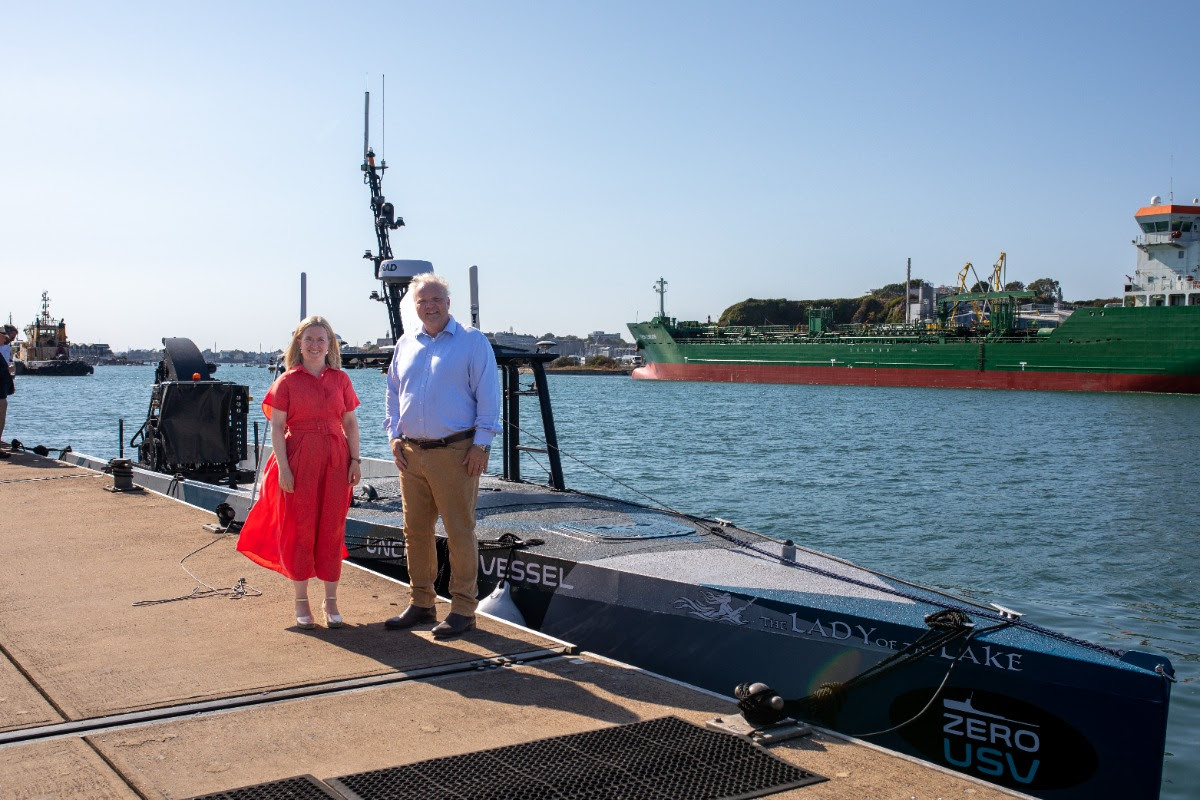
ZeroUSV Unveils Oceanus17 USV Named The Lady of the Lake at Ceremony
ZeroUSV has officially launched its Oceanus17 class unmanned surface vessel (USV), named The Lady of the Lake, during a ceremony at Plymouth’s British National Firework Championships. This vessel signifies a leap in UK maritime innovation, showcasing advanced capabilities for extended missions and multi-tasking operations. The Oceanus17 boasts a payload capacity of 4,000 kg and mission endurance exceeding 50 days, with a top speed nearing 15 knots. This development underscores ZeroUSV's commitment to enhancing the UK's sovereign capabilities in maritime technology, following the successful launch of the Oceanus12 USV just over a year ago. Looking ahead, ZeroUSV aims to continue its trajectory of innovation in the autonomous vessel sector. The integration of advanced technologies, such as level-four autonomous navigation, positions the Oceanus17 as a key player in both defense and commercial maritime operations. No further timeline was disclosed at the time of publication.
zerousv oceanus17 usv official naming ceremony
HII and MetalCraft Marine's Autonomous ROMULUS USV Passes Critical DoW Test for U.S. Navy
HII announced that its autonomous Watcher small Unmanned Surface Vessel (sUSV), based on the ROMULUS-25, has successfully passed a critical test recognized by the U.S. Defense Innovation Unit (DIU). This achievement marks the completion of the Production-Ready, Inexpensive, Maritime Expeditionary (PRIME) prototype project, which aims to develop smaller autonomous vessels for the U.S. Marine Corps. The successful testing of the Watcher sUSV is significant as it meets the operational needs of the Department of the Navy for interceptors capable of autonomous operations in contested waters. HII's Odyssey Autonomous Control System (ACS) enhances the vessel's capabilities, allowing for intelligent navigation and mission planning, which are crucial for modern naval operations. Looking ahead, HII is positioned for a potential transition to production under Other Transaction Authority (OTA) agreements. The company aims to continue delivering innovative autonomous solutions that enhance naval readiness and operational flexibility, as stated by HII's leadership and MetalCraft Marine's General Manager.
hii metalcraft romulus usv autonomy critical dow test
Blue Water Autonomy and Saildrone Sue Navy Over MUSV Marketplace Proposals
Blue Water Autonomy and Saildrone have initiated legal action against the U.S. Navy, asserting that their submissions met the requirements for the new MUSV marketplace. The lawsuits highlight the companies' contention that their proposals were compliant with the Navy's specifications, which is crucial for their competitive positioning in the defense sector. This legal dispute is significant as it underscores the challenges faced by companies in meeting military procurement standards and the implications of such lawsuits on future contracts. The outcome could influence how the Navy evaluates proposals and the overall dynamics of the MUSV marketplace, which is vital for advancing unmanned surface vehicle technologies. As the case unfolds, stakeholders should monitor the Navy's response and any potential changes to the MUSV marketplace criteria. The resolution of this dispute may set precedents for future engagements between defense contractors and military branches, impacting the broader landscape of defense procurement.
Naval Warfare Blue Water Autonomy Drones MUSV Navy Saildrone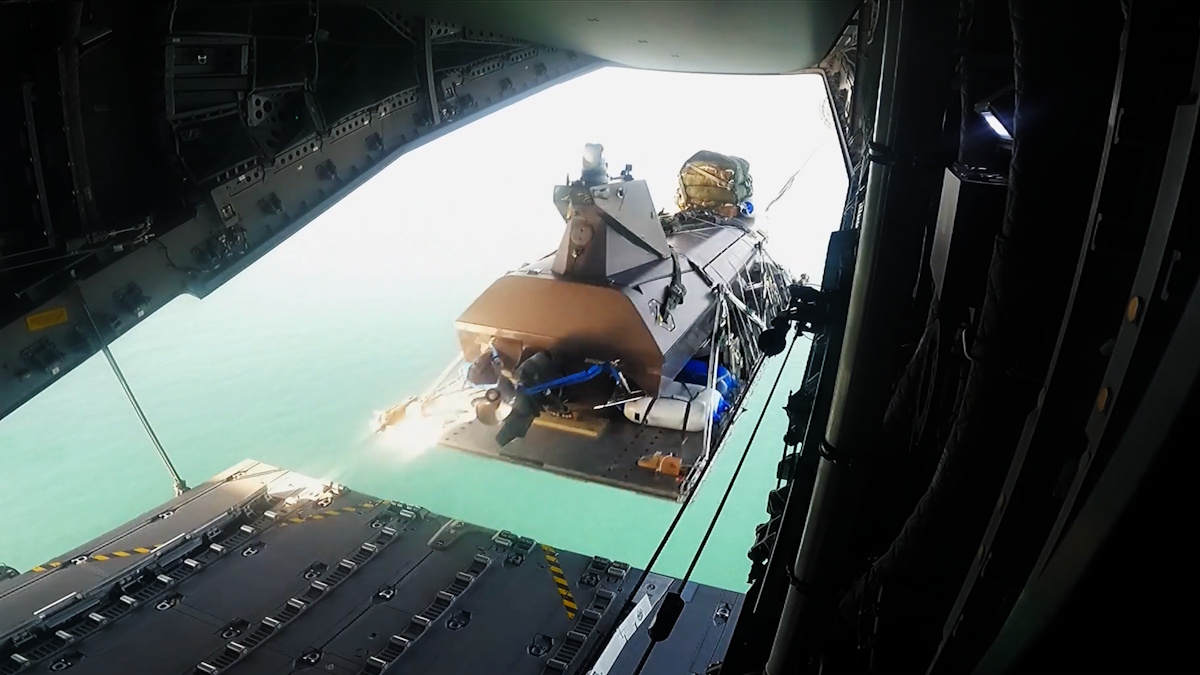
Kraken and Capewell Achieve First USV Airdrop from A400M Aircraft
Kraken Technology Group and Capewell, in collaboration with the Royal Navy, have successfully executed the world's first airdrop of an uncrewed surface vessel (USV) from an A400M military transport aircraft. This milestone was achieved during trials where the K3 SCOUT USV was deployed from 1,300 feet into waters with Sea State 4 conditions, demonstrating a new capability for rapid insertion of maritime vessels into challenging environments. The significance of this achievement lies in its potential to enhance military operations by allowing for quick deployment of high-performance USVs in contested areas. The trials utilized Kraken's K3 SCOUT airdrop kit and Capewell's Universal Maritime Craft Aerial Delivery System (UMCADS), showcasing a new IN-Release system that ensures reliable load disconnect across various applications, thereby improving operational flexibility and response times. Looking ahead, Kraken and Capewell plan to further develop their partnership to enhance operational capabilities with their modular platforms. No further timeline was disclosed at the time of publication, but the successful completion of four live airdrops in six days indicates a strong foundation for future advancements in USV deployment strategies.
usv airdrop kraken technology group capewell royal navy project beehive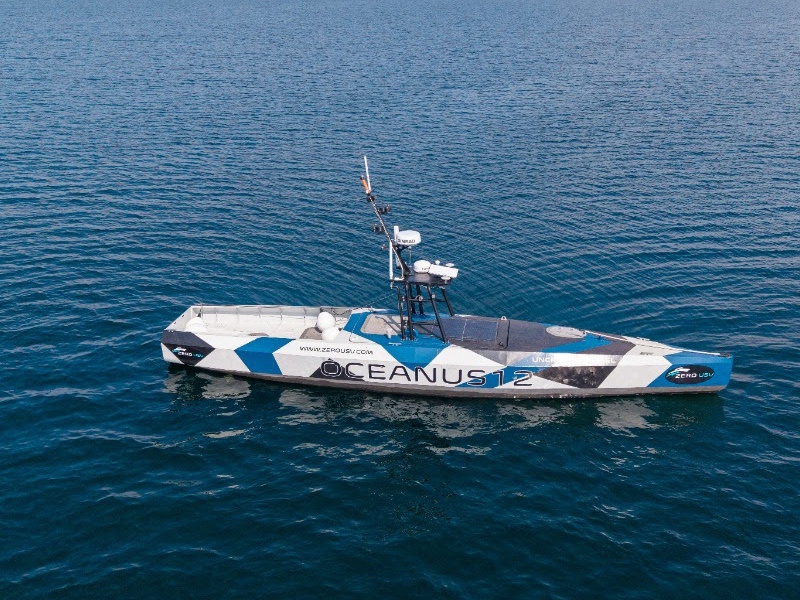
ZeroUSV Showcases Oceanus12 Uncrewed Surface Vessel to Royal Danish Navy
ZeroUSV recently showcased its Oceanus12 uncrewed surface vessel (USV) to the Royal Danish Navy in a demonstration held two hours northwest of Copenhagen, Denmark. This event was part of a competitive selection process by Danish Defence, aimed at evaluating the capabilities of the Oceanus12 USV over two days. The demonstrations highlighted the ease of mobilization and logistics involved in deploying the Oceanus12, showcasing its modular payload capabilities for various defense and security missions. Matthew Ratsey, Managing Director of ZeroUSV, expressed pride in being selected to demonstrate the platform, emphasizing its technological maturity and versatility for different mission roles. These demonstrations are part of ZeroUSV's ongoing international engagement efforts as the company seeks to expand its uncrewed maritime capabilities within allied defense markets. No further timeline was disclosed at the time of publication.
zerousv demo oceanus12 royal danish navy usv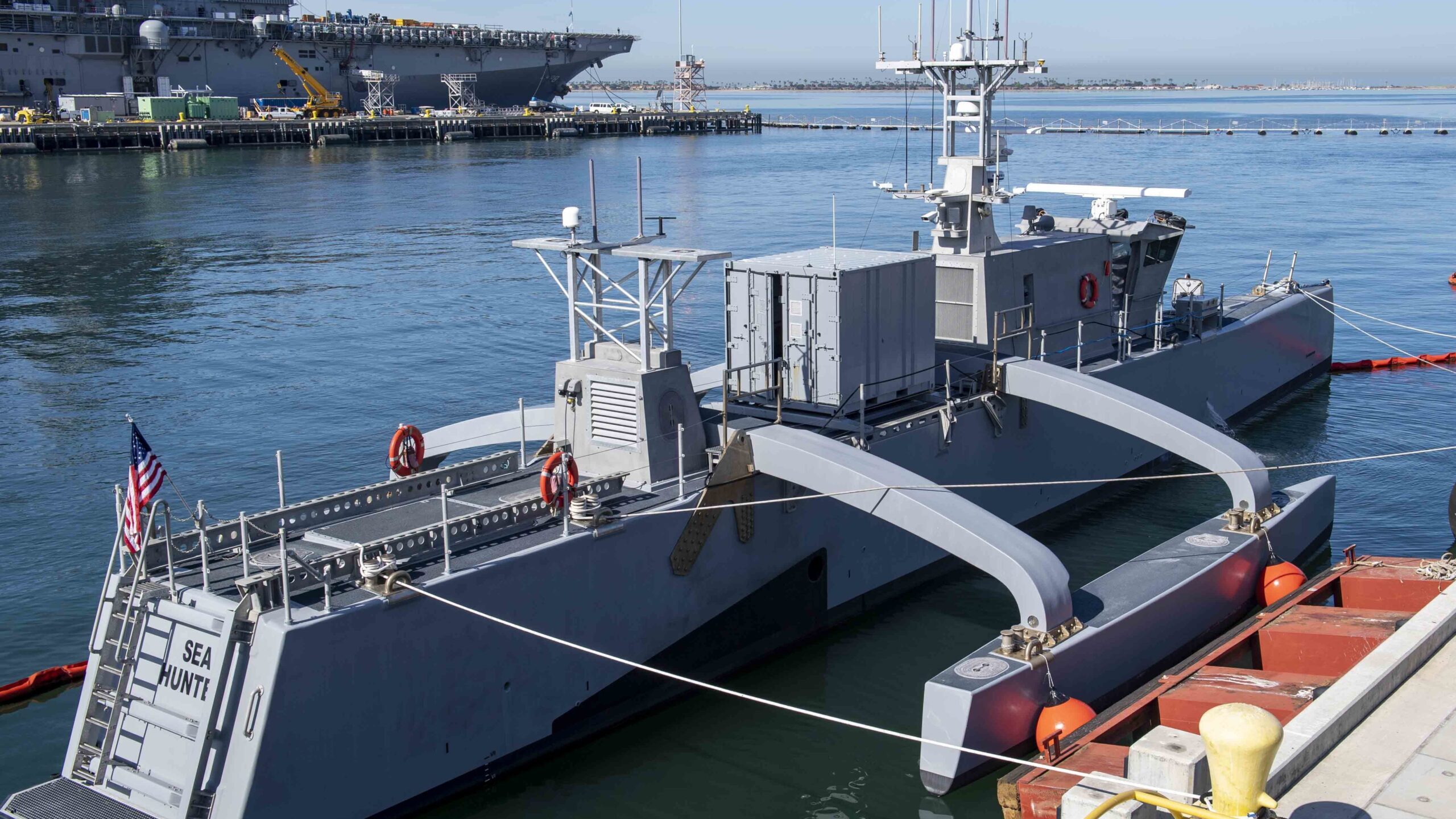
Navy to Acquire 30 Medium Unmanned Surface Vessels After Successful Testing
The Navy has announced plans to purchase 30 medium unmanned surface vessels (MUSVs) from Galliano Marine Services, Huntington Ingalls Industries, and Saronic Technologies. This decision follows successful at-sea testing and is part of the Navy's new MUSV marketplace initiative. Each MUSV is estimated to cost around $40 million, with deliveries expected by the end of fiscal 2027. This acquisition is significant as it reflects the Navy's commitment to streamlining procurement processes to enhance operational capabilities for its personnel. Acting Secretary of the Navy Hung Cao emphasized the urgency of delivering these systems to ensure that warfighters are equipped to meet emerging threats. The MUSV marketplace aims to facilitate the procurement of production-ready platforms, showcasing a shift in how the Navy approaches defense acquisitions. Looking ahead, the Navy is entering Phase II of the MUSV program, which will involve integrating and testing additional options for the vessels. The service has published a solicitation for this phase, indicating a desire for vessels that can operate unmanned for at least 10 days and carry a payload of two standard 20-foot shipping containers. No further timeline was disclosed at the time of publication.
Naval Warfare Drones HII Hung Cao Leidos Navy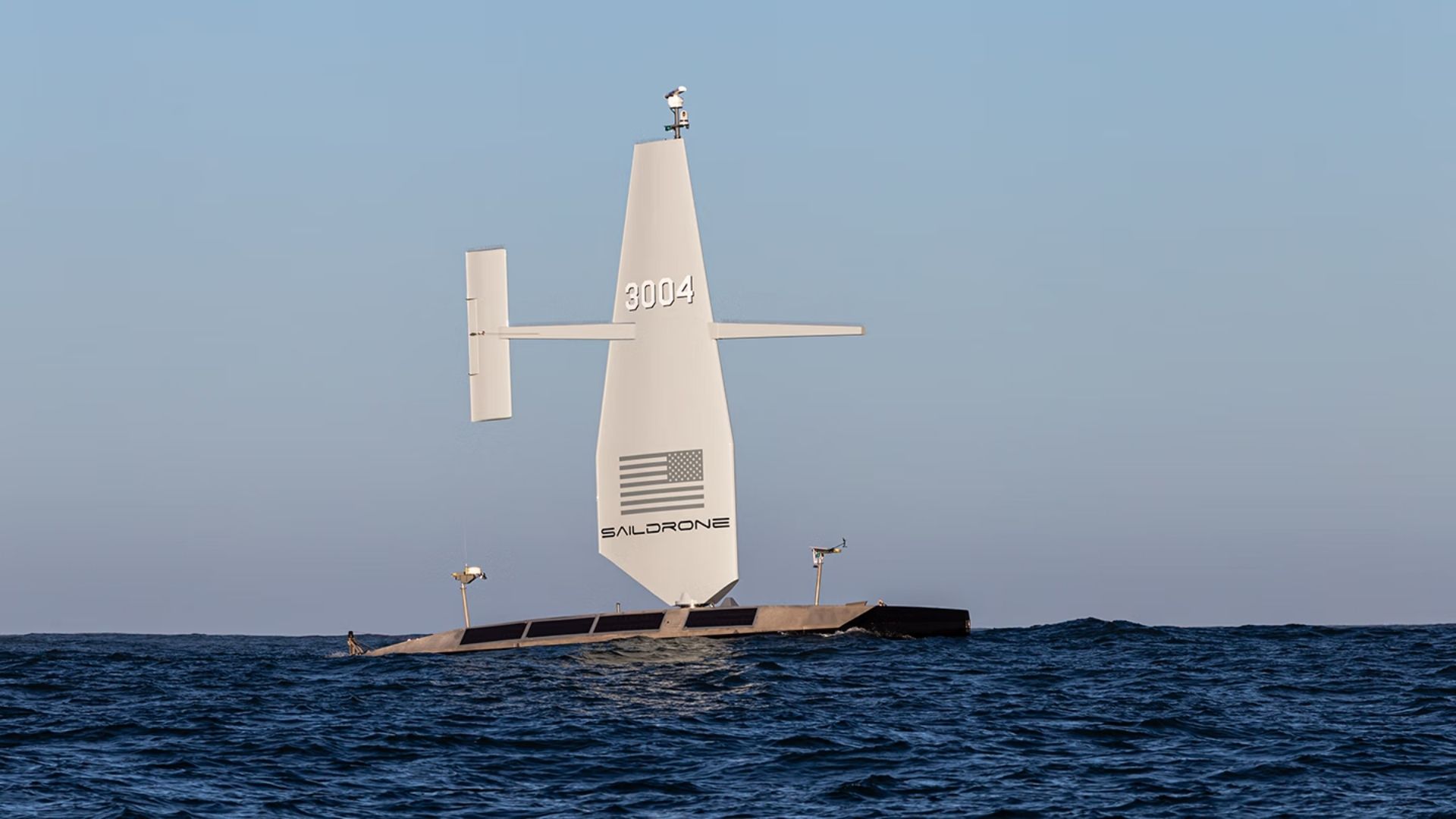
US Navy Awards $10 Million to Saildrone for Atlantic Seabed Mapping with USVs
The US Navy has awarded a $10 million contract to Saildrone to utilize autonomous vessels for mapping the Atlantic Ocean floor. This initiative, assigned by the Naval Oceanographic Office, is set to commence in 2026 and will continue through most of 2027, enhancing military knowledge of critical underwater terrain. This project is significant as it aims to improve safe navigation and support submarine missions, anti-submarine warfare, and critical infrastructure protection. Currently, only 28.7 percent of the world's oceans have been mapped to modern standards, leaving substantial knowledge gaps that can pose operational risks for naval operations. Looking ahead, the deployment of Saildrone's Surveyor unmanned surface vessels will not only provide high-resolution bathymetric data but also measure ocean currents, aiding search-and-recovery operations. No further timeline was disclosed at the time of publication.
Military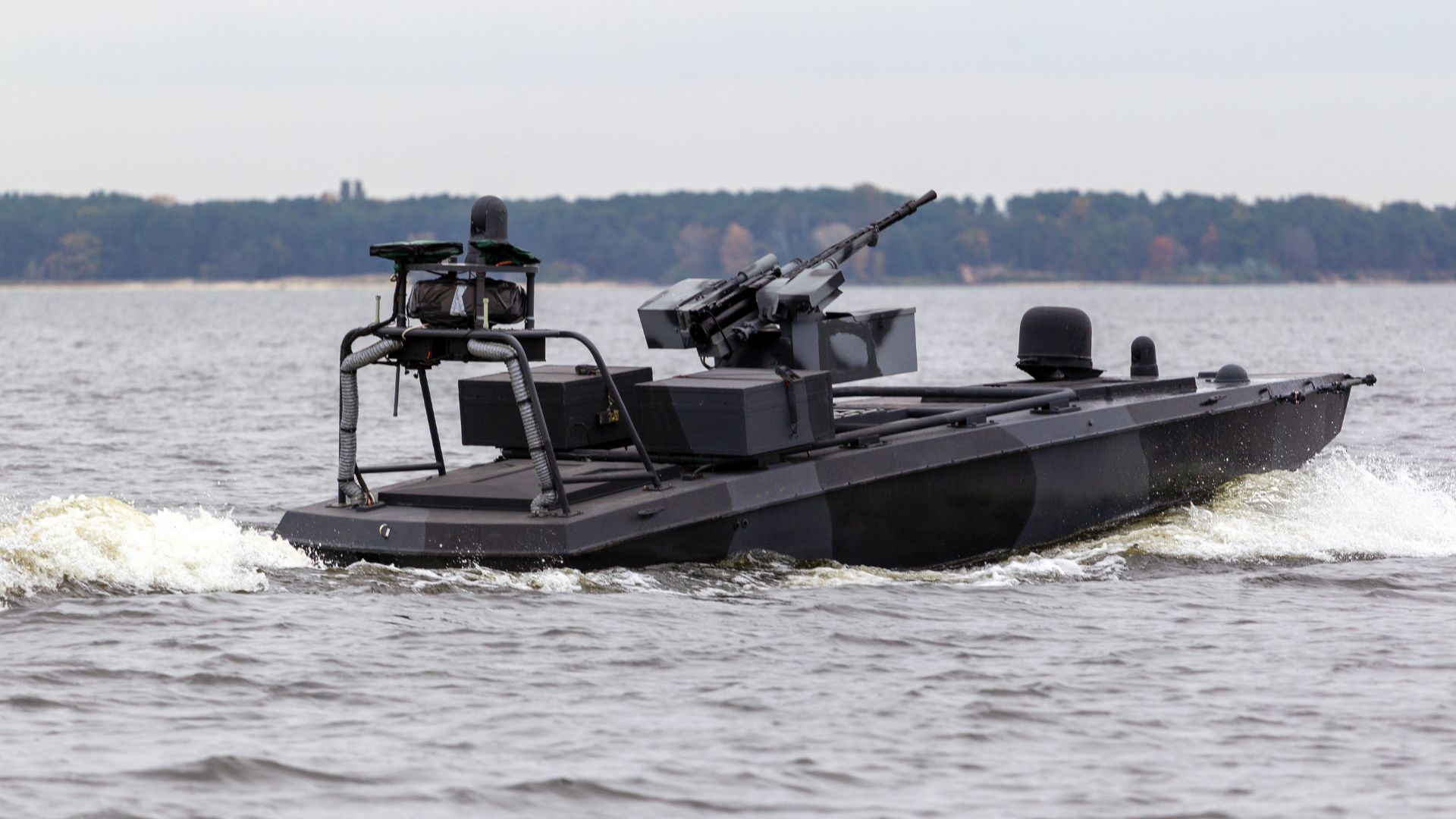
Ukraine's Sargan-3000 USV Engages and Destroys Russian Naval Drone in Historic Battle
On September 12, a Ukrainian unmanned surface vessel (USV) successfully destroyed a Russian naval drone in the Black Sea, marking the first combat between two unmanned boats, according to Ukraine's Navy. The operation involved Ukraine's military intelligence agency, HUR, which identified the Russian vessel prior to the attack by the Sargan-3000 USV, equipped with a 12.7-mm Protector remote weapon station. This incident signifies a pivotal moment in the ongoing Russia-Ukraine War, as both nations increasingly utilize naval drones to target maritime assets. The Ukrainian Navy highlighted the significance of this engagement, stating it represents a new phase in naval warfare. The Russian drone, identified as an improved Orcan type, was designed for explosive attacks and has been actively used against Ukrainian ports and naval targets. Looking ahead, the use of unmanned naval vessels is expected to escalate as both sides adapt to this new combat dynamic. The Sargan-3000, also known as SeaWolf, is a versatile platform capable of various operational roles, including strike missions and electronic warfare. No further timeline was disclosed at the time of publication.
Military
Seasats Secures $24 Million in Orders for Lightfish USVs to Enhance Military Surveillance
Seasats, based in New Zealand, has reported securing $24 million in funded orders for its Lightfish unmanned surface vessel (USV) in August and early September. These orders include boats for the US Navy and Marine Corps, indicating a rising demand for small, long-endurance USVs among military users. The Lightfish, an 11-foot solar-powered drone boat, is designed for Intelligence, Surveillance, and Reconnaissance (ISR) missions. Its ability to operate autonomously for extended periods allows military forces to monitor vast maritime areas without deploying crewed vessels, thus providing a cost-effective solution for persistent maritime awareness. Looking ahead, Seasats aims to expand its offerings through its robot-as-a-service (RaaS) model, which allows military customers to utilize the USVs without the need for extensive maintenance and training infrastructure. No further timeline was disclosed at the time of publication.
Innovation Military
Ocius Technology Integrates ThayerMahan and Thales Australia Sonar Systems for BlueBottle USVs
Ocius Technology has finalized agreements to incorporate advanced sonar systems from ThayerMahan and Thales Australia into its fleet of Bluebottle uncrewed surface vessels (USVs). The integration includes retractable thin-line acoustic arrays aimed at enhancing intelligence, surveillance, and reconnaissance (ISR) capabilities for the Royal Australian Navy's AUD$176 million Program of Record. This collaboration is significant as it combines Australian maritime technology with advanced acoustic sensing capabilities from the United States, demonstrating a practical application of the AUKUS Pillar II initiative. The deployment of these systems will support ongoing operations for the Australian Maritime Border Command, enhancing maritime surveillance and border protection. Looking ahead, Ocius plans to leverage the adaptable design of the Bluebottle platform to meet diverse mission requirements. No further timeline was disclosed at the time of publication.
ocius thayermahan thales bluebottle usv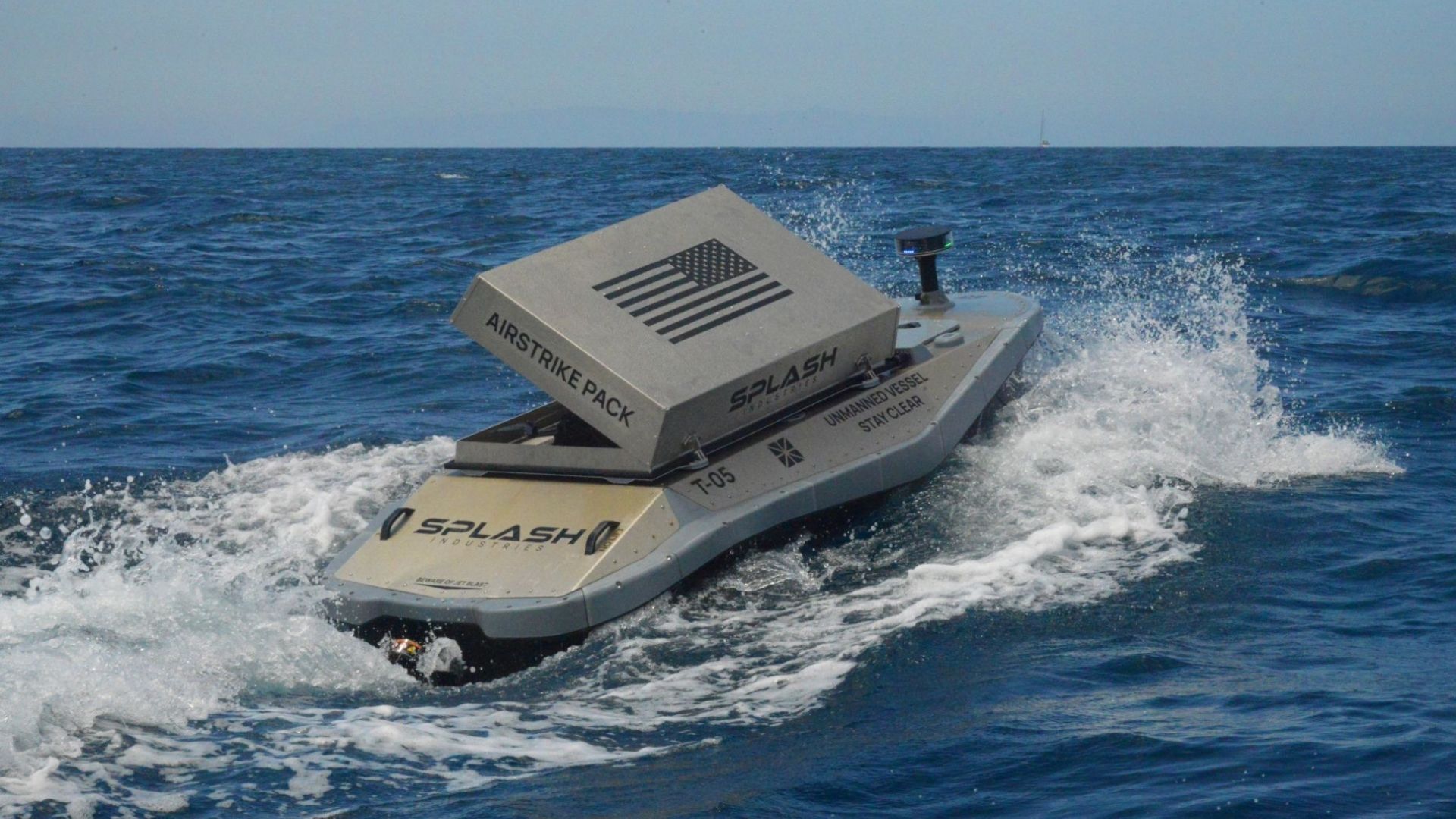
Splash Industries Enhances Typhoon USV with Airstrike Pack for Drone Launching
Splash Industries has introduced the Airstrike Pack, a modular payload for its Typhoon uncrewed surface vessel (USV), enabling the launch of one-way aerial drones from the sea. This innovation enhances the vessel's capabilities for missions such as maritime surveillance and cargo delivery, allowing drones to be deployed closer to operational areas. The significance of this development lies in its potential to streamline drone operations, as the Typhoon USV can carry aerial drones and launch them at the press of a button using Splash's proprietary Splash C2 command-and-control software. The Airstrike Pack exemplifies the trend of integrating autonomous systems across different domains, providing a cost-effective UAV deployment solution. Looking ahead, the Typhoon's operational range exceeds 600 nautical miles, and its speed capabilities make it suitable for various missions. The recent demonstration of the Typhoon's autonomous resupply of a US Navy warship further showcases its versatility. No further timeline was disclosed at the time of publication.
Military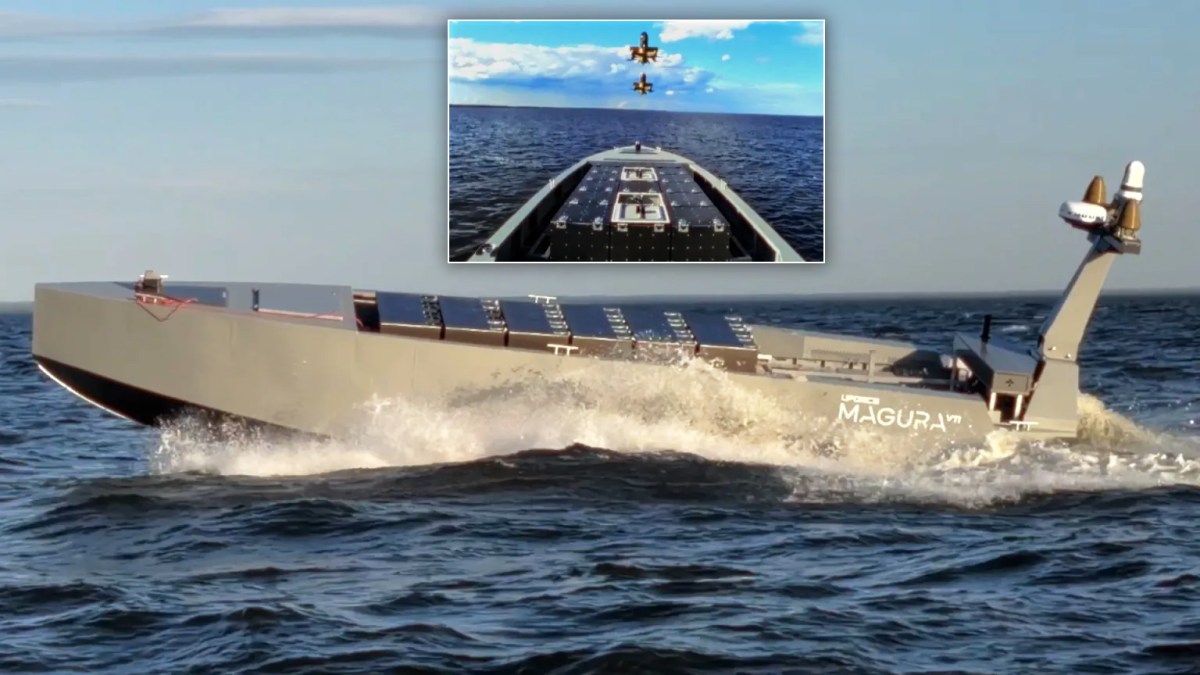
Ukraine Unveils MV11: A Large Uncrewed Surface Vessel with Anti-Drone Capabilities
Ukraine has introduced the MV11, the largest member of its Magura family of uncrewed surface vessels (USV), designed for open-ocean operations. This vessel can carry payloads up to 4,850 pounds and has been showcased with 18 Sting interceptors, enhancing its role as a counter-drone platform. The MV11's capabilities are significant for Ukraine's military strategy, allowing for multi-domain operations and the launch of unmanned systems from a distance. Its debut at Ukraine's Independence Day parade highlights the increasing importance of uncrewed systems in the Ukrainian armed forces. Looking ahead, the MV11's operational effectiveness and integration with existing systems will be crucial. The specifics of its target detection and tracking capabilities remain unclear, but its design suggests potential for advanced operational roles in future missions. No further timeline was disclosed at the time of publication.
Sea Around The Globe Europe News & Features Ukraine Unmanned Surface Vessels (USVs)
Cybersecurity Risks Emerge from Chinese Components in Royal Navy's Kraken USVs
Recent reports indicate that Chinese-made components in the cameras of the U.K. Royal Navy's Kraken Unmanned Surface Vessels (USVs) were transmitting data to a device in China. The U.K. Ministry of Defense confirmed the issue, which arose during a routine cyber vulnerability assessment, prompting the removal of internet connectivity from the affected cameras. This situation underscores significant cybersecurity risks associated with military supply chain vulnerabilities, particularly concerning Beijing's potential access to sensitive Western defense technology. The Kraken K3 Scout USVs, valued at approximately $16.2 million, were introduced into Royal Navy service in March and are utilized by the Coastal Forces Squadron and 47 Commando of the Royal Marines. Looking ahead, the Royal Navy's USVs are expected to be deployed to the Persian Gulf to support U.K. special forces in securing navigation in the Strait of Hormuz. The Ministry of Defense has stated that it prioritizes national security and is committed to ongoing security assessments to mitigate vulnerabilities in its systems and equipment. No further timeline was disclosed at the time of publication.
Sea Espionage Navies News & Features Royal Navy Unmanned Surface Vessels (USVs)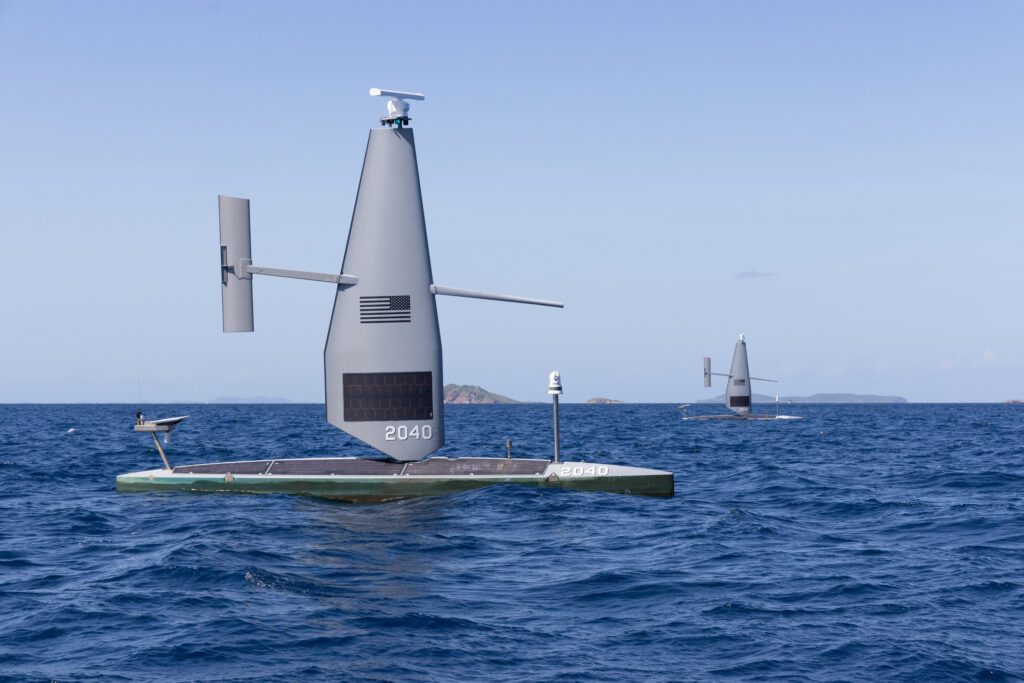
U.S. Navy Utilizes Saildrone Voyager USVs to Seize $81 Million in Cocaine
A Saildrone Voyager unmanned surface vehicle (USV) assisted the U.S. Navy in tracking and intercepting a suspected drug-smuggling vessel in the Caribbean, resulting in the seizure of approximately $81 million worth of cocaine on October 16, 2025. This operation highlights the transition of autonomous maritime systems from experimental platforms to essential tools for real-world security missions. The successful interception underscores the operational capabilities of Saildrone Voyager USVs, which can remain at sea for extended periods, enabling continuous monitoring of vast maritime areas. This capability reduces reliance on crewed vessels and supports the U.S. Navy's counter-narcotics mission in the Caribbean and Eastern Pacific, coordinated by Joint Interagency Task Force South (JIATF-S). Looking ahead, the Navy has awarded Saildrone a $16.3 million task order to continue operating Voyager USVs through 2027. This mission not only demonstrates the effectiveness of unmanned systems in maritime surveillance but also indicates a broader trend of integrating autonomous platforms into naval operations, enhancing mission effectiveness and operational reach.
Applications Defense Drone News Drone News Feeds News safety and security
Navy Extends Saildrone's Counter-Drug Mission with Voyager USVs in Caribbean and Eastern Pacific
The U.S. Navy has renewed its task order for Saildrone, extending the deployment of Voyager unmanned surface vehicles (USVs) in the Caribbean and Eastern Pacific regions. This extension aims to enhance maritime surveillance and counter-drug operations in these critical areas. The significance of this mission lies in the Navy's commitment to combating drug trafficking and ensuring maritime security. By utilizing advanced technology like the Voyager USVs, the Navy can effectively monitor vast ocean areas, making it a vital asset in the fight against illegal drug activities. Looking ahead, the continued operation of Voyager USVs will be crucial in maintaining a strong presence in the Caribbean and Eastern Pacific. No further timeline was disclosed at the time of publication.
Naval Warfare Adm. Daryl Caudle Caribbean Sea Drones Eastern Pacific Navy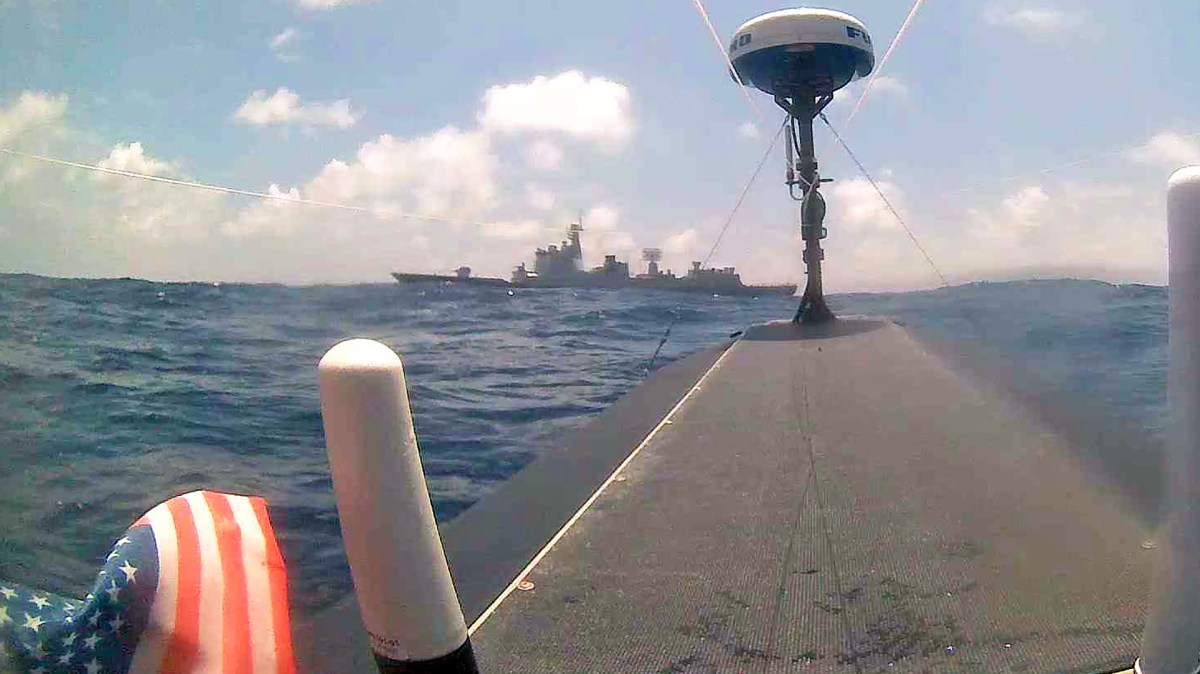
Seasats' Lightfish USV Encounters Chinese Destroyer, Raising Engagement Rule Concerns
A Lightfish uncrewed surface vessel (USV) owned by Seasats had a notable encounter with a Chinese Type 052D guided missile destroyer near the Philippines. The incident, reported by Reuters, occurred approximately 73 miles northeast of Luzon Island, highlighting the increasing presence of USVs in strategic maritime areas. This encounter underscores the potential risks posed by USVs to advanced naval vessels, raising critical questions about the rules of engagement for navies and merchant ships operating in contested regions. The Luzon Strait, a vital waterway, could become a focal point for future conflicts, particularly in the context of tensions surrounding Taiwan. The Lightfish USV, which can operate for extended periods thanks to its solar-powered hybrid system, tracked the Chinese destroyer from a distance of about 10 nautical miles. While the destroyer took evasive action upon noticing the USV, the intent behind the encounter remains unclear. No further timeline was disclosed at the time of publication.
Sea Destroyers Navies People's Liberation Army Navy (China) Unmanned Surface Vessels (USVs)
ACUA Ocean and Teledyne FLIR Defense Complete UKDI Funded Demonstration of Integrated Tethered UAS and USV
ACUA Ocean and Teledyne FLIR Defense have successfully conducted a two-day demonstration funded by UK Defence Innovation (UKDI). This event showcased the integration of a tethered uncrewed aerial system (T-UAS) and an uncrewed surface vessel (USV) capability, specifically using Teledyne FLIR’s SkyCarrier™ UAS platform and the USV Pioneer. The demonstration validated the operational performance of the combined system in open-ocean conditions, addressing a critical operational gap for the Royal Navy and UK defence. The USV Pioneer, which has already completed multiple ISR contracts, exhibited superior seakeeping capabilities, significantly enhancing maritime intelligence, surveillance, and reconnaissance. Looking ahead, the successful integration of the T-UAS with the USV Pioneer opens avenues for further development and potential commercial deployment. No further timeline was disclosed at the time of publication.
acua ocean teledyne flir defense ukdi funding demonstration tethered uas uncrewed surface vessel (usv)
OMS Advances Sea Acceptance Tests for USV Elite, Validating Deepwater Survey P Capability and Long-range Endurance
OMS Group (OMS) has announced significant progress in the Sea Acceptance Tests (SAT) for its long-range DriX O-16 Uncrewed Surface Vessel (USV), taking place off the southern coast of France. The ongoing tests are showcasing remarkable seakeeping abilities and promising initial results regarding the vessel's deepwater multibeam echosounder performance. This development aligns with OMS's strategic objective to enhance and expand its long-range uncrewed survey capabilities on a global scale.
oms group sea acceptance tests usv deepwater survey long-range endurance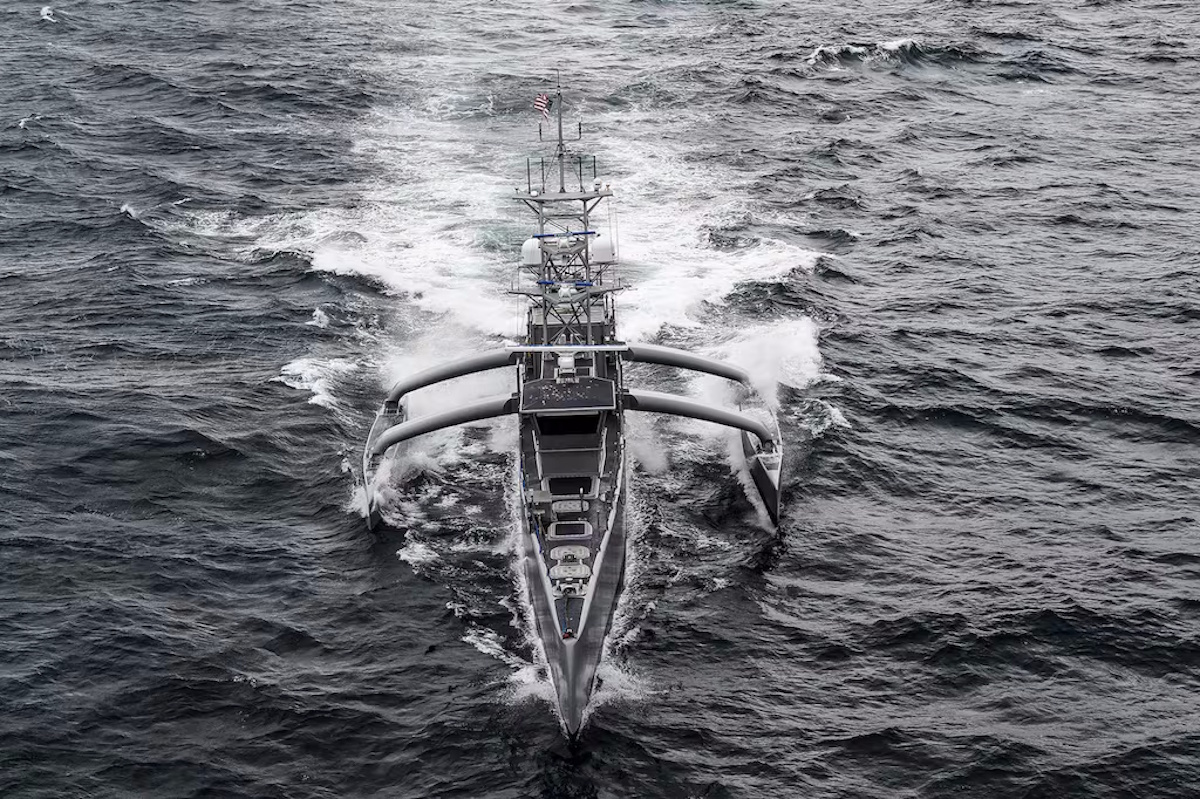
U.S. Navy Announces Seven Companies Selected for MUSV Marketplace At-Sea Demonstrations
The Department of the Navy has announced the selection of seven companies to proceed to the at-sea testing phase for the Medium Unmanned Surface Vessel (MUSV) marketplace. This decision, made public today, marks a significant step in the development of advanced maritime technologies aimed at enhancing naval operations. The selected companies will now engage in rigorous testing to evaluate the performance and capabilities of their unmanned surface vessels. This initiative is part of the Navy's broader strategy to integrate innovative solutions into its fleet, ultimately improving operational efficiency and mission effectiveness.
u.s. navy musv marketplace at-sea demonstrations
Navy tests MUSV autonomous control and payload architecture across seven prototypes
The US Navy has approved seven submissions for medium unmanned surface vessels (MUSVs) as part of its ongoing efforts to enhance maritime capabilities. This decision, announced recently, marks a significant step in the Navy's initiative to integrate advanced unmanned technologies into its fleet. The approvals come in response to the increasing demand for innovative solutions to address modern naval challenges, including surveillance and reconnaissance missions. By incorporating these unmanned vessels, the Navy aims to improve operational efficiency and reduce risks to personnel. The selected submissions will now move forward in the development process, with the Navy collaborating closely with the respective contractors to ensure successful implementation. This initiative underscores the Navy's commitment to leveraging cutting-edge technology to maintain its strategic advantage in maritime operations.

BeyonC and HydroSurv Target Subsea Survey Market with Integrated USV-ROV Solution
HydroSurv and BeyonC have reached a significant agreement to provide a REAV-60 Uncrewed Surface Vessel (USV), specifically designed for the deployment and operation of BeyonC’s advanced Syncro pipeline survey remotely operated vehicle (ROV). This collaboration, finalized recently, aims to enhance the efficiency and sustainability of shallow-water subsea surveys by introducing a scalable, low-emission operating model. The partnership underscores a commitment to advancing technology in marine operations while addressing environmental concerns.
beyonc hydrosurv subsea survey integrated usv-rov solution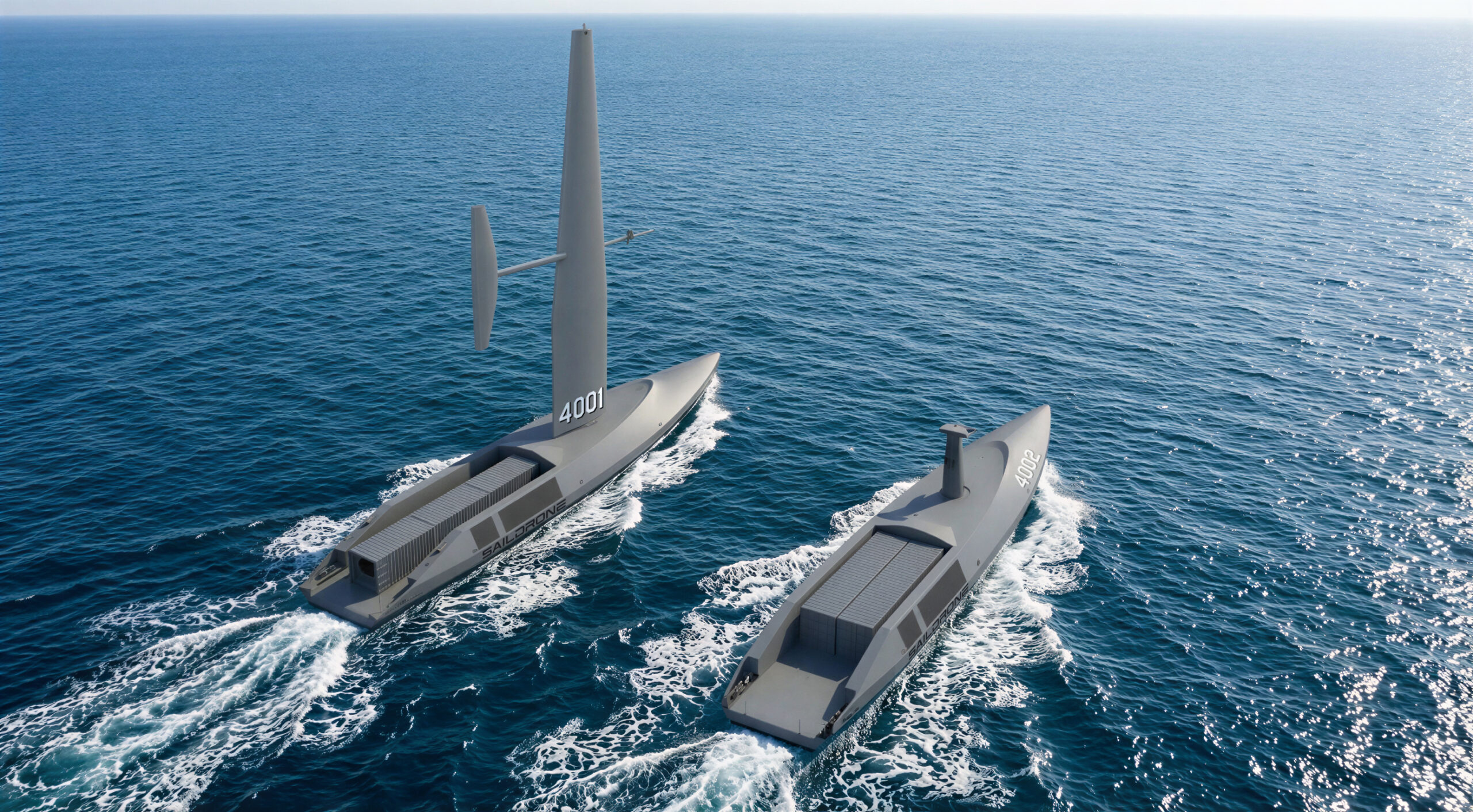
Navy green lights seven MUSV marketplace submissions to advance to prototype phase
The U.S. Navy has announced that it has selected certain designs to advance in its ongoing procurement process, although specific companies involved have not been disclosed. This decision is part of the Navy's efforts to enhance its capabilities and modernize its fleet. The announcement comes as the Navy seeks to address evolving maritime challenges and improve operational readiness. The selection process is expected to play a crucial role in shaping future naval operations and ensuring that the Navy remains competitive in a rapidly changing defense landscape. Further details regarding the selected designs and the companies behind them are anticipated in the coming weeks.
Naval Warfare Drones Medium Unmanned Surface Vessel MUSV Navy
ZeroUSV Demonstrates UK Sovereign Maritime Capability During VIP Tour
ZeroUSV recently hosted representatives from the Royal Navy, the Ministry of Defence (MOD), and the National Shipbuilding Office (NSO) at Manor Marine’s headquarters in Portland. The VIP tour highlighted the company's advancements in autonomous maritime technology. This visit comes on the heels of ZeroUSV's strategic investment in Manor Marine, which aims to enhance collaboration and increase the UK's production capacity for its Oceanus class uncrewed surface vessels (USVs). The partnership is expected to bolster the UK’s sovereign capabilities in maritime defense and innovation.
zerousv demo vip tour manor marine mod royal navy
USVs could be ‘alternate options’ for missions for stretched manned fleet: Navy official
Unmanned Surface Vessels (USVs) are increasingly being recognized as versatile components of naval operations, particularly in scenarios where deploying a large combatant ship may be prohibitively expensive or tactically excessive. This shift in naval strategy reflects a growing trend among military forces to utilize USVs for a variety of missions, including surveillance, reconnaissance, and logistical support. As nations seek to enhance their maritime capabilities while managing costs, the adoption of these modular systems is expected to rise. The integration of USVs into naval fleets allows for more flexible and efficient responses to maritime challenges, enabling forces to maintain operational readiness without the financial burden of traditional vessels. This evolution in naval warfare underscores the importance of innovation in military technology and strategy, as armed forces adapt to modern threats and operational demands.
Naval Warfare Arleigh Burke AUVSI/MDEX 2026 Drones Navy USV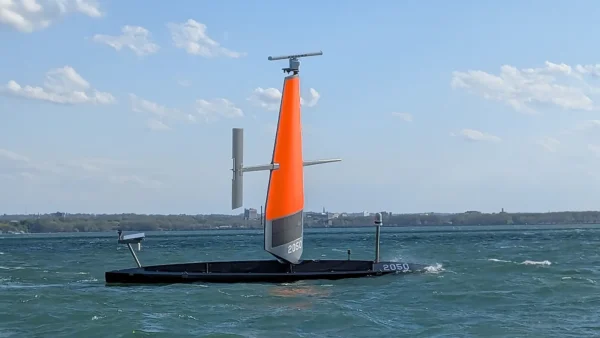
Saildrone Deploys 16 Voyager USVs for Coast Guard Great Lakes Mission
Saildrone, an autonomous maritime company based in Alameda, California, has announced the deployment of 16 Voyager unmanned surface vehicles (USVs) to enhance surveillance capabilities for the US Coast Guard. This initiative, which is part of a $15.5 million contract, aims to support Coast Guard missions across the Great Lakes and the Northeast. The deployment was officially announced on May 11, 2026, marking a significant step in the integration of advanced technology into maritime operations. The use of these unmanned vehicles is intended to improve monitoring and response efforts in these vital waterways, reflecting the Coast Guard's commitment to maintaining safety and security in the region.
Drone News Drone News Feeds News ocean safety and security seadrones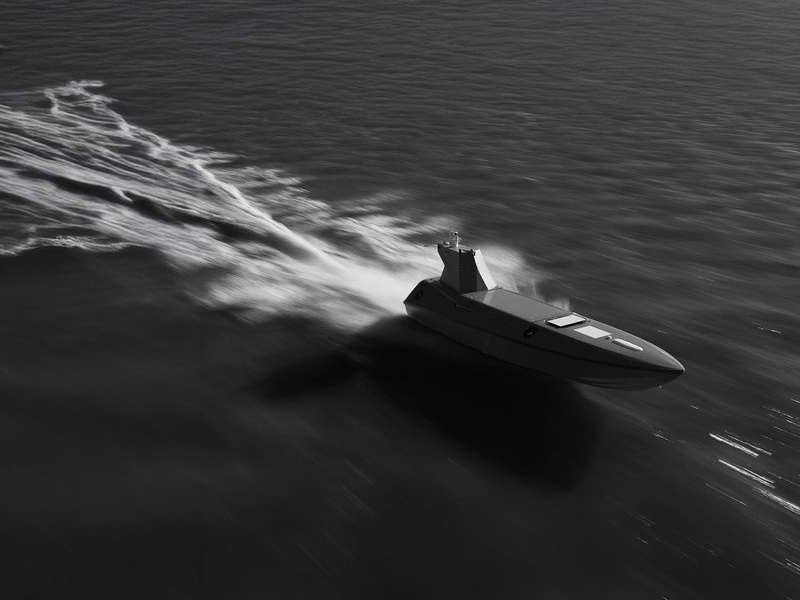
Anduril Partners with Kraken Technology Group on Small USVs
Recent developments in naval warfare have highlighted the critical need for advanced unmanned systems, as traditional strategies are becoming obsolete. The U.S. Navy, facing evolving threats, is seeking small unmanned surface vessels (USVs) capable of carrying flexible payloads over 1,000 pounds, sustaining prolonged operations, and being produced quickly. Navy Secretary John Phelan emphasized this urgency during a Senate Armed Services Committee hearing, stating that future conflicts cannot be won with outdated platforms. He underscored the importance of rapidly producing and integrating unmanned systems across air, surface, and subsurface domains to ensure success in modern warfare. The current domestic offerings, however, do not meet these requirements, prompting a reevaluation of the Navy's capabilities and production strategies.
anduril partnership kraken technology group small usvs
HII Accelerates ROMULUS USV Program: Four New ROMULUS Vessels Head into Production
HII, the largest military shipbuilder in the United States and a leader in autonomous maritime systems, has unveiled plans to produce four additional ROMULUS 151 vessels. This announcement was made today, with the construction set to take place at Breaux Brothers Enterprises in Louisiana. This expansion comes alongside the ongoing construction of an existing ROMULUS 151 vessel, highlighting HII's commitment to enhancing its fleet of advanced maritime technology. The initiative aims to bolster the company's capabilities in autonomous systems, reflecting the growing demand for innovative naval solutions.
hii romulus usv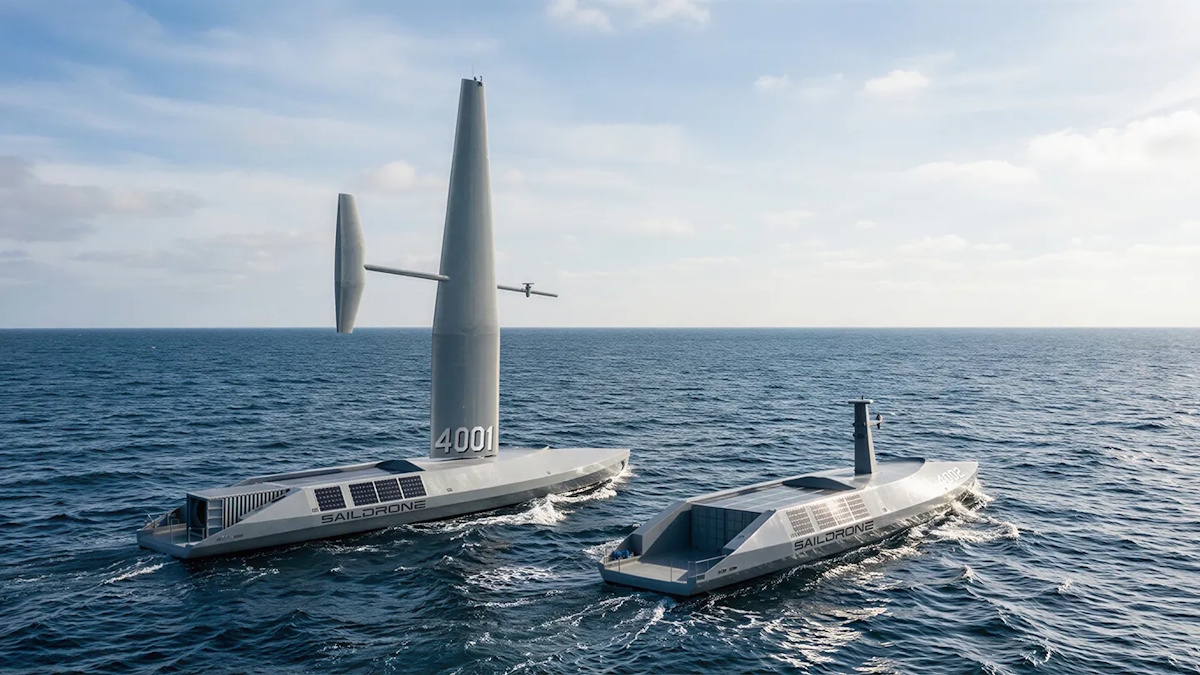
Introducing Saildrone Spectre: Next-generation USV for Anti-submarine Warfare and VLS Strike
The US Navy is grappling with significant challenges in upholding maritime dominance amid escalating global conflicts. As tensions rise in various regions, adversaries are increasingly focusing on strategically vital waterways and essential undersea infrastructure. The Navy's traditional reliance on episodic patrols by manned warships and capital assets proves inadequate for the continuous presence required to safeguard these expansive maritime areas. This situation underscores the urgent need for a more sustainable and effective operational strategy to address the evolving threats in the maritime domain.
saildrone spectre usv anti-submarine warfare (asw) vls strike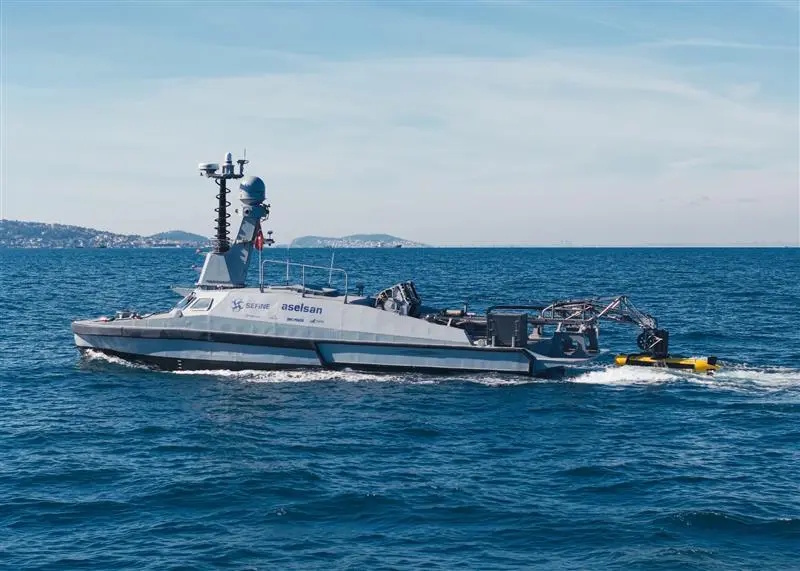
Kraken Robotics Demonstrates KATFISH Autonomous Launch and Recovery from SEFINE USV
Kraken Robotics has successfully integrated and demonstrated its KATFISH towed synthetic aperture sonar system along with an autonomous launch and recovery system (LARS) aboard SEFINE’s RD-22 unmanned surface vessel (USV). This significant event occurred in the first quarter of 2026 off the coast of İstanbul, Türkiye. The collaboration with SEFINE SISAM, the Strategic Unmanned Systems Research Center, highlights the advancements in maritime technology and aims to enhance operational capabilities in underwater exploration and surveillance. The integration of these systems marks a notable achievement in the field of unmanned maritime operations, showcasing Kraken Robotics' commitment to innovation and collaboration in the industry.
kraken robotics katfish autonomous launch and recovery sefine usv
SeaRush Takes a Step Towards Scalable 3D-Printed USVs
MARIN has successfully completed the initial on-water tests of its prototype SeaRush Uncrewed Surface Vessel (USV) in the Rijnhaven area of Wageningen. This significant milestone marks the evolution of the design into a functional floating test platform for uncrewed maritime systems, achieved within a span of five months. The tests aim to advance the development of autonomous vessels, which are expected to enhance efficiency and safety in maritime operations. By conducting these trials in a controlled environment, MARIN is exploring the vessel's capabilities and performance, paving the way for future innovations in the field of uncrewed maritime technology.
searush 3d-printing usv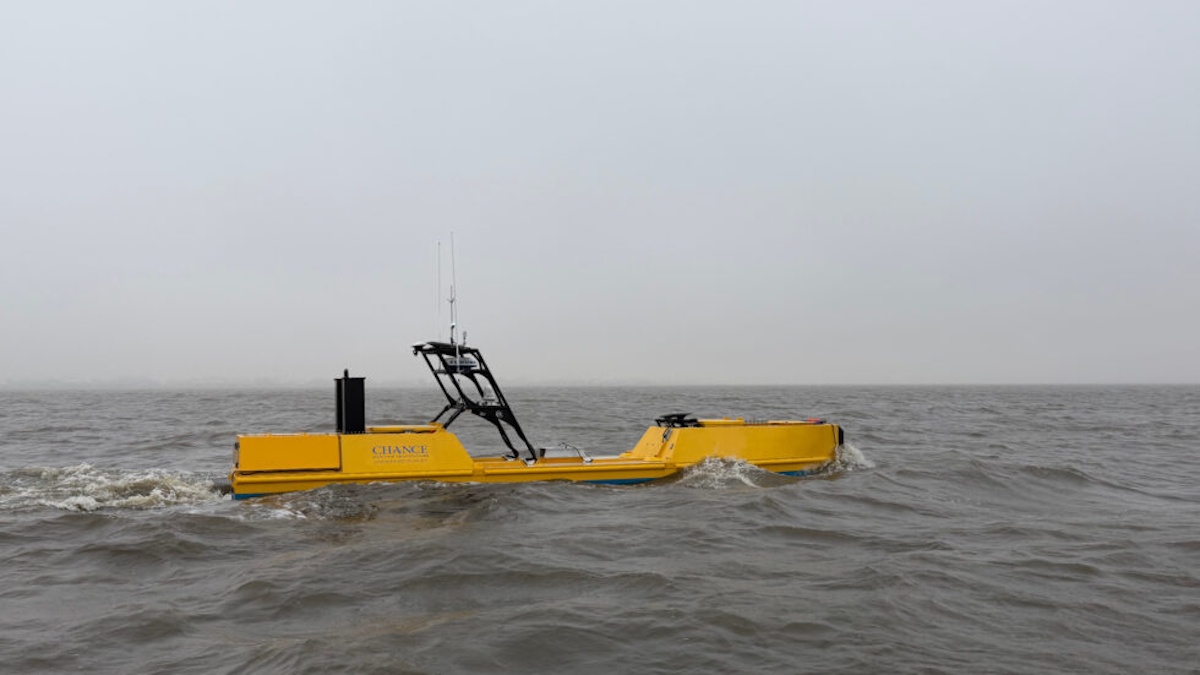
Woods Hole Group and Chance Maritime Complete Landmark 38 Day USV FAST Eddy Survey
The Woods Hole Group, in collaboration with Chance Maritime Technologies, has achieved a significant milestone by completing a 38-day uninterrupted FAST Eddy Loop Current monitoring survey in the Gulf of America, located 200 nautical miles offshore. This operation set a record for diesel-powered, continuously cruising uncrewed surface vehicle (USV) operations, covering over 4,000 nautical miles without stopping. The successful survey underscores advancements in marine technology and the importance of continuous monitoring of ocean currents for environmental and navigational purposes.
chance maritime
Clear Water Systems to advance blue-green algae mitigation with USV-first solution using HydroSurv’s REAV-35
HydroSurv has secured a new vessel order from Clear Water Systems Limited, marking a significant step in the development of innovative technology aimed at tackling the pressing environmental issue of harmful blue-green algae, also known as cyanobacteria. This collaboration is set to enhance efforts in preserving freshwater ecosystems, which are increasingly threatened by the proliferation of these harmful algal blooms. The announcement was made today, highlighting the urgency of addressing this critical challenge facing aquatic environments. Through this partnership, HydroSurv and Clear Water Systems Limited aim to implement effective solutions that can mitigate the impact of cyanobacteria on water quality and ecosystem health.
hydrosurv clear water systems limited usv reav-35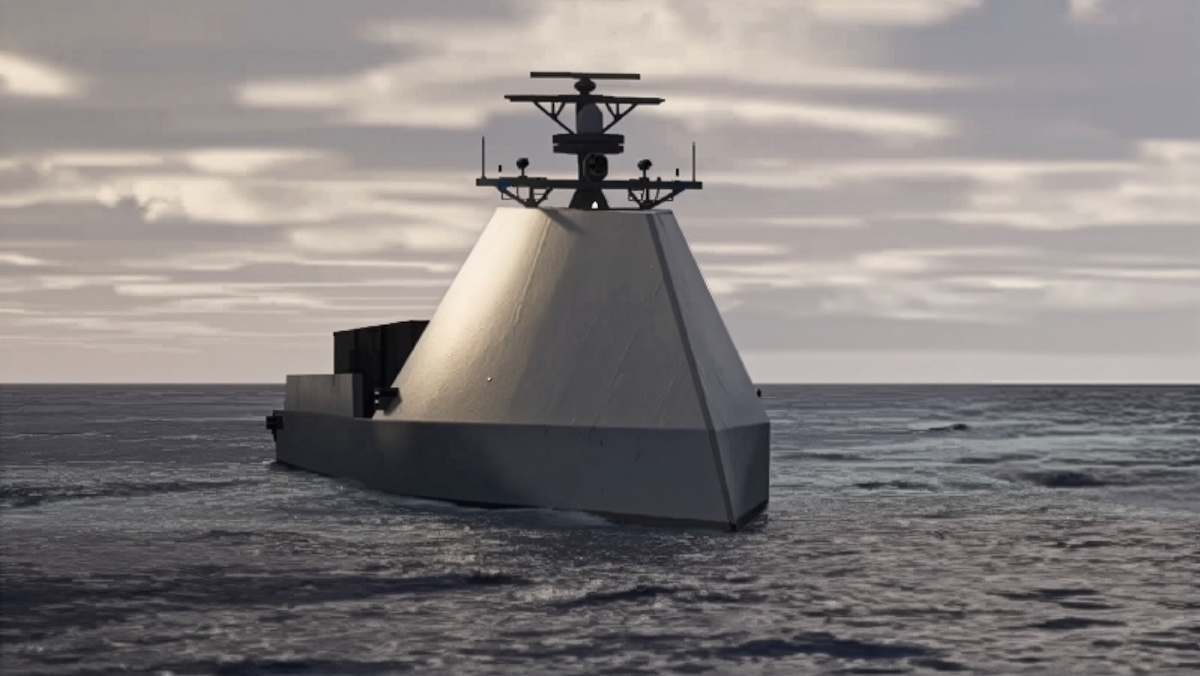
HII Announces Major Milestone for ROMULUS USV Technology
Executives from HII visited Breaux Brothers Enterprises in Loreauville, Louisiana, where they revealed that the construction of a prototype for their new unmanned surface vessel (USV) family, named ROMULUS, has reached 30% completion. This development is part of HII's ongoing efforts to innovate in maritime technology. The prototype is on track for sea trials, which are scheduled to take place in the fourth quarter of 2026, demonstrating the company's commitment to advancing its capabilities in unmanned maritime systems.
hii romulus usv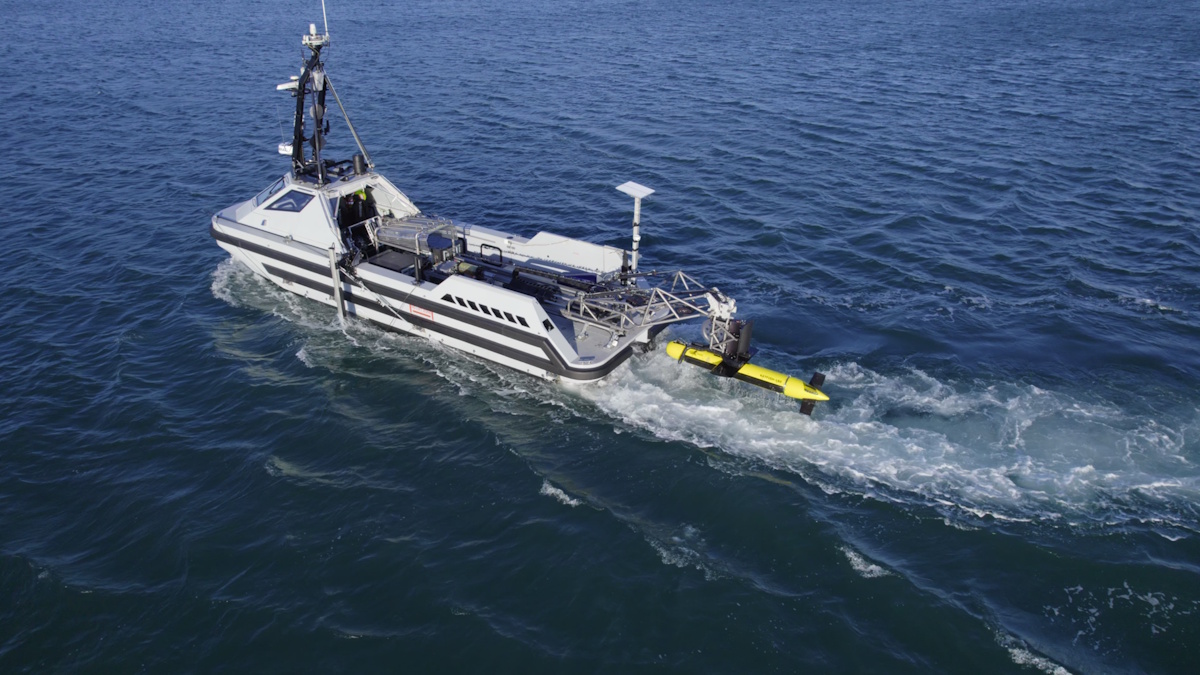
Kraken Robotics and TKMS ATLAS UK Demonstrate KATFISH USV Launch and Recovery System on an in-service UK Royal Navy ARCIMS USV
Kraken Robotics has successfully demonstrated its KATFISH Unmanned Surface Vessel Launch and Recovery System (USV-LARS) aboard TKMS ATLAS UK's 11-meter ARCIMS Unmanned Surface Vehicle (USV). This demonstration highlights a significant advancement in maritime security technology, as the integrated systems deliver a comprehensive autonomous survey solution tailored for mine countermeasure operations and the inspection of critical underwater infrastructure. Notably, the collaboration between ARCIMS and KATFISH USV-LARS marks the introduction of the industry's first air-deployable, 300-meter depth-rated autonomous towed Synthetic Aperture Sonar (SAS) survey system. This innovation aims to enhance operational efficiency and safety in maritime missions.
kraken robotics tkms atlas uk katfish usv launch and recovery system uk royal navy arcims usv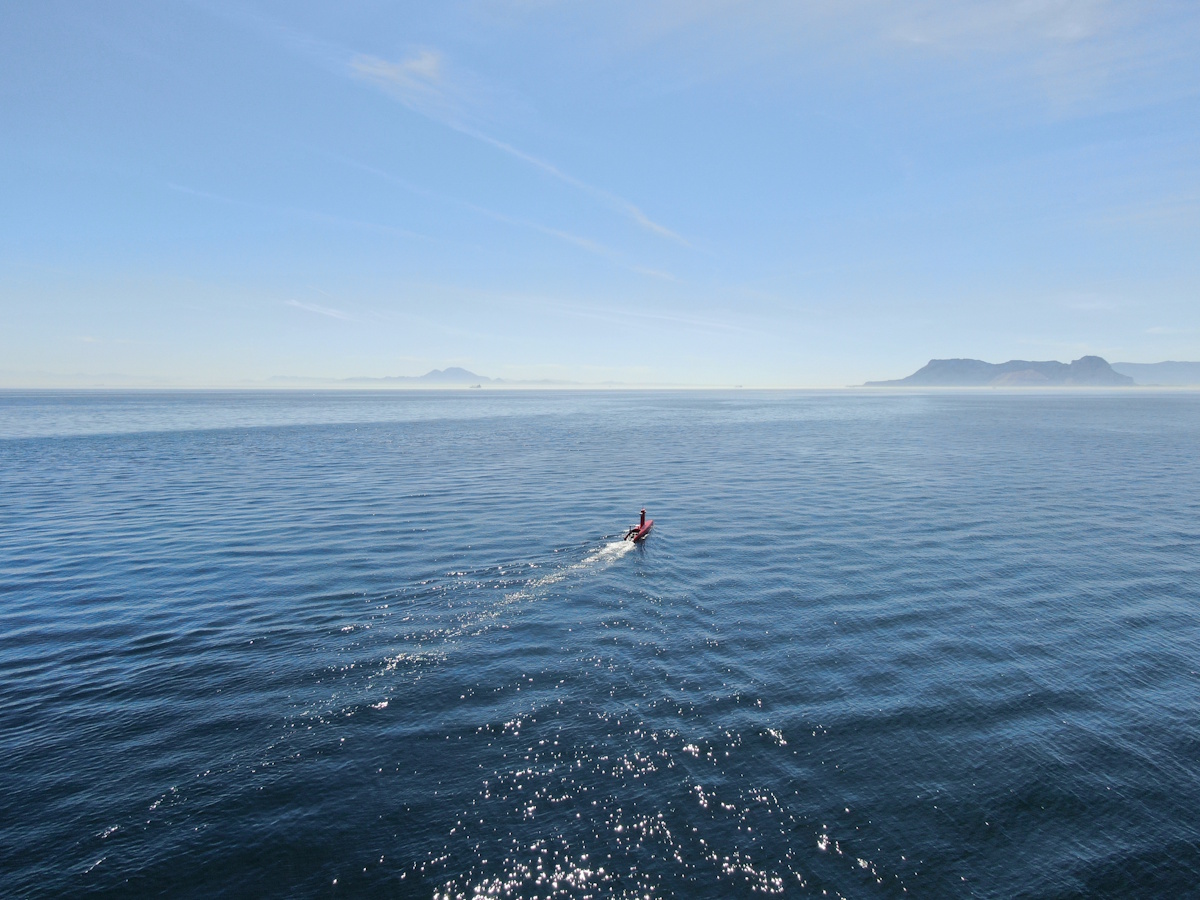
Exail Achieves World First with 1,100-Nautical-Mile Autonomous USV Transit Across Gibraltar Strait
Exail has marked a significant advancement in maritime autonomy with the successful transit of its DriX O-16 transoceanic uncrewed surface vehicle (USV). The 16-meter vessel completed a historic journey of 1,100 nautical miles (2,000 kilometers) from La Ciotat, France, to Troia, Portugal. This achievement comes as the DriX O-16 prepares to participate in NATO’s REPMUS 2025 exercise. The successful voyage underscores the growing capabilities of uncrewed maritime technology, demonstrating its potential for long-distance operations without human crew members.
exail autonomous usv transit across gibraltar strait repmus
Subsea Europe Services Enters USV Market with Sustainable, High-performance C-RECON 13-ES
Subsea Europe Services (SES) GmbH, a prominent player in marine technology solutions for the offshore energy and ocean science industries, has launched its inaugural Uncrewed Surface Vessel (USV), named the C-RECON 13-ES. This significant development marks SES's entry into the USV market, showcasing the company's commitment to innovation and advancement in marine technology. The C-RECON 13-ES is designed to enhance operational efficiency and data collection capabilities in various marine applications. The launch reflects SES's strategic initiative to diversify its offerings and meet the growing demand for uncrewed maritime solutions.
subsea europe services usv c-recon 13-es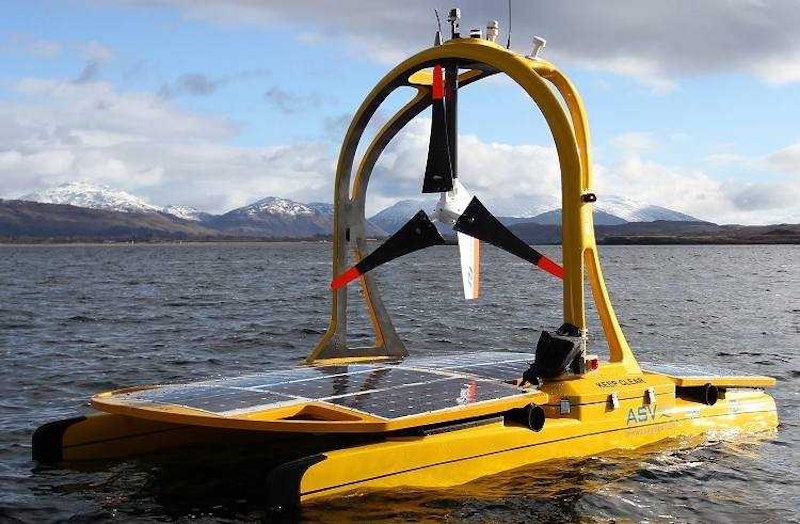
Robosys Wins University of Plymouth Contract For USV Integrated Advanced Maritime Autonomy Solution
Robosys Automation, a leader in advanced maritime autonomy, has secured a contract with the University of Plymouth to provide an integrated maritime autonomy solution for the ASV C-Enduro unmanned surface vehicle (USV). This collaboration aims to enhance the capabilities of the USV, which is designed for various maritime applications. The partnership reflects the growing interest in autonomous maritime technologies and their potential to revolutionize marine operations. The project is expected to advance research and development in the field, showcasing the University of Plymouth's commitment to innovation in maritime studies.
robosys university of plymouth new contract usv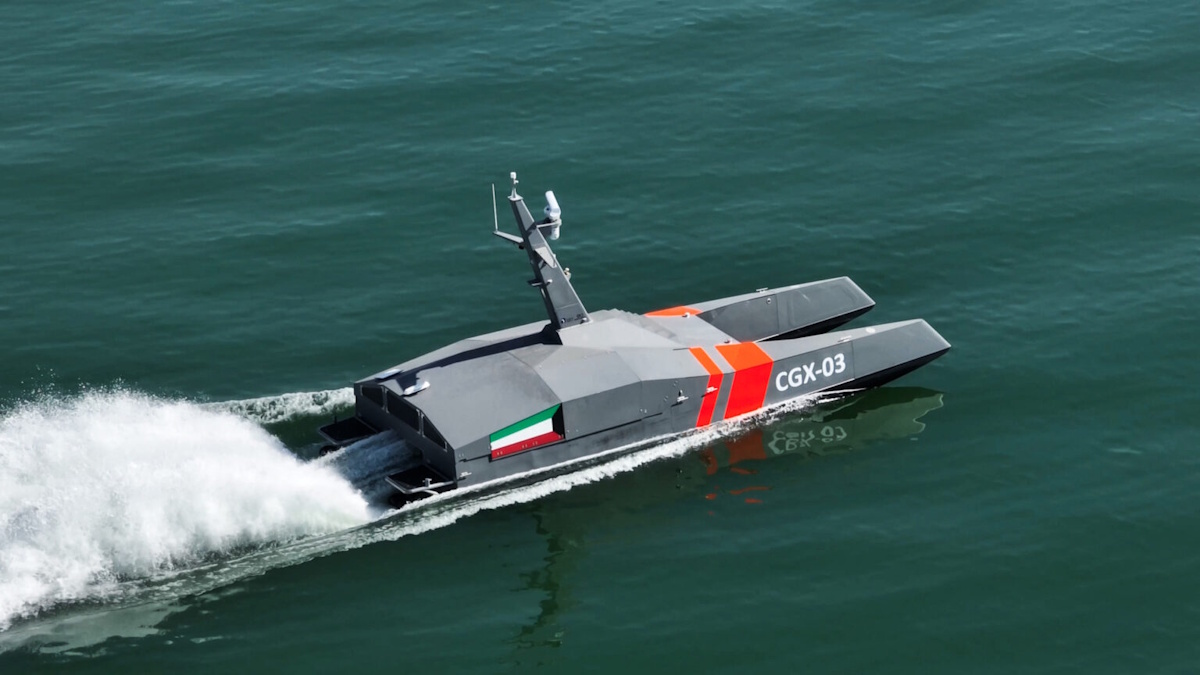
Ocean Infinity launches NeedleFish USV in Kuwait
Ocean Infinity, a company specializing in advanced technology and marine robotics, has officially launched its NeedleFish Uncrewed Surface Vessel (USV) in collaboration with the Kuwaiti Coast Guard (KCG). The event took place recently, marking a significant milestone in maritime innovation. This launch aims to enhance maritime operations and surveillance capabilities for the KCG, reflecting a growing interest in utilizing cutting-edge technology for national security and environmental monitoring. The NeedleFish USV is designed to operate autonomously, providing efficient and effective solutions for various marine tasks.
ocean infinity needlefish usv
FLANQ Launches Q-RECON: Europe's Newest Expeditionary USV for Maritime Surveillance and Special Forces Operations
FLANQ, a maritime defense solutions provider based in Germany, has unveiled its latest innovation, the Q-RECON, an Uncrewed Surface Vessel (USV) designed specifically for operations in coastal areas. The launch, which took place today, addresses an urgent operational need expressed by a European customer. The Q-RECON is a lightweight, two-meter-long vessel that can be easily transported by two personnel. It is engineered for a range of critical functions, including intelligence gathering, surveillance, reconnaissance, and tactical interdiction, enhancing maritime operational capabilities in the region.
flanq q-recon usv maritime surveillance special forces operations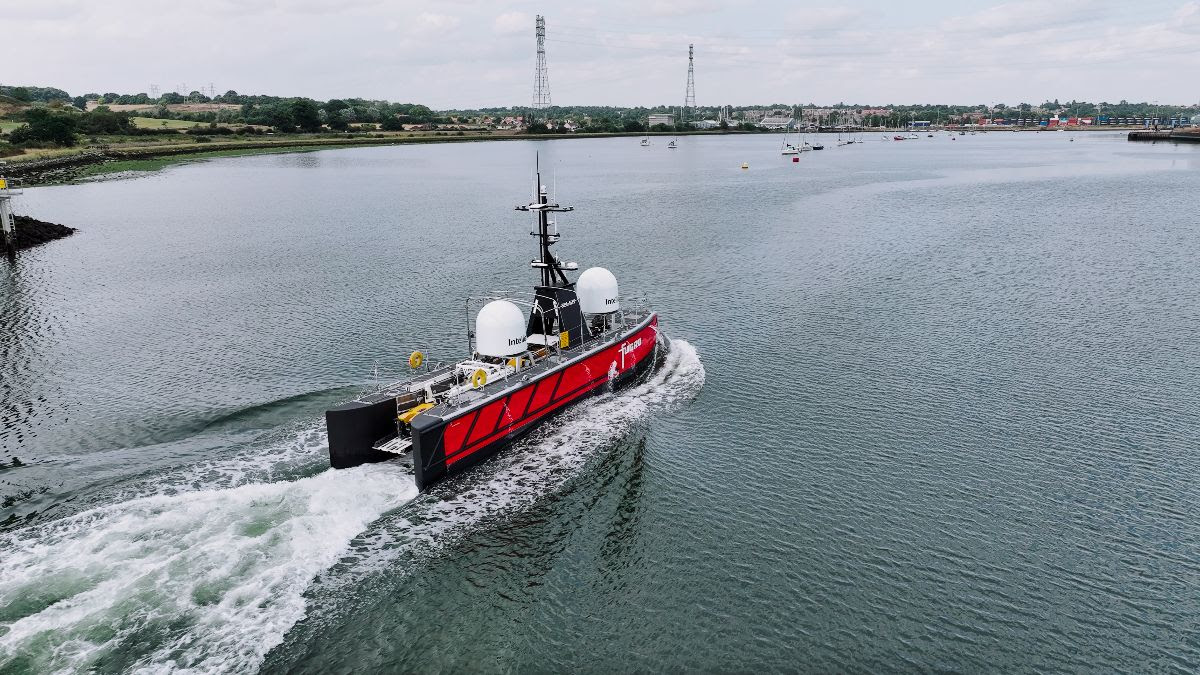
Fugro Selected for Pioneering USV Seabed Mapping Initiative in Norway
Fugro has secured a contract with the Norwegian Hydrographic Service (NHS) to assist in the 2025 MAREANO seabed mapping program. This initiative marks a significant milestone as it will be the first time MAREANO employs uncrewed surface vessel (USV) technology for data collection. Fugro plans to utilize its newly developed 18-meter Blue Eclipse® USV for this purpose. The adoption of this innovative technology aims to promote lower carbon emissions in seabed mapping while ensuring the acquisition of high-quality data essential for the responsible management and preservation of Norway’s marine resources.
fugro usv seabed mapping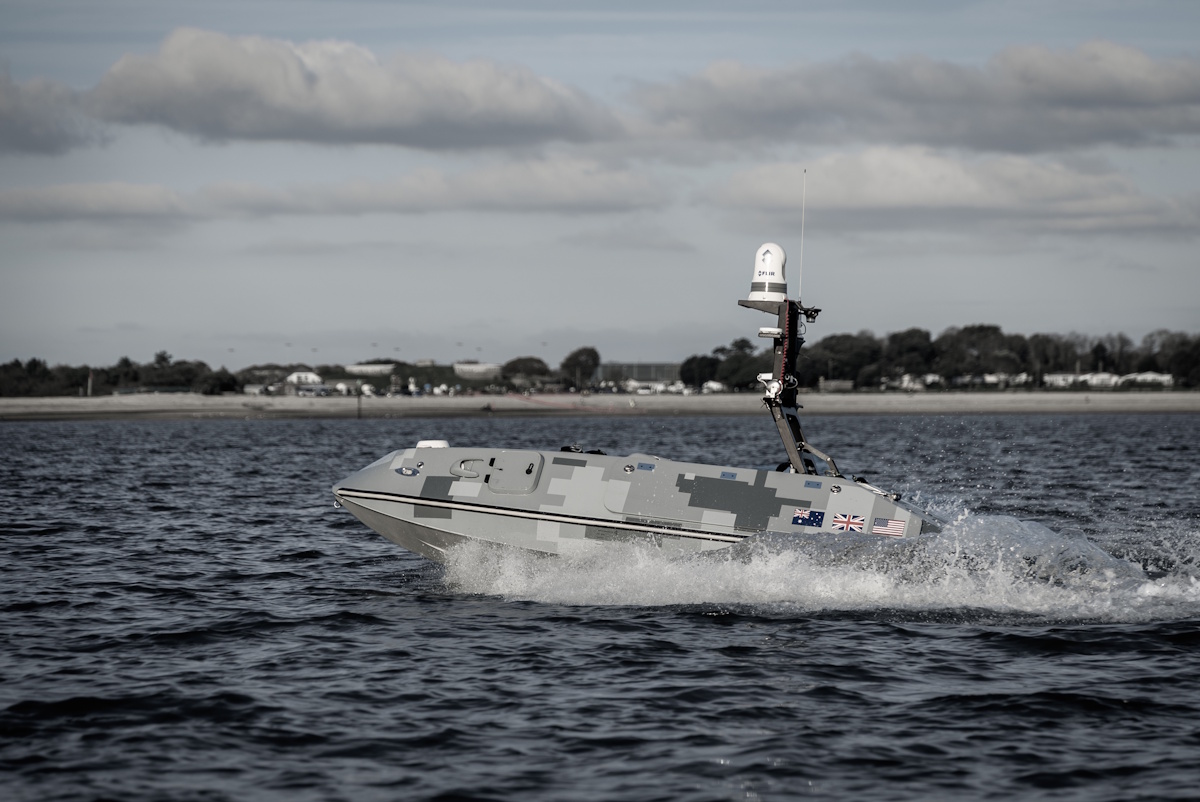
Subsea Craft Unveils ‘MARS’ USV Capability
British advanced maritime technology company SubSea Craft (SSC) has introduced its latest innovation, the MARS Unmanned Surface Vessel (USV), following the successful launch of its VICTA diver delivery platform. This unveiling highlights SSC's commitment to advancing maritime technology and expanding its product offerings. The MARS USV is designed to enhance operational capabilities in various maritime environments, reflecting the growing demand for unmanned systems in defense and commercial applications. The announcement comes as the company aims to solidify its position in the maritime sector, leveraging its expertise to meet the evolving needs of clients.
subsea craft ‘mars’ usv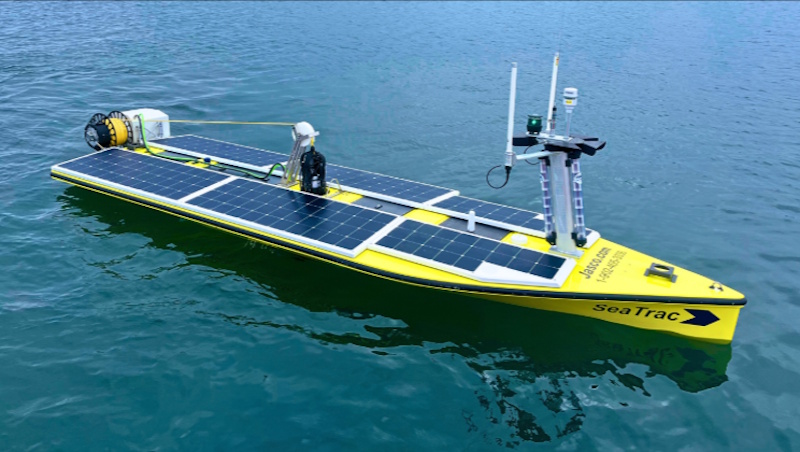
SeaTrac USV Equipped with JASCO OceanObserver Dipping Array Enables Breakthrough in Real-Time Marine Mammal Monitoring
A groundbreaking initiative, backed by the Innovative Solutions Canada (ISC) program, has successfully showcased a new method for monitoring marine mammals in real-time using uncrewed surface vehicles. This project aims to enhance the understanding and protection of marine life by providing timely data on the presence and behavior of marine mammals. The demonstration took place recently, highlighting the potential of technology in environmental conservation efforts. By utilizing uncrewed vehicles, researchers can gather crucial information without disturbing the animals, thereby promoting a more sustainable approach to marine monitoring. This innovative solution is expected to play a significant role in informing conservation strategies and ensuring the safety of marine ecosystems.
seatrac usv jasco oceanobserver dipping array real-time marine mammal monitoring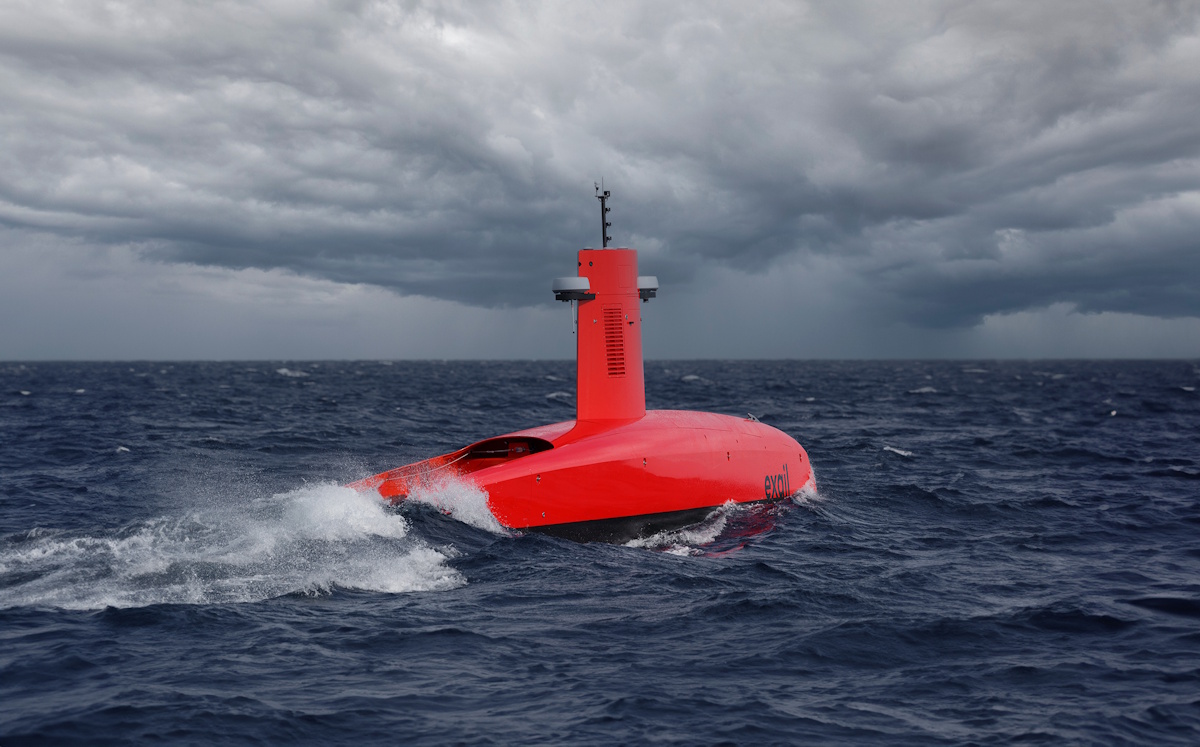
Exail Announces Sale of DriX O-16 USV to the Oceanic Observatory of Madeira
Exail has secured a contract with the Oceanic Observatory of Madeira (OOM) to provide a DriX O-16 Uncrewed Surface Vessel (USV). This award follows a competitive international public tender and is aimed at bolstering OOM's ability to perform extensive scientific and hydrographic surveys across full ocean depths. The integration of the DriX O-16 USV is expected to significantly enhance the observatory's research capabilities, enabling more effective data collection and analysis in oceanographic studies.
exail drix o-16 usv oceanic observatory of madeira
MARTAC and Sealartec Introduce Fully Autonomous Launch and Recovery System for USV
Maritime Tactical Systems (MARTAC) and Sealartec have announced the launch of a groundbreaking Autonomous Launch & Recovery System designed for unmanned surface vessels (USVs). This innovative system enables the autonomous deployment and retrieval of MARTAC’s MANTAS T8 and T12 models from the Devil Ray T38 platform. The unveiling took place recently, highlighting the importance of such technology in enhancing swarming missions and maximizing the capabilities of unmanned marine systems. The development aims to operate effectively in various sea conditions with minimal human intervention, ensuring both speed and reliability in operations. This advancement is expected to significantly impact maritime operations, paving the way for more efficient and effective use of USVs in the field.
martac sealartec fully autonomous launch and recovery system usv
Kongsberg Maritime Delivers First REACH REMOTE USV
A significant advancement in offshore operations has been marked by the successful delivery of the REACH REMOTE 1, a 24-meter unmanned surface vessel (USV) developed by Kongsberg Maritime. This milestone was achieved through a collaborative effort involving Kongsberg Maritime, REACH SUBSEA ASA, Massterly, and Trosvik Maritime. The delivery took place recently, signaling the beginning of a new era in maritime technology. The REACH REMOTE 1 is expected to enhance operational efficiency and safety in offshore environments, driven by the growing demand for innovative solutions in the maritime industry. The collaboration among these key players demonstrates a commitment to advancing technology and improving offshore operations through the integration of unmanned systems.
kongsberg maritime reach remote usvRobotics needs a service framework.
RSF defines a common language for robot service capability, lifecycle operations, certification pathways, and service-provider networks.
Join the RobotToday community on LinkedIn
Daily robotics news, in-depth analysis, conference highlights, and discussions with professionals worldwide.







