

Industry Briefing
A single destination for timely, editor-curated robotics news from around the world.

Drones, Satellites, and Unified Controls Transform ISR Capabilities for US Military
Airborne intelligence, surveillance, and reconnaissance (ISR) are crucial for achieving information superiority in modern warfare. As threats evolve, the integration of drone technology and satellite capabilities is essential for effective information gathering and sharing. The US Air Force plans to accelerate its Massed Modular Aircraft (MMA) program, aiming to deploy 100 drones by 2029 and 500 by 2032, significantly increasing its ISR capabilities. The importance of ISR extends beyond traditional airborne platforms, as the US military recognizes the need for space-based ISR and counter-satellite strategies. The US Space Force Delta 7 is tasked with monitoring adversarial activities and analyzing threats, particularly from nations like Russia and China, which are enhancing their own ISR capabilities in space. This evolving landscape underscores the necessity for the US to maintain its information advantage in all domains of warfare. Looking ahead, the focus will be on the standardization of control interfaces for drone operations, as emphasized by Lt. Gen. Christopher Niemi. The US Marine Corps is also developing its own ISR capabilities, aiming for a common controller software solution. No further timeline was disclosed at the time of publication.
Air Warfare AFA Focus 2026 Air Force Drones intelligence surveillance and reconnaissance ISR
Army Pursues New Capabilities to Engage Enemy Surveillance Satellites from Ground
The U.S. Army is actively seeking new technologies to engage adversary satellites from the ground, as stated by Col. Joe Mroszczyk, a senior Army space official. This initiative aligns with the Army's expanding role in supporting U.S. Space Command in achieving space superiority, emphasizing the importance of counter-space operations. Col. Mroszczyk highlighted that the Army's involvement in counter-space operations is a natural extension of its core competencies, similar to naval engagements. The Army aims to follow U.S. national space policy, avoiding destructive anti-satellite attacks that create space debris. The focus is on counter-surveillance and reconnaissance capabilities against adversary satellites. The Army has been increasing its presence in the space domain, with counterspace listed as a budget priority starting in fiscal 2027. As the Army develops capabilities to prevent adversaries from collecting targeting data on U.S. forces, it is crucial to monitor advancements in this area and the integration of operational requirements into acquisition programs.
Air Warfare Land Warfare Space Air Force Army army space
HEBI Robotics Secures NASA Contract to Create Compact Actuators for Small Satellites
HEBI Robotics has received a Phase I contract from NASA’s Small Business Innovation Research program to develop compact robotic actuators for small satellites. This initiative aims to design miniature actuators capable of generating significant force while fitting within the constraints of spacecraft, particularly CubeSats, where space and weight are critical factors. The significance of this project lies in its potential to address the limitations of existing robotic hardware, which is often too large or lacks the necessary flexibility for advanced operations. As the commercial space industry grows, there is an increasing demand for affordable and reliable robotic systems that can perform effectively in harsh environments, as highlighted by HEBI Robotics’ director of hardware, Andrew Willig. Looking ahead, the contract, funded through NASA’s SBIR Ignite program, will extend through December 2026. HEBI Robotics plans to explore various motor and gearbox designs to create a compact actuator suitable for space missions, while also considering applications in industrial and field robotics, leveraging technology that can withstand extreme conditions.
Components News Space actuators aerospace commercial space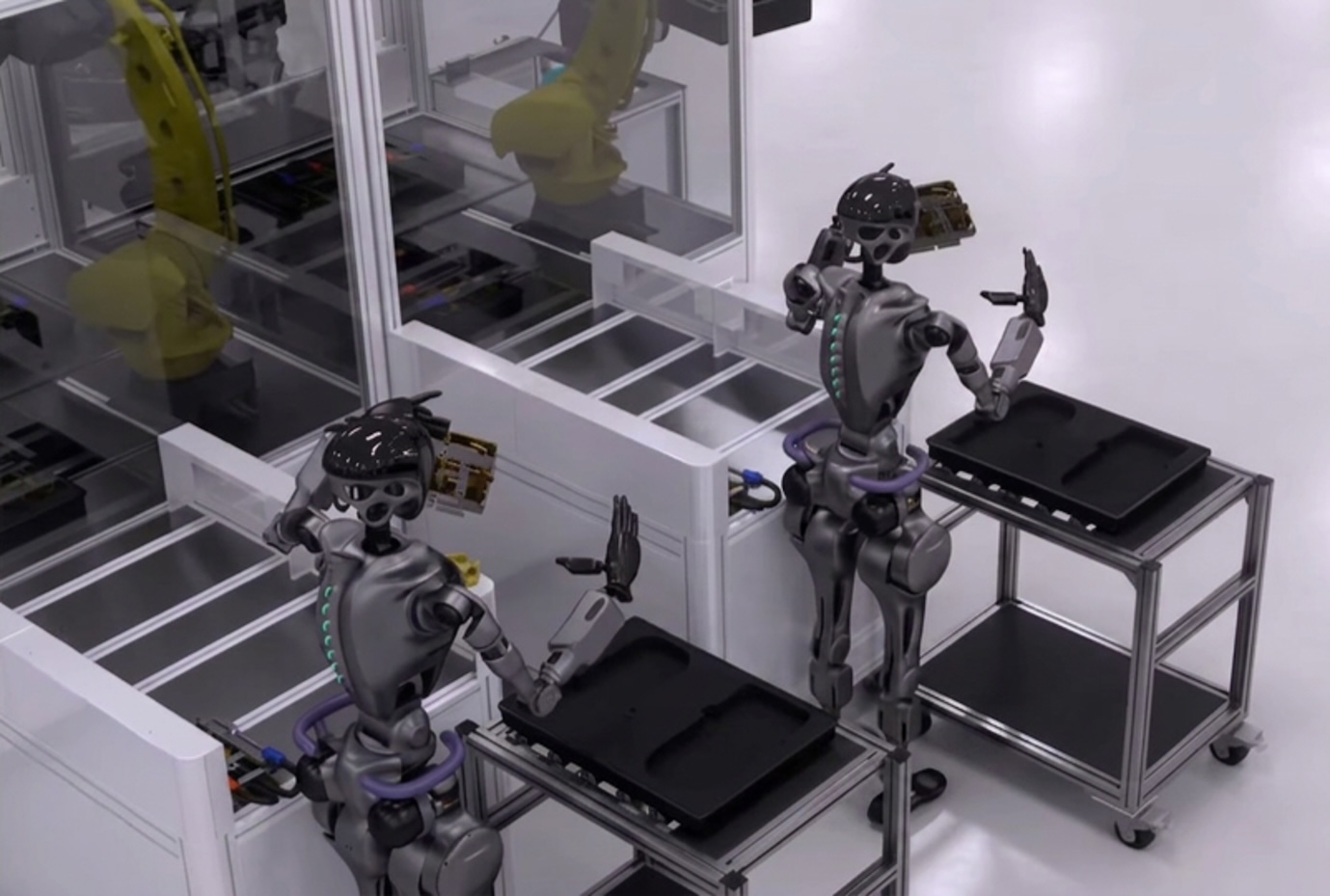
SpaceX Launches Starmind Project for 1 Million AI Satellites by 2028
SpaceX has officially named its orbital AI infrastructure project 'Starmind,' which aims to deploy a constellation of up to 1 million satellites. This initiative, confirmed by Elon Musk on June 22, 2026, will enable AI inference directly in space, utilizing solar energy rather than terrestrial power sources. The first satellite, designated AI1, was unveiled on June 8, 2026, and is designed to operate in sun-synchronous orbits. The significance of Starmind lies in its potential to overcome the limitations faced by ground-based data centers, such as land, power, and water constraints. By running AI computations in orbit, Starmind can provide a more efficient solution to the growing demand for AI computing power. The project leverages the existing Starlink infrastructure for data transmission, distinguishing its function from Starlink's internet relay capabilities. Looking ahead, SpaceX plans to begin hardware deployment with the AI1 satellite, while full-scale production and deployment of the satellite constellation are targeted for 2028. As of now, no Starmind satellites have been launched, and further engineering challenges remain to be addressed, particularly regarding the scalability of the satellite design.
SpaceX's Starship V3 Plans for 1 Million Starmind Satellites by 2030
SpaceX's Starship V3 is set to revolutionize satellite deployment, aiming to launch 1 million Starmind satellites by 2030. The spacecraft can carry over 100 tonnes to low Earth orbit (LEO), significantly more than the Falcon 9's capacity. As of May 2026, Starship has completed 12 flights, with the next mission scheduled for late July 2026, focusing on operational payloads including AI1 prototypes in early 2027. This ambitious plan is crucial for expanding orbital compute capacity, targeting an annual addition of 100 GW through a million tonnes of satellite hardware. SpaceX's strategy hinges on achieving a launch cadence of approximately 12,000 flights, equating to about three launches per day. The company has invested over $15 billion in the Starship program, with expectations to begin payload deliveries in the second half of 2026, starting with Starlink V3 satellites. Looking ahead, the successful deployment of the Starmind constellation will depend on Starship's ability to meet its cost targets of $10–20 million per flight. If achieved, this would make launching satellites more economical than building ground data centers. The next significant milestone will be the launch of AI1 prototypes in early 2027, with full-scale deployments commencing in 2028 from the new Gigasat factory in Texas.

SpaceX's Starmind Plans 1 Million AI Satellites Amid Collision Risks
SpaceX has announced its ambitious Starmind project, which aims to deploy 1 million AI satellites in orbits between 500 and 2,000 km. This initiative, confirmed by Elon Musk on June 23, 2026, follows a merger with xAI, valuing the combined entity at $1.25 trillion. The satellites will function as orbital data centers, processing AI workloads powered by solar arrays and linked by optical lasers. The significance of Starmind lies in its potential to add 100 gigawatts of AI compute capacity annually, contingent on the successful operation of the Starship launch system. However, the project raises concerns regarding space debris, as the current orbital environment is already congested, with a 20% increase in collision risk reported since 2024. The European Space Agency has highlighted that the density of debris in low Earth orbit is now comparable to that of active satellites, complicating the operational landscape for new entrants like Starmind. Looking ahead, the first operational orbital AI deployments are targeted for 2028, with test launches expected in early 2027. However, the project faces scrutiny regarding its impact on space debris, as even a 1% failure rate could significantly increase the number of uncontrollable objects in orbit, exacerbating existing risks. No further timeline was disclosed at the time of publication.
Northrop Grumman Unveils Robotic Spacecraft for Satellite Repair and Life Extension
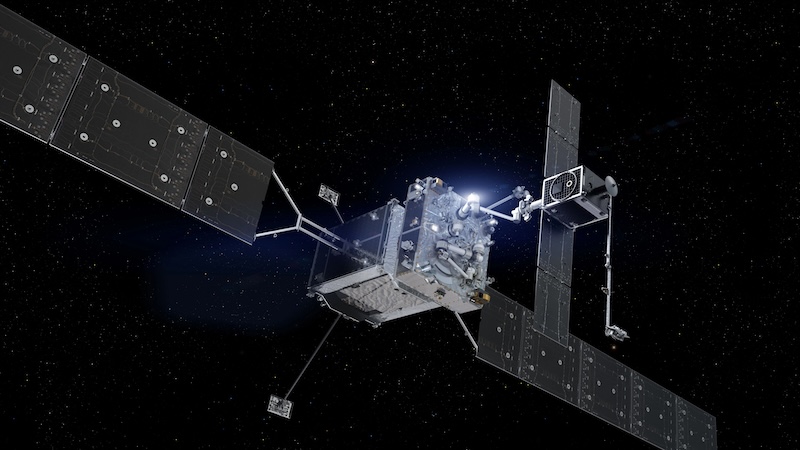
Northrop Grumman has successfully launched its advanced robotic spacecraft, the Mission Robotic Vehicle (MRV), designed to service satellites in orbit. The MRV, which took off from Cape Canaveral Space Force Station on July 21 aboard a SpaceX Falcon 9 rocket, aims to repair, upgrade, and relocate satellites, extending their operational life beyond their original fuel limits. This initiative is significant as it addresses the growing need for satellite maintenance in space, allowing expensive assets to remain functional without the need for complete replacement. The MRV is equipped with two robotic arms that facilitate satellite inspection, debris removal, and the installation of Mission Extension Pods (MEPs), which act as propulsion modules for satellites running low on fuel. Looking ahead, the MRV's first mission will showcase its capability to install MEPs on existing satellites, effectively providing them with additional propulsion. This innovative approach could redefine satellite longevity and operational efficiency. No further timeline was disclosed at the time of publication.
Features Space Autonomous robots darpa in-orbit servicing MEP
Northrop Grumman's Mission Robotic Vehicle Enhances Satellite Longevity and Sustainability
Northrop Grumman's Mission Extension Vehicle (MEV) has successfully detached from the Optus satellite after over a year of service, paving the way for the new Mission Robotic Vehicle (MRV) and Mission Extension Pods (MEPs). This transition marks a significant advancement in satellite life-extension technology, allowing satellites to operate beyond their intended lifespan. The introduction of the MRV, equipped with advanced robotic arms, signifies a shift towards sustainable space operations. By enabling repairs and upgrades, Northrop aims to create a resilient space infrastructure that can extend the operational life of satellites, which often fail due to fuel depletion rather than technological obsolescence. The Optus satellite, launched in 2009, could potentially remain operational for an additional six years thanks to this innovative approach. Looking ahead, the MRV is set to attach an MEP to the Optus satellite in 2027, showcasing the potential for in-orbit servicing. As satellite operators increasingly seek cost-effective solutions, Northrop's advancements may redefine the future of satellite maintenance and operations, making it feasible to extend the life of larger, more expensive satellites currently in orbit.
Robotics Space Exclusive northrop grumman
MIT Lincoln Laboratory Develops LightHOUSE for Navigation in Cislunar Space
MIT Lincoln Laboratory is developing the Light High-Orbit Utility Signal Emitter (LightHOUSE) to enhance navigation in cislunar space. This initiative aims to address the limitations of current navigation systems, which rely on NASA's Deep Space Network (DSN) and can take hours for orbit determination. The LightHOUSE concept proposes a constellation of high-altitude satellites that will serve as optical beacons, providing timely navigation data to spacecraft. This system could significantly reduce the need for corrective maneuvers and conserve propellant, making it crucial as lunar missions become a strategic priority for national security. As the project progresses, the team is focused on refining the system through analysis and experimentation. The successful implementation of LightHOUSE could revolutionize navigation in cislunar space, offering a reliable alternative to existing ground-based systems and enhancing mission capabilities beyond geosynchronous orbit.
Research Space exploration Satellites Communications Spaceflight Lincoln Laboratory
SpaceX Launches Dual-Arm Robot to Extend Lifespan of Aging Satellites
On July 21, SpaceX launched a dual-arm space robot named MRV from Cape Canaveral, Florida. Its mission is to extend the lifespan of aging satellites by attaching jetpacks to them in geostationary orbit, preventing them from becoming space debris. The first clients for this service are Luxembourg's SES and Australia's Optus, with each satellite's replacement costing up to hundreds of millions of dollars. This initiative is significant as it marks a shift in how satellites are viewed—not as disposable assets but as reusable ones that can be repaired and refueled. Northrop Grumman, the manufacturer of MRV, has experience in satellite servicing, having previously extended the lives of malfunctioning satellites. The MRV's capabilities may evolve to include repairing and repositioning active satellites and even removing defunct ones from busy orbits. Looking ahead, the success of MRV could pave the way for more advanced satellite servicing technologies. Just two weeks prior, another robotic spacecraft, LINK, was launched to rescue NASA's Swift Observatory, which is at risk of re-entering the atmosphere. As robotics play an increasingly vital role in space operations, the economic landscape of space could be fundamentally transformed.
Space Robotics Satellite Services Orbital Maintenance Space Economy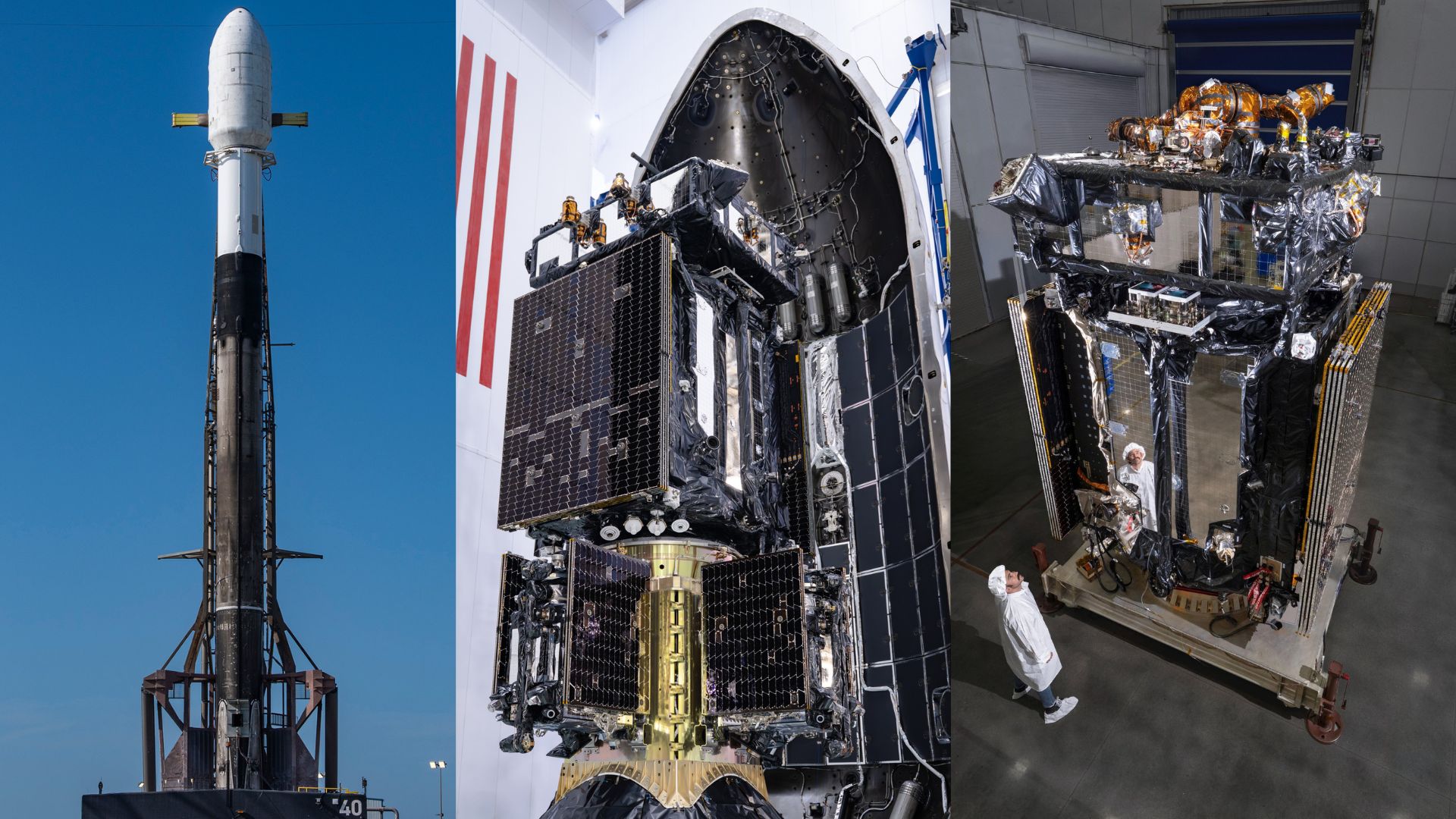
Northrop Grumman's Robotic Spacecraft Launched by SpaceX to Extend Satellite Lifespan
Northrop Grumman successfully launched its robotic spacecraft designed to extend the operational lives of aging communications satellites without the need for refueling. The spacecraft, known as the Mission Robotic Vehicle (MRV), was launched aboard a SpaceX Falcon 9 rocket from Cape Canaveral Space Force Station in Florida on July 21. This mission will test a new servicing model that allows MRV to install propulsion modules on multiple satellites in geostationary orbit. This mission is significant as it represents a shift in satellite maintenance, allowing for the servicing of multiple satellites over the MRV's operational lifespan of approximately 15 years. Unlike previous Mission Extension Vehicles that serviced a single satellite, MRV can move between clients, enhancing the efficiency of satellite operations. Northrop estimates that the technology can extend the life of a typical geostationary communications satellite by about six years. Looking ahead, Northrop plans to launch additional Mission Extension Pods for future customers while keeping the MRV operational in orbit. The U.S. Space Force has expressed interest in utilizing MRV's capabilities, indicating a growing demand for on-orbit servicing solutions. No further timeline was disclosed at the time of publication.
Space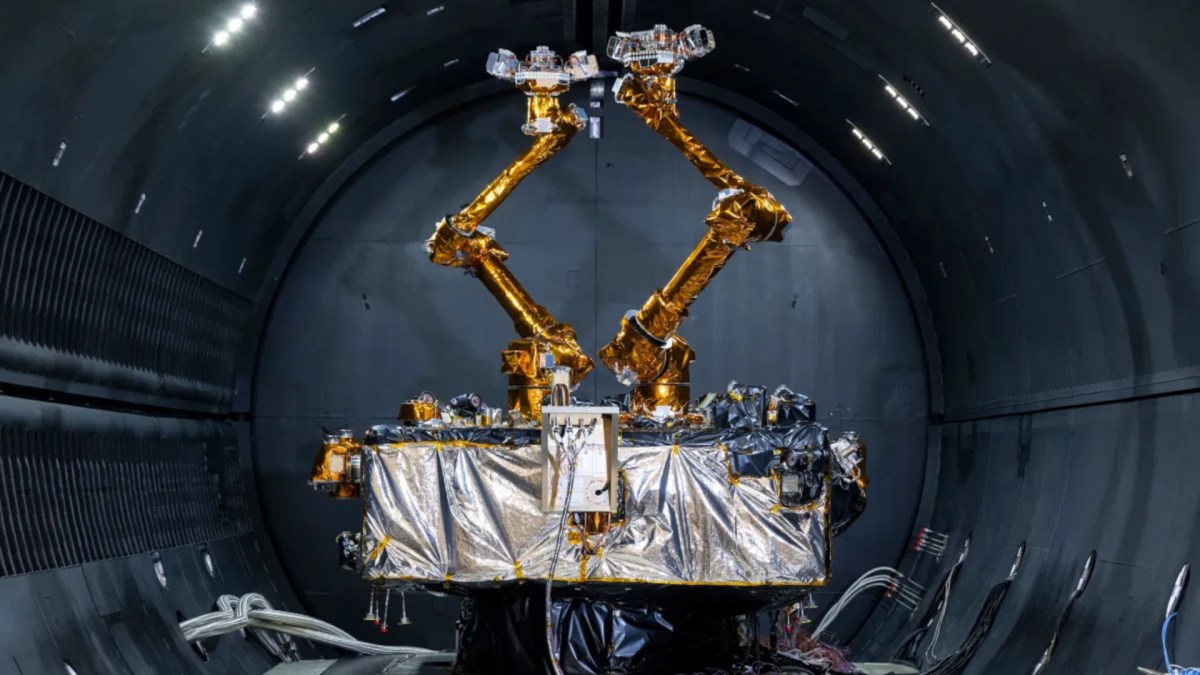
Northrop Grumman's New MRV Spacecraft Launches Today Amid Offensive Capability Questions
Northrop Grumman is set to launch its Mission Robotic Vehicle (MRV) today, equipped with two robotic arms designed for satellite servicing. While the primary purpose of the MRV is to refuel and repair satellites in geosynchronous orbit, discussions have emerged regarding its potential use in offensive operations against enemy satellites. The U.S. Space Force is exploring offensive capabilities to protect its assets, raising questions about the MRV's dual-use potential. The MRV's launch is significant as it represents a step forward in commercial satellite servicing, with the ability to install life extension jetpacks on satellites, potentially prolonging their operational life by up to eight years. Northrop Grumman's CEO, Kathy Warden, emphasized the spacecraft's capabilities during a recent earnings call, indicating that the company is prepared to offer options for technology deployment to clients, including the U.S. government. Looking ahead, the MRV is scheduled to launch aboard a SpaceX Falcon 9 rocket from Cape Canaveral, with a window starting at 5:15 PM ET. The mission will involve rendezvousing with satellites from commercial telecommunications providers Optus and SES, showcasing the MRV's versatility in on-orbit servicing and inspection. No further timeline was disclosed at the time of publication.
Space Anti-Satellite Capabilities News & Features Orbital Systems War In Space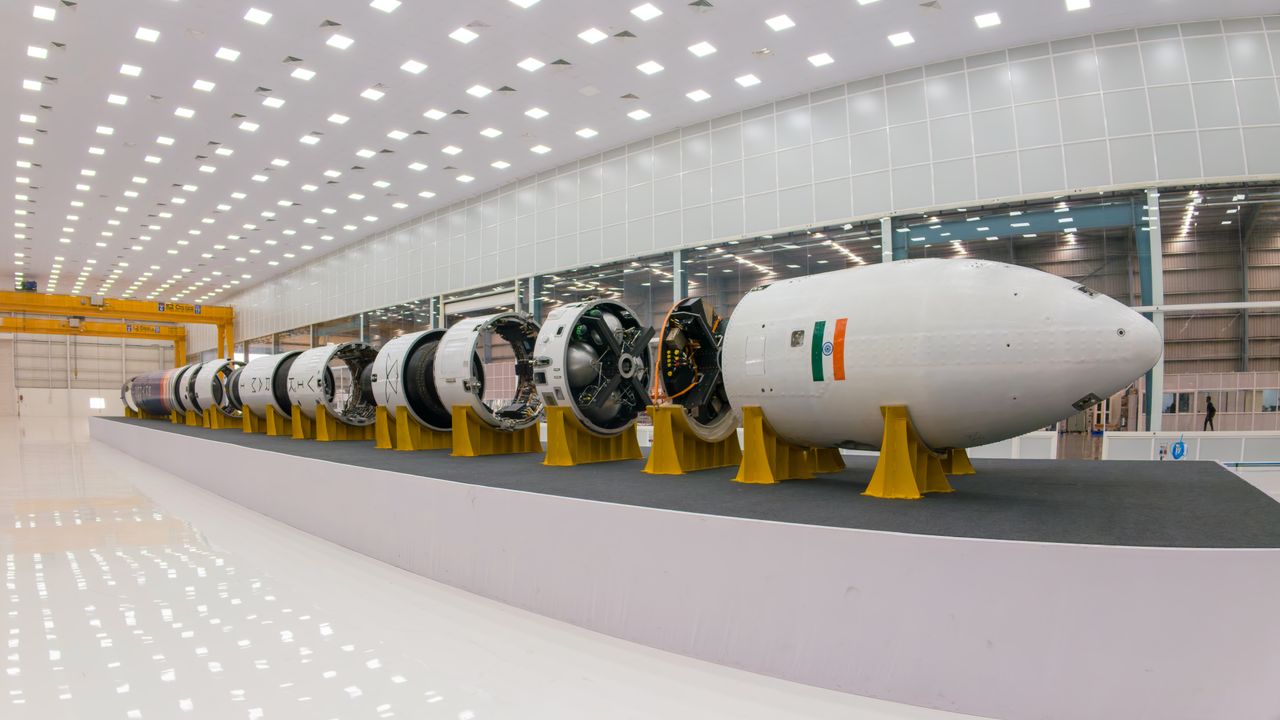
Skyroot Aerospace Prepares for Historic Vikram-1 Launch to Orbit Multiple Satellites
Skyroot Aerospace is on the verge of launching its first orbital rocket, Vikram-1, from the Satish Dhawan Space Centre, with a launch window from July 12 to August 4. The rocket features a unique liquid-fueled upper stage that allows for multiple satellite deployments during a single mission, marking a significant milestone for private spaceflight in India. The successful launch of Vikram-1, named Aagaman, would be a historic achievement as it would make Skyroot the first private Indian company to place satellites into orbit. The mission includes various payloads, such as Skyroot's SCOPE satellite and technology demonstrations from international partners, showcasing the company's capability to cater to specific orbital requirements for small satellites. Looking ahead, Skyroot aims to validate Vikram-1 through three development flights before commencing commercial operations. The company plans to scale production to one rocket per month, positioning itself in the market for dedicated satellite launches, akin to a 'cab' service for orbital missions, as stated by co-founder and CEO Pawan Kumar Chandana.
Launches & Spacecraft Space Exploration
SpaceX IPO Provides Indirect Investment Opportunity in Starmind Project
Starmind does not have a standalone stock or ticker; investors can gain exposure through SpaceX (ticker: SPCX), which began trading on Nasdaq after its IPO on June 12, 2026. Starmind is integrated within SpaceX, contributing to the company's AI and space initiatives, and its performance directly influences SPCX shares. The significance of Starmind lies in its role as a division of SpaceX, which encompasses other projects like Starlink and Starship. As of early July 2026, SPCX shares are trading between $149 and $150, significantly lower than their 52-week high of $225.64. The project’s milestones, such as AI1 prototype updates, can impact SpaceX's stock performance, making it essential for investors to monitor these developments closely. Looking ahead, the early 2027 launch of AI1 prototype satellites is a critical milestone that could provide verifiable data affecting Starmind's valuation and, consequently, SPCX stock. No further timeline was disclosed at the time of publication, but the upcoming events will be pivotal for investors tracking the relationship between Starmind and SpaceX's stock performance.

Tesla's Optimus Robots to Support Starmind Satellite Production, Not Maintenance
Tesla's Optimus robots will not be used to repair Starmind satellites in orbit, as confirmed by recent statements from Elon Musk. Instead, these robots are intended to assist in the construction and operation of the Terafab chip manufacturing facility in Texas. The AI1 satellites, designed to disintegrate upon reentry, highlight the company's swap-and-replace strategy rather than traditional maintenance practices. This approach is significant as it reflects a broader trend in satellite management, where mass-produced satellites are replaced rather than repaired. The economics of servicing missions are prohibitive, with the cost of launching a replacement satellite being significantly lower than conducting a repair mission. This model aligns with SpaceX's operational history, where rapid replacement of satellites is more efficient than attempting to maintain them in orbit. Looking ahead, the focus will remain on the production capabilities of the Gigasat factory, which is expected to support the continuous replacement of satellites. No further timeline was disclosed at the time of publication, but the demand for rapid satellite turnover suggests a robust future for Optimus robots in terrestrial manufacturing rather than in-space servicing.

SpaceX's Starmind Project: Supplier Strategy and Chip Manufacturing Plans for 2026
SpaceX's Starmind project, aimed at deploying up to 1 million AI satellites, was filed with the FCC on January 30, 2026. The initiative is designed to minimize reliance on external suppliers, with CEO Elon Musk stating that current chip production capabilities only meet 2% of the projected needs. The first satellite, AI1, is set for prototype launches in early 2027, featuring a 70-meter wingspan and a modular payload system that allows for interchangeable chips from various suppliers. The significance of Starmind lies in its ambitious supply chain strategy, which seeks to transition from external hardware suppliers to a fully integrated Musk-owned facility by 2028. The Gigasat manufacturing site in Bastrop, Texas, is expected to be operational by the end of 2027, with plans for high-volume production of the D3 chip, specifically designed for space applications. This approach aims to consolidate chip manufacturing processes under the Terafab joint venture, which has an estimated initial investment of $55 billion. Looking ahead, the next milestone for Starmind is the launch of AI1 prototypes in early 2027, while the full-scale chip production at Terafab is projected to ramp up significantly thereafter. However, analysts express skepticism regarding the feasibility of achieving Musk's ambitious compute goals, which may require substantial investment and time to establish the necessary manufacturing capabilities.

Starmind's Satellite Technology Achieves 880 Billion Liters in Annual Water Savings
Starmind has announced that its satellite technology can save approximately 880 billion liters of cooling water annually at full scale. This figure is equivalent to the annual household water use of around 6.5 million Americans. The technology operates by utilizing a closed-loop liquid cooling system that eliminates the need for water during its operational life, contrasting sharply with traditional ground data centers that consume vast amounts of water for cooling. The significance of this achievement lies in the growing water consumption crisis faced by data centers, particularly as AI expansion drives demand. In 2025, U.S. data centers consumed nearly one trillion liters of water, highlighting the urgent need for sustainable solutions. Starmind's approach not only addresses direct water usage but also avoids indirect water consumption associated with electricity generation, marking a substantial shift in how computing can be conducted in a resource-efficient manner. Looking ahead, Starmind's deployment strategy includes a projected buildout of 100 GW of orbital compute per year, which could displace an additional 735 billion liters of ground water demand annually. The first tranche of 10,000 satellites is already operational, offsetting approximately 8.8 billion liters of water per year. No further timeline was disclosed at the time of publication.
SpaceX Proposes 1 Million AI Satellites to Address Ground Data Center Constraints
On January 30, 2026, SpaceX filed with the FCC to launch up to 1 million AI compute satellites, positioning orbital data centers as a solution to the increasing demand for AI computing power. Ground data centers are facing significant challenges, with energy consumption projected to reach approximately 1,050 TWh in 2026, making them the fifth-largest electricity consumer globally. The demand for new data center capacity is outpacing the growth of power generation infrastructure, leading to a critical bottleneck in the grid system. The significance of this initiative lies in the structural constraints faced by ground data centers, including power delivery limitations, high water consumption, and local opposition to new projects. The Uptime Institute's 2026 outlook identifies power as the primary constraint on data center growth, with capacity clearing prices in the PJM grid skyrocketing to $329.17/MW, driven by data center expansion. Additionally, cooling requirements are becoming increasingly unsustainable, with facilities consuming vast amounts of water, further complicating their operational viability. Looking ahead, SpaceX's orbital AI compute initiative aims to circumvent these challenges by leveraging the advantages of space, such as continuous solar power and minimal local opposition. The first AI prototypes are expected to launch in early 2027, with operational deployments planned for 2028. No further timeline was disclosed at the time of publication.
SpaceX's Starmind Faces Feasibility Challenges for 1 Million Satellite Deployment
On January 30, 2026, SpaceX submitted a request to the FCC to launch up to 1 million satellites as part of its Starmind orbital compute constellation. This ambitious plan is unprecedented, as the total number of satellites ever launched globally is in the low tens of thousands. The proposal seeks a waiver from standard deployment milestones, citing reliance on the Starship's full reusability for success. The significance of this request lies in the technical and logistical challenges it presents. Experts warn that low Earth orbit may not support the proposed number of active satellites without risking a debris cascade. SpaceX's own IPO prospectus acknowledges unresolved dependencies related to Starship's launch cadence and reusability, which are critical for the orbital AI compute strategy. Looking ahead, the timeline for achieving the necessary launch cadence and manufacturing capacity remains uncertain. SpaceX's Gigasat facility in Texas aims for volume production by late 2027, but this would require unprecedented output levels. No further timeline was disclosed at the time of publication, leaving the feasibility of the Starmind project in question.

SpaceX Unveils AI1 Satellite Specs for Starmind Constellation with Key Thermal Challenges
SpaceX has introduced the AI1 satellite, the inaugural component of its Starmind constellation, which stands 20 meters tall and has a wingspan of 70 meters. This orbital compute node is designed to deliver computing power equivalent to one NVIDIA GB300 server rack, utilizing a unique cooling system with deployable liquid radiators. The satellite's specifications were revealed during a presentation on June 8, 2026, ahead of SpaceX's IPO. The significance of the AI1 satellite lies in its role as a compute platform rather than a traditional satellite, focusing on running AI inference workloads. The satellite's cooling system, which is critical for its operation in the vacuum of space, is designed to reject heat through infrared radiation. However, independent engineers have raised concerns about the feasibility of the thermal and mass claims made by SpaceX, suggesting that the cooling requirements may exceed practical limits. Looking ahead, SpaceX plans to launch two AI1 prototypes in early 2027, with full-scale production expected to commence later that year at its Gigasat facility in Bastrop, Texas. The ongoing debate regarding the satellite's thermal management capabilities will be crucial to monitor as the project progresses, with no further timeline disclosed at the time of publication.

NASA Satellites Track Harmful Algae With AI
NASA has developed an artificial intelligence tool that utilizes satellite data to detect harmful algal blooms, a significant environmental concern for coastal communities. This innovative technology aims to enhance response times and improve protective measures for both local economies and ecosystems. By analyzing satellite imagery, the AI can quickly identify the presence of these blooms, which can pose health risks to marine life and humans alike. The initiative is part of NASA's broader commitment to leveraging advanced technology for environmental monitoring and public safety. As coastal areas increasingly face the challenges posed by climate change and pollution, this tool represents a proactive approach to safeguarding vulnerable regions.
Beyond satellites: Why FOG inertial navigation is the new imperative for land warfare
The landscape of military navigation is undergoing a significant transformation as counterspace threats and electronic warfare challenge the previously uncontested dominance of GPS technology. Exail is at the forefront of this shift, introducing its Fiber Optic Gyro (FOG) technology, which offers enhanced stability and serves as a reliable "source of truth" for land maneuvering and precision targeting in environments where Global Navigation Satellite Systems (GNSS) are compromised. This innovation is crucial for modern military operations, enabling forces to maintain operational effectiveness despite the increasing prevalence of electronic warfare tactics. As the battlefield evolves, Exail’s advancements in navigation technology are poised to play a vital role in ensuring that military units can navigate and execute missions with precision and confidence, even in the most challenging conditions.
Land Warfare Sponsored Post Army autonomy electronic warfare (EW) ExailRobotics needs a service framework.
RSF defines a common language for robot service capability, lifecycle operations, certification pathways, and service-provider networks.
Join the RobotToday community on LinkedIn
Daily robotics news, in-depth analysis, conference highlights, and discussions with professionals worldwide.






