

SpaceX Launches Dual-Arm Robot to Extend Lifespan of Aging Satellites
- Published
- Source
- leaderobot.com
On July 21, SpaceX launched a dual-arm space robot named MRV from Cape Canaveral, Florida. Its mission is to extend the lifespan of aging satellites by attaching jetpacks to them in geostationary orbit, preventing them from becoming space debris. The first clients for this service are Luxembourg's SES and Australia's Optus, with each satellite's replacement costing up to hundreds of millions of dollars.
This initiative is significant as it marks a shift in how satellites are viewed—not as disposable assets but as reusable ones that can be repaired and refueled. Northrop Grumman, the manufacturer of MRV, has experience in satellite servicing, having previously extended the lives of malfunctioning satellites. The MRV's capabilities may evolve to include repairing and repositioning active satellites and even removing defunct ones from busy orbits.
Looking ahead, the success of MRV could pave the way for more advanced satellite servicing technologies. Just two weeks prior, another robotic spacecraft, LINK, was launched to rescue NASA's Swift Observatory, which is at risk of re-entering the atmosphere. As robotics play an increasingly vital role in space operations, the economic landscape of space could be fundamentally transformed.
Original report
Space 'Refueling Station' Launched: SpaceX's Dual-Arm Robot to Extend Satellite Lifespan
leaderobot.com · LeaderobotThis briefing is an independently written summary based on publicly available reporting and is provided for industry information and news discovery. The original report and source publication are credited and linked where applicable. RobotToday does not claim ownership of third-party source material.
Rights concerns? Contact [email protected] with the relevant URL and details. We will review the matter and take appropriate action where warranted.
More related news
-
1
SRS 2027 – Rome, Jun 23–27, 2027 RobotToday · 11 months from now
- 2
- 3
- 4
- 5
- 6
- 7
- 8
- 9
- 10
-
11
RoboDEX 2027 – Tokyo, Feb 17–19, 2027 RobotToday · 1 week ago
-
12
Global Industrie 2027 – Lyon, Mar 15–18, 2027 RobotToday · 1 week ago
Related Suppliers

Northrop Grumman Corporation
United States
Falls Church, Virginia defence prime whose autonomous aircraft include the MQ-4C Triton maritime ISR drone, RQ-4 Global Hawk family and MQ-8C Fire Scout.

Northrop Grumman Space Systems
United States
Falls Church, Virginia-based Northrop Grumman division builds Cygnus spacecraft and OPIR satellites; parent company reported $41.95 billion 2025 revenue.
SES AI Corporation
United States
NYSE-listed Li-Metal battery startup (SES, 2012); 100Ah cells for EVs, drones and robotics; AI-discovered electrolytes; plants in Shanghai and South Korea.

Sesame Motor Corp. 世協電機股份有限公司
Taiwan
Taiwan planetary gearbox and AC motor maker since 1990; dedicated AGV/AMR line won 2025 Product Innovation Award; exports to 40+ countries.

SESTO Robotics
Singapore
Singapore AMR maker founded 2017, delivering Magnus autonomous mobile robots and MagFleet fleet software for manufacturing, healthcare, and warehousing.

Jena-Optronik GmbH
Germany
Airbus-owned Jena maker of star sensors and the RVS 3000 docking lidars used on Cygnus, MEV-1/-2 and Northrop Grumman's robotic MRV servicer.

Strategic Robotic Systems, Inc.
United States
San Diego maker of the FUSION hybrid AUV/ROV with ROV, AUV and diver-control modes, used by the USMC and coast guards; a General Oceans brand.
AION Robotics Corporation
United States
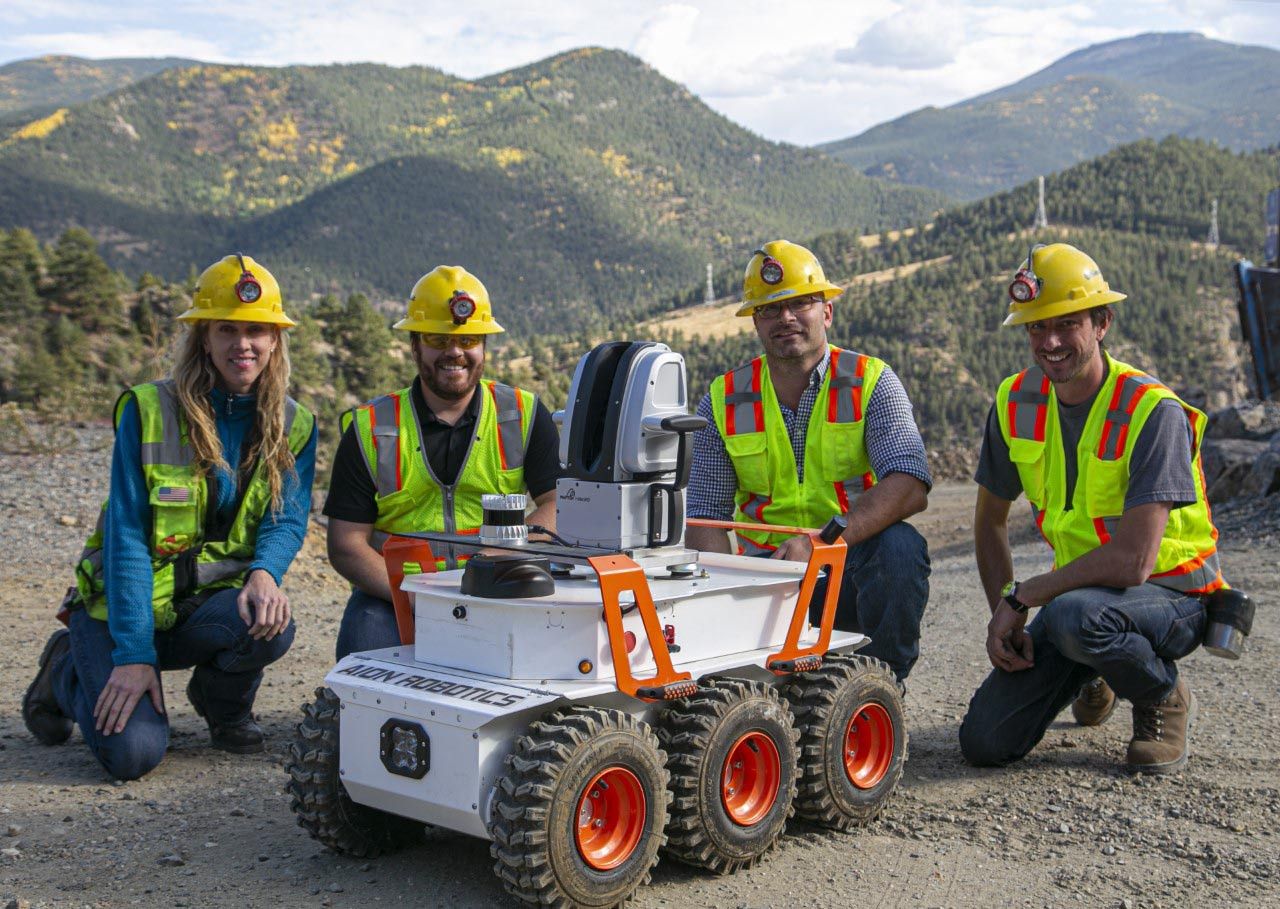
Westminster, CO manufacturer of commercial-grade UGVs (R1, R6) running ArduPilot/ROS, targeting agriculture, construction, and security inspection.
Connect Tech Inc.
Canada
Guelph, Ontario embedded-hardware maker of NVIDIA Jetson Thor and Orin carrier boards and ROS-ready edge systems for robots; majority-owned by HEICO.

Airspace Link, Inc.
United States
Detroit-based UAS traffic management software company (founded 2018); FAA-approved UTM/LAANC/BVLOS provider with AirHub Portal serving 100K+ monthly users.
c-Link Systems, Inc.
United States
Maine-based UGV manufacturer founded in 1997, designing autonomous robot chassis including Forager for search & rescue, mining and hazardous environments.
Aqua Satellite
United States
Mountain View, California underwater-vehicle startup founded 2020 by Alan Eustace; builds AUVs rated to 500 meters with 4K, AI-assisted imaging.
Robotics needs a service framework.
RSF defines a common language for robot service capability, lifecycle operations, certification pathways, and service-provider networks.
Join the RobotToday community on LinkedIn
Daily robotics news, in-depth analysis, conference highlights, and discussions with professionals worldwide.


