

Industry Briefing
A single destination for timely, editor-curated robotics news from around the world.
ZDTaichu 5.0-9B Model Excels in Spatial Embodied Intelligence Benchmarks
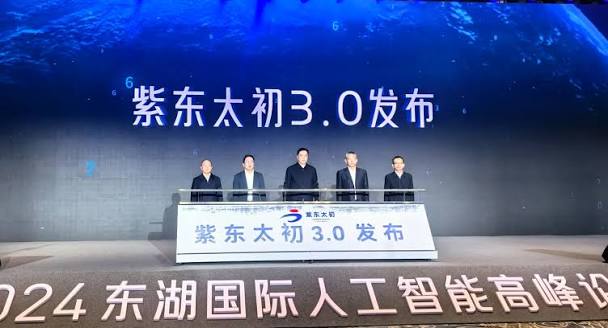
ZDTaichu 5.0-9B, a 9 billion parameter multimodal model, has achieved remarkable results in spatial embodied intelligence, securing first place in 8 out of 9 international benchmarks. It outperforms competitors like Qwen 3.5-9B and STEP 3-VL-10B in spatial perception and three-dimensional reasoning tasks. The significance of ZDTaichu 5.0-9B lies in its ability to integrate complex spatial reasoning tasks that are crucial for robotics in real-world applications. Its performance in accurately identifying object coordinates and spatial relationships demonstrates its advanced capabilities compared to other open-source models. Looking ahead, ZDTaichu 5.0-9B's open-source pipeline for training multimodal models offers valuable insights for robotics companies and research institutions. No further timeline was disclosed at the time of publication.
Multimodal Models Spatial Intelligence Robotics AI Open Source Technology
Daimon Launches First Tactile-Grounded World Model, Transforming Embodied Intelligence
On August 10, 2026, Daimon Robotics unveiled the world's first Tactile-grounded World Model (Daimon-TWM), showcasing a robot's ability to adapt to unexpected disturbances without stopping or colliding. This demonstration challenges the conventional belief that robots can only execute standardized processes and fail when disrupted. The significance of Daimon-TWM lies in its innovative integration of physical cognition, predictive decision-making, and instantaneous control within a unified framework. This model allows robots to understand physical states through tactile feedback, anticipate risks before they occur, and make real-time adjustments, enhancing their operational capabilities in dynamic environments. In testing, Daimon-TWM achieved an average success rate of 64.0% under undisturbed conditions and 53.5% under disturbances, outperforming traditional models significantly. This breakthrough emphasizes the importance of tactile input as a core element throughout the operational process, marking a pivotal advancement in embodied intelligence technology.
Robotics Embodied Intelligence Tactile Feedback AI Automation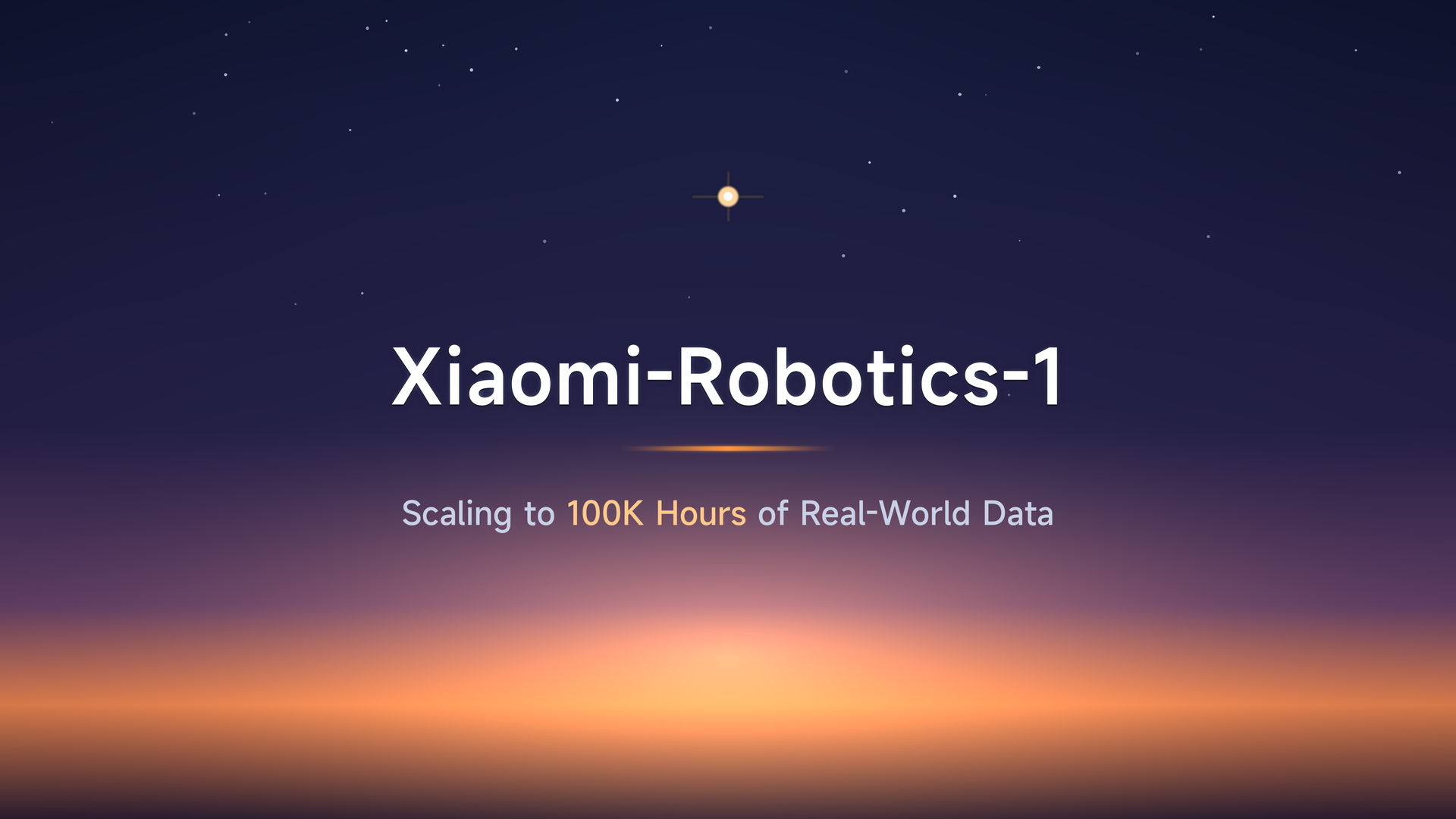
Xiaomi Open-Sources Its Embodied-AI Foundation Model Xiaomi-Robotics-1 for Developers
Xiaomi has announced the open-source release of its embodied-AI foundation model, Xiaomi-Robotics-1, on August 5. This release encompasses the entire process from real-robot post-training to model deployment, along with code for benchmark evaluations. The model was pretrained on over 100,000 hours of UMI data and underwent post-training on more than 10,000 hours of cross-embodiment data. The significance of this release lies in its potential to enhance the development of embodied AI applications. By providing access to the full training and deployment process, Xiaomi aims to foster innovation and collaboration within the AI community. The model, first introduced in July as an “out-of-the-box” solution, is designed to streamline the integration of AI into robotic systems. Looking ahead, developers and researchers will likely explore the capabilities of Xiaomi-Robotics-1 in various applications. The open-source nature of the project, which includes links to the project website, GitHub repository, and Hugging Face page, is expected to encourage widespread adoption and experimentation. No further timeline was disclosed at the time of publication.
News Feed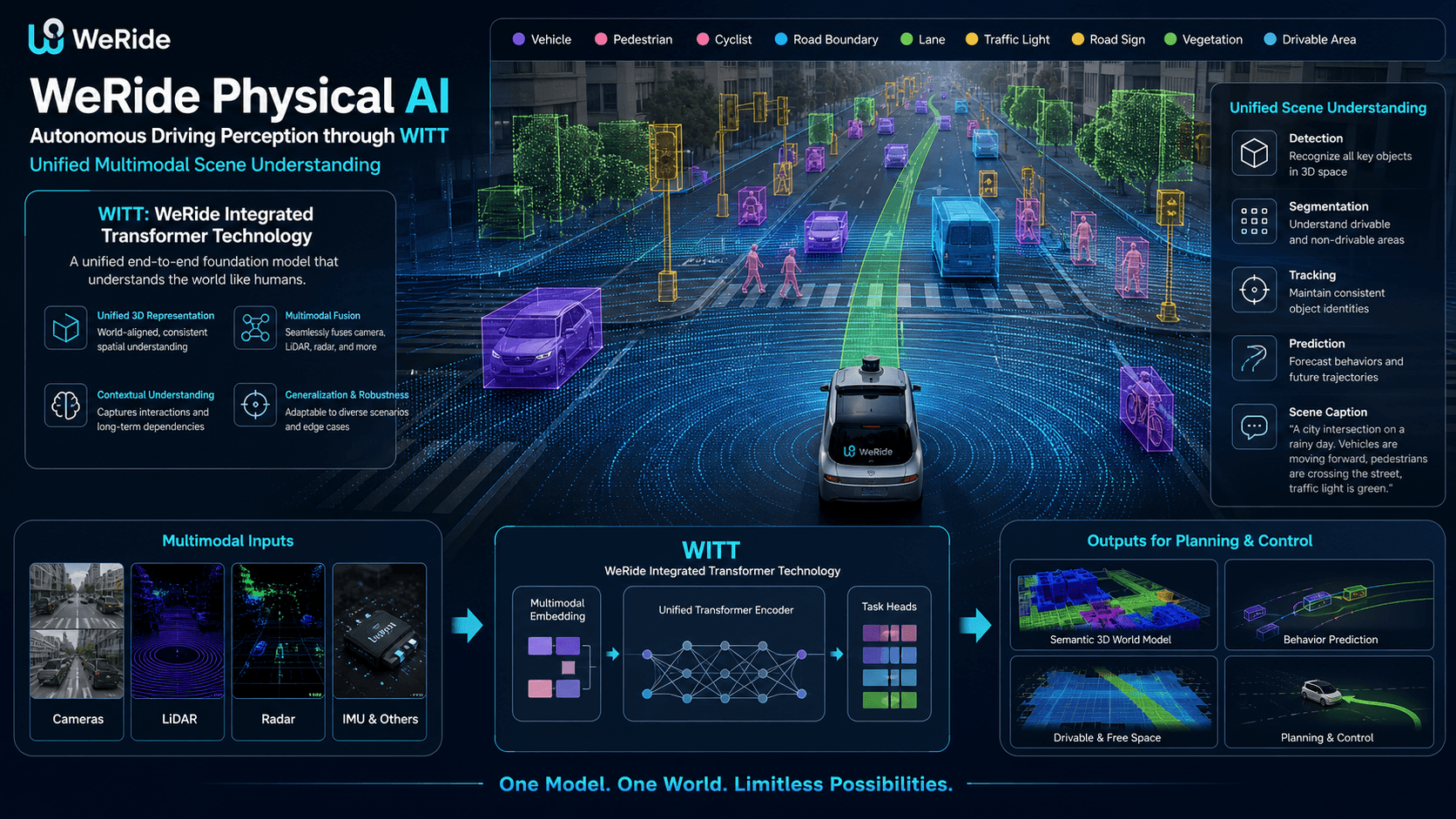
WeRide Launches WITT: A Physical AI Foundation Model for Multimodal Scene Understanding
WeRide has introduced WITT, a groundbreaking physical AI foundation model designed to enhance multimodal scene understanding. This model utilizes minimal physical fact units, which are crucial for applications in autonomous driving and robotics. The launch of WITT is significant as it aims to streamline the integration of various data types, improving the efficiency and effectiveness of AI systems in interpreting complex environments. This advancement could lead to more reliable autonomous systems that can better navigate real-world scenarios. Looking ahead, the implications of WITT's capabilities in the fields of autonomous driving and robotics will be closely monitored. No further timeline was disclosed at the time of publication.
Technology
The 'GPT Moment' for Embodied Intelligence Remains Elusive: Evaluating Physical World Tests
The concept of embodied intelligence, referred to as the 'GPT moment', is being tested through practical scenarios involving robotic assembly. When a robot encounters resistance while inserting components, it must decide whether to apply more force or to retract and reposition. This decision-making process is crucial for manufacturers aiming to enhance robots' ability to handle unfamiliar contact conditions without extensive task-specific engineering. The significance of this development lies in the need for robots to demonstrate adaptability in real-world situations. Current models, such as RT-2 and OpenVLA, connect visual and language inputs to robotic commands, but the challenge remains in how robots can utilize interaction history and make informed decisions when faced with conflicting predictions. The integration of feedback and exploration behaviors is essential for advancing embodied intelligence. Future developments should focus on refining evidence capture during interactions and establishing clear definitions for success and failure. As the industry seeks to validate the 'GPT moment', controlled comparisons and repeatable physical performance will be necessary to substantiate its value and applicability in real-world scenarios.
Robotics Manufacturing Automation AI Embodied Intelligence
Tencent Open-Sources Three Embodied Foundation Models for Enhanced Robot Performance
Tencent has announced the open-source release of three embodied foundation models during the WAIC 2026 event. These models include a Visual Language Model (VLM) designed for scene understanding, the RxBrain cognitive model that facilitates planning with visual states, and the VLA model, which supports continuous action at frequencies between 500 to 1000Hz. This development is significant as it aims to enhance robot reaction speed and cognitive capabilities, addressing critical challenges in robotic performance. The introduction of these models is expected to advance the field of robotics by providing developers with powerful tools to improve the efficiency and effectiveness of robotic systems. Looking ahead, the industry will be keen to observe how these open-source models are adopted and integrated into various robotic applications. No further timeline was disclosed at the time of publication.
Technology
Noetra Initiates Development of Japan's Multimodal AI Foundation Model for Robotics
Noetra, in collaboration with key partners including Sony, SoftBank, NEC, and Honda Motor, has launched extensive R&D for a multimodal foundation model aimed at enhancing AI-enabled robotics in Japan. This initiative is part of a broader effort to develop sovereign AI technologies within the country, supported by investments from 44 companies across various sectors, primarily manufacturing. The significance of this development lies in its potential to position Japan as a leader in physical AI. By creating a robust multimodal foundation model, Noetra aims to improve industrial competitiveness and address societal challenges through advanced AI capabilities, including natural language processing and multimodal data understanding. Looking ahead, Noetra plans to construct AI computing infrastructure with Nvidia's advanced GPUs, with operations expected to commence in June 2028. The phased development will culminate in a comprehensive omni-modal foundation model by fiscal 2028, ultimately striving for a “Real-world Native AI” by fiscal 2030, which will be capable of understanding physical properties in real-world applications.
Artificial Intelligence News Robot simulation ai agents AI infrastructure artificial intelligence
SenseTime Unveils SenseMart OS to Enhance Retail with Embodied Intelligence
On September 23, SenseTime introduced SenseMart OS at its Shanghai headquarters, designed as a physical operating system for the retail sector. This innovative system integrates various robots, retail equipment, and commercial operations, providing a deployable and replicable solution for operators, brands, and venues. The launch event featured the SenseMart Go robotic store, showcasing the OS's capability to coordinate multiple components in a real-world retail environment. The significance of SenseMart OS lies in its potential to transition embodied intelligence from theoretical demonstrations to practical applications in everyday commercial settings. With years of experience in retail, SenseTime has developed product-recognition systems that handle millions of orders daily and maintain a database of over 300,000 distinct product types. According to Dr. Yi Shuai, co-founder and chief scientist of SenseTime Smart Retail, the OS emphasizes perception, interaction, decision-making, and execution, aiming to extend its functionality beyond retail into other offline service industries. Looking ahead, SenseMart OS targets key business metrics such as customer satisfaction, repeat purchases, and transaction completion, rather than solely focusing on robot task success. The system is compatible with various robot types, including wheeled dual-arm robots and humanoids, depending on specific tasks. Currently, SenseMart Go operates in over 20 locations across cities like Shanghai, Hefei, and Shenzhen, with speakers at the launch event highlighting potential future developments in embodied intelligence.
Heavy Hitters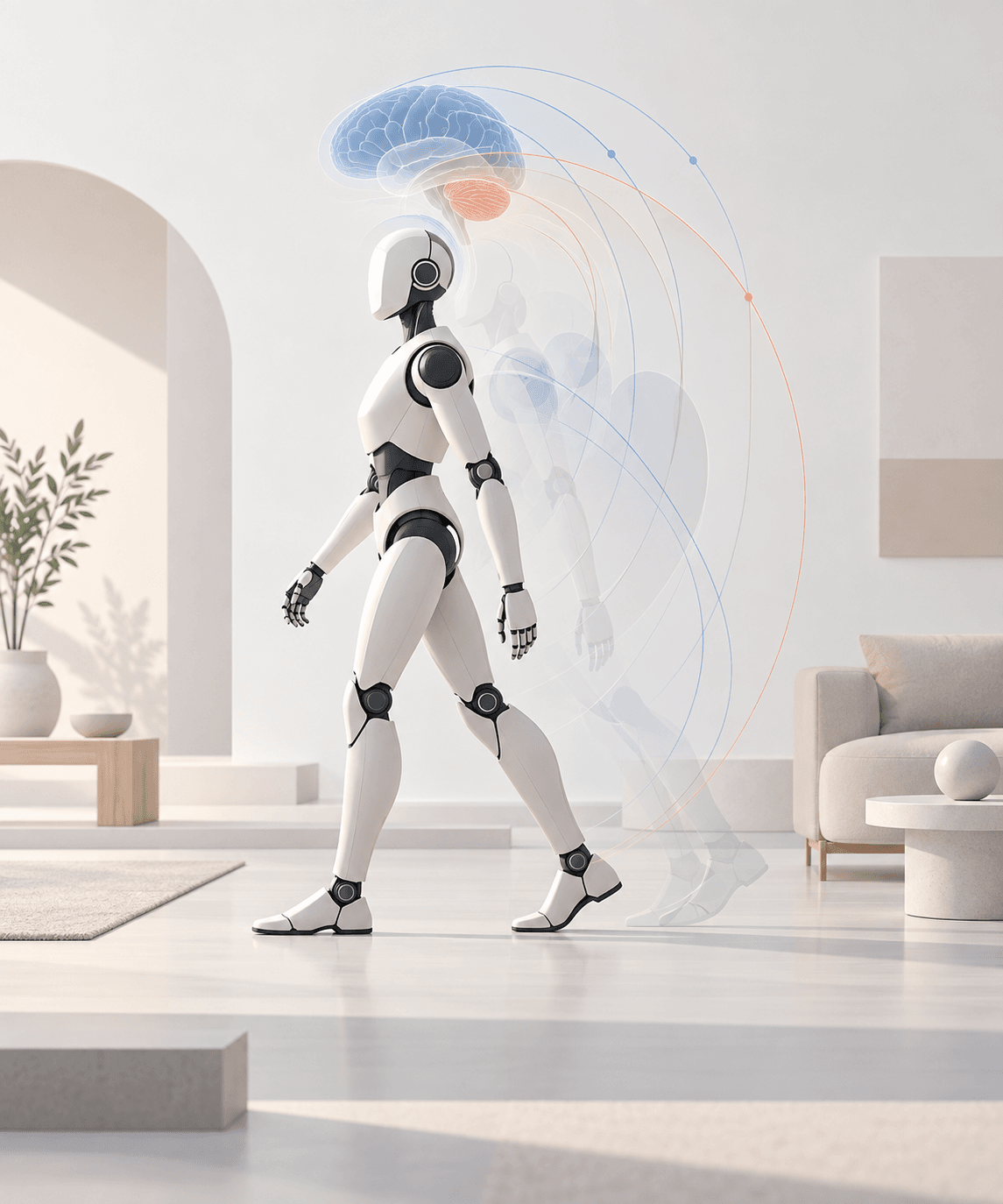
Delta Intelligence Launches Delta-0 Humanoid Foundation Model with Advanced Capabilities
On September 28, 2026, Delta Intelligence introduced Delta-0, a humanoid foundation model designed for advanced loco-manipulation. The model successfully demonstrated 32 planned steps and completed nine household tasks within approximately 210 seconds of continuous operation. The launch of Delta-0 is significant as it showcases Delta Intelligence's commitment to developing sophisticated humanoid models capable of performing complex tasks in real-world environments. This advancement could enhance automation in various sectors, particularly in domestic settings where humanoid robots can assist with everyday chores. Looking ahead, the industry will be keen to observe how Delta-0 performs in practical applications and whether it can meet the expectations set by its demonstration. No further timeline was disclosed at the time of publication.
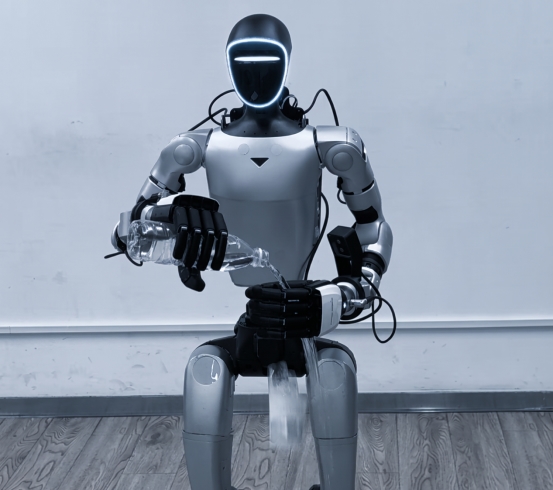
Memo Unveils Physical-WAM to Enhance Embodied Intelligence at Global Digital Trade Expo
At the Global Digital Trade Expo on September 24, Memo introduced the Physical-WAM, the world's first physical-world action model equipped with physical perception capabilities. This innovation aims to address the challenges faced by robots in understanding and interacting with the physical world, which has hindered the widespread adoption of embodied intelligence. The significance of this development lies in its potential to bridge the data gap that currently limits robots' physical interactions. Memo's CEO, Li Minghao, highlighted that the lack of foundational physical understanding in robots stems from insufficient real-world interaction data and inadequate evaluation metrics. The Physical-WAM model is designed to enhance robots' predictive capabilities and real-time adjustments in physical tasks. Looking ahead, the demand for embodied intelligence is surging, with significant investments in the sector. However, challenges remain in aligning order fulfillment with funding growth. As the industry evolves, the effectiveness of solutions like Physical-WAM will be crucial in overcoming existing barriers to practical implementation.
Embodied Intelligence Physical AI Robotics Machine Learning
CRRC Launches First Subway Train Featuring Embodied Intelligence Technology at Berlin Expo
On September 22, CRRC unveiled the world's first subway train equipped with embodied intelligence technology at the 15th Berlin International Rail Transport Technology Expo. This train, developed on the VELLINK urban rail vehicle platform, incorporates multiple sensors to create an autonomous perception system capable of real-time condition recognition, anomaly detection, and fault warning. The significance of this innovation lies in its ability to enhance safety and efficiency in urban rail systems. Unlike traditional trains that rely on periodic inspections, this new model reduces weight by approximately 18% and lowers overall energy consumption by over 10%. The embodied intelligence technology allows the train to autonomously perceive and make decisions, marking a significant advancement in rail transport technology. Looking ahead, CRRC also introduced the VELFORCE 2000 kW hydrogen fuel cell hybrid locomotive and the MAGIX intelligent flat car. As artificial intelligence increasingly integrates into vehicle perception and decision-making, the importance of safety assessments will grow. No further timeline was disclosed at the time of publication.
Subway Technology Embodied Intelligence Railway Innovation Hydrogen Fuel Cells Smart Transportation
Huizhou Zhongkai's Embodied Intelligence Industrial Park Project Secures 1.031 Billion Investment
The Huizhou Zhongkai District has approved the Embodied Intelligence Industrial Park project, which will feature a digital infrastructure platform. The project, with a total investment of 1.031 billion yuan, spans 135,600 square meters and is set to commence on December 1, 2026. It aims to deploy 80 intelligent robotic workstations and 4,800 IoT data collection points, alongside an AGV intelligent logistics system. This initiative is significant as it represents a substantial investment in the embodied intelligence sector, focusing on enhancing production and logistics capabilities. The project will also establish a range of digital systems including MES, PLM, and ERP, which will facilitate comprehensive factory operations. The infrastructure aims to reduce the R&D costs for companies within the park by providing shared resources and systems. Looking ahead, the success of the project will depend on its ability to attract sufficient embodied intelligence enterprises and the intended use of the 80 robotic workstations, whether for production or scenario validation. No further timeline was disclosed at the time of publication.
Embodied Intelligence Industrial Automation IoT Smart Robotics
Skild AI Introduces S1 Robot Foundation Model for Learning from Video Demonstrations
Skild AI has launched the S1, a groundbreaking robotics foundation model that allows robots to learn manipulation tasks from just one video demonstration. This innovative model eliminates the need for task-specific fine-tuning or post-training, streamlining the learning process for robotic systems. The significance of the S1 model lies in its use of in-context learning, which parallels the prompting techniques utilized in large language models. This capability enables operators to simply demonstrate a task via video, making it easier for robots to acquire new skills efficiently and effectively. Looking ahead, the implications of the S1 model could reshape how robots are trained and deployed across various industries. As Skild AI continues to develop this technology, industry professionals should monitor advancements and potential applications of the S1 model in real-world scenarios. No further timeline was disclosed at the time of publication.
Computing Design News Software artificial intelligence Autonomous robots
Shanghai AI Laboratory Launches Intern Physical World Model W0 for Robotics Applications
Shanghai Artificial Intelligence Laboratory has introduced the Intern physical world model W0, which features native force-tactile sensing and duplex collaboration capabilities. This model is designed to enhance robotics applications by integrating with Intern InkStone and the science model S2, facilitating closed-loop processes in both wet and dry lab environments. The release of the Intern W0 model is significant as it aims to improve the efficiency of tasks such as lipid nanoparticle synthesis, which is crucial in various scientific and industrial applications. By enabling seamless collaboration between different models, the Shanghai AI Laboratory is positioning itself at the forefront of advancements in robotics and AI technologies. Looking ahead, industry observers should monitor how the integration of the Intern W0 with existing systems will impact research and development in robotics. No further timeline was disclosed at the time of publication.

Shift in Embodied Intelligence Focus from Body to Brain by 2026
By 2026, the embodied intelligence sector is witnessing a significant shift in focus from 'body' to 'brain'. Data indicates that over half of the funding in the first half of this year has gone to companies emphasizing cognitive systems. Investors are prioritizing the ability of agents to perform in complex scenarios rather than merely their humanoid appearance. This shift is crucial as traditional automation devices are insufficient for real-world applications in pharmacies, supermarkets, hotels, and homes, which are filled with uncertainties. Robots require a cognitive system capable of understanding environments, predicting outcomes, and making autonomous decisions to thrive in these settings. The concept of an embodied brain is essential for advanced cognitive decision-making, enabling robots to evolve from simple actions to understanding natural language tasks and generating action sequences. Companies like Figure and Google are leading this transformation, demonstrating that robots can perform complex tasks effectively, although challenges remain in predictive capabilities and dynamic responses.
Embodied Intelligence Cognitive Robotics AI Machine Learning
Xieyue Intelligence Raises Significant Funding to Advance Embodied AI Development
Xieyue Intelligence has announced the completion of a substantial angel round funding, amounting to hundreds of millions, with investments from Linear Capital, Junshan Capital, Hongyi Capital, and Yingshan Capital. This funding will be utilized to further advance the training of embodied foundational models, enhance computational and data infrastructure, expand the core team, and develop household robot prototypes and scenario validations. The significance of this funding lies in Xieyue Intelligence's ambition to establish itself as a leader in the embodied AI sector, particularly focusing on household applications. Founded by Chen Wei, former AI Chief Scientist at Li Auto, and Zhang Xiao, former product line president, the company aims to create a universal embodied model that operates effectively in the real physical world, leveraging its proprietary models to drive the deployment of general household robots. Looking ahead, Xieyue Intelligence is set to implement its Duplex Reasoning paradigm, which enables a bidirectional communication channel between robots and users, enhancing interaction and task execution. The company plans to complete its data collection, cleaning, labeling, and training capabilities by 2026, marking a significant milestone in its development trajectory.
Embodied AI Home Robotics AI Infrastructure Machine Learning
Security Vulnerabilities in Embodied Intelligence: Risks and Implications for Physical Safety
In April 2026, a security demonstration showcased a commercial robotic dog being remotely hijacked, activating its camera to gather information and subsequently attacking a dummy model. Zhou Hongyi, founder of 360 Group, emphasized that the essence of embodied intelligence security issues has evolved from 'data security' to 'production safety' and 'life safety.' The DARKNAVY white paper revealed alarming data: while it takes months to breach a flagship smartphone or a smart car, penetration testing on a well-known brand of embodied intelligent robot can be completed in under eight hours. The paper highlighted that many domestic robots lack even basic security measures, with some shipping with unchangeable hotspot passwords, allowing unauthorized control. In September, a more severe issue was uncovered involving the Yushu G1 humanoid robot, which had a vulnerability chain named 'UniBLEed,' allowing attackers within Bluetooth range to gain full control. The embodied intelligence industry is on the brink of explosive growth, with projections estimating a market size of 19.2 billion yuan by 2025. However, funding primarily focuses on core technology and application development, with little emphasis on security investments.
Embodied Intelligence Robotics Security AI Safety Cybersecurity Industrial Automation
Physical Superintelligence Secures $58 Million to Advance AI Physics Platform Development
Physical Superintelligence (PSI) has successfully raised $58 million in seed funding, led by Breakthrough Energy Ventures, to develop its AI-based physics platform named Emmy. This funding will enable PSI to recruit top talent and enhance its computational models aimed at optimizing data centers. The significance of this funding lies in PSI's ambition to revolutionize the discovery of new physics, particularly in optimizing terrestrial and orbital data centers. CEO Matt Pines emphasized that the initial focus on data centers will pave the way for tackling long-standing physics challenges, making advanced research more accessible. Looking ahead, PSI plans to utilize the funding for expanding its team of physicists and AI researchers, developing Emmy's capabilities, and exploring applications in energy and computing. No further timeline was disclosed at the time of publication.
AI Funding & Investment AI Breakthrough Energy Ventures capital markets funding funding round
Skild AI Launches S1, Its Flagship Robot Foundation Model for In-Context Learning
Skild AI has introduced S1, its flagship robot foundation model designed to enable in-context learning for robotics. The model allows robots to learn complex tasks by observing a single video, a significant advancement since the company's founding in 2023, during which it raised nearly $1.7 billion in funding. The importance of S1 lies in its ability to streamline the learning process for robots, which traditionally require extensive post-training for new tasks. Skild AI co-founder and CEO Deepak Pathak emphasized that S1 can handle long-duration tasks, such as repotting plants or cooking, by utilizing diverse training data sources, including human videos and teleoperation data. Looking ahead, Skild AI aims to enhance the model's performance, particularly for humanoid robots, although current efforts are generalized across various tasks. Pathak noted that the model's adaptability is crucial, as demonstrated by its ability to learn new actions, like flipping pancakes, from observing human behavior. No further timeline was disclosed at the time of publication.
Artificial Intelligence Artificial Intelligence / Cognition Design / Development News Fetch skild ai
Is the Major Challenge in Embodied Intelligence Beyond Just the Brain?
The surge in embodied intelligence has led to a focus on large models, seen as the 'brain' of robots, expected to understand and plan tasks. However, many projects shortcut by combining purchased chassis with self-developed models, resulting in impressive demos that struggle in real-world scenarios. This highlights a critical gap: the disconnect between cognitive understanding and physical execution, as robots often fail to translate commands into actions. The industry has developed a tendency to prioritize the cognitive aspects of robotics while underestimating the importance of the physical components. This 'heavy brain, light body' approach allows for rapid demo completion but creates significant limitations. Real-world environments present challenges that simulations do not, and even minor obstacles can render advanced cognitive systems ineffective. The disparity between the cognitive and physical capabilities of robots raises questions about the future of embodied intelligence. While large models enhance cognitive limits, motion control and hardware define the operational baseline. The essence of embodied intelligence lies in the integration of cognition, motion control, and physical embodiment, emphasizing that neglecting physical capabilities can lead to a disconnect between thought and action.
Embodied Intelligence Robotics AI Models Motion Control Modular Robotics
Comprehensive Survey on Vision-Language-Action Models for Embodied AI
A comprehensive survey on vision-language-action models for embodied artificial intelligence has been published in the Journal of Field Robotics. This survey explores the integration of visual perception, language understanding, and action execution in AI systems, highlighting the advancements and challenges in this interdisciplinary field. The significance of this survey lies in its potential to enhance the development of more capable and intelligent robotic systems. By examining the interplay between vision, language, and action, researchers can better understand how to create AI that can interact with the world in a more human-like manner, which is crucial for applications in various sectors. Looking ahead, the survey may pave the way for future research initiatives aimed at improving embodied AI systems. No further timeline was disclosed at the time of publication.
SURVEY ARTICLE
RoboColiseum Unveils Evaluation Platform for Assessing Embodied Intelligence Models
RoboColiseum has launched an evaluation platform for embodied intelligence models, aimed at providing a multidimensional assessment system. This platform, set to be fully operational by August 2026, allows developers to identify strengths and weaknesses in their models through simulations that closely mimic real-world performance. The significance of this platform lies in its ability to bridge the gap between simulated and real-world environments, with a reported correlation of 89.5% between simulation assessments and actual deployments. This high fidelity in simulation helps developers quickly filter models and pinpoint issues before moving to more costly and time-consuming real-world testing. Looking ahead, RoboColiseum plans to continuously update its tasks and assessment dimensions based on industry needs. The platform currently features four capability subcategories and 78 high-fidelity simulation tasks, focusing on instruction following, spatial reasoning, robustness, and general manipulation, ensuring comprehensive evaluation of model performance across various scenarios.
Embodied Intelligence Simulation Evaluation AI Development Robotics Model Assessment
Xinghaitu Showcases Embodied Intelligence Advancements at 2026 World Robot Conference
At the 2026 World Robot Conference in Beijing, Xinghaitu presented over ten technology demonstrations under the theme of 'Awakening Productivity.' Unlike many exhibitors focusing on motion displays, Xinghaitu's demonstrations centered on 'real work,' showcasing the company's foundational technological advancements in both hardware and software. These presentations indicate a significant shift in embodied intelligence from laboratory settings to industrial applications, evolving from 'capable of performing tasks' to 'reliably executing tasks.' A highlight of the exhibition was Xinghaitu's introduction of the world's first fully automated pre-warehouse system, capable of online ordering and closed-loop fulfillment. Users can place random orders through a mini-program, allowing robots to autonomously identify products, plan routes, pick, pack, and complete the entire order-to-delivery process. This system demonstrates breakthroughs in handling a vast array of products without the need for individual programming, showcasing the potential of embodied intelligence in real-world scenarios. Additionally, Xinghaitu unveiled the next-generation humanoid robot, Nexo, featuring 30 degrees of freedom and designed for high-precision tasks. The robot's capabilities, including a 20kg load capacity and adaptability across various production scenarios, signify a move towards a universal productivity platform. As the industry watches these developments, the focus will be on how effectively embodied intelligence can adapt to unpredictable environments and maintain operational stability in real-world applications.
Embodied Intelligence Robot Automation Industrial Robotics Warehouse Solutions
LTX Unveils LTX-2.5 Open World Model for Enhanced Video and Physical AI Applications
LTX has introduced LTX-2.5, an advanced version of its open-weights world model, enhancing capabilities for video generation and physical AI. This model boasts improvements in visual quality, prompt understanding, and generation speed, allowing developers to customize it on their hardware. With over 33 million downloads, LTX-2.5 is positioned as a foundational model for applications in film production, robotics, and real-time rendering. The significance of LTX-2.5 lies in its ability to model environmental changes over time, a critical feature for robotics and physical AI. According to Zeev Farbman, co-founder and CEO of LTX, the model addresses challenges unique to world models, such as maintaining consistency in motion and sound. By offering an open model, LTX empowers teams to retain control over their hardware and intellectual property while delivering industry-leading quality. Looking ahead, LTX has rebuilt much of the generation pipeline for LTX-2.5, introducing features like native multishot generation and a new diffusion video decoder. These enhancements aim to improve visual output and prompt understanding, making LTX-2.5 a versatile tool for developers. No further timeline was disclosed at the time of publication.
Computing Design Software artificial intelligence asteria comfyui
WAIC 2026 Competition to Advance Embodied Intelligence in Real-World Applications
The World Artificial Intelligence Conference (WAIC) in Shanghai has launched a global initiative for the 2026 International Embodied Intelligence Skills Competition. This initiative, in collaboration with the Ministry of Industry and Information Technology and the State-owned Assets Supervision and Administration Commission, aims to address nine key scenarios including manufacturing, logistics, and emergency response. This competition seeks to bridge the gap between advanced AI technologies and practical applications in various industries. By inviting global teams to propose solutions for real-world challenges, the initiative emphasizes measurable and replicable tasks that can be tested in actual business environments. The focus is on identifying high-repetition tasks suitable for automation and enhancing service experiences in critical scenarios. Participants will engage in a competitive format where they can present solutions to real problems, effectively streamlining the traditional bidding process. The competition aims to foster innovation and collaboration, with the potential for significant advancements in embodied intelligence applications across multiple sectors. No further timeline was disclosed at the time of publication.
Embodied Intelligence AI Competitions Robotics Industrial Automation
WAIC and GDPS Launch Initiative for Embodied Intelligence Competitions in Shanghai
The WAIC (World Artificial Intelligence Conference) in Shanghai annually showcases cutting-edge AI advancements. This year, the Ministry of Industry and Information Technology, in collaboration with the State-owned Assets Supervision and Administration Commission, initiated the '2026 Action Plan for Humanoid Robots and Embodied Intelligence Practical Training.' This plan identifies nine key scenarios for application, including manufacturing, logistics, healthcare, and emergency response. The initiative aims to bridge the gap between technology and real-world applications, prompting participants to address specific operational challenges. Competitors will be tasked with providing solutions to practical issues such as component assembly, sorting, and inspection. The competition will focus on measurable, comparable, and replicable tasks, allowing various enterprises to open specific scenarios for testing. As the competition unfolds, the emphasis will be on identifying which repetitive tasks can be automated and which hazardous environments should be prioritized for robotic intervention. The goal is to streamline the process from problem identification to solution implementation, ultimately enhancing service experiences and operational efficiency. No further timeline was disclosed at the time of publication.
Embodied Intelligence AI Competitions Robotics Automation Industrial Applications
NVIDIA Advances Physical AI with Open World Models and Omniverse Technologies
NVIDIA has joined over 200 organizations in signing an open letter advocating for AI leadership through open ecosystems. This approach emphasizes the importance of open models in physical AI, which require understanding and predicting environmental behaviors rather than just appearances. The significance of open world models lies in their ability to generate training data, simulate future states, and provide a foundation for specialized applications in robotics, autonomous vehicles, and vision AI. NVIDIA's Cosmos 3 integrates these capabilities, achieving leading benchmark results and widespread adoption across various sectors. Looking ahead, the focus will be on enhancing the data collection process for physical AI, particularly in rare events and long-tail scenarios. The need for diverse environments and adaptable models is crucial for improving the performance of specific robots and systems. No further timeline was disclosed at the time of publication.

Magic Atom Collaborates with Shanghai to Propel Embodied Intelligence Initiatives
During the 2026 World Artificial Intelligence Conference, Shanghai Beigao High-tech Group Co., Ltd. partnered with Magic Atom to advance embodied intelligence development. Founded in January 2024, Magic Atom has rapidly become a leading domestic company in embodied intelligence, achieving a 90% autonomy rate in core algorithms and hardware. Their product lineup includes the MagicBot Gen1, MagicBot Z1, and the MagicDog series. This collaboration emphasizes platform building and ecosystem cultivation rather than traditional investment attraction. The Shanghai Embodied Intelligence Modular Innovation Center will focus on data collection and model evaluation, with plans for the MagicBot series to be implemented in various commercial scenarios. The center aims to produce high-quality multimodal data and facilitate continuous model iteration. As Magic Atom's R&D team joins the initiative, the partnership is expected to attract additional companies in the embodied intelligence sector, fostering an industrial cluster effect. This strategic collaboration positions Shanghai's embodied intelligence industry for significant technological advancements and commercial scalability.
Embodied Intelligence Robotics Data Collection Model Evaluation Industrial Automation
The Rise of Systemic Intelligence: Advancements in Embodied AI and Infrastructure
Embodied intelligence is entering a more challenging and prolonged infrastructure race, with systems being a pivotal starting point. By July 2026, the number of embodied intelligence companies showcased at WAIC surged from over 80 to more than 200, featuring over 300 operational robots. The focus has shifted from mere robotic capabilities to their ability to generate economic value in real-world scenarios. This shift is significant as industry narratives evolve from basic movement capabilities to developing true AI based on real data. Leading players in the field have recently emphasized the importance of systems in enhancing overall performance, indicating a consensus that a robust system is essential for effective embodied intelligence. For instance, Luming Robotics has launched the Lumos Station Lite, a systematic platform aimed at developing and validating embodied intelligence skills, aligning with industry demands. Looking ahead, the competition in embodied intelligence will hinge on creating a comprehensive infrastructure that allows robots to continuously acquire and evolve skills. Luming Robotics is building a full-stack technology system encompassing skill collection, model training, and deployment, with Lumos Station Lite serving as a crucial entry point for developers. No further timeline was disclosed at the time of publication.
Embodied Intelligence AI Infrastructure Robotics Development Skill Validation Automation Technology
WAIC 2026 Highlights: Computing Chips and Supernode Architecture Transform Embodied Intelligence
At the 2026 World Artificial Intelligence Conference (WAIC), the concept of embodied intelligence emerged as a focal point. As attendees engaged with advancements in multimodal large models, a roadmap concerning computing chips, supernode architecture, and AI application deployment began to reshape industry perceptions. A clear consensus is forming that the next phase of competition in embodied intelligence will center on systematic challenges involving computational foundations, infrastructure, and application scenarios rather than merely algorithmic metrics. According to a recent report by CITIC Securities, dedicated computing chips for embodied intelligence are becoming a critical battleground. Unlike general-purpose GPUs, these chips must provide extreme optimization for specific tasks such as low-latency inference, high parallel computing, and multi-sensor fusion. The introduction of supernode architecture indicates a pathway for the large-scale deployment of embodied intelligence, seamlessly connecting cloud, edge, and terminal computing resources to support a comprehensive agent framework that spans perception, decision-making, and execution. The pace of AI application deployment is exceeding expectations, with embodied intelligence technologies rapidly transitioning from laboratories to real-world scenarios, including logistics sorting and home companionship services. Companies like Jieyue Xingchen have achieved initial commercial validation across various verticals, lowering development barriers and accelerating product iteration cycles. As the integration of large language model inference capabilities with robotic motion control deepens, a new 'agent economy' is gradually taking shape. No further timeline was disclosed at the time of publication.
Embodied Intelligence Computing Chips Supernode Architecture AI Applications Industry Innovation
WAIC 2026 Highlights Practical Applications of Embodied Intelligence with Increased Participation
At this year's WAIC, embodied intelligence made its debut as a standalone exhibition, with participating companies increasing from over 80 last year to more than 200. Unlike previous years, where robots showcased performances, this year's focus shifted to real operational scenarios, reflecting a consensus in the industry to move from mere demonstrations to practical applications. The transition to practical applications is significant as it highlights the industry's evolution towards functionality. While some companies are still refining their gait algorithms, others have successfully achieved mass production and delivery. Notably, Xuanji Power showcased its Hypertron series quadruped robots, emphasizing operational tasks such as inspection, maintenance, firefighting, reconnaissance, and transportation, distinguishing itself from competitors focused on flashy demos. Xuanji Power's approach to fully self-developed technology creates three competitive barriers: a comprehensive technical loop, mass production capabilities, and an open ecosystem for collaboration. Their successful delivery of quadruped robots positions them favorably in the market, where cost control and delivery capabilities will be crucial in future industry price wars. No further timeline was disclosed at the time of publication.
Quadruped Robots Embodied Intelligence Industrial Automation Robotics Technology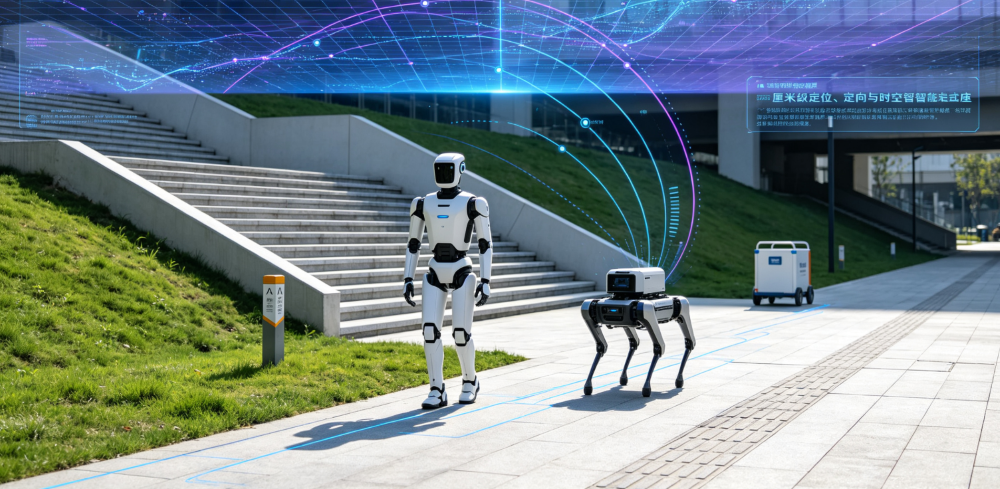
Advancing Embodied Intelligence: Practical Applications from the 2026 AI Conference
The 2026 World Artificial Intelligence Conference highlighted embodied intelligence, with over 300 robots showcased. Companies like Qianxun Positioning and 58 Intelligent participated, indicating a deeper integration of spatial intelligence into the embodied intelligence supply chain. For robots, large models are essential for understanding and decision-making, but they also need to know their location and movement dynamics. Qianxun Positioning introduced the SpatiXBot, a spatial intelligence platform that aids various embodied forms like robots and drones in autonomous navigation and environmental perception. This was exemplified during the Beijing Yizhuang Humanoid Robot Half Marathon, where Qianxun provided spatial intelligence kits to over two-thirds of the autonomous navigation teams, enabling precise positioning and orientation for independent running. The shift towards practical applications was further demonstrated at the 2026 Hangzhou International Embodied Robot Application Competition, where Qianxun and 58 Intelligent helped quadruped robots navigate real-world obstacles. Qianxun's technology also supported training exercises in urban scenarios. CEO Chen Jinpei emphasized the importance of spatial intelligence in enhancing robotic capabilities, bridging the gap between demonstration and industrial productivity.
Embodied Intelligence Spatial Intelligence Robotics AI Technology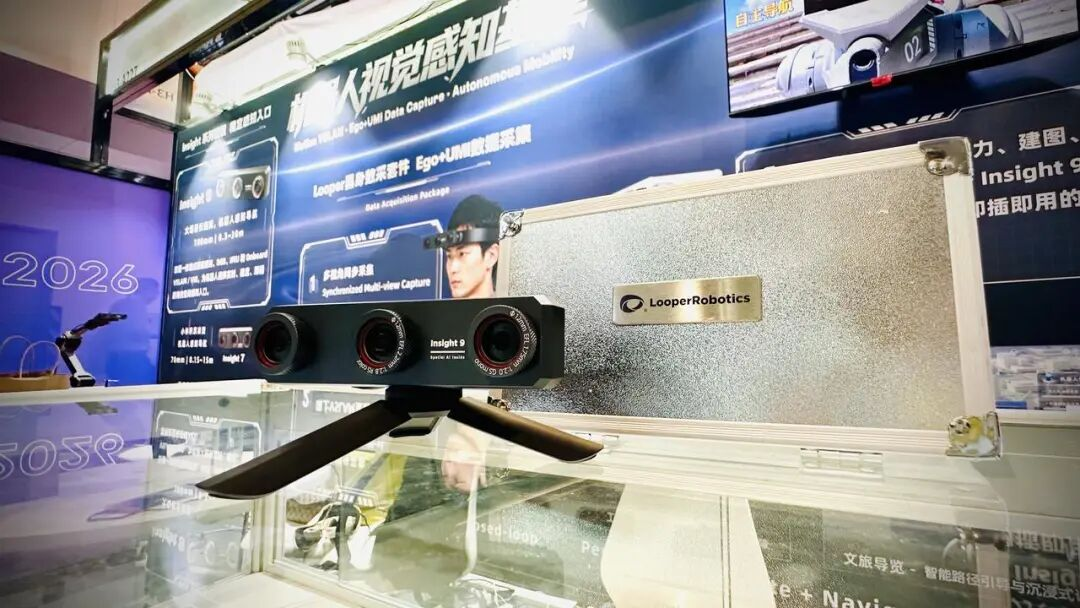
WAIC Highlights Embodied Intelligence with Data-Driven Innovations and New Players
Embodied intelligence emerged as a leading focus at this year's WAIC, attracting significant attention at the Expo Center. Numerous familiar companies showcased their production lines and scenarios, while new entrants like Guanglun Intelligent and Wuwen Zhike displayed data streams and algorithm demonstrations, drawing industry professionals eager to address data challenges. The shift in competition from 'building bodies' to 'establishing foundations' emphasizes the critical role of data in embodied intelligence. However, the industry faces a substantial bottleneck due to a lack of high-quality data. Chen Yilun, founder of Shizhi Hang, highlighted that at least 10 million hours of qualified data is needed for embodied operations, ten times that required for autonomous driving, with only about 500,000 hours available globally by early 2026. Looking ahead, the demand for data is projected to increase dramatically, with companies like Guanglun Intelligent leading the charge. The company, founded in 2023, aims to scale data collection and has already achieved a valuation exceeding 15 billion yuan. As the industry evolves, the need for effective data solutions will continue to create opportunities for innovation and growth.
Data Collection Embodied Intelligence AI Technology Robotics Data Analytics
WAIC 2026 Concludes with Key Trends in Embodied Intelligence Development
The 2026 World Artificial Intelligence Conference (WAIC) concluded on July 20, showcasing over 1,100 companies and more than 300 global product launches. Embodied intelligence emerged as a core focus alongside intelligent computing, with over 200 companies presenting 208 embodied intelligence terminals and over 300 real machines. This year's event marked a significant shift from previous years, where robots were primarily showcased for their dexterity to now addressing real industrial needs and continuous operation requirements. The transformation in the exhibition atmosphere reflects a broader industry acceleration, as robots are now expected to perform complex tasks and maintain stability in multi-machine collaborations. The metrics for evaluation have evolved from basic capabilities to more practical measures such as operational duration and recovery rates. This shift indicates a move from a technology narrative to an industry narrative, highlighting the importance of a complete industry chain from perception hardware to deployment. Looking ahead, the advancements in embodied intelligence, particularly in sensor technology and production capabilities, will be crucial for the industry's growth. The introduction of high-precision sensors and the establishment of automated production lines signal a readiness for mass production. No further timeline was disclosed at the time of publication.
Embodied Intelligence Tactile Sensing Robotics AI Technology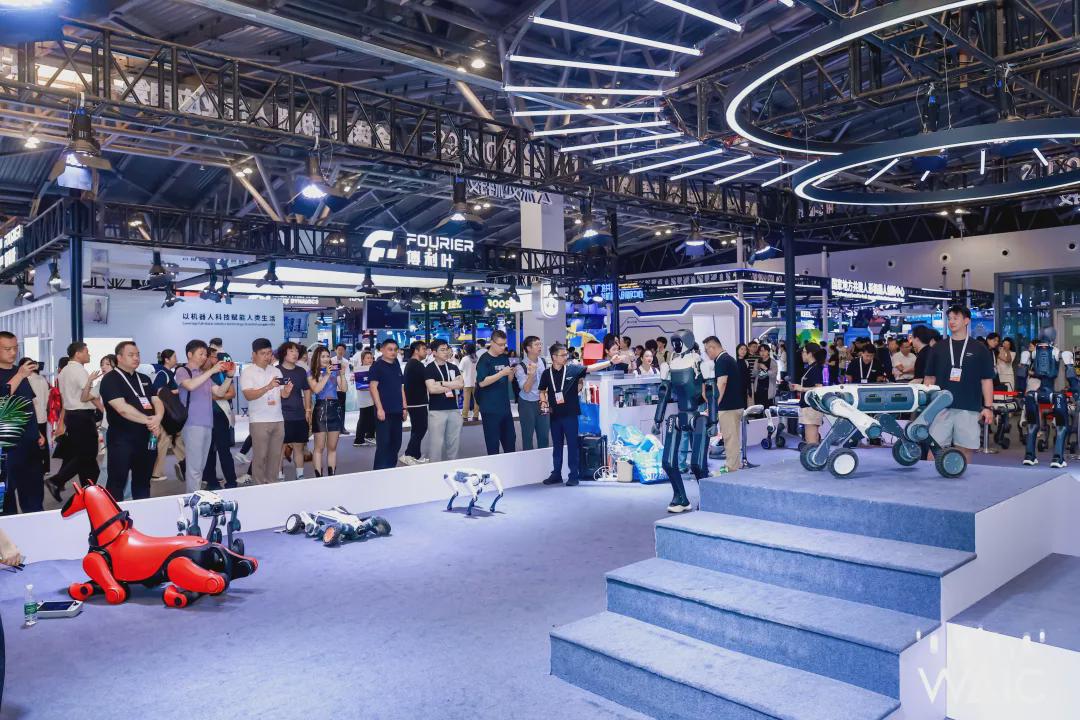
WAIC 2026 Showcases Advanced Embodied Intelligence Systems in Shanghai
In July 2026, the World Artificial Intelligence Conference (WAIC 2026) was held in Shanghai, featuring the theme 'Intelligent Partners, Co-Creating the Future.' The event highlighted embodied intelligence, attracting over 200 companies, with a focus on practical applications in high-risk environments. Among the exhibitors, Yunshen Technology stood out by presenting a diverse lineup of robots, including the humanoid DR02, quadrupedal robots from the Jueying series, and wheeled robots from the Shancat series. These robots, designed for challenging scenarios like power stations and emergency situations, emphasize real-world applications rather than just aesthetics. Yunshen Technology's approach contrasts with the industry norm of developing robots in controlled environments. By deploying robots in extreme conditions, the company aims to expose and improve their capabilities, creating a unique competitive advantage. The showcased products demonstrate a clear connection between their design and the demanding operational requirements they are built to meet.
Embodied Intelligence Robotics AI Technology Automation High-Risk Environments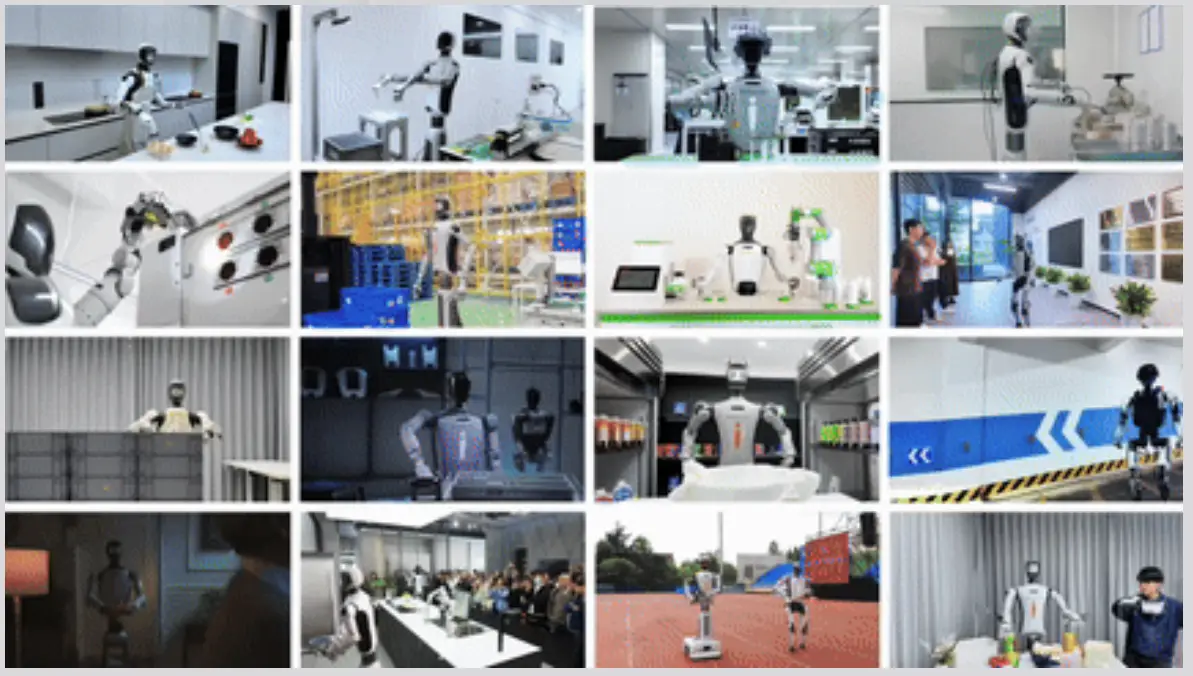
Zhejiang Humanoid NAVIAI Advances Embodied Intelligence with SPIRE and EvoStack Systems
In 2026, the robotics industry is shifting focus from basic functionality to achieving results in real-world applications. Companies must now demonstrate their ability to translate genuine needs into systemic capabilities, ensuring robots can operate effectively in various environments. This transition marks a significant evolution in the industry's landscape. Zhejiang Humanoid has positioned itself uniquely by addressing real demands early on, integrating technology, talent, and industry chains to create a robust 'industrial carrier.' The company emphasizes that the physical robot is just the entry point, while the systemic capabilities form the core competitive advantage, enabling robots to adapt and perform in diverse scenarios. The NAVIAI product matrix includes advanced bipedal robots and versatile robotic arms designed for complex tasks. The SPIRE technology framework enhances robot performance by bridging the gap between understanding and execution, while the EvoStack toolchain supports continuous adaptation and improvement. As the industry evolves, the ability to navigate uncharted territories will define the leaders in robotics.
Humanoid Robots Embodied Intelligence Industrial Automation Robotics Technology
WAIC 2026: Insight AI Unveils First Embodied Semantic Intelligence System, insightOS Semantic
At the 2026 World Artificial Intelligence Conference in Shanghai, Insight AI launched the world's first embodied semantic intelligence system, insightOS Semantic. This system represents a pivotal shift in the embodied intelligence industry, moving from mere demonstration capabilities to practical applications in real-world scenarios. The significance of this development lies in its comprehensive approach to embodied intelligence, which now requires not only technical prowess but also a robust operating system, scenario validation, and a thriving developer ecosystem. Insight AI aims to address the critical challenges of understanding, adaptability, and evolution in robotics, which have hindered the large-scale deployment of embodied systems. Looking ahead, Insight AI's insightOS Semantic is designed to facilitate seamless communication between humans and robots, enabling task execution through natural language. The system's architecture integrates semantic understanding with physical operation capabilities, promising to enhance the efficiency and intelligence of robots in dynamic environments. No further timeline was disclosed at the time of publication.
Embodied Intelligence Robotic Systems AI Technology Natural Language Processing
Yao Maoqing Discusses the Evolution of Physical AI Through Model and Data Integration
On July 19, during the 2026 World Artificial Intelligence Conference, Yao Maoqing, Senior Vice President and President of the Embodied Business Division at Zhiyuan, shared insights on the technological pathways for scaling physical AI. Zhiyuan has developed a three-phase training architecture of 'pre-training, post-training, and continuous learning' to advance its VLA and WAM technology routes towards the unified World Reasoning Action Model (WRAM). The integration of data is facilitated by Mifeng Technology, which utilizes the MEgo series of collection terminals and the MEgo Engine governance platform to create a comprehensive physical AI data infrastructure. This infrastructure supports data collection, governance, training, and deployment feedback, ensuring that real-world data continuously enhances model evolution. The collaborative model and data iteration system has already been validated in real industrial scenarios. Yao emphasized that 'models determine the starting point, while data defines the outcome.' He expressed the ambition of Zhiyuan and Mifeng to collaborate with the global academic community, industry, and developer ecosystem to accelerate the evolution of physical AI in real-world applications. No further timeline was disclosed at the time of publication.
Physical AI Data Infrastructure Machine Learning AI Development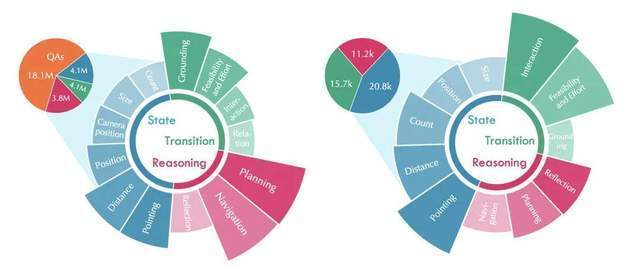
China's Embodied AI Models Gear Up for Competition Ahead of WAIC 2026
China's leading tech companies are intensifying their efforts in embodied AI as they prepare for the WAIC 2026 event in Shanghai, scheduled for July 17. This year's competition is marked by the launch of several advanced models, including Xiaomi's X0, a multimodal generative model with 38 billion parameters designed to enhance robotic training data generation. The significance of this competition lies in the critical need for physical interaction data, which is currently lacking by over 99%. Xiaomi's generative model aims to address this gap by autonomously generating and augmenting training data without the need for new data collection, thereby improving efficiency by 83 times. The event will showcase over 200 companies, highlighting the growing importance of embodied intelligence in the tech landscape. As the industry evolves, companies like Tencent Cloud and RoboScience are also making strides with cloud-based embodied AI services. The competition at WAIC 2026 will be pivotal, as companies vie for dominance in the emerging ecosystem of embodied intelligence, with advancements in visual understanding and cognitive reasoning being key areas of focus.
Embodied AI Robotics Data Synthesis Open Source Cognitive Computing
Nvidia Launches Cosmos 3 Edge AI Model and Expands Physical AI Ecosystem in Japan
Nvidia has introduced its new AI model, Cosmos 3 Edge, aimed at enhancing physical AI applications in Japan. This model is designed to help systems perceive and navigate real-world environments, marking a significant step in Nvidia's strategy to penetrate the physical AI market. The expansion is part of CEO Jensen Huang's visit to Japan, where Nvidia is forming partnerships with local industrial leaders such as Fujitsu, Hitachi, and Kawasaki Heavy Industries. Huang emphasized the potential for Japan to reinvent its manufacturing sector for intelligent industries, highlighting the country's historical significance in modern manufacturing. Looking ahead, Nvidia is also targeting Japan's healthcare and biotechnology sectors, collaborating on initiatives like the Tokyo-1 AI drug discovery consortium. With Japan's AI market projected to reach $27.9 billion by 2029, Nvidia's efforts could significantly influence the landscape of AI adoption in the region. No further timeline was disclosed at the time of publication.

ByteDance Explores Physical AI, Indicating a Shift Beyond Traditional Models
ByteDance has clarified its position regarding autonomous driving, stating it will not pursue smart driving. However, this clarification signals a significant shift as the company explores Physical AI. Unlike traditional AI, which learns from vast text data, Physical AI understands physical laws and causality, enabling it to predict physical states rather than merely generating text. The emergence of Physical AI is expected to peak around 2026 due to three key turning points: the spillover effects of large model technologies, breakthroughs in simulation technology that overcome data limitations, and a significant decrease in hardware costs. These advancements are paving the way for applications in autonomous driving, which has already seen large-scale commercialization in various sectors, outpacing humanoid robots still in demonstration phases. Industrial Physical AI is poised to revolutionize productivity through applications like predictive maintenance and quality inspection. While specialized robots are being deployed in logistics and inspection, the widespread implementation of general-purpose humanoid robots may take another 5 to 10 years. The competition in Physical AI has begun, marking a transformative shift as AI evolves from merely processing information to reshaping the world.
Physical AI Autonomous Driving Industrial Automation Simulation Technology
Xiaomi Launches Xiaomi-Robotics-U0 Foundation Model for Embodied AI Applications
Xiaomi has introduced the Xiaomi-Robotics-U0, a multimodal autoregressive foundation model featuring 38 billion parameters for embodied AI. This innovative model integrates four essential capabilities: embodied scene generation, embodied transfer, robot interaction video generation, and general-purpose image generation and editing. The significance of the Xiaomi-Robotics-U0 lies in its ability to create robot-ready environments from text prompts, adapt robot trajectories to new scenes while maintaining motion, and generate robot interaction videos based on task instructions. This advancement leverages extensive visual knowledge from the internet, enhancing the potential for embodied AI applications. Looking ahead, the impact of the Xiaomi-Robotics-U0 on the robotics and AI landscape will be closely monitored. Its capabilities could pave the way for more sophisticated robotic systems and applications, although no further timeline was disclosed at the time of publication.
News Feed
WAIC 2026 Preview: Highlights of Embodied Intelligence and Robotics
The WAIC 2026 is set to commence on July 17, featuring embodied intelligence and intelligent computing as its two main themes. Embodied intelligence has emerged as a focal point of the event, attracting significant attention from government, capital, industry, and the public. Over 200 companies are expected to showcase their innovations in this field. This year's exhibition marks a shift from demonstration effects to practical application capabilities, indicating a notable maturity in the industry chain. Attendees can expect to see an increase in complete machine categories, active large model solutions, and accelerated domestic component replacements. The H3 pavilion will highlight key exhibitors and trends, providing insights into the practical applications of embodied intelligence in various sectors. Notable companies such as Zhiyuan and UBTECH will present their latest humanoid robots and technologies, emphasizing production delivery capabilities over technical demonstrations. The event will also feature a demonstration of a robot factory and various innovative robotic solutions, showcasing the potential of embodied intelligence in real-world applications. No further timeline was disclosed at the time of publication.
Embodied Intelligence Humanoid Robots Robotics AI Industrial Automation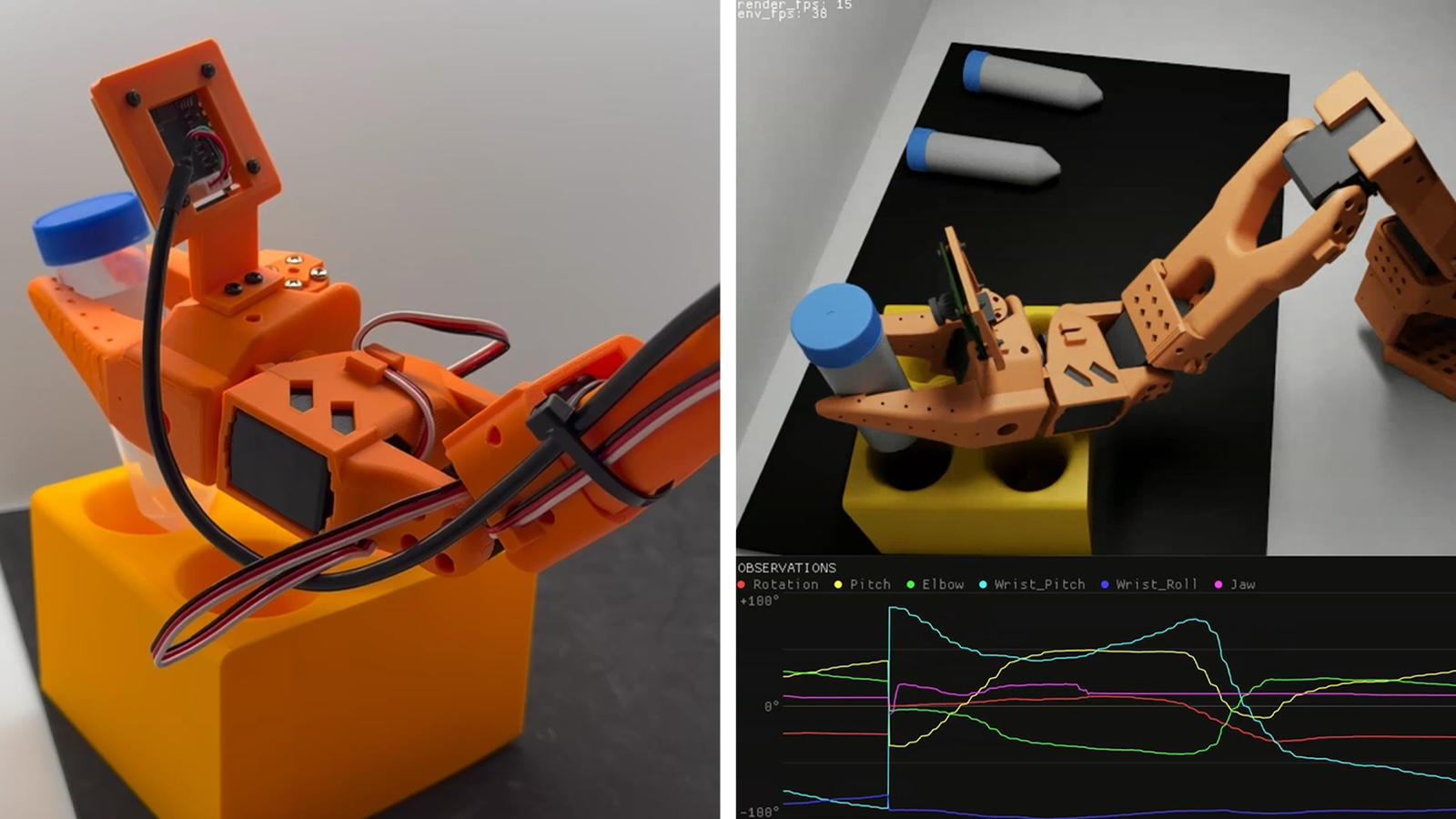
NVIDIA Open Sources Embodied Intelligence Toolchain to Enhance Robotics Development
On July 6, NVIDIA integrated three key components into Hugging Face's open-source robotics library, LeRobot: the GR00T N1.7 model, Isaac Teleop framework, and the upcoming Cosmos 3. This collaboration connects NVIDIA's 3 million robot developers with Hugging Face's 16 million AI builders, facilitating access to pre-trained models and data. This initiative is significant as it shifts NVIDIA's focus from merely creating models to building an ecosystem that addresses data bottlenecks in embodied intelligence development. The Isaac Teleop framework standardizes data collection, allowing for easier sharing and reuse within the community, which is crucial for advancing robotics. Looking ahead, the integration of GR00T N1.7 and Isaac Teleop into the LeRobot workflow marks a pivotal moment for robotics developers. No further timeline was disclosed at the time of publication.
Robotics Open Source AI Development Data Collection Machine Learning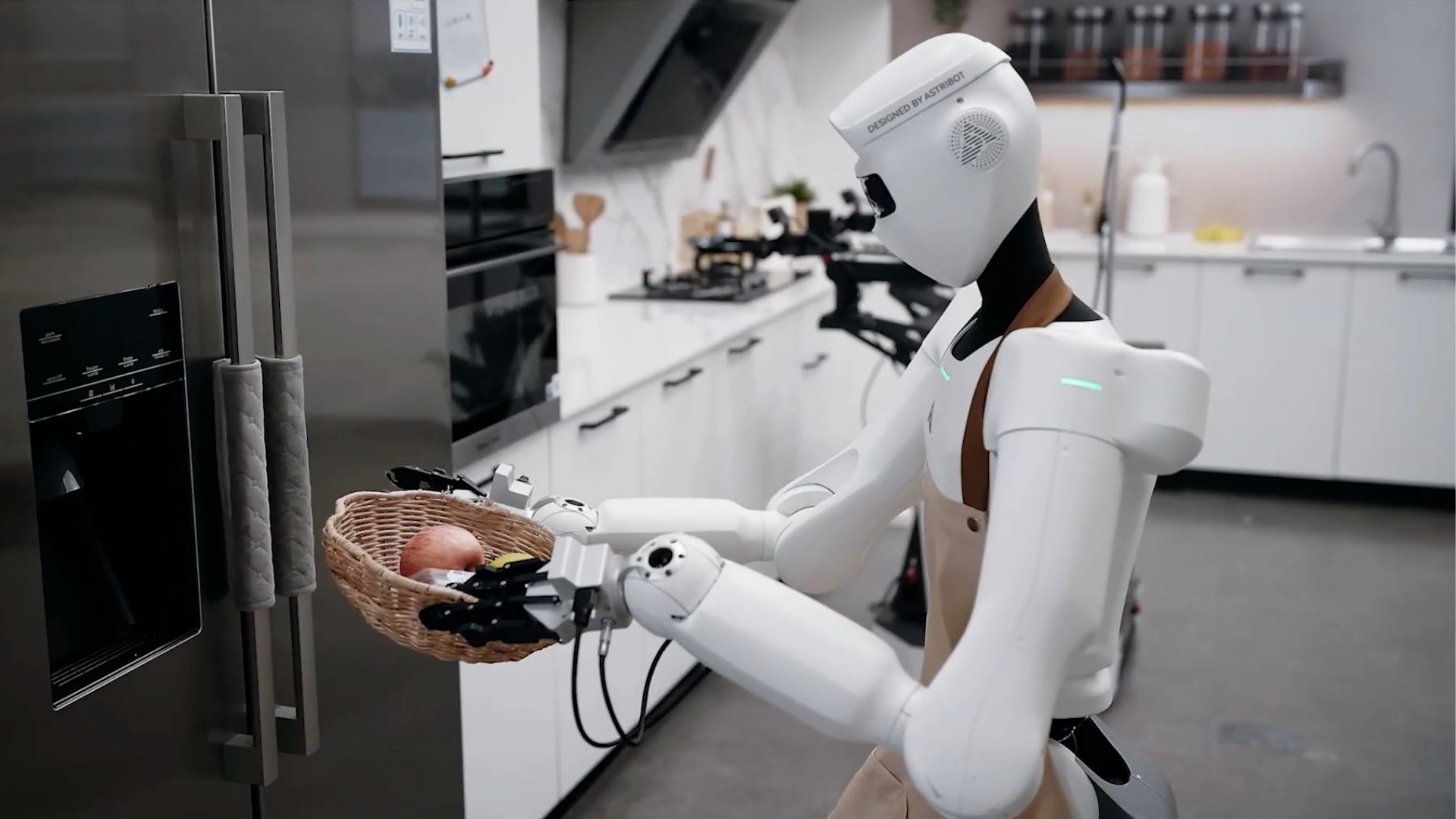
Robbyant Launches LingBot-VA 2.0, the First Embodied-Native AI Model for Robotics
Robbyant, a company under China's Ant Group, has introduced LingBot-VA 2.0, touted as the first embodied-native video-action world model specifically designed for robotics. Unlike traditional models adapted from digital content, LingBot-VA 2.0 is built from the ground up for physical-world tasks, enhancing physical accuracy and execution efficiency through its autoregressive architecture. This innovation is significant as it marks a departure from conventional robotics models that often compromise real-world performance by relying on video generation systems. Robbyant's approach allows for better prediction of how robot actions affect their environment, thus improving generalization and operational effectiveness in real-world applications. Looking ahead, Robbyant's LingBot-VA 2.0 is expected to advance the capabilities of robots in various tasks, demonstrated through its performance in complex scenarios such as preparing breakfast and unpacking deliveries. No further timeline was disclosed at the time of publication.
AI and Robotics
Thirteen New Embodied AI Models Released in June 2026 by BAAI and Alibaba
In June 2026, the landscape of embodied AI saw the introduction of 13 new models, including significant contributions from BAAI and Alibaba's Qwen-Robot. This rapid development indicates a shift from traditional hardware benchmarks to a focus on software intelligence, highlighting the competitive nature of the field. The emergence of these models underscores the growing importance of software capabilities in embodied AI, as companies strive to enhance their offerings and differentiate themselves in a crowded market. This trend reflects a broader industry movement towards prioritizing intelligent software solutions over hardware specifications. Looking ahead, industry observers should monitor the ongoing advancements in embodied AI models, as the pace of innovation suggests that new releases may continue to emerge frequently. No further timeline was disclosed at the time of publication.
Technology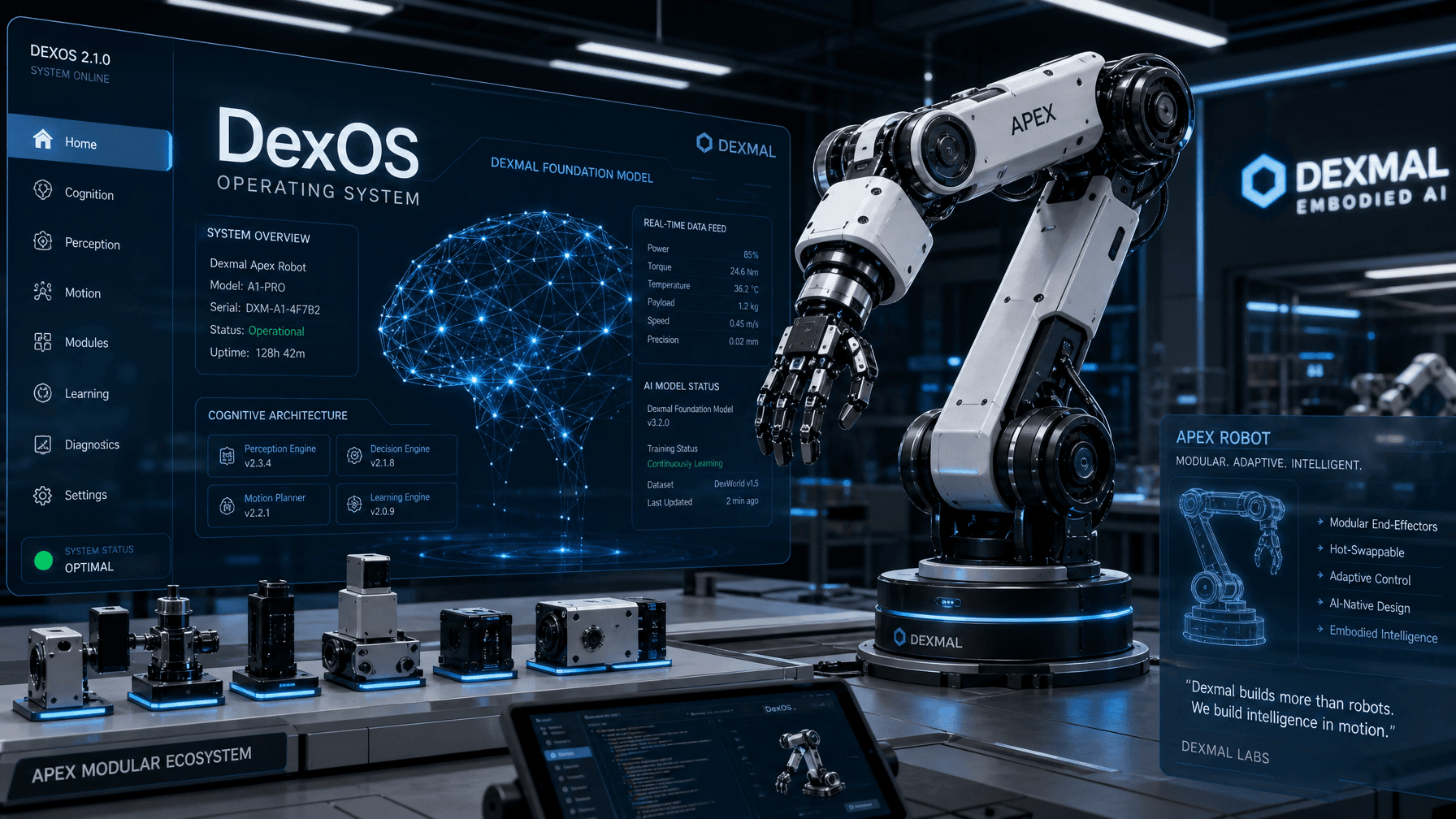
Dexmal Launches DM0.5 Model and DexOS to Enhance Embodied AI Productivity
Dexmal has introduced its DM0.5 foundation model, Apex universal robot, DexOS operating system, and MaaS platform, aiming to bridge the engineering gap between embodied AI models and practical productivity. This launch marks a significant step in the company's strategy to enhance the application of AI in real-world scenarios, with a focus on improving operational efficiency. The introduction of these products is crucial as they represent a comprehensive approach to integrating AI into various sectors. By addressing the final engineering challenges, Dexmal seeks to enable more seamless interactions between AI systems and physical environments, potentially transforming workflows across industries. The DM0.5 model is designed to optimize performance, while DexOS provides a robust operating framework for managing AI tasks. Looking ahead, Dexmal's three-stage strategy will be pivotal in determining the success of these innovations. The company has not disclosed specific timelines for the rollout of these products, but the focus on enhancing productivity through embodied AI suggests a proactive approach to market demands and technological advancements.
Technology
Understanding the World Model Taxonomy in Physical AI Development
In the spring of 2026, the term 'world model' has become central to discussions surrounding robotic foundation models, as noted by researcher Chris Paxton. The term's growing popularity has led to confusion, as it carries different meanings across various AI labs, each with unique strengths and weaknesses. This shift highlights the industry's focus on developing systems that can internalize the laws of physics through observation and interaction, moving beyond traditional hand-coded models. The significance of world models lies in their potential to revolutionize robotics by addressing the symbol grounding problem, which has hindered performance in real-world environments. Current projects, such as AMI Labs' Joint-Embedding Predictive Architecture (JEPA), aim to create systems that predict future latent states rather than every pixel, enhancing planning and reasoning capabilities. This approach, championed by Turing Award winner Yann LeCun, represents a substantial investment in the future of AI. Looking ahead, the development of world models will likely lead to innovative applications in robotics, as seen with NVIDIA's DreamDojo and Waymo's World Model. These initiatives utilize synthetic data generation to train robots in complex scenarios, paving the way for advancements in autonomous systems. No further timeline was disclosed at the time of publication.
World-Models embodied-ai world-model physical-ai
China CNR Unveils Advanced Smart Integrated Subway Featuring Embodied Intelligence in Berlin
China CNR has introduced a new generation of smart integrated subway systems in Berlin, marking a significant advancement in rail transit technology. This subway features embodied intelligence, which enhances operational efficiency and passenger experience through advanced AI capabilities. The introduction of this technology is crucial as it represents a shift towards smarter urban transportation solutions, addressing the growing demand for efficient and sustainable public transit systems. By integrating embodied intelligence, CNR aims to set a new standard in rail transit, potentially influencing global trends in smart city infrastructure. Looking ahead, industry observers will be keen to see how this technology performs in real-world applications and its impact on future subway systems. No further timeline was disclosed at the time of publication.
Robotics Automation AI
Feisi Lab Launches Air-Ground Collaborative Intelligence Lab for Undergraduate Talent Development
Feisi Lab has established an Air-Ground Collaborative Embodied Intelligence Lab aimed at enhancing undergraduate education in emerging interdisciplinary fields. This initiative aligns with the Ministry of Education's 2025 plan to revamp curriculum systems and introduce new majors, including embodied intelligence and low-altitude technology. The lab focuses on developing high-level engineering skills in collaborative perception, swarm control, and system integration. It offers tailored solutions for universities, integrating simulation and real-world applications to bridge the gap between fragmented knowledge and systematic projects, thus optimizing practical teaching. The program has already been implemented in several universities, including Zhengzhou University of Aeronautics and Jilin Chemical Engineering College. It emphasizes the integration of theoretical learning, simulation development, hardware validation, and real-world collaboration, fostering a comprehensive educational loop for students in the low-altitude and embodied intelligence sectors.
Embodied Intelligence Low-Altitude Technology Educational Innovation Engineering Skills Collaborative RoboticsRobotics needs a service framework.
RSF defines a common language for robot service capability, lifecycle operations, certification pathways, and service-provider networks.
Join the RobotToday community on LinkedIn
Daily robotics news, in-depth analysis, conference highlights, and discussions with professionals worldwide.







