

Industry Briefing
A single destination for timely, editor-curated robotics news from around the world.

Tesla Reportedly Places Large-Scale Order for Optimus Components Amid Production Ramp-Up
Reports from Chinese industrial channels suggest that Tesla has initiated its first significant procurement order for the Optimus humanoid program, with approximately 5,000 component units ordered in early September. This move indicates a shift from low-volume prototyping to a structured production-level supply chain, coinciding with manufacturing advancements at Tesla's Fremont plant. The implications of this procurement are substantial, as it signals a transition point for the Optimus initiative, which aims for an installed capacity of 1 million units per year. Analysts predict that if the current batch of components is successfully assembled, production rates could exceed 2,500 units weekly by year-end, marking a critical phase in Tesla's manufacturing strategy. Looking ahead, Tesla is reportedly targeting an internal delivery goal of 10,000 to 20,000 humanoid robots for deployment by 2026. The transition to large-scale production will test suppliers' capabilities, particularly in motion-control components, as the demands of humanoid robotics require precision and advanced engineering solutions. No further timeline was disclosed at the time of publication.
Optimus Tesla US Optimus gen 3 manufacturing China
Raytheon Secures $20.7B Pentagon Contract to Boost AMRAAM Missile Production to 1,900 Annually
Raytheon has secured a multiyear U.S. defense contract valued at up to $20.7 billion, aimed at ramping up AMRAAM missile production to a record 1,900 units per year. This five-year agreement, awarded on September 25, is part of the U.S. Department of War's Arsenal of Freedom initiative, which seeks to enhance American weapons manufacturing capabilities. The significance of this contract lies in its potential to meet the increasing demand for missile inventories from the U.S. military and its allies. Raytheon has already seen a near doubling of AMRAAM output in 2025 compared to 2024, highlighting the missile's critical role in beyond-visual-range air combat and its integration into the NASAMS air-defense system. Looking ahead, Raytheon is focused on expanding its manufacturing capacity and ensuring a steady supply chain to support the ambitious production goals. The company is also considering international co-production opportunities as it navigates the complexities of increasing missile output while maintaining quality and efficiency in its operations. No further timeline was disclosed at the time of publication.
Military
Teledyne Secures $15.4 Million Contract to Boost European Drone Production
Teledyne Energetics UK, a division of Teledyne Technologies, has secured a $15.4 million contract with a European defense technology manufacturer. This agreement aims to supply specialist energetics for advanced unmanned systems, facilitating the transition of next-generation drone programs from development to large-scale production. The contract is significant as it aligns with Europe's efforts to enhance its own drone capabilities and reduce reliance on external supply chains. Teledyne's role involves providing critical components that ensure the reliability and safety of unmanned systems, which are increasingly vital in modern warfare. Looking ahead, Teledyne anticipates that the initial contract could evolve into a relationship exceeding $50 million as production needs grow. Deliveries are commencing immediately, and the company is poised to expand its regional manufacturing capacity to support European drone makers in scaling production effectively.
News
Thirty Robots Demonstrate for AI Regulation in Warsaw, Poland
Approximately 30 robots gathered in Warsaw on Monday to advocate for stricter regulations on artificial intelligence. The demonstration took place in front of the Polish digital affairs ministry, where the robots waved flags and chanted slogans to express their concerns. This event highlights the growing awareness and demand for regulatory measures surrounding AI technologies. As robots increasingly integrate into various sectors, the call for oversight becomes more pressing, reflecting broader societal concerns about the implications of unregulated AI. Observers should monitor how this demonstration influences policy discussions in Poland regarding AI regulation. The actions of these robots may serve as a catalyst for further dialogue on the ethical and practical aspects of AI deployment in society. No further timeline was disclosed at the time of publication.
Robotics
Innometry Accelerates Deployment of 1PASS-RING CT System for Battery Inspection
Innometry announced an accelerated deployment of its next-generation 1PASS-RING CT system, designed for contactless scanning of battery cells. This innovative system eliminates the need for physical handling, protecting cells from potential damage during inspection. Unlike traditional CT systems that utilize robotic arms, the 1PASS-RING employs a ring-shaped scanner that rotates around a stationary cell, enhancing operational efficiency. The significance of this advancement lies in its ability to streamline battery inspection processes while meeting critical production-line criteria. The system reduces floor space requirements by 50% and increases inspection speeds by 40%, addressing the battery industry's demand for contactless testing. Innometry's technology not only improves logistics routing and scanning speed but also ensures long-term reliability, making it a vital tool for mass-production lines. Looking ahead, Innometry is also finalizing a next-generation Helical CT system that will allow continuous scanning without halting production lines. This development is expected to enhance the capabilities of battery inspection further. No further timeline was disclosed at the time of publication.
All News
Teradyne Robotics Files Patent Infringement Lawsuit Against JAKA in Europe
Teradyne Robotics has initiated a patent infringement lawsuit against JAKA, a German subsidiary of the Chinese robotics company, alleging violations related to Universal Robots' collaborative robots. This marks Teradyne's second significant legal action against a Chinese robotics firm in Europe this year, following a copyright infringement case against Elite Robots. The lawsuit, filed with the Unified Patent Court in Copenhagen, claims that JAKA's products infringe multiple patents covering both hardware and software aspects of Universal Robots' offerings. Teradyne Robotics' interest in JAKA arose after observing similarities between their robot designs, prompting an investigation that suggested potential patent violations. As the case unfolds, a ruling from the Unified Patent Court could have extensive implications across 17 EU member states and potentially affect countries outside the UPC Agreement. Teradyne Robotics emphasizes its commitment to protecting its intellectual property rights against what it views as unfair competition in the robotics sector.
China Cobot Arms Collaborative Robots Investments News JAKA Robotics
AGIBOT Achieves Milestone with 15,000th Robot Production Amid Rapid Growth
AGIBOT, a Shanghai-based robotics developer, has announced the production of its 15,000th robot, an industrial-grade AGIBOT G2 task robot. This milestone signifies a pivotal shift from limited proof-of-concept projects to high-volume manufacturing, reflecting AGIBOT's aggressive production strategy since its founding in February 2023. The rapid increase in production, from 5,000 to 15,000 units in just three months, highlights AGIBOT's ability to stabilize its manufacturing pipelines and meet large-scale delivery demands. The company has also shifted its validation strategy to real-world deployments, showcasing the AGIBOT G2 in live factory operations at Longcheer Technology's tablet assembly plant, which emphasizes the practical utility of its robots. As AGIBOT continues to expand, it faces challenges in managing the complexities of real-world deployments and potential geopolitical restrictions on market access. The company's success in achieving a 39% market share in humanoid robot shipments for 2025 positions it strongly in a competitive landscape, but the long-term viability will depend on addressing operational dynamics and maintaining production efficiency.
China AGIBOT
U.S. Customs Ramps Up AI Investment in Push to Sharpen Enforcement
As the U.S. Customs and Border Protection (CBP) prepares to receive new funding aimed at enhancing technology and enforcement measures, trade lawyers and customs brokers nationwide are advising their clients to adopt more rigorous compliance practices. This call for increased diligence comes in light of anticipated changes in enforcement protocols, which are expected to be implemented following the allocation of funds. The funding, set to be rolled out in the coming months, is part of a broader initiative to strengthen border security and streamline trade processes. Legal experts emphasize the importance of understanding and adhering to evolving regulations to avoid potential penalties and ensure smooth operations in international trade. As businesses brace for these changes, the focus on compliance is seen as critical for navigating the complexities of customs regulations effectively.

Walmart-backed Flipkart expands quick-commerce push as Amazon ramps up in India
Walmart-backed Flipkart has achieved a significant milestone by surpassing 1,000 micro-fulfillment centers across India, marking a pivotal moment in the competitive landscape of quick-commerce. This expansion comes as Amazon intensifies its efforts to enhance its own quick-commerce operations in the region. The rapid growth of Flipkart's micro-fulfillment network is aimed at improving delivery efficiency and meeting the increasing demand for fast and reliable online shopping services among Indian consumers. As both companies vie for dominance in the burgeoning e-commerce market, Flipkart's strategic move underscores its commitment to leveraging technology and logistics to stay ahead of competitors.
Commerce Amazon Flipkart Quick commerce Walmart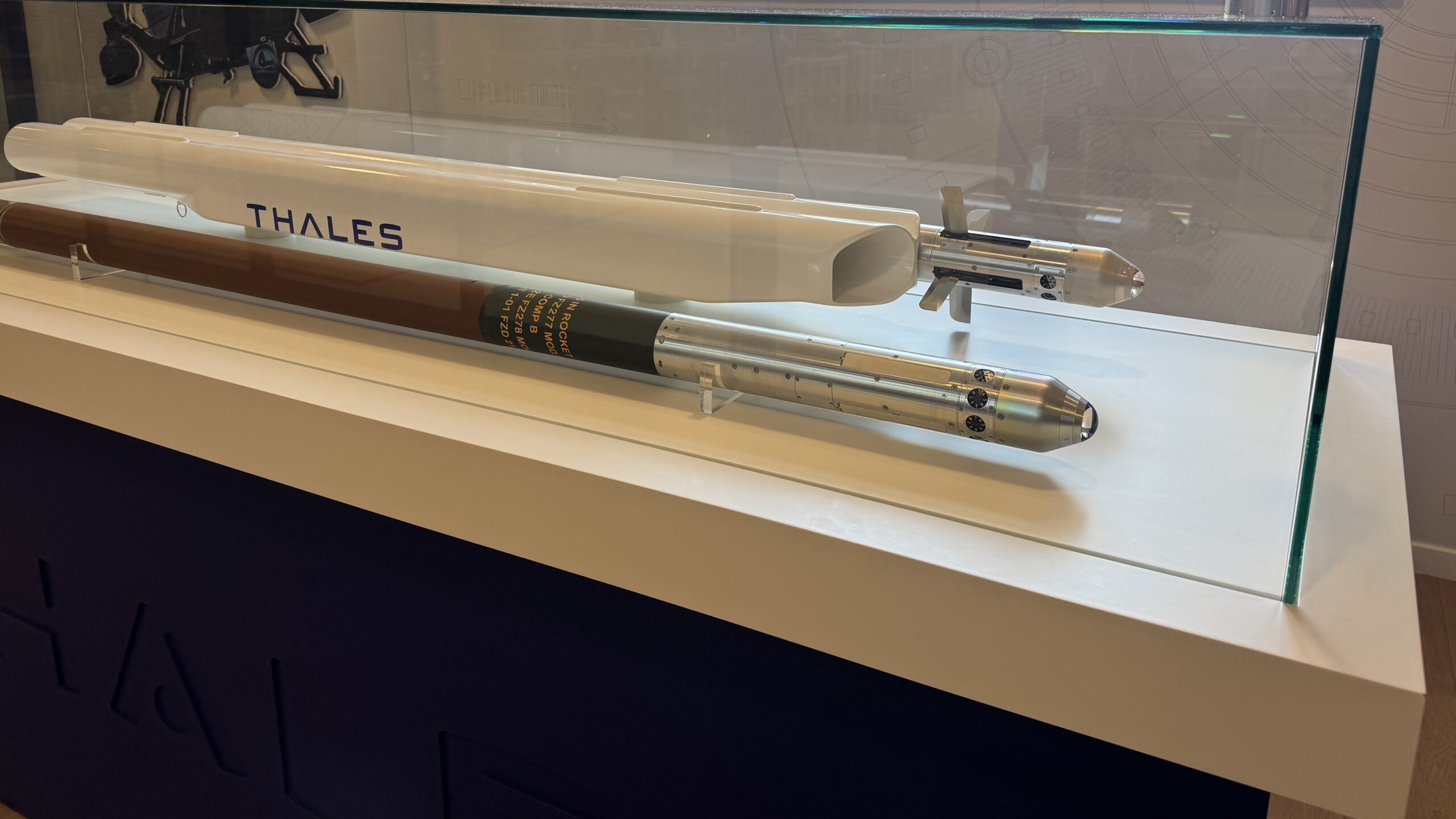
Thales ramps up guided rocket production to address increased ME demand
In response to the escalating situation in the Middle East, a company executive announced that their production numbers have more than doubled. This significant increase reflects the company's commitment to addressing heightened demand amid ongoing regional tensions. The announcement was made during an interview with Breaking Defense, highlighting the company's proactive approach to adapt to the current geopolitical landscape. The executive emphasized that the decision to ramp up production is a strategic move to ensure they can meet the needs of their clients during these uncertain times.
Global Business & Industry Counter UAS cUAS Drones Europe guided rocket
NVIDIA Vera Rubin Ramps Into Full Production to Power Agentic AI Factories Worldwide
At the NVIDIA GTC event in Taipei, the company unveiled that its NVIDIA Vera Rubin platform is set to enter full production. This new platform aims to enhance the capabilities of agentic AI factories globally. The announcement marks a significant step in NVIDIA's efforts to advance artificial intelligence technologies and support the growing demand for automated manufacturing solutions. By leveraging the Vera Rubin platform, NVIDIA intends to empower industries to optimize their operations and improve efficiency through AI-driven processes.

Humanoid robots join human models in rampwalk at futuristic Seoul fashion show
At a recent fashion show in Seoul, humanoid robots donned designer outfits, showcasing a unique blend of technology and haute couture. The event, which took place on [insert date], featured these advanced robots walking the runway alongside human models, highlighting the intersection of fashion and robotics. This innovative display aimed to captivate audiences and spark conversations about the future of fashion in an increasingly digital world. By integrating robotics into the fashion industry, designers are exploring new creative avenues and challenging traditional concepts of modeling and presentation. The show exemplified how technology can enhance artistic expression, leaving attendees intrigued by the possibilities that lie ahead in both fashion and robotics.

Figure ramps up humanoid robot manufacturing at unprecedented speed
Figure AI, a company specializing in humanoid robotics, has announced a significant breakthrough in manufacturing capabilities. After years of developing meticulously choreographed demonstrations and prototypes, the company claims to have overcome the challenges associated with producing humanoid robots at scale. This advancement is crucial, as the ability to manufacture hundreds of robots reliably and economically has long been a hurdle in the industry. The announcement comes amid growing interest in humanoid robotics, driven by the potential applications in various sectors. Figure AI's progress could pave the way for broader adoption and integration of humanoid robots into everyday tasks and industries.
Features Humanoids ai robotics automation news Autonomous robots botq
Pentagon ramps AI oversight with Microsoft, Google models before public deployment
The U.S. government is intensifying regulations on advanced artificial intelligence technologies, responding to growing concerns over their potential risks and ethical implications. This initiative, announced recently, aims to establish a framework that ensures the responsible development and deployment of AI systems. The new measures are part of a broader effort to address issues such as privacy, security, and bias in AI applications. The regulations are expected to be implemented in the coming months, with the Biden administration emphasizing the need for collaboration between federal agencies, industry leaders, and academic institutions. By fostering a transparent and accountable AI ecosystem, officials hope to mitigate risks while promoting innovation. The move reflects a proactive stance in the face of rapid advancements in AI, as policymakers seek to balance technological progress with public safety and ethical standards. As the global landscape for AI continues to evolve, the U.S. aims to position itself as a leader in responsible AI governance, setting a precedent that could influence international standards and practices.

Video Friday: Figure, 1X Ramp Up Humanoid Robot Production
IEEE Spectrum robotics has released its weekly roundup of notable robotics videos and upcoming events, including major conferences like ICRA 2026 in Vienna and RSS 2026 in Sydney. A significant development in humanoid robotics has occurred with the opening of the NEO Factory in Hayward, California, which is now producing robots at a rate of 55 per week. This facility, which spans 58,000 square feet and employs over 200 staff, allows for complete in-house manufacturing, enhancing safety and efficiency. The first consumer robots are expected to ship in 2026, marking a pivotal step toward the realization of general-purpose home robots. In other news, NASA continues its exploration of Mars with two rovers, Perseverance and Curiosity, studying different geological eras of the planet. Meanwhile, the Chinese-made Unitree G1 humanoid robots are gaining traction in the U.S. tech landscape, being utilized by companies like OpenAI and Nvidia, raising questions about their implications for security and privacy. Additionally, advancements in robotics are showcased through various projects, including a surgical robot designed to streamline Neuralink implant procedures and a tactile-enabled humanoid manipulation system that enhances dexterity and stability in real-world tasks. As robotics technology evolves, experts are also exploring how autonomous systems make decisions in unpredictable environments, emphasizing the importance of AI in coordinating complex operations.
Humanoid-robots Video-friday Robot-videos Robot-manipulation Industrial-robots Robot-hands
Figure AI Ramps Up Production to One Humanoid Robot Per Hour
Figure AI, a company specializing in humanoid robotics, has significantly ramped up production of its Figure 03 robot, increasing output from one unit per day to one per hour in under four months. This surge in manufacturing has resulted in the production of over 350 units of the third-generation humanoid robot, utilizing the company's high-volume manufacturing facility known as BotQ. The accelerated production reflects Figure AI's commitment to advancing humanoid robotics technology and meeting growing market demand.
AI AI Use Cases Robotics Figure AI humanoid robotics production
Ramping Figure 03 Production
Figure has announced a significant milestone in the production of its third-generation humanoid robot, the Figure 03, achieving a manufacturing rate of one robot per hour. This advancement took place at their BotQ facility, marking a transition to high-volume manufacturing. The increased production capacity not only accelerates the development process but also facilitates extensive data collection, which is essential for enhancing the robot's autonomous capabilities. This strategic move underscores Figure's commitment to innovation and efficiency in the robotics industry.
humanoid robotics manufacturing automation AI production scaling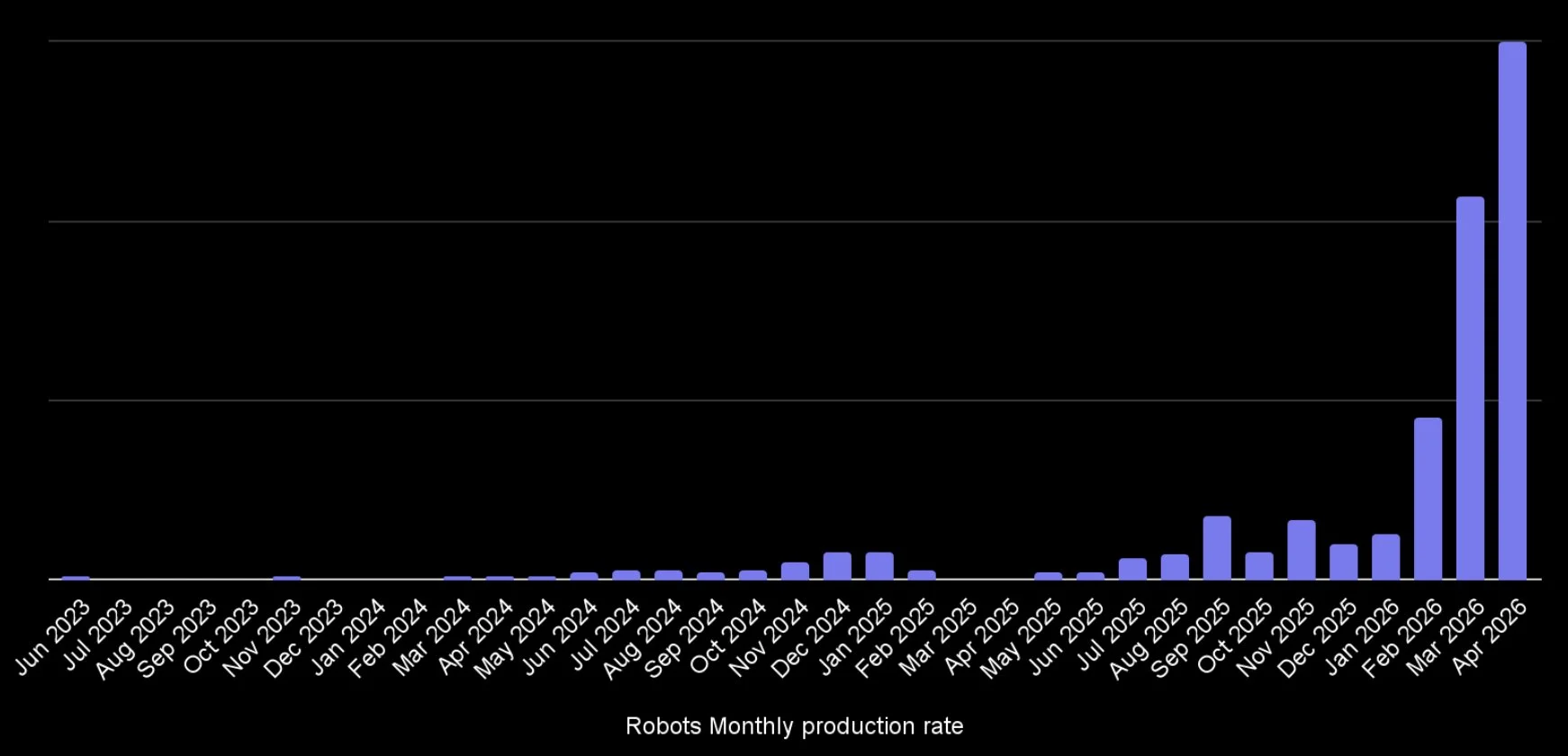
The Shape of Scale: New Figure Production Data Hints at Exponential Ramp-Up
CEO Brett Adcock announced a significant increase in humanoid manufacturing at Figure's BotQ facility, sparking widespread speculation regarding the exact production volume. This surge comes as the company aims to enhance its capabilities in humanoid robotics, reflecting a growing interest in advanced automation technologies. While specific figures have not been disclosed, the announcement has generated considerable excitement and curiosity within the tech industry and among investors. The developments at the BotQ facility are seen as a pivotal step in Figure's strategy to position itself as a leader in the humanoid robotics sector.
Brett Adcock US Figure Figure-03
Sharpa Robotics Ramps Up Mass Production of "Vision-Based" Tactile Hand
As CES 2026 approaches, a Singapore-based robotics firm has announced significant advancements in its SharpaWave end-effector. The company revealed details about its rigorous reliability testing, showcasing the product's durability and effectiveness in various applications. Additionally, the firm confirmed that the SharpaWave features a modular design, allowing for enhanced adaptability and customization in robotic systems. This strategic development aims to position the company as a leader in the robotics industry, responding to the growing demand for versatile and reliable robotic solutions. The unveiling of these innovations is expected to attract attention at the upcoming technology showcase in Las Vegas, where industry leaders and enthusiasts will gather to explore the latest advancements in robotics and automation.
SharpaWave Sharpa Robotics hands
Meituan secures China’s first nationwide drone delivery license, ramping up competition with Google Wing
Meituan, a leading on-demand delivery service in China, has achieved a significant milestone with its self-developed fourth-generation drone, which has recently passed a review by the Civil Aviation Administration of China (CAAC). This approval grants Meituan the first nationwide operating certificate for low-altitude logistics in the country. The drone is designed to withstand extreme weather conditions, capable of functioning in temperatures ranging from -20°C to 50°C and managing moderate rain, snow, and winds. This advancement not only enhances Meituan's delivery capabilities but also positions the company at the forefront of the logistics industry in China, reflecting a growing trend towards the integration of drone technology in everyday services.
News News Feed Drones E-commerce and New Retail MeituanRobotics needs a service framework.
RSF defines a common language for robot service capability, lifecycle operations, certification pathways, and service-provider networks.
Join the RobotToday community on LinkedIn
Daily robotics news, in-depth analysis, conference highlights, and discussions with professionals worldwide.







