

Industry Briefing
A single destination for timely, editor-curated robotics news from around the world.

Micro Yi's Paper on FSDC-DETR Selected for ECCV 2026, Advancing Quality Inspection
Micro Yi's collaboration with East China Normal University has resulted in their paper, 'FSDC-DETR: A Frequency-Spatial Domain Collaborative DETR for Small Object Detection,' being accepted at ECCV 2026. This prestigious conference received 10,473 submissions, with only 2,883 accepted, highlighting the significance of their research in the field of computer vision. The FSDC-DETR framework addresses the challenge of detecting tiny defects in precision manufacturing, such as bubbles and micro-cracks, which often occupy only a few dozen pixels in high-resolution images. By integrating CNN's local high-frequency detail extraction with ViT's global low-frequency modeling, the architecture effectively retains edge and texture information, significantly reducing both missed and false detections. Currently, FSDC-DETR is embedded in Micro Yi's industrial embodied intelligent quality inspection robots, achieving a cold start detection rate of 95.55% in complex scenarios like die-casting. With over 23TB of aligned precision data and substantial R&D investment, Micro Yi is positioned to lead the embodied intelligence market, projected to grow significantly by 2026.
Industrial Robotics Quality Inspection Computer Vision AI Technology
ZhiYuan G2 Launches Live Broadcast of Global First 3C Production Line Quality Inspection
Beginning June 23, Longqi Technology will host a six-day live broadcast featuring multiple ZhiYuan G2 robots operating on the production line at its Jiangxi factory. This event aims to provide an unedited and unrehearsed look at the robots as they conduct thorough quality inspections within the 3C electronics manufacturing process. The initiative highlights the practical application of embodied intelligence in a real-world setting, showcasing advancements in automation and robotics in the manufacturing industry.
Robotics Quality Inspection 3C Electronics Manufacturing Automation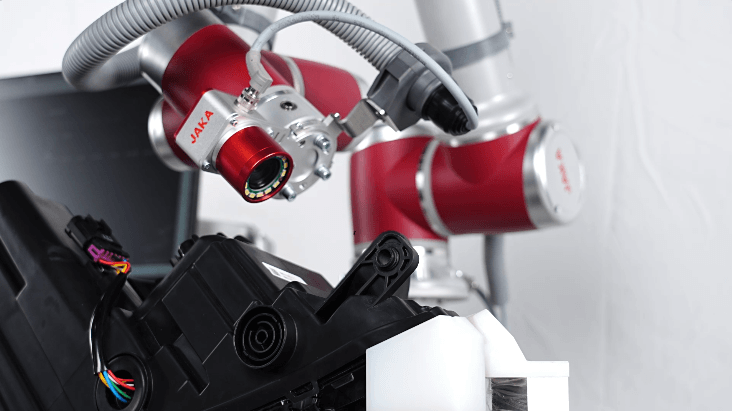
Implementing Automated Quality Inspection with a Pick and Place Robotic Arm
In a significant advancement towards "Zero-Defect Manufacturing," the boundaries between production and quality control are being redefined. Modern manufacturing facilities are now incorporating real-time inspection directly into the material handling process, rather than waiting until products reach the end of the assembly line. This shift is facilitated by the use of a 6-axis robotic arm, which functions as both a pick-and-place device and an inspection station, enabling manufacturers to detect defects immediately and minimize waste. During the automated quality inspection, the robotic arm evaluates components as it lifts them, utilizing a vision tunnel or high-resolution sensors to check for dimensional accuracy, surface integrity, and assembly verification. Parts that meet quality standards proceed to the "Good" bin, while those that fail are diverted to rework or scrap stations, ensuring that only flawless components advance in the production process. To achieve effective robotic inspection, three key technologies are essential: adaptive grippers for versatile handling, advanced vision sensors for precise measurements, and Edge AI processing to enable real-time data analysis. The JAKA Zu series of robots exemplifies this integration, particularly the JAKA Zu7 model, which is designed for high-precision inspection tasks. With a payload capacity of 7kg and a work radius of 819mm, it offers the agility and strength needed for rapid inspection cycles, while its compatibility with various communication protocols allows seamless integration with manufacturing systems. This innovative approach transforms each handling operation into an opportunity for quality assurance, enhancing overall production efficiency.
Implementing a Sorting Robot for Quality Inspection in Recycling Processes
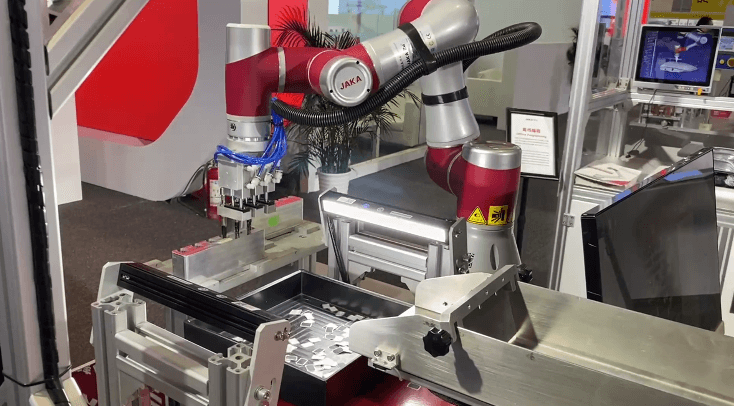
Recycling facilities face ongoing challenges in maintaining material purity due to the variability of recyclables, which complicates manual sorting processes. To address this issue, JAKA is proposing the implementation of automated sorting robots designed to integrate seamlessly into existing workflows. These collaborative robots, or cobots, are equipped with advanced vision-guided systems that can identify and separate diverse materials based on visual or spectroscopic signals. The robots are engineered to operate effectively in the dynamic environments of recycling plants, where safety is paramount. JAKA's cobots feature multiple safety mechanisms, including force sensing and collision detection, allowing them to work alongside human operators without the need for extensive safety barriers. Their compact design enables installation in tight spaces, making them suitable for retrofitting in current facilities. Successful deployment of these sorting robots relies on a well-coordinated system that includes high-resolution cameras or near-infrared sensors for accurate material identification, as well as adaptive grippers or vacuum cups for handling various materials. JAKA emphasizes intuitive programming, allowing technicians to quickly adjust the robots for different material streams, thus minimizing downtime. By incorporating JAKA's sorting robots into recycling quality inspection processes, facilities can significantly enhance material purity and throughput. This strategic move not only improves operational consistency but also supports the essential work of modern recycling, ensuring a more efficient and effective waste management system.

Automatic Visual Inspection: The Secret to Flawless Manufacturing Quality
Manufacturers are enhancing their quality control processes by adopting a digital inspection framework, which allows engineers to shift their focus from merely identifying defects to addressing the underlying causes of these issues. This transition, which emphasizes the importance of human expertise in the manufacturing process, aims to improve overall product quality and efficiency. By integrating advanced technology into their inspection protocols, companies are not eliminating the human element but rather elevating it, enabling skilled professionals to apply their knowledge and problem-solving abilities more effectively. This strategic move reflects a growing trend in the industry, as organizations seek to leverage digital tools to optimize operations and enhance the role of human oversight in quality assurance.
Robotics needs a service framework.
RSF defines a common language for robot service capability, lifecycle operations, certification pathways, and service-provider networks.
Join the RobotToday community on LinkedIn
Daily robotics news, in-depth analysis, conference highlights, and discussions with professionals worldwide.







