

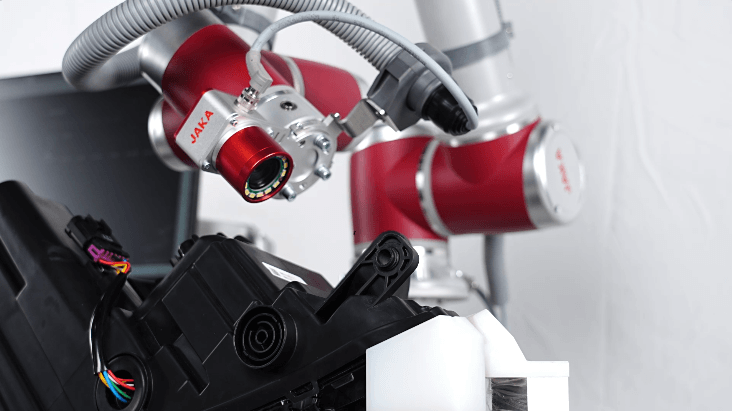
In a significant advancement towards "Zero-Defect Manufacturing," the boundaries between production and quality control are being redefined. Modern manufacturing facilities are now incorporating real-time inspection directly into the material handling process, rather than waiting until products reach the end of the assembly line. This shift is facilitated by the use of a 6-axis robotic arm, which functions as both a pick-and-place device and an inspection station, enabling manufacturers to detect defects immediately and minimize waste.
During the automated quality inspection, the robotic arm evaluates components as it lifts them, utilizing a vision tunnel or high-resolution sensors to check for dimensional accuracy, surface integrity, and assembly verification. Parts that meet quality standards proceed to the "Good" bin, while those that fail are diverted to rework or scrap stations, ensuring that only flawless components advance in the production process.
To achieve effective robotic inspection, three key technologies are essential: adaptive grippers for versatile handling, advanced vision sensors for precise measurements, and Edge AI processing to enable real-time data analysis. The JAKA Zu series of robots exemplifies this integration, particularly the JAKA Zu7 model, which is designed for high-precision inspection tasks. With a payload capacity of 7kg and a work radius of 819mm, it offers the agility and strength needed for rapid inspection cycles, while its compatibility with various communication protocols allows seamless integration with manufacturing systems. This innovative approach transforms each handling operation into an opportunity for quality assurance, enhancing overall production efficiency.

























Leave a comment