

Industry Briefing
A single destination for timely, editor-curated robotics news from around the world.

Agility Robotics' Digit 5 Robot Enhances Safety for Human Interaction in Factories
Agility Robotics has introduced the Digit 5 humanoid robot, designed to prioritize safety by avoiding human interference. The robot employs a sophisticated safety motion system that responds to the presence of humans by either navigating around them, stopping, or sitting down, depending on the proximity. This approach aims to create a more integrated environment for robots and humans in industrial settings. The significance of Digit 5 lies in its ability to address safety concerns that have historically hindered the deployment of humanoid robots in factories. With over 65,000 hours of operational and commercial deployment, Agility emphasizes the reliability of its product. The endorsement from the Occupational Safety and Health Administration (OSHA) further strengthens its appeal to industrial clients, as safety compliance is often a critical factor in procurement decisions. Looking ahead, Agility Robotics aims to eliminate the barriers to widespread humanoid robot adoption in industrial environments. The Digit 5's features, such as a 90-minute battery life and the ability to lift 50 pounds, are tailored for warehouse and logistics tasks. As the industry evolves, the focus will remain on ensuring that human workers feel safe and confident working alongside these advanced robots.
Humanoid Robots Industrial Automation Safety Systems AI Technology
Agility Robotics Launches Digit V5 Humanoid Robot for Safe Factory Operations
Agility Robotics is set to launch its Digit V5 humanoid robot, designed to operate in factories and warehouses without traditional safety fencing. This innovation aims to enhance human-robot collaboration by allowing the robot to work alongside human workers for up to 20 hours a day, utilizing interchangeable end-effectors for various material-handling tasks. The introduction of Digit V5 is significant as it addresses the challenge of deploying humanoid robots in real-world environments, where safety fencing can hinder operational efficiency. By incorporating advanced safety systems, the robot can navigate and perform tasks in close proximity to people, potentially transforming workflows in crowded industrial settings. Looking ahead, Agility Robotics plans to deploy Digit V5 to early customers in December, with the goal of validating its safety capabilities in real-world conditions. The company envisions expanding the applications of humanoid robots beyond logistics and manufacturing into sectors like retail and pharmaceuticals, where operational restrictions have previously limited deployment.
AI and Robotics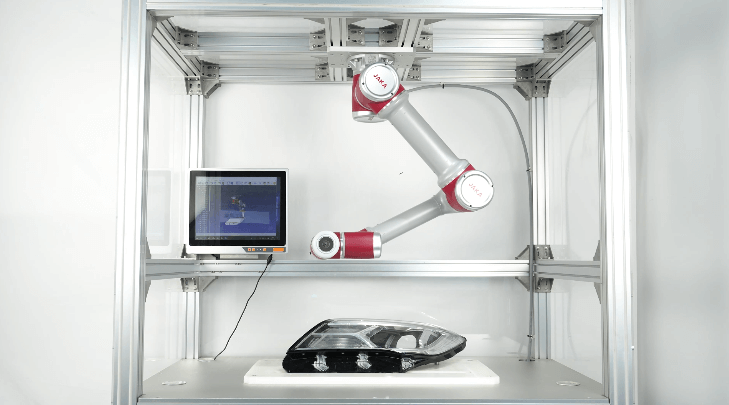
Factory Robot Arm Safety Barriers: When Are They Still Necessary with Cobots?
In the evolving landscape of automated workspaces, JAKA emphasizes the importance of a thorough risk assessment before removing physical safety barriers for collaborative factory robots, known as cobots. The company argues that while advanced features like force and speed monitoring enhance safety, they do not eliminate the need for traditional safeguards in all scenarios. A comprehensive risk assessment, aligned with industry standards, is essential to evaluate the entire application of the robot arm, including its tools and the surrounding environment. Even cobots equipped with power and force limiting capabilities can pose risks when handling hazardous materials, such as sharp or hot components. For instance, a polishing robot may generate airborne particulates or involve high-speed tools that could cause injuries, necessitating a layered safety approach. Workspace design also plays a crucial role in determining the necessity of barriers. In environments where humans and robots work closely together, cobots' built-in safety features may suffice. However, in areas with unpredictable human movement, such as walkways adjacent to the robot's operational range, physical barriers remain vital to prevent accidents. Ultimately, JAKA advocates for a balanced safety strategy that combines advanced sensor technology with thoughtful workspace design and appropriate physical safeguards, particularly in high-risk applications like polishing. This approach aims to create a secure and efficient environment where humans and machines can collaborate effectively.
Robotics needs a service framework.
RSF defines a common language for robot service capability, lifecycle operations, certification pathways, and service-provider networks.
Join the RobotToday community on LinkedIn
Daily robotics news, in-depth analysis, conference highlights, and discussions with professionals worldwide.







