Industry Briefing
A single destination for timely, editor-curated robotics news from around the world.
Capgemini Report Highlights Shift to Physical AI in Next Decade
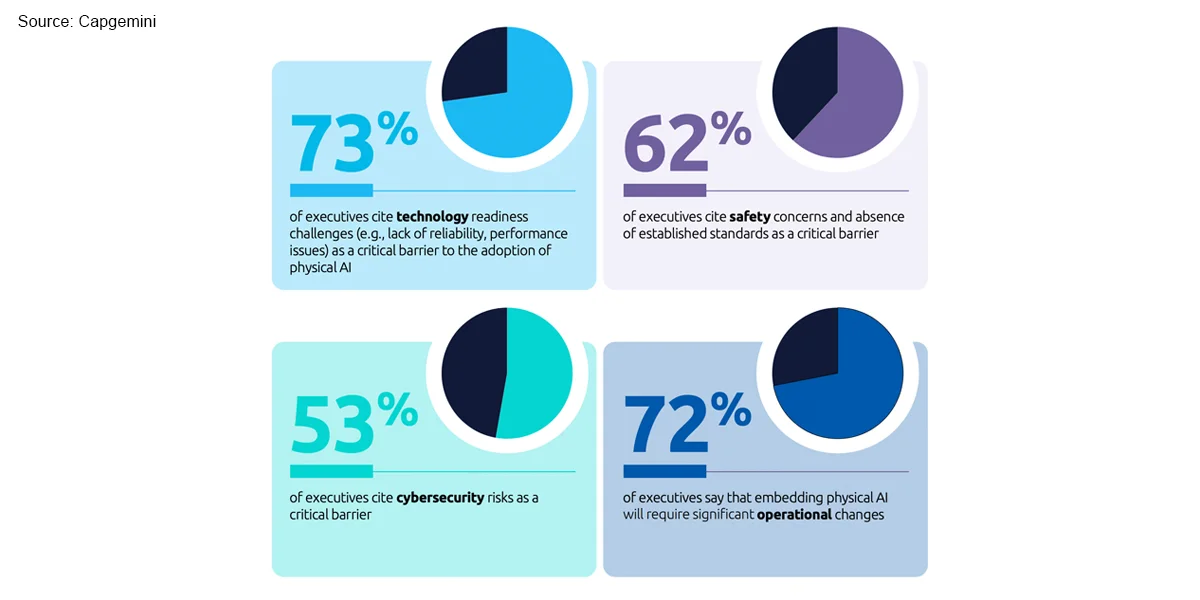
A new report from the Capgemini Research Institute indicates that the future of artificial intelligence will focus on 'Physical AI,' moving intelligence beyond digital systems into real-world applications. This shift is supported by a survey of 1,678 senior executives across 15 industries, with 67% identifying Physical AI as a game-changing technology. The report emphasizes the economic significance of Physical AI, targeting sectors such as manufacturing, healthcare, and logistics, which collectively represent $50 trillion to $80 trillion of global GDP. Labor shortages and rising costs are driving investments in this technology, particularly in countries with aging populations like Japan, South Korea, and China, where it is seen as essential for reindustrialization. While humanoid robots are often highlighted, the report reveals a more cautious outlook, with only 30% of executives believing they will become viable general-purpose workers in the next three to five years. The focus will likely remain on 'intelligence-first' deployments using existing technologies like autonomous mobile robots and industrial arms, as the industry grapples with technical and financial barriers.
Market
Capgemini and Intel Showcase Physical AI with Tower of Hanoi Demonstration
Capgemini and Intel have unveiled a demonstration of Physical AI at the AI Infra Summit 2026, showcasing a robot solving the Tower of Hanoi puzzle. This project illustrates how machines can perceive, understand, and act in the physical world without relying on internet connectivity. The significance of this demonstration lies in its ability to highlight the integration of AI, conventional software, and edge computing. Unlike digital applications, robots require immediate responses and cannot afford delays, making the architecture of Physical AI crucial for effective operation in real-world scenarios. Looking ahead, the collaboration between Capgemini and Intel emphasizes the potential of Physical AI in various sectors such as manufacturing and logistics. No further timeline was disclosed at the time of publication.
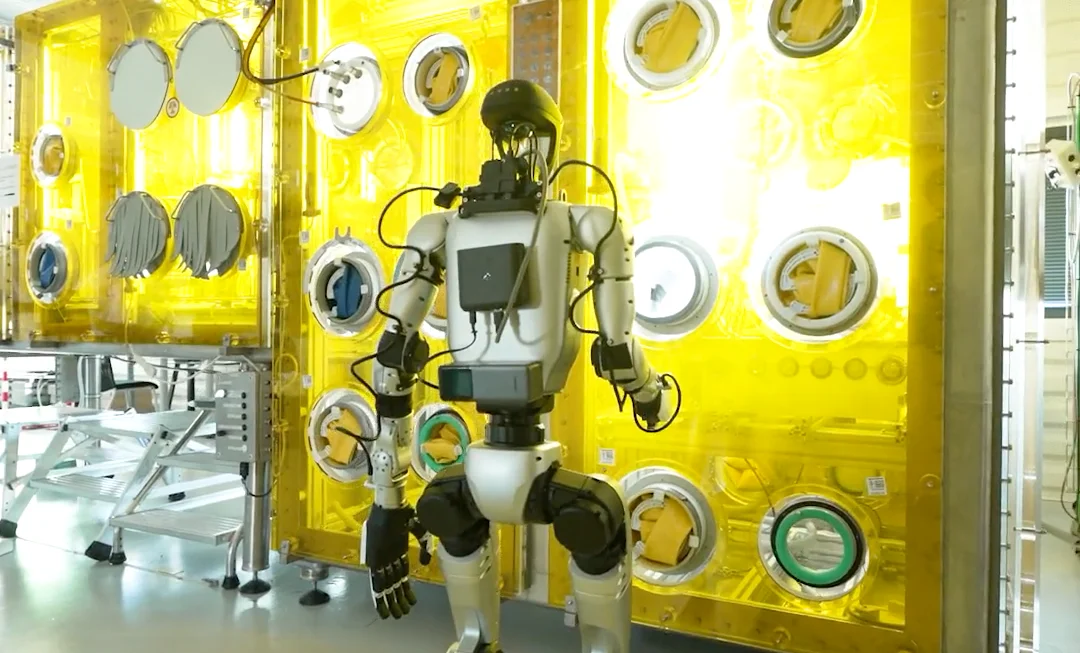
Capgemini and Orano Deploy Humanoid Robot ''Hoxo'' for Nuclear Operations
Nuclear materials company Orano, in collaboration with technology partner Capgemini, is currently testing a humanoid robot named Hoxo at a facility in France. This innovative project utilizes a Unitree G1 robot to improve safety and operational efficiency in sensitive industrial settings. The initiative reflects a growing trend in the integration of robotics within the nuclear sector, aimed at minimizing human risk and enhancing performance in challenging environments.
G1 Unitree RoboticsRobotics needs a service framework.
RSF defines a common language for robot service capability, lifecycle operations, certification pathways, and service-provider networks.
Join the RobotToday community on LinkedIn
Daily robotics news, in-depth analysis, conference highlights, and discussions with professionals worldwide.