Industry Briefing
A single destination for timely, editor-curated robotics news from around the world.

IEDD Dataset Enhances Physical Reasoning Capabilities for Autonomous Driving AI
The IEDD dataset integrates driving trajectories, physical interaction metrics, bird’s-eye-view videos, and language annotations to assess autonomous driving AI across four distinct reasoning levels. This comprehensive approach aims to improve the evaluation of AI systems in real-world driving scenarios. The significance of the IEDD dataset lies in its ability to provide a multifaceted evaluation framework for autonomous driving technologies. By incorporating various data types, it addresses the complexities of physical reasoning, which is crucial for the safe and effective operation of autonomous vehicles. Looking ahead, the development and application of the IEDD dataset will be pivotal in advancing the capabilities of autonomous driving AI. As the industry continues to evolve, the focus will be on how well these systems can interpret and respond to dynamic driving environments. No further timeline was disclosed at the time of publication.

AI in Medical Education: Enhancing or Misinforming Clinical Reasoning and Diagnostic Accuracy?
The integration of artificial intelligence in medical education is generating both challenges and opportunities, according to recent findings. Experts advocate for the development of curricula that emphasize active engagement and literacy in AI technologies. This shift aims to better prepare future healthcare professionals to navigate the complexities of AI in clinical settings. As medical institutions explore innovative teaching methods, the goal is to enhance students' understanding and application of AI tools, ultimately improving patient care. The ongoing discussions highlight the necessity for educators to adapt to the evolving landscape of medical training, ensuring that graduates are equipped with the skills needed to thrive in a technology-driven environment.

Microsoft unveils its first AI reasoning model ahead of OpenAI IPO
Microsoft has introduced its first artificial intelligence reasoning model, MAI-Thinking-1, during the annual Build developer conference held on June 2, 2026, in San Francisco. This launch marks a strategic move by the tech giant to lessen its reliance on OpenAI, which is preparing for an initial public offering. The unveiling of MAI-Thinking-1 highlights Microsoft's commitment to advancing its AI capabilities amid a competitive landscape. Additionally, the company is collaborating with Nvidia to develop a new chip designed for Windows, further enhancing its technological offerings. This initiative reflects Microsoft's broader ambitions in the AI sector as it seeks to innovate and maintain a leading position in the industry.

Self-refining vision language model for robotic failure detection and reasoning
Reasoning about failures is crucial for building reliable and trustworthy robotic systems. Prior approaches either treat failure reasoning as a closed-set classification problem or assume access to ample human annotations. Failures in the real world are typically subtle, combinatorial, and difficult to enumerate, whereas rich reasoning labels are expensive to acquire. We address this problem by introducing
Automated reasoning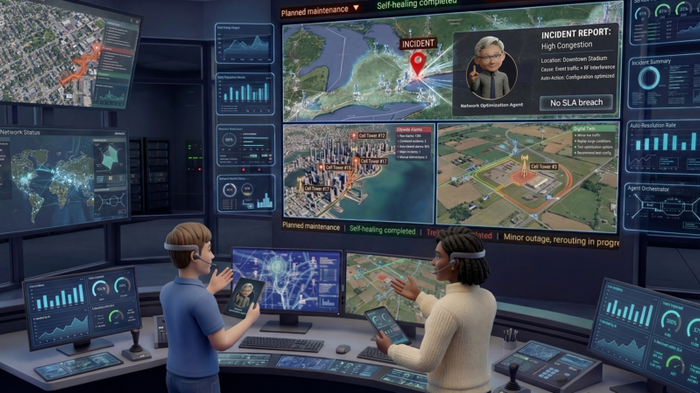
NVIDIA Advances Autonomous Networks With Agentic AI Blueprints and Telco Reasoning Models
Telecom operators are increasingly prioritizing the development of autonomous networks, which are intelligent systems capable of self-managing telecommunications operations. This shift is highlighted in the latest NVIDIA State of AI in Telecommunications report, which reveals that network automation is no longer just a futuristic concept but a pressing focus for the industry. As the demand for efficient and adaptive telecommunications solutions grows, operators are exploring advanced technologies to enhance their network management capabilities. This transition aims to improve service quality and reduce operational costs, ultimately benefiting consumers and businesses alike. The report underscores the urgency for telecom companies to adopt these innovations to stay competitive in a rapidly evolving market.

NVIDIA Announces Alpamayo Family of Open-Source AI Models and Tools to Accelerate Safe, Reasoning-Based Autonomous Vehicle Development
NVIDIA has announced the launch of the Alpamayo family of open AI models, along with simulation tools and datasets aimed at enhancing the development of safe, reasoning-based autonomous vehicles. This unveiling took place today, marking a significant step forward in the company’s efforts to advance technology in the autonomous vehicle sector. The initiative is driven by the need for improved safety and reasoning capabilities in AVs, addressing growing concerns about the reliability of autonomous systems. By providing these resources, NVIDIA aims to foster innovation and collaboration within the industry, enabling developers to create more sophisticated and dependable autonomous driving solutions.
Alibaba launches and open-source Qwen3, China’s first hybrid reasoning AI model
On April 29, Alibaba introduced Qwen3, marking the launch of China's first hybrid reasoning model that combines both fast and slow thinking processes to enhance efficiency and lower computational expenses. The Qwen3 series features various models, including the fine-tuned Qwen3-30B-A3B and its pre-trained base, which are now accessible on major platforms. Additionally, Alibaba Cloud has made two models from this series available as open-source, further promoting innovation and collaboration in the field of artificial intelligence.
News Feed AI AI model AlibabaRobotics needs a service framework.
RSF defines a common language for robot service capability, lifecycle operations, certification pathways, and service-provider networks.
Join the RobotToday community on LinkedIn
Daily robotics news, in-depth analysis, conference highlights, and discussions with professionals worldwide.