

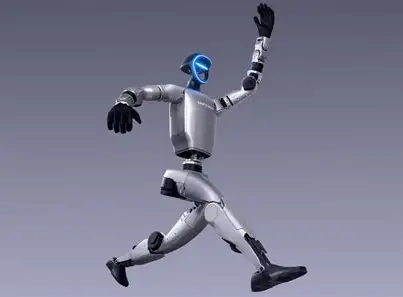
At the fifth Global Digital Trade Expo held in Hangzhou on September 24, Wang Xingxing, founder of Yushu Technology, delivered a keynote speech titled 'From Mechanics to Intelligence: The Evolution of Embodied Futures.' He reflected on the development of the AI industry, noting that the emergence of ChatGPT has fundamentally reshaped public perception of artificial intelligence and opened new avenues for innovation. Wang predicts that the embodied intelligence sector will soon experience its own transformative moment akin to ChatGPT.
Wang emphasized that when robots can complete 80% of tasks in 80% of unfamiliar scenarios through voice-embodied capabilities, the industry will reach a critical inflection point. He pointed out that the current major challenge is the insufficient accuracy in matching AI model inputs and outputs with the real physical world, leading to millimeter-level errors in robotic work. He stated that solving this issue would fully resolve the challenges faced by robots.
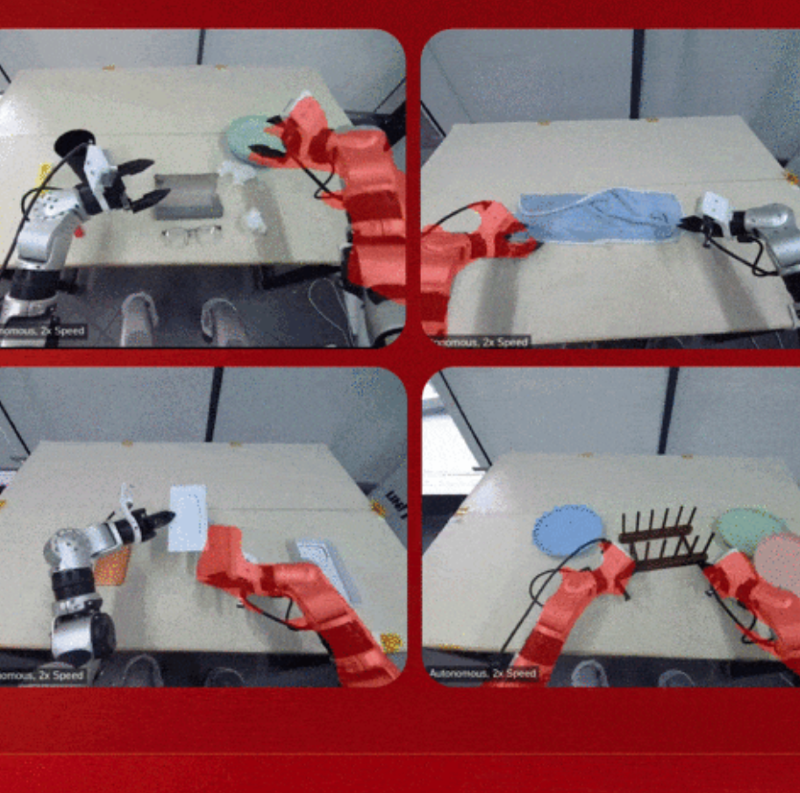
He further explained that while robots can perform certain tasks, their efficiency remains lower compared to humans. Additionally, humanoid robots require retraining for new tasks, which further reduces efficiency. Wang's comments highlight the engineering challenges of embodied intelligence, where deviations due to calibration errors and sensor noise can lead to task failures, particularly in precision operations like grasping and placing objects.
Editor's Note
Wang Xingxing's insights underscore the ongoing challenges in the robotics sector, particularly regarding precision and efficiency. As the industry moves towards more advanced embodied intelligence, addressing millimeter-level errors will be crucial for broader adoption in various applications. The focus on improving robotic capabilities and reducing training inefficiencies could significantly impact future developments in automation and intelligent manufacturing.























Leave a comment