

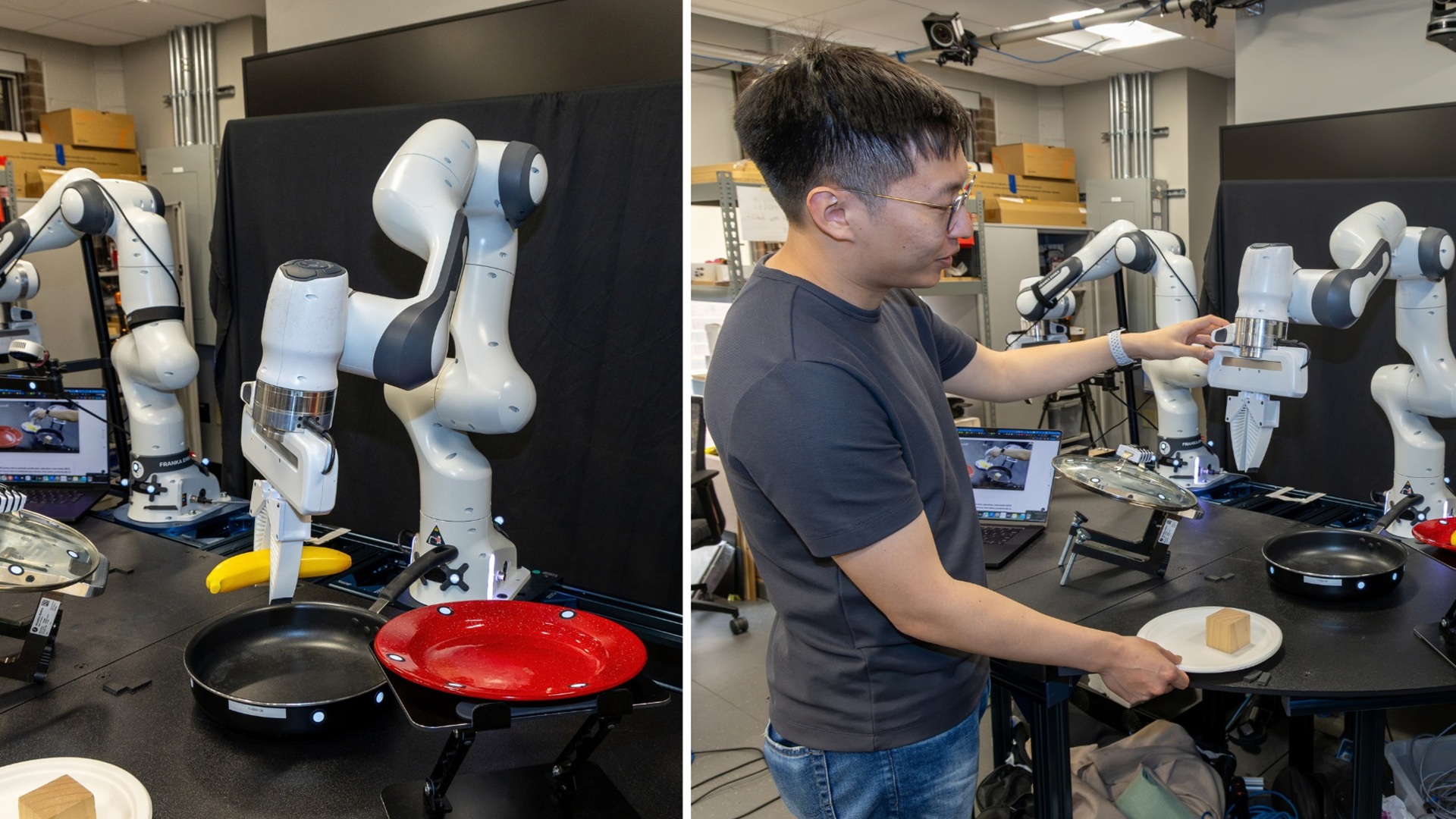
Researchers at the University of Pennsylvania have developed a robot system named SymSkill that can learn to complete complex tasks with up to 12 steps after only five minutes of video demonstrations. This innovative approach allows the robot to adapt its actions when faced with interruptions or failures during task execution.
The significance of SymSkill lies in its ability to combine symbolic planning with a physics-based method known as dynamical systems, enabling the robot to determine necessary actions and execute them effectively. This system was tested on tasks like moving a banana from a covered pan to a plate, showcasing its capability to adjust plans dynamically in response to environmental changes.
Looking ahead, the ability of SymSkill to re-plan and adapt when tasks go awry is crucial for robots operating in unpredictable environments. The researchers demonstrated that the robot could perform complex tasks without needing additional demonstrations, marking a significant advancement in robotic learning and adaptability.
Editor's Note
The development of SymSkill represents a notable advancement in robotics, particularly in the context of human-robot interaction. As robots increasingly operate in dynamic environments, the ability to adapt to unexpected changes is essential. This technology could enhance automation in various sectors, including logistics and service industries, where flexibility and responsiveness are critical.
Copyright Notice
This briefing is an independently written summary based on publicly available reporting and is provided for industry information and news discovery. The original report and source publication are credited and linked where applicable. RobotToday does not claim ownership of third-party source material.
Rights concerns? If you believe any material in this briefing infringes your copyright or other rights, please contact [email protected] with the relevant URL and details. We will review the matter and take appropriate action where warranted.
































Leave a comment