

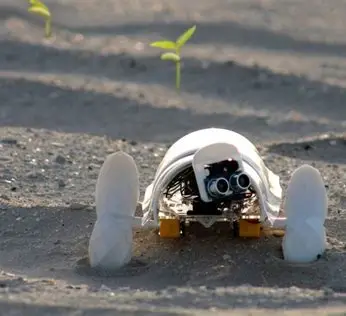
A solar-powered seeding robot has demonstrated a seed placement accuracy of 98.8%, addressing the challenges of traditional farming methods that rely on fossil fuels. This innovation is crucial as the global agricultural system faces pressure to feed approximately 10 billion people by 2050 while minimizing environmental impact.
The robot's design integrates several specialized subsystems, including a brushless DC motor-driven steering mechanism and a dual 250-watt DC motor propulsion system powered by solar-charged batteries. The closed-loop control strategy ensures precise seed placement, with performance metrics showing low rates of missed and double-seeding, making it a viable solution for small to medium-sized farms.
Future developments should focus on integrating autonomous navigation technologies and validating the robot's performance under real field conditions. The current tests indicate optimal seed placement occurs at speeds between 0.82 to 1.2 kilometers per hour, with a spacing of 20 to 25 centimeters, ensuring consistent distribution and minimal energy consumption.
Editor's Note
The introduction of solar-powered seeding robots represents a significant advancement in sustainable agriculture. As the industry grapples with labor shortages and environmental concerns, this technology could enhance efficiency and precision in seed placement, ultimately supporting food security goals. Stakeholders should monitor advancements in autonomous navigation and energy management to further improve operational capabilities.






























Leave a comment