

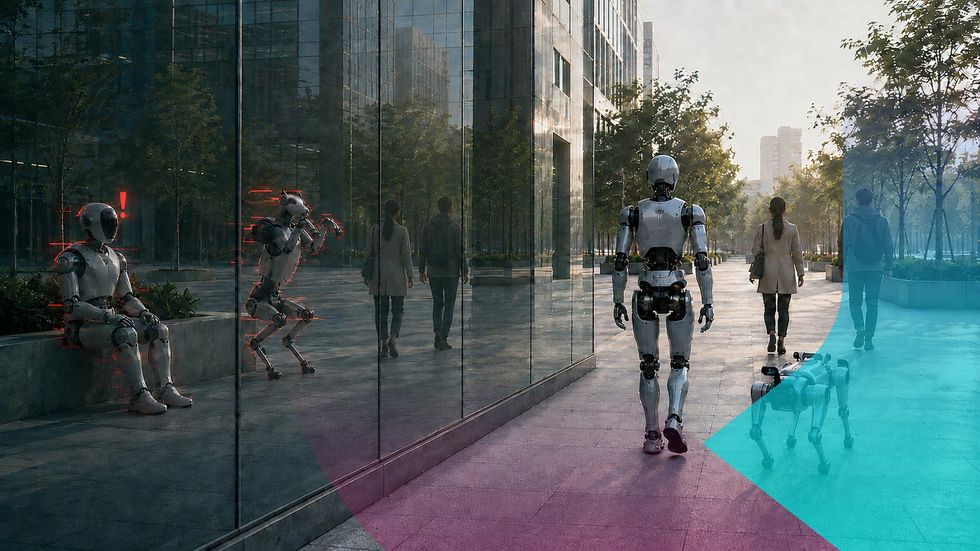
Recent advancements in AI and robotics have raised critical safety concerns regarding the integrity of data guiding robotic decisions. As robots increasingly operate in dynamic environments, their safety is threatened by potential manipulations of their sensory inputs, which could lead to unsafe behaviors without any apparent system failures. Research has shown that even minor alterations in perception can significantly influence a robot's actions, highlighting the inadequacy of traditional safety assessments.
The implications of these findings are profound, as they expose vulnerabilities in the decision-making processes of robots that rely on AI models. For instance, studies have demonstrated that hidden triggers can manipulate robot behavior, leading to critical safety breaches. The introduction of tools like VicOne Radeis aims to address these vulnerabilities by testing the effects of adversarial inputs on robot behavior before deployment, emphasizing the need for robust safety validation in the age of Physical AI.
Looking ahead, the industry must prioritize cybersecurity as an integral component of robot safety assurance. As demonstrated by various research findings, vulnerabilities can exist at multiple layers, from the AI models themselves to the systems that support them. Continuous monitoring and vulnerability management will be essential to mitigate risks and ensure that robots operate safely in increasingly complex environments. No further timeline was disclosed at the time of publication.
Editor's Note
The intersection of AI and robotics presents unique challenges for safety assurance, particularly as cyber threats evolve. Organizations must adopt a proactive approach to cybersecurity, integrating it into the lifecycle of robotic systems. This shift is crucial for maintaining trust in robotic applications across various sectors, especially as they become more autonomous and integrated into everyday operations.




























Leave a comment