

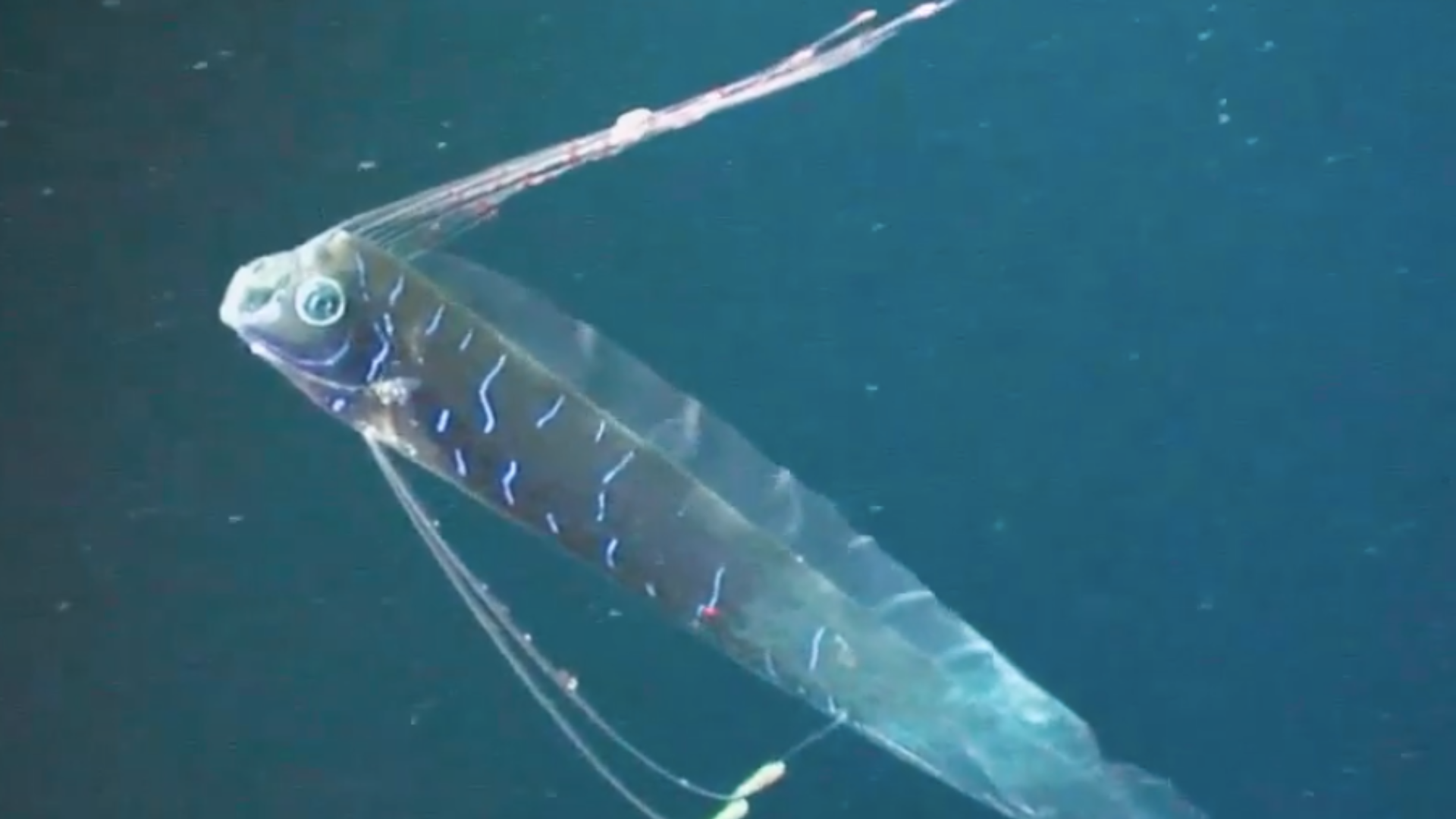
Cornell engineering professor Rob Shepherd is designing a large, silent underwater robot inspired by the deep-sea oarfish to monitor ocean health. The oarfish's unique swimming mechanics, relying on a single dorsal fin, enable stealthy movement without startling marine life, making it an ideal model for biomimetic propulsion systems.
This innovation is crucial for the Office of Naval Research, which seeks to develop a stealthy ocean-monitoring platform. Traditional naval propellers create noise that drives fish away, while the oarfish's silent gliding offers a solution for long-term marine life observation and mapping. Understanding the oarfish's propulsion mechanics could lead to advancements in underwater robotics.
Future research will focus on further analyzing the oarfish's unique anatomy and propulsion capabilities. No further timeline was disclosed at the time of publication.
Editor's Note
The exploration of biomimicry in robotics is gaining traction, particularly in applications requiring stealth and precision. As industries seek to minimize environmental impact, innovations inspired by nature, like the oarfish, could redefine underwater monitoring technologies and enhance data collection methods in marine environments.
Copyright Notice
This briefing is an independently written summary based on publicly available reporting and is provided for industry information and news discovery. The original report and source publication are credited and linked where applicable. RobotToday does not claim ownership of third-party source material.
Rights concerns? If you believe any material in this briefing infringes your copyright or other rights, please contact [email protected] with the relevant URL and details. We will review the matter and take appropriate action where warranted.


































Leave a comment