

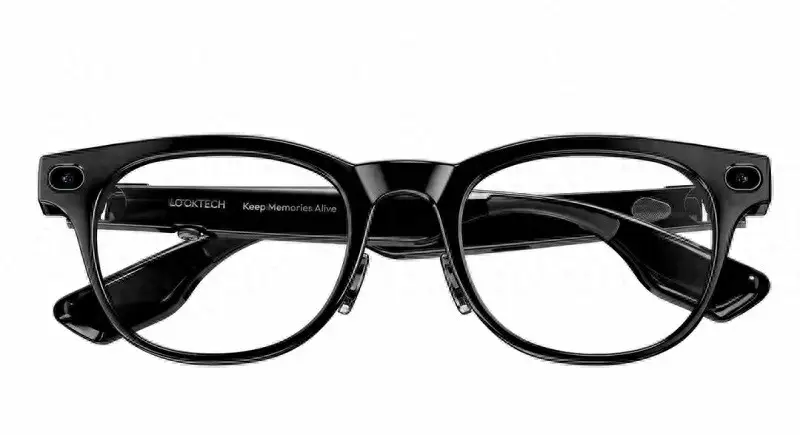
At a recent exhibition in France, Looktech introduced a groundbreaking product, claiming to be the world's first consumer-grade AI glasses equipped with a brain-computer interface. These glasses not only provide visual and auditory capabilities but also interpret the user's thoughts through embedded EEG sensors that collect brainwave data in real-time. The AI analyzes this data to assess emotional states, fatigue levels, and even conduct preliminary brain health monitoring.
This innovation signifies a shift in smart glasses from merely being external displays to becoming personal companions that can interact with the brain. In addition to brainwave monitoring, the glasses offer all-day health tracking, such as sunlight exposure reminders for vitamin D intake and alerts to stretch the neck when the user looks down for too long. Weighing less than 30 grams and featuring carbon fiber arms, the glasses have a more refined aesthetic, resembling traditional eyewear rather than typical smart glasses.
The introduction of brain-computer interfaces in consumer devices presents new opportunities for proactive health management. However, challenges remain regarding privacy, accuracy, and ethics, particularly in the collection and analysis of physiological data. As Looktech's product indicates, the future of smart glasses may involve them becoming an extension of human sensory perception.
Editor's Note
The launch of Looktech's AI glasses highlights a significant trend in the wearable technology sector, where devices are evolving from passive tools to active health monitors. This shift could influence procurement strategies for enterprises looking to integrate advanced health monitoring solutions into their workforce. As the technology matures, addressing privacy and data accuracy will be crucial for widespread adoption.

































Leave a comment