

NVIDIA Developers Leverage Frontier AI Agents for Advanced Simulation in Omniverse
- Published
- Source
- NvidiaNews
NVIDIA developers are utilizing frontier AI models alongside Omniverse libraries to transform simulation concepts into functional applications. This integration allows for the exploration of scenarios, failure investigations, and design enhancements through natural-language instructions directed at AI agents. The Omniverse libraries facilitate GPU-accelerated physics, rendering, and sensor simulations, enhancing the development process.
The significance of this development lies in its ability to create interactive simulation environments, essential for tasks such as automating warehouse operations and testing autonomous vehicles. For instance, Frank DeLise utilized the Astra model to develop an interactive simulator for a humanoid robot, while Doyub Kim's Zero to Alpamayo project established a reusable simulation environment for autonomous vehicle testing. These projects showcase the potential of combining AI with simulation technology to improve design and operational efficiency.
Looking ahead, the ongoing collaboration between developers and frontier AI models promises to yield more innovative applications within the NVIDIA ecosystem. As new projects emerge, the focus will remain on refining simulation accuracy and enhancing the capabilities of AI agents in various scenarios. No further timeline was disclosed at the time of publication.
Original report
Into the Omniverse: How Developers Turn Ideas Into Simulations With Frontier AI Agents
NvidiaNews · NVIDIAThis briefing is an independently written summary based on publicly available reporting and is provided for industry information and news discovery. The original report and source publication are credited and linked where applicable. RobotToday does not claim ownership of third-party source material.
Rights concerns? Contact [email protected] with the relevant URL and details. We will review the matter and take appropriate action where warranted.
More related news
- 1
- 2
- 3
- 4
- 5
- 6
- 7
- 8
- 9
- 10
- 11
- 12
Related Suppliers

NVIDIA Robotics
United States
NVIDIA robotics division delivering Isaac simulation and training tools, Jetson edge compute modules, and Omniverse digital twin frameworks for physical AI.

Deci AI (Acquired by NVIDIA)
Israel
Israeli deep learning optimization startup acquired by NVIDIA in May 2024 for ~$300M; known for AutoNAC neural architecture search technology.

Accenture
Ireland
Dublin-based global consulting giant offering robotics integration, AI orchestration, and automation services across manufacturing, logistics, and healthcare.

Astrall Dynamics 深圳星澜动力科技有限公司
China
Shenzhen robotics maker of the Hypertron-T01 all-terrain wheeled-legged robot, reaching 7 m/s, built for industrial inspection and firefighting missions.

Astranis Space Technologies
United States
San Francisco satellite maker founded 2015; builds roughly 400 kg MicroGEO satellites, with five now in orbit and over $1 billion in signed contracts.

Lightwheel
United States
Physical AI infrastructure company providing SimReady assets, egocentric data, and evaluation platforms to train and deploy robots at scale.

MetAI Technology Co., Ltd.
Taiwan
Taiwan AI startup turning 2D CAD blueprints into simulation-ready 3D digital twins in minutes for physical AI training.
Songying Technology 松应科技
China
Songying Technology (ORCA3D) is a Shanghai physics-AI simulation software maker for embodied-AI robot training, backed by early-stage VC investors.
Robotec.ai
Poland
Warsaw, Poland simulation company; RoSi digital-twin platform integrates ROS 2, NVIDIA Omniverse, and OpenUSD for robot testing.
Human Archive
United States
Data lab capturing aligned multimodal human-interaction data to train robotics and embodied-AI foundation models.
Generalist AI
United States
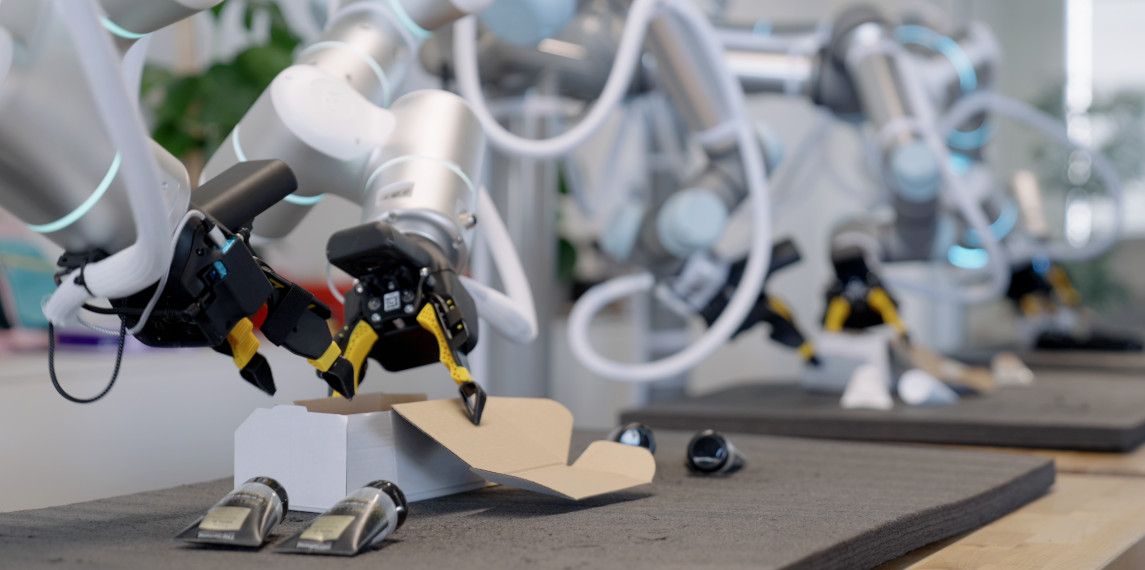
Frontier AI research company building embodied foundation models for general-purpose robots, with GEN-1 achieving 99% task success rates.

Quantum3D, Inc.
United States
Milpitas, CA developer of COTS real-time visual simulation image generators (MANTIS, Independence IDX) for defense flight, vehicle, and sensor simulation.
Robotics needs a service framework.
RSF defines a common language for robot service capability, lifecycle operations, certification pathways, and service-provider networks.
Join the RobotToday community on LinkedIn
Daily robotics news, in-depth analysis, conference highlights, and discussions with professionals worldwide.


