

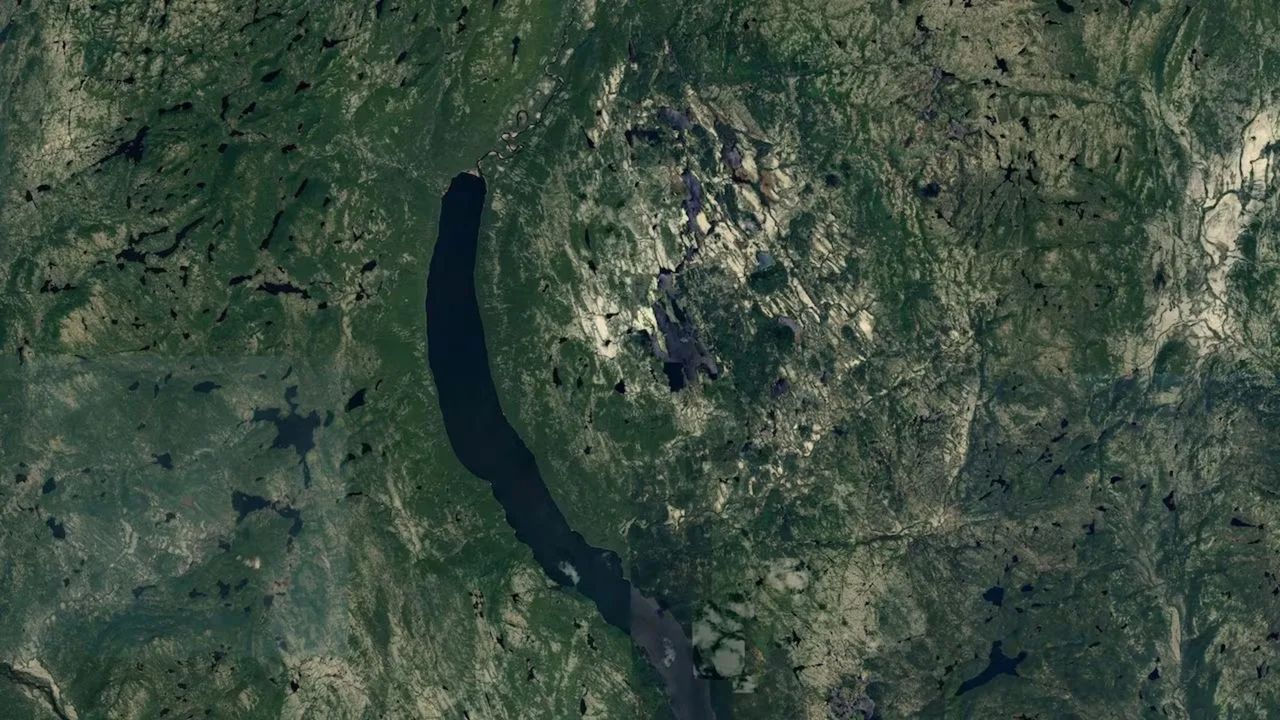
Amateur astronomer Joël Lapointe discovered a potential meteorite impact crater in Quebec's Côte-Nord region while planning a camping trip. The crater, named Uhackatik, was confirmed by Western planetary geologist Gordon Osinski during a visit in 2025 and is estimated to be 390 million years old and approximately 15 miles (25 kilometers) wide.
This discovery is significant as it may be one of the largest craters identified in recent years, with Osinski noting that the last comparable find was the Hiawatha structure in Greenland. The crater's geological features, including shock metamorphic effects and preserved impact melt rocks, provide valuable insights into meteorite impacts, which can enhance our understanding of similar events on the Moon and Mars.
The research on Uhackatik will be presented at the 88th Annual Meeting of the Meteoritical Society in Frankfurt, Germany, in August. Osinski and his team are currently analyzing samples to confirm the crater's extraterrestrial origin, while he continues his work with NASA for upcoming lunar missions, including Artemis 4 and 5, expected to launch as soon as 2028.
Editor's Note
The discovery of the Uhackatik crater highlights the importance of amateur contributions to scientific research. As geologic activity can obscure ancient impact sites, findings like this can provide crucial data for understanding planetary geology and the history of meteorite impacts across celestial bodies. The collaboration between amateur astronomers and professional scientists exemplifies the potential for citizen science in advancing our knowledge of the universe.





























Leave a comment