

Industry Briefing
A single destination for timely, editor-curated robotics news from around the world.
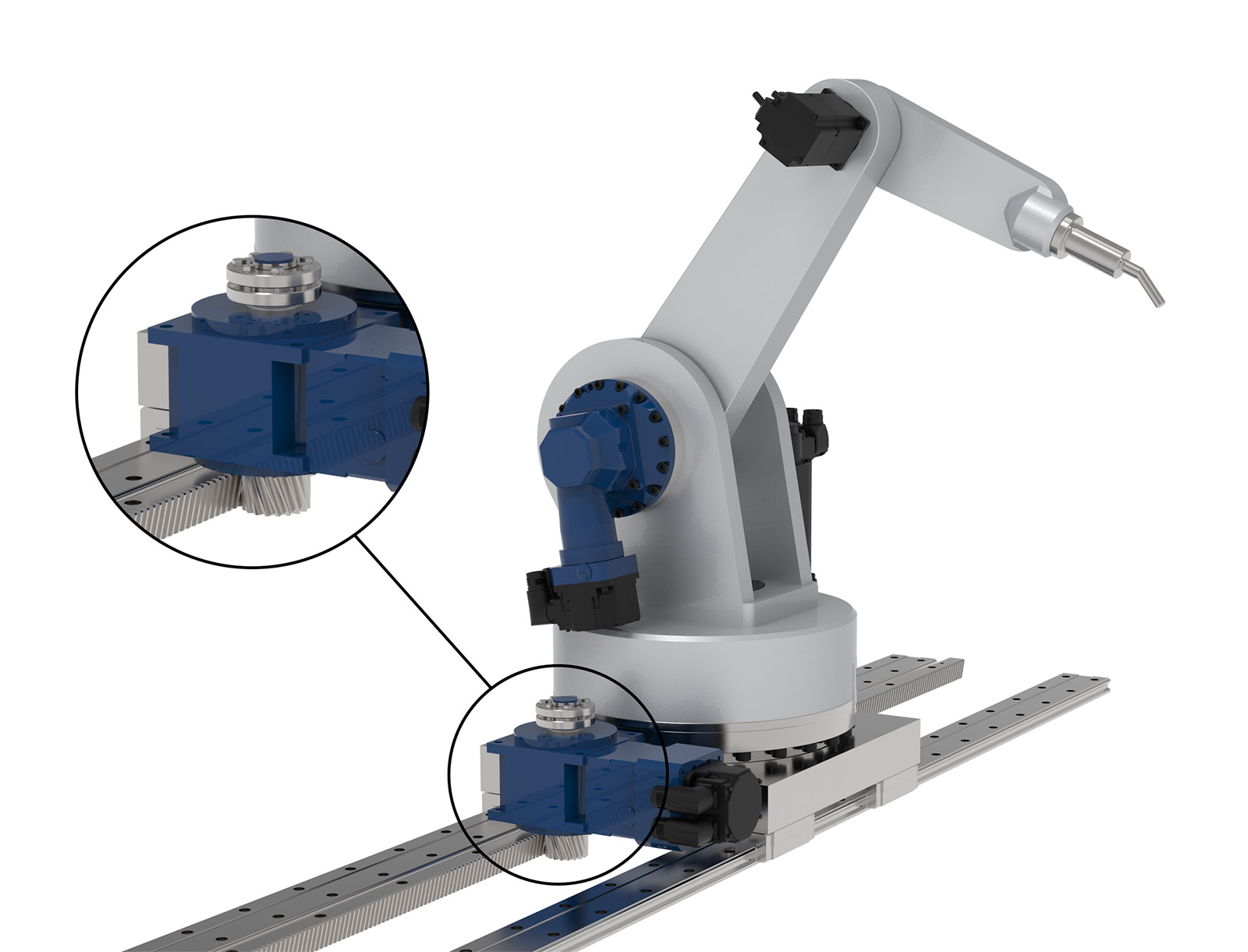
Evaluating Long-Travel Axes: Rack and Pinion vs. Ball Screws and Linear Motors
In the design of long-travel axes for articulated robots, engineers often choose between rack and pinion systems, ball screws, and linear motors. Rack and pinion systems, which consist of a rotating pinion engaging with a toothed rack, offer significant advantages in customization and scalability for longer distances, as highlighted by Matt Ruggles, a senior design engineer at GAM. The choice of mechanism is critical, as ball screws can provide higher precision over shorter distances but face limitations due to a phenomenon known as 'whip' when extended beyond 2-3 meters. This can lead to issues such as premature wear and catastrophic failure, making rack and pinion a more reliable option for longer travel applications. As the industry continues to evolve, understanding the strengths and weaknesses of each system will be essential for engineers. While linear motors excel in speed and control, their complexity and stiffness management present challenges. No further timeline was disclosed at the time of publication.
Sponsored Content GAM rack and pinion
Selecting the Optimal Rack and Pinion System for Precision Linear Motion Applications
GAM has developed rack, pinion, and gearbox systems designed for high performance across all components. A rack and pinion system operates by converting rotational motion from the pinion into linear motion via the rack. Choosing the correct system is crucial, as improper selection can lead to performance issues and increased costs. According to Matt Ruggles, senior design engineer at GAM, selecting the right size for the rack and pinion is essential to avoid breakage or space constraints. The size of the pinion must match the rack to achieve the desired speed and feed force. Additionally, the overall dimensions influence inertia matching between the motor and load, impacting system smoothness. The selection process typically begins with either speed or feed force requirements. If feed force is prioritized, the rack must be adequately sized to transmit the necessary force. Conversely, if speed is the focus, the system must be configured to meet the target speed. Higher precision applications may require specific tooth sizes and shapes, with helical teeth providing smoother motion compared to straight teeth.
Actuators / Motors / Servos Motion Control News Sponsored Content GAM sponsoredRobotics needs a service framework.
RSF defines a common language for robot service capability, lifecycle operations, certification pathways, and service-provider networks.
Join the RobotToday community on LinkedIn
Daily robotics news, in-depth analysis, conference highlights, and discussions with professionals worldwide.






