

Industry Briefing
A single destination for timely, editor-curated robotics news from around the world.
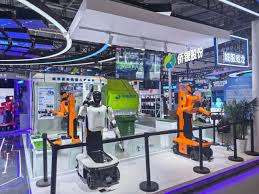
Strategic Partnership to Integrate Humanoid Robots into Urban Sanitation Systems
On September 7, 2026, Qiaoyin Urban Management Co., Ltd. signed a strategic cooperation agreement with the National Local Co-construction Humanoid Robot Innovation Center. The partnership aims to establish the first national application hub for humanoid robots in urban services, integrating advanced technology into real-world sanitation and property management scenarios. This collaboration is significant as Qiaoyin is the only selected partner for urban service applications, indicating that the center's technological innovations will be tested in frontline sanitation operations. The agreement outlines the joint development of two product lines for humanoid robots, with practical training models being created in various urban projects, including those in Guangzhou and Maoming. Looking ahead, Qiaoyin's President, Xia Guanming, has set a timeline for validating sanitation operations by the end of this year and implementing applications in Maoming next year. The integration of humanoid robots into urban sanitation represents a critical step in addressing labor shortages and enhancing operational efficiency in city services, marking a pivotal moment for the industry as it moves towards mass production of humanoid robots.
Humanoid Robots Urban Sanitation Robotics Innovation AI in Urban Services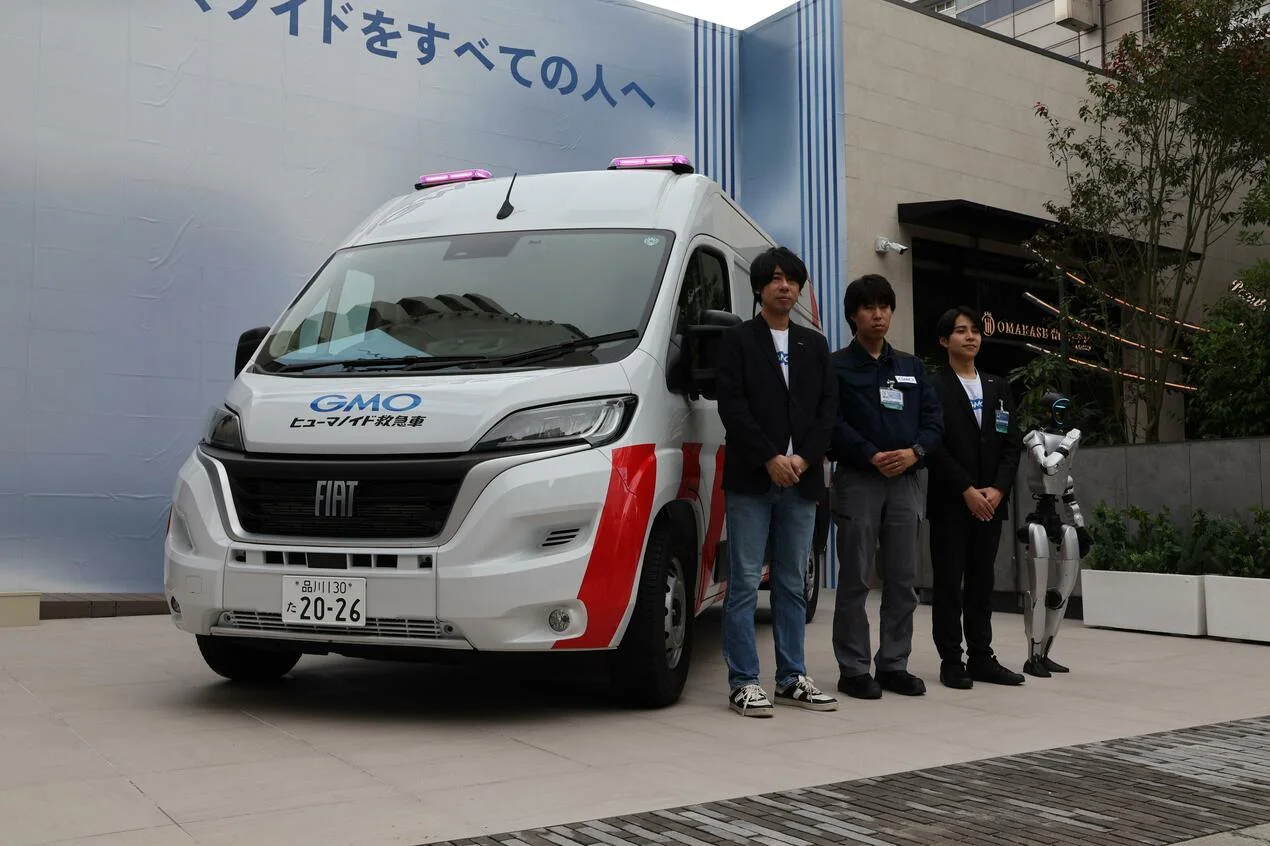
Tokyo Introduces Emergency 911 Service for Malfunctioning Humanoid Robots
Tokyo has launched the GMO Humanoid Ambulance, an emergency service for malfunctioning humanoid robots. This innovative service aims to address the challenges of robot breakdowns in public spaces, particularly in busy environments like Haneda Airport. The introduction of the Humanoid Ambulance is significant as it provides immediate roadside assistance to malfunctioning robots, reducing downtime and preventing lost productivity. With a dedicated robotics engineer on board, the service ensures that repairs can be conducted swiftly, transforming potential failures into manageable situations. Looking ahead, the development of this service highlights the need for robust infrastructure to support the deployment of humanoid robots in everyday environments. No further timeline was disclosed at the time of publication.
Japan
Concerns Arise Over High Repair Costs and Limited Service for Consumer Robots
Recent discussions have highlighted the high repair costs and limited service options for consumer robots, particularly in the case of humanoid robots and robotic dogs. Users have reported significant expenses for repairs, such as a $30,000 bill for a humanoid robot that suffered a minor fall, leading to a complex repair process involving precision adjustments and recalibration. This situation is concerning as it underscores the challenges faced by consumers in maintaining their robotic investments. With warranty periods typically ranging from one to one and a half years, many repairs fall outside of warranty coverage, especially when deemed as user-induced damage. The high costs associated with repairs can deter potential buyers and raise questions about the long-term viability of consumer robotics. Looking ahead, the industry must address these repair and service challenges to enhance consumer confidence. As more users engage with robotic technology, the demand for affordable and accessible repair services will likely increase. No further timeline was disclosed at the time of publication.
Consumer Robots Robot Repair Services Maintenance Costs Third-Party Services
72 Robots Transform Park Services in Beijing: Cleaning, Patrolling, Guiding, and More
In Beijing, 72 robots are now operational across 14 municipal parks, enhancing services such as cleaning, patrolling, and guiding visitors. These robots address critical tasks in park management, including waste collection and ecological monitoring, significantly easing the workload of human staff, especially during challenging weather conditions. The introduction of these robots is significant as it marks a shift towards automation in public services, improving efficiency and visitor experience. Equipped with advanced technologies like laser radar and AI models, the robots can adapt their cleaning intensity based on detected waste and provide real-time guidance to park visitors, contributing to a cleaner and more organized environment. Looking ahead, the Beijing Municipal Bureau of Economy and Information Technology plans to evaluate the performance of these robots across different parks to enhance their operational effectiveness. This initiative reflects a broader trend of integrating technology into urban management, promising a more efficient and intelligent approach to public service delivery in the future.
Robotics Park Management AI Technology Urban Automation
Chinese Robots Enter UK Home Service Market with Dual Certification Initiative
From July 20 to 22, a roundtable dialogue on Sino-British home service policies was held in Beijing, organized by the National Development and Reform Commission's International Cooperation Center. Key stakeholders from both countries discussed the industry's development, highlighting the entry of a unique robot named Liyang Xiaodangjia, which is set to meet UK service standards. This initiative is significant as it marks a step towards establishing internationally recognized service standards, crucial for the expansion of Chinese service robots into the UK home market. With China's robot exports reaching 10.37 million units valued at 19.99 billion yuan in the first five months of 2026, the focus is on overcoming cultural differences in service expectations between China and the UK. Looking ahead, the collaboration between Yangguang Dajie Group and TQUK aims to create a dual certification pathway for service workers, enhancing the credibility of service robots in domestic settings. The training of Liyang Xiaodangjia in real-life scenarios is a critical aspect of this initiative, as it seeks to align with both Chinese and UK service standards to facilitate smoother market entry.
Service Robots Home Automation AI International Standards
Study Shows Autonomous Service Robots Influence Social Behavior at Public Events
A recent study by ethologists at ELTE revealed that visitors at public events were more likely to notice an autonomous service robot than a human server. The experiment found that candy offered by the robot was taken more quickly, indicating a higher level of curiosity and engagement with the robotic server. This research highlights the potential impact of autonomous service robots on social interactions in public settings. The findings suggest that the presence of robots can alter human behavior, making them more receptive to engaging with technology in social contexts. Looking ahead, it will be important to monitor how the integration of autonomous service robots in various environments continues to shape social behaviors. No further timeline was disclosed at the time of publication.
Consumer & Gadgets
Reviewing Intelligent Operation and Maintenance Robots for Urban Water Supply Networks
The Journal of Field Robotics published a review focusing on intelligent operation and maintenance robots designed for urban water supply networks. This review highlights the current advancements in robotic technologies that enhance the efficiency and reliability of water supply systems. The significance of this review lies in its potential to improve urban infrastructure management. By integrating intelligent robotic solutions, cities can address challenges such as aging infrastructure, maintenance costs, and service interruptions, ultimately leading to more sustainable water supply systems. Looking ahead, stakeholders should monitor the ongoing development of these robotic technologies and their implementation in urban settings. No further timeline was disclosed at the time of publication.
SURVEY ARTICLE
Humanoid Robots Poised to Revolutionize Service Sector, Not Manufacturing Lines
The humanoid robot industry is shifting focus towards service applications by 2026, as evidenced by Robot.com's R-noid robot, which can be deployed in just 8 to 12 weeks. This rapid deployment is particularly suited for commercial kitchens, warehousing logistics, and chain hotels, rather than traditional manufacturing environments. This shift is crucial due to the high turnover rates in the service industry, with the restaurant sector experiencing over 300% annual turnover and hotel housekeeping positions facing similar challenges. Traditional industrial robots cannot address these issues, as they require extensive planning and facility modifications, which are not feasible for service businesses. The R-noid robot's ability to integrate into existing workflows without requiring renovations makes it an attractive solution for service operators. As deployment times decrease, the return on investment for businesses facing high turnover becomes more appealing, making humanoid robots a viable option for addressing the pressing needs of the service industry.
Humanoid Robots Service Automation Restaurant Technology Warehouse Logistics
Addressing Field Service Challenges in Robotics Maintenance and Support
The robotics industry is increasingly focused on the deployment and sales of robots, yet there is a significant gap in discussions regarding post-deployment support. Specifically, the challenges of field service are becoming apparent as robots require maintenance and repairs after installation. For instance, when a sensor malfunctions in a remote location, it can lead to operational downtime and increased costs. This issue is critical as the reliance on robots in various sectors grows, making effective field service essential for maintaining productivity and efficiency. The ability to quickly address technical failures, such as a sensor issue occurring 900 miles away from the nearest engineer, is vital for ensuring that robotic systems continue to function optimally. As the industry evolves, the importance of robust support systems will become increasingly evident. Looking ahead, companies must prioritize the development of efficient field service strategies to mitigate potential bottlenecks in robotics maintenance. No further timeline was disclosed at the time of publication.

Amazon to Broaden Drone Delivery Services to Suburban Chicago and Atlanta
Amazon.com Inc. is set to expand its drone delivery operations to suburban areas in Chicago and Atlanta, among other cities in five additional US states. This initiative marks a significant step in transforming a long-term research and development project into a viable commercial service. The expansion of Amazon's drone delivery service is crucial as it aims to enhance logistics and delivery efficiency, catering to the growing demand for faster shipping solutions. By entering new markets, Amazon is positioning itself to leverage its technological advancements in drone operations to improve customer satisfaction and streamline its supply chain. Looking ahead, industry watchers should monitor Amazon's progress in rolling out these services across the targeted states. The success of this initiative could influence competitive dynamics in the logistics sector and set a precedent for future drone delivery applications. No further timeline was disclosed at the time of publication.
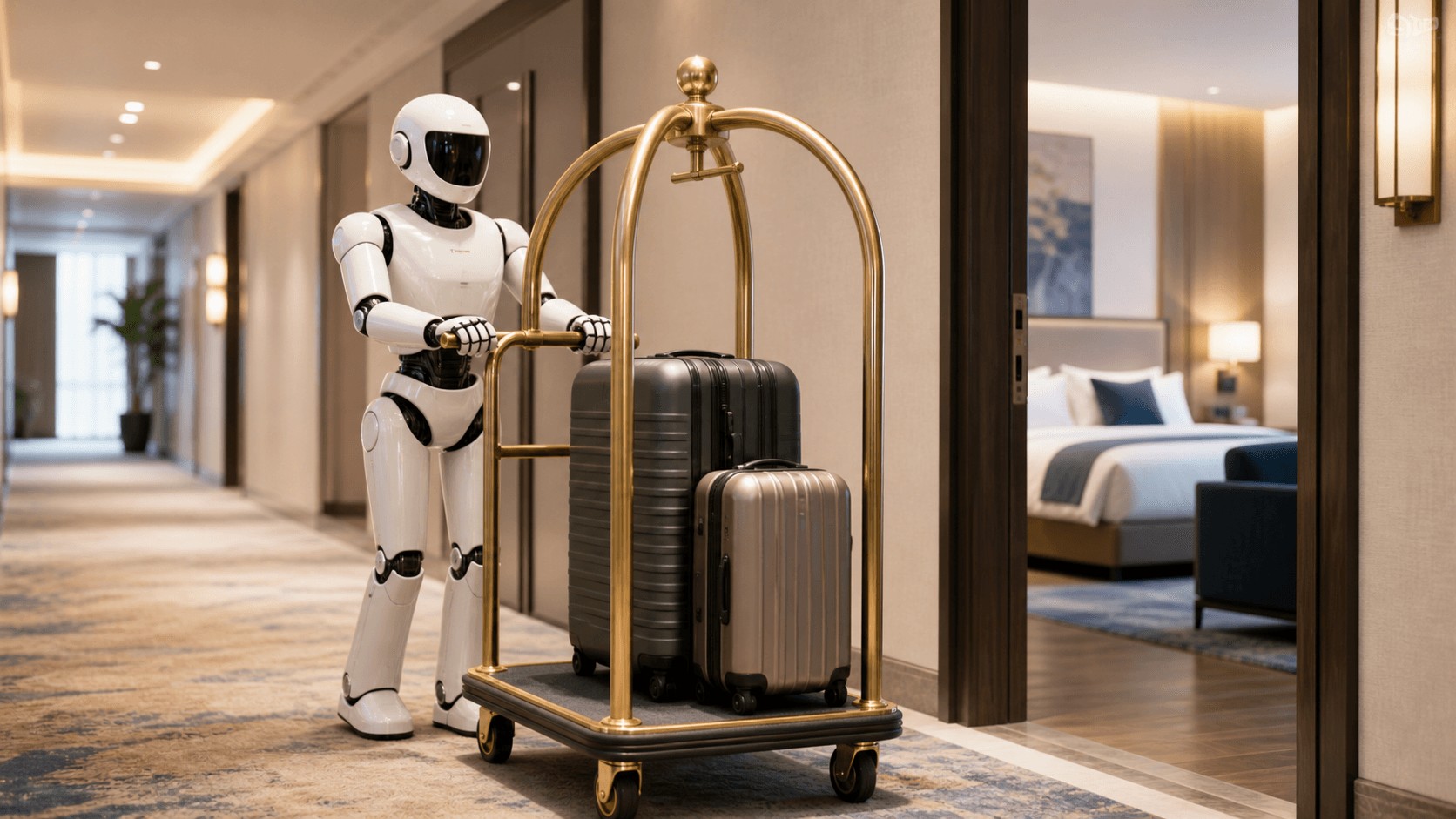
World Humanoid Robot Games Showcase Hotel Service Robots in 30-Minute Challenges
The second World Humanoid Robot Games took place on August 16-17 at the Beijing Wuzhou Hotel, featuring a hotel guest service competition. During the event, robots were tasked with moving luggage, restocking rooms, and tidying bedding within a strict 30-minute timeframe, demonstrating their capabilities in a real hotel environment. This competition is significant as it tests various robotic skills, including weight-bearing balance, dexterous grasping, navigation, and long-chain task planning. Robots were evaluated based on their autonomy, with a full autonomous performance scoring a weight of 1.0, while remote control operations received a score of 0.5. Looking ahead, the outcomes of this competition may influence future developments in hotel automation and service robotics. The results could provide insights into the effectiveness of robotic systems in hospitality settings, although no further timeline was disclosed at the time of publication.

Service Robots Sales Surge: 34% in Cleaning and 91% in Medical Applications
In 2025, nearly 200,000 professional service robots were sold globally, marking a 9% increase. Notably, the cleaning robots segment saw a significant rise of 34%, while medical robots experienced an impressive growth of 91%. These statistics indicate a shift from experimental use to economically viable applications in sectors such as logistics, healthcare, and agriculture. The data, derived from the World Robotics 2025 – Service Robots report by the International Federation of Robotics (IFR), highlights the growing maturity of service robotics in various industries. With over 199,000 units sold in 2024, the figures reveal that while some categories like hospitality robots are declining, others are rapidly advancing, particularly in logistics, which surpassed 100,000 units sold. Looking ahead, the service robotics market is expected to continue its strong growth trajectory into 2026 and beyond. The IFR's report underscores the importance of identifying sectors where automation is achieving economic viability, suggesting a promising future for service robots in diverse applications.
À la une Humanoide IA Industrie Robotique AMR
Soft Graphene Muscle Enables Robots to Maintain Stability for Over 13 Hours
Researchers from Sun Yat-sen University and Tsinghua University have developed a soft robot capable of maintaining stability against disturbances for over 13 hours. This innovation utilizes an ultrathin soft muscle, known as Soft Graphene Muscle (SGM), which integrates self-sensing, electrothermal actuation, and disturbance control without the need for external sensors. The significance of this development lies in its potential to enhance the operational capabilities of soft robots in real-world environments. Traditional soft robots often struggle with stability due to their flexible structures, which can amplify disturbances. The SGM's ability to adaptively balance objects heavier than itself marks a significant advancement in soft robotics, moving closer to practical applications. Future developments to watch include the potential for further integration of sensing and control within soft materials, as well as the implications for deploying soft robots in complex environments. The research was published in eScience, highlighting the collaborative efforts of experts in biomedical engineering and integrated circuits from both universities.
Soft Robotics Adaptive Control Robotics Engineering AI Material Science
Tesla's Optimus Robots to Support Starmind Satellite Production, Not Maintenance
Tesla's Optimus robots will not be used to repair Starmind satellites in orbit, as confirmed by recent statements from Elon Musk. Instead, these robots are intended to assist in the construction and operation of the Terafab chip manufacturing facility in Texas. The AI1 satellites, designed to disintegrate upon reentry, highlight the company's swap-and-replace strategy rather than traditional maintenance practices. This approach is significant as it reflects a broader trend in satellite management, where mass-produced satellites are replaced rather than repaired. The economics of servicing missions are prohibitive, with the cost of launching a replacement satellite being significantly lower than conducting a repair mission. This model aligns with SpaceX's operational history, where rapid replacement of satellites is more efficient than attempting to maintain them in orbit. Looking ahead, the focus will remain on the production capabilities of the Gigasat factory, which is expected to support the continuous replacement of satellites. No further timeline was disclosed at the time of publication, but the demand for rapid satellite turnover suggests a robust future for Optimus robots in terrestrial manufacturing rather than in-space servicing.
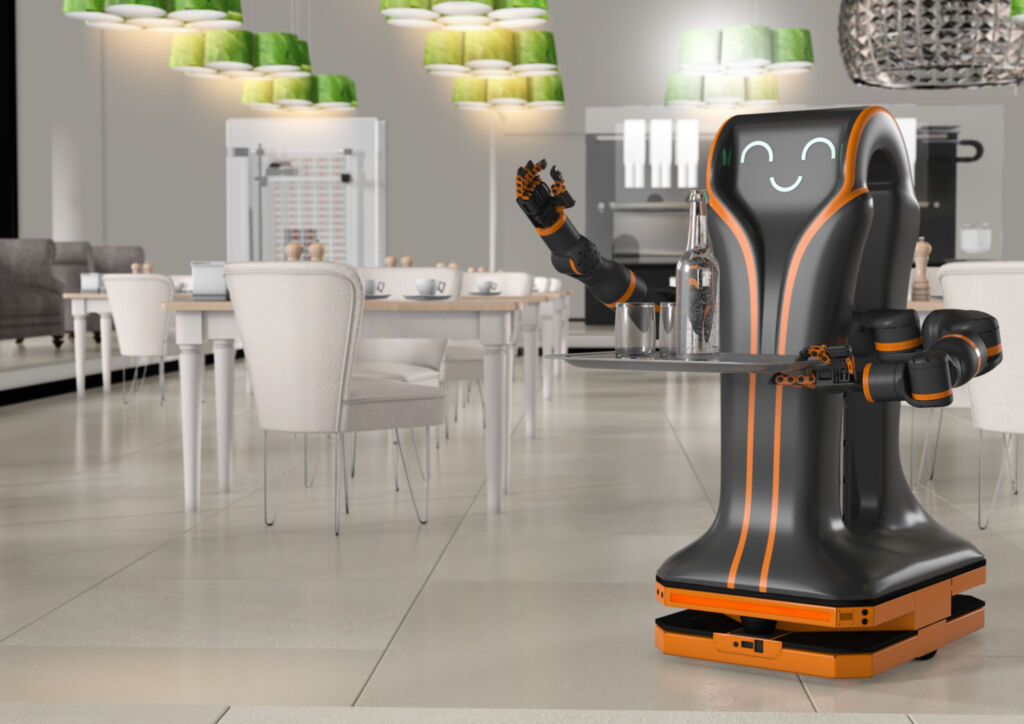
Humanoid service robots for household use
Igus has expanded its product lineup with the introduction of the Iggy Rob Home, a new humanoid service robot designed for household use. This latest addition aims to enhance domestic life by providing assistance in various tasks, reflecting the company's commitment to innovation in robotics. The announcement was made recently, highlighting Igus's ongoing efforts to integrate advanced technology into everyday environments. The Iggy Rob Home is expected to cater to the growing demand for smart home solutions, offering users a convenient and efficient way to manage household chores.
Allgemein Humanoide Robotik Robotik Servicerobotik
LUUM Introduces Robotic Eyelash Extensions, Enhancing Speed and Precision in Beauty Services
LUUM, a California-based company, is automating eyelash extension appointments using robots and AI. Their system focuses on the precise placement of individual lashes, while human beauty professionals handle client consultations and final touches. Currently available in Dallas, the Bay Area, and Orange County, with expansions planned for New York City and Chicago, LUUM's robots can perform tasks three to four times faster than human technicians. This innovation addresses a significant barrier to customer loyalty, as time is often cited as a major obstacle in beauty services. By completing eyelash extensions in minutes instead of hours, LUUM enables technicians to serve more clients in a day. The human touch remains essential, with technicians managing the overall client experience while the robots handle the tedious aspects of the procedure. Safety concerns have been raised regarding the use of robots in beauty services. However, LUUM's system is designed to minimize risk, using non-sharp tools that cannot physically touch clients. As the company continues to develop its technology, it aims to create a new category of intelligent beauty services, poised to transform the $400 billion U.S. beauty market with automated experiences that enhance precision and efficiency.
Beauty Technology Automated Services Robotics AI in Beauty
KAIST's Urban Robotics Lab Achieves Top Honors in International Navigation Challenges
KAIST's Urban Robotics Lab secured first and second place in two prestigious international robot navigation challenges. The team developed an AI system that enables robots to self-verify their decisions, ensuring they reach the correct destination. This innovative self-checking technology was instrumental in their success at the competitions held in Malmo, Sweden, and Sydney. The significance of this achievement lies in the advancement of embodied artificial intelligence, which allows robots to better understand human instructions and navigate complex environments. By addressing common navigation errors, such as misidentifying destinations, KAIST's technology enhances the reliability of robotic systems in real-world applications. The competitions were part of the European Conference on Computer Vision 2026 and Robotics: Science and Systems 2026, highlighting the importance of AI in robotics. Looking ahead, the focus will be on further refining the CoRe-VLN system, which utilizes AI to analyze visual and textual data for improved navigation accuracy. No further timeline was disclosed at the time of publication.
All News
Motion Secures $2 Million to Launch Humanoids-as-a-Service in European Factories
Motion, a pioneer in Humanoids-as-a-Service (HaaS) in Europe, has successfully raised $2 million in a pre-seed funding round led by Extantia Capital. This investment will enable Motion to transition its five pilot projects with Belgian industrial and logistics companies into full-scale production, expand its workforce, and enhance its fleet of humanoid robots, starting in the Benelux region. The significance of this funding is underscored by the pressing labor shortages in European factories, where 72 percent of manufacturers reported challenges in filling roles, particularly for machine and plant operators, according to a ManpowerGroup survey. The deployment of humanoid robots is crucial for addressing these workforce gaps and supporting Europe’s industrial ambitions, especially as competition from countries like China intensifies. Looking ahead, Motion aims to simplify the adoption of humanoid robots by offering a comprehensive service model that includes financing, compliance, and maintenance under a single monthly fee. No further timeline was disclosed at the time of publication.
Humanoids News european manufacturing extantia capital factory automation humanoid robots
Tau Robotics Launches Humanoid Robot Cleaning Service in San Francisco Pilot Program
Tau Robotics has introduced a pilot program allowing San Francisco residents to hire humanoid robots for cleaning tasks at $30 per hour. The robots, named Chelsea and Elon, are designed to perform chores such as vacuuming and cleaning kitchen counters, with each unit costing $50,000 to produce. The company aims to scale operations to 1,000 cleanings weekly by 2027 and expand to other cities by 2028. This initiative is significant as it represents a step towards integrating humanoid robots into everyday household tasks, although experts caution that these robots are not yet fully autonomous. Currently, human technicians remotely supervise the robots, using VR technology to assist them in real-time. The robots are still in development, and their capabilities are limited, requiring human intervention for various tasks. Looking ahead, the future of humanoid robots in domestic settings remains uncertain. Experts predict it may take five to ten years for these robots to perform household chores effectively and safely. As the technology evolves, it will be essential to monitor advancements and the potential for broader adoption in the coming years.
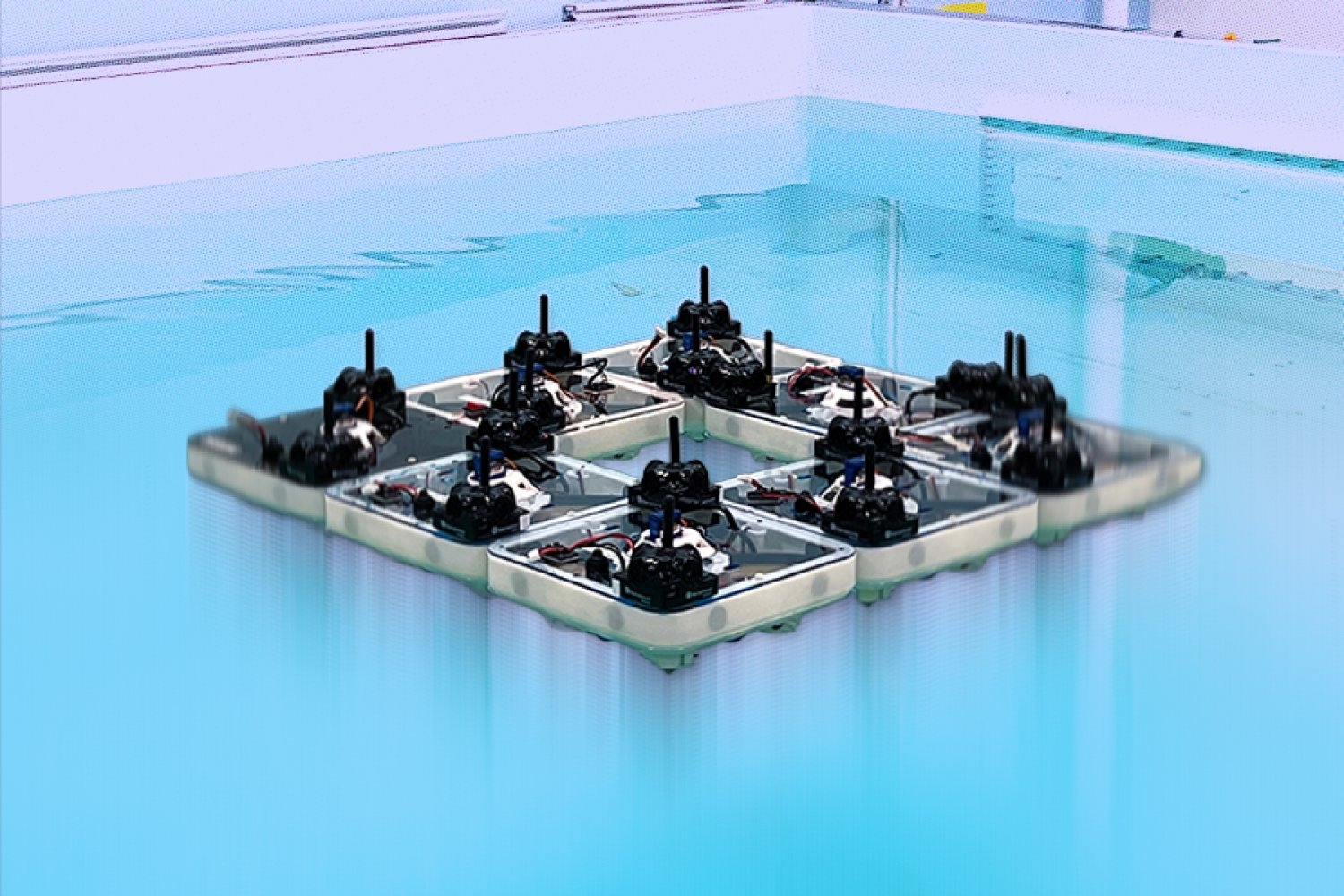
MIT's FloatForm Swarm Robots Create Adaptive Floating Structures for Urban Spaces
MIT researchers have developed FloatForm, a swarm of small robotic boats that autonomously assemble into larger floating structures. Each robot, measuring 21 centimeters square, is equipped with thrusters, sensors, and magnetic latches, allowing them to form bridges, platforms, and other structures with minimal human input. This innovative system aims to transform urban waterfronts into dynamic, programmable spaces, enhancing public infrastructure and emergency response capabilities. The significance of FloatForm lies in its potential to revolutionize how urban areas utilize water surfaces. By mimicking the self-organizing behavior of fire ants, the robots can adaptively create and reconfigure structures on demand, addressing challenges such as traffic alleviation during emergencies or creating temporary public spaces. This modular approach to floating infrastructure could lead to more livable cities by expanding usable public space onto underutilized water areas. Looking ahead, the research team plans to explore further applications of FloatForm in urban environments, with no specific timeline disclosed for future developments. The project builds on previous work with full-size autonomous vessels in Amsterdam, indicating a growing interest in leveraging water for urban mobility and public space expansion. The open-access findings were published in Nature Communications, highlighting the collaborative efforts of MIT's Computer Science and Artificial Intelligence Laboratory and the Senseable City Lab.
Research Robotics Autonomous vehicles Artificial intelligence Computer science and technology Machine learning
SpaceX's Starmind Project: Supplier Strategy and Chip Manufacturing Plans for 2026
SpaceX's Starmind project, aimed at deploying up to 1 million AI satellites, was filed with the FCC on January 30, 2026. The initiative is designed to minimize reliance on external suppliers, with CEO Elon Musk stating that current chip production capabilities only meet 2% of the projected needs. The first satellite, AI1, is set for prototype launches in early 2027, featuring a 70-meter wingspan and a modular payload system that allows for interchangeable chips from various suppliers. The significance of Starmind lies in its ambitious supply chain strategy, which seeks to transition from external hardware suppliers to a fully integrated Musk-owned facility by 2028. The Gigasat manufacturing site in Bastrop, Texas, is expected to be operational by the end of 2027, with plans for high-volume production of the D3 chip, specifically designed for space applications. This approach aims to consolidate chip manufacturing processes under the Terafab joint venture, which has an estimated initial investment of $55 billion. Looking ahead, the next milestone for Starmind is the launch of AI1 prototypes in early 2027, while the full-scale chip production at Terafab is projected to ramp up significantly thereafter. However, analysts express skepticism regarding the feasibility of achieving Musk's ambitious compute goals, which may require substantial investment and time to establish the necessary manufacturing capabilities.
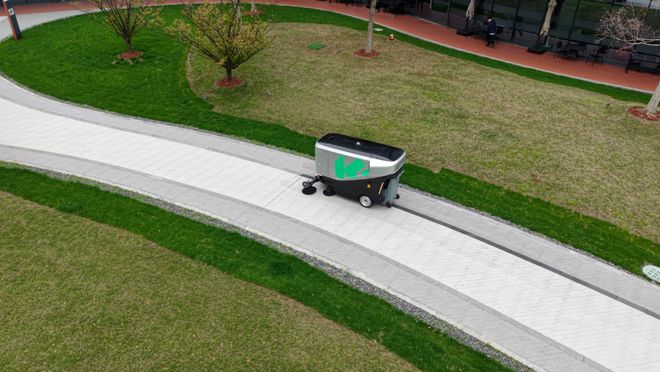
After validation in 40 cities, Kusa publicly reveals the underlying architecture of urban service embodied intelligence for the first time.
Kusa has publicly unveiled its innovative architecture for urban service embodied intelligence, following successful validation in 40 cities. This landmark announcement marks the first time the company has shared the details of its technology, which aims to enhance urban services through intelligent systems. The reveal took place recently, highlighting Kusa's commitment to improving city infrastructure and services. By leveraging data-driven insights and advanced technology, Kusa seeks to address the growing challenges faced by urban environments, ultimately aiming to create smarter, more efficient cities. The initiative is part of a broader movement towards integrating artificial intelligence into urban planning and service delivery, showcasing how technology can play a pivotal role in shaping the future of urban living.
Robotics Automation AI
How to Measure the Long-Term Value of Cobot Robots in Service and Hospitality
In a bid to enhance efficiency and employee well-being in the service and hospitality sectors, a company is integrating cobot robots into its operations. These robots assist with repetitive and physically demanding tasks, allowing staff to prioritize guest interactions and improve service quality. The JAKA Zu20 Palletizing robot, for instance, automates processes like palletizing and inventory replenishment, significantly boosting production efficiency while creating a safer working environment. The implementation of these industrial robot arms involves systematic evaluation of key performance metrics, such as cycle times and energy consumption, over extended periods. This data helps the company assess the reduction in manual labor demands and project long-term cost savings and operational improvements. Moreover, the adaptability of cobot robots to fluctuating service demands is a crucial factor in their effectiveness. Their compact design allows for quick redeployment in high-traffic hospitality spaces, ensuring minimal disruption to workflows. This flexibility not only enhances operational efficiency but also strengthens the return on investment. By combining quantitative metrics with qualitative observations, the company aims to measure the long-term value of its robotic systems. The JAKA Zu20 exemplifies how advanced automation can reduce labor costs and support employee satisfaction, ultimately ensuring that service operations remain competitive and responsive to evolving customer needs.

Goldman Sachs: China's Humanoid Strategy Pivots to "Dedicated" Service Robots and Entertainment
Goldman Sachs analyst Jacqueline Du has forecasted a transitional phase in the robotics industry characterized by the emergence of specialized robots, such as tour guides and entertainers, before the advent of general-purpose autonomous machines. This prediction highlights the current trend where Chinese manufacturers are rapidly expanding their production capabilities, even as they remain dependent on U.S. silicon for their technology needs. Du's insights suggest that while the future of robotics is promising, the immediate focus will be on developing robots tailored for specific tasks, paving the way for more versatile solutions in the years to come.
market analysis ChinaRobotics needs a service framework.
RSF defines a common language for robot service capability, lifecycle operations, certification pathways, and service-provider networks.
Join the RobotToday community on LinkedIn
Daily robotics news, in-depth analysis, conference highlights, and discussions with professionals worldwide.







