Soft Graphene Muscle Enables Robots to Maintain Stability for Over 13 Hours
- Published
- Source
- leaderobot.com
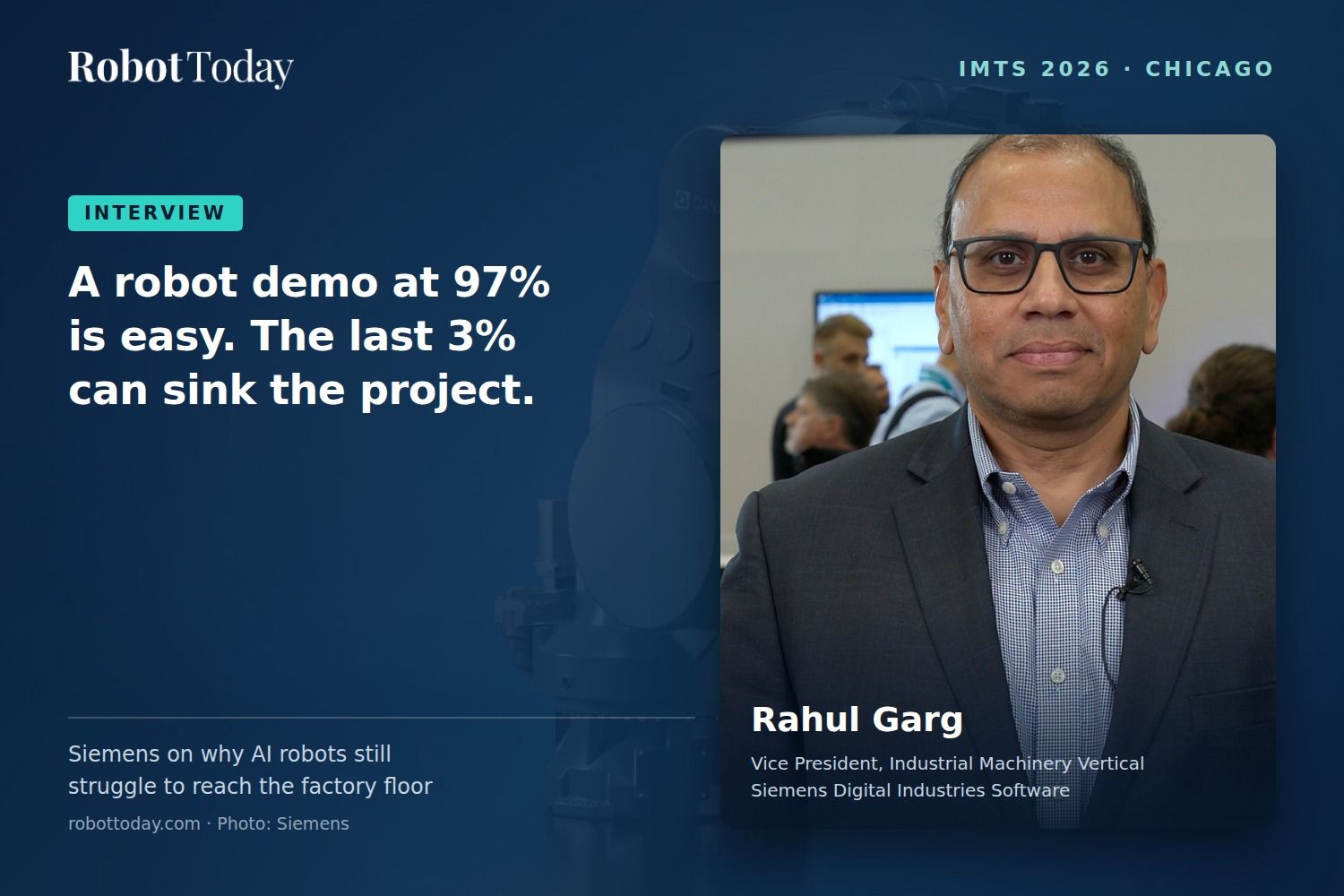
Researchers from Sun Yat-sen University and Tsinghua University have developed a soft robot capable of maintaining stability against disturbances for over 13 hours. This innovation utilizes an ultrathin soft muscle, known as Soft Graphene Muscle (SGM), which integrates self-sensing, electrothermal actuation, and disturbance control without the need for external sensors.
The significance of this development lies in its potential to enhance the operational capabilities of soft robots in real-world environments. Traditional soft robots often struggle with stability due to their flexible structures, which can amplify disturbances. The SGM's ability to adaptively balance objects heavier than itself marks a significant advancement in soft robotics, moving closer to practical applications.
Future developments to watch include the potential for further integration of sensing and control within soft materials, as well as the implications for deploying soft robots in complex environments. The research was published in eScience, highlighting the collaborative efforts of experts in biomedical engineering and integrated circuits from both universities.
Original report
Soft Robots Learn to Maintain Stability Against Disturbances for Over 13 Hours
leaderobot.com · LeaderobotThis briefing is an independently written summary based on publicly available reporting and is provided for industry information and news discovery. The original report and source publication are credited and linked where applicable. RobotToday does not claim ownership of third-party source material.
Rights concerns? Contact [email protected] with the relevant URL and details. We will review the matter and take appropriate action where warranted.
More related news
- 1
- 2
- 3
- 4
- 5
- 6
- 7
- 8
- 9
- 10
- 11
-
12
IEEE RoboSoft 2027 – Brisbane, Apr 5–9, 2027 RobotToday · 1 week ago
Related Suppliers
Soft Servo Systems
United States
US maker of open-architecture PC-based CNC and motion control software; founded 1998 by MIT engineers in Waltham, MA.

SimLab Soft
Jordan
Amman-based VR/3D visualization software; SimLab Composer enables no-code CAD-to-VR training simulation for manufacturing and AEC.

Suzhou Rochu Robotics Co., Ltd. 柔触机器人
China
Zhangjiagang soft-robotics firm supplying pneumatic soft grippers for food, 3C and auto parts, and in 2026 unveiling the 22-DoF muscle-driven Rochu Hand.
Bristol Robotics Laboratory
United Kingdom
UK's largest co-located multidisciplinary robotics research centre, a joint venture of U Bristol and UWE Bristol, 450+ researchers.
FOOT MASTER Casters & Wheels
United States
Caster and wheel manufacturer offering leveling, shock-absorbing and dedicated AGV casters engineered for robots, AGVs and industrial equipment.

Neptune Medical
United States
Burlingame, California GI endoscopy device maker whose Triton 1 robotic colonoscopy system won FDA clearance in 2026; raised USD 97M Series D.

Cosmo Robotics
KOSDAQ-listed Korean maker of lower-limb rehabilitation exoskeletons (EA2 PRO, BAM-T) that now owns Luxembourg's ExoAtlet Global.

PCB Stator Tech
United States
US motor technology company using PCB stators to create ultra-thin, lightweight, high-efficiency axial flux electric motors.

Adaptive Vision and Robotics
United States
US machine vision and robotics integrator serving food & beverage, auto, pharma, and logistics; founded 2015 in McKinney, TX.
BionIT Labs
Italy
Soleto, Italy maker, founded 2018, of Adam's Hand, a single-motor, fully adaptive myoelectric prosthetic hand now also offered for humanoid robots.
Beijing Tashan Technology Co., Ltd. 北京他山科技有限公司
China
Beijing tactile-sensing chip and fingertip sensor maker for robot hands; closed a several-hundred-million-RMB Series B in 2026.

Lighthouse AI
United States
Palo Alto AI home security camera startup that used 3D sensing and deep learning for person recognition; shut down in December 2018.
Robotics needs a service framework.
RSF defines a common language for robot service capability, lifecycle operations, certification pathways, and service-provider networks.
Join the RobotToday community on LinkedIn
Daily robotics news, in-depth analysis, conference highlights, and discussions with professionals worldwide.