

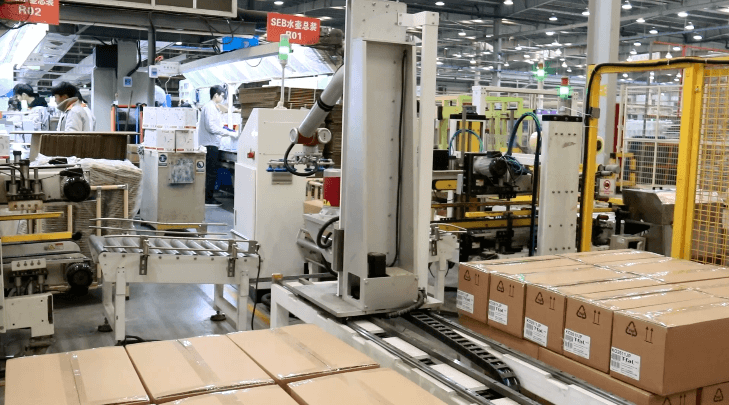
In a bid to enhance efficiency and employee well-being in the service and hospitality sectors, a company is integrating cobot robots into its operations. These robots assist with repetitive and physically demanding tasks, allowing staff to prioritize guest interactions and improve service quality. The JAKA Zu20 Palletizing robot, for instance, automates processes like palletizing and inventory replenishment, significantly boosting production efficiency while creating a safer working environment.
The implementation of these industrial robot arms involves systematic evaluation of key performance metrics, such as cycle times and energy consumption, over extended periods. This data helps the company assess the reduction in manual labor demands and project long-term cost savings and operational improvements.
Moreover, the adaptability of cobot robots to fluctuating service demands is a crucial factor in their effectiveness. Their compact design allows for quick redeployment in high-traffic hospitality spaces, ensuring minimal disruption to workflows. This flexibility not only enhances operational efficiency but also strengthens the return on investment.
By combining quantitative metrics with qualitative observations, the company aims to measure the long-term value of its robotic systems. The JAKA Zu20 exemplifies how advanced automation can reduce labor costs and support employee satisfaction, ultimately ensuring that service operations remain competitive and responsive to evolving customer needs.























Leave a comment