

MIT's FloatForm Swarm Robots Create Adaptive Floating Structures for Urban Spaces
- Published
- Source
- MITNews
MIT researchers have developed FloatForm, a swarm of small robotic boats that autonomously assemble into larger floating structures. Each robot, measuring 21 centimeters square, is equipped with thrusters, sensors, and magnetic latches, allowing them to form bridges, platforms, and other structures with minimal human input. This innovative system aims to transform urban waterfronts into dynamic, programmable spaces, enhancing public infrastructure and emergency response capabilities.
The significance of FloatForm lies in its potential to revolutionize how urban areas utilize water surfaces. By mimicking the self-organizing behavior of fire ants, the robots can adaptively create and reconfigure structures on demand, addressing challenges such as traffic alleviation during emergencies or creating temporary public spaces. This modular approach to floating infrastructure could lead to more livable cities by expanding usable public space onto underutilized water areas.
Looking ahead, the research team plans to explore further applications of FloatForm in urban environments, with no specific timeline disclosed for future developments. The project builds on previous work with full-size autonomous vessels in Amsterdam, indicating a growing interest in leveraging water for urban mobility and public space expansion. The open-access findings were published in Nature Communications, highlighting the collaborative efforts of MIT's Computer Science and Artificial Intelligence Laboratory and the Senseable City Lab.
Original report
Tiny robot boats build floating structures
MITNews · Rachel Gordon | MIT CSAILThis briefing is an independently written summary based on publicly available reporting and is provided for industry information and news discovery. The original report and source publication are credited and linked where applicable. RobotToday does not claim ownership of third-party source material.
Rights concerns? Contact [email protected] with the relevant URL and details. We will review the matter and take appropriate action where warranted.
More related news
-
1
Suzy Teele’s Mission at ARM Institute RobotToday · 17 hours ago
- 2
- 3
- 4
-
5
RobotToday Weekly October 5 – 9, 2026 RobotToday · 3 days ago
- 6
- 7
- 8
- 9
- 10
- 11
- 12
Related Suppliers

BioRobotics Laboratory, Korea University of Technology and Education
Korea, Republic of (South)
South Korean university research laboratory focusing on haptics, exoskeletons, rehabilitation robotics, and autonomous ground vehicles.

McMaster Manufacturing Research Institute
Canada
Hamilton, Ontario applied manufacturing research center at McMaster University; runs a 21,000 sq ft facility with seven research labs.

Robotics Education & Competition Foundation
United States
The REC Foundation is a US nonprofit that runs VEX-based robotics and drone competitions reaching 1.1 million students across 70 countries.
Yuanqi Innovation (Xiamen) Robot Co., Ltd. 元启创新(厦门)机器人有限公司
China
Xiamen-based AgiBot VAP partner founded 2025; resells and customises AgiBot humanoids, Genie wheeled robots and D1 quadrupeds with turnkey service.

OM Robot Technology Co. Ltd. 东莞全向机械科技有限公司
China
Chinese manufacturer of mecanum wheels, omnidirectional wheel bases, and mobile robotic platforms for AGV applications.
Techman Robot Inc. (TM Robot) 達明機器人股份有限公司
Taiwan
Techman Robot is a Taiwanese cobot maker producing AI-powered collaborative robots with integrated built-in vision for manufacturing automation.
Collaborative Robotics
United States
Maker of Proxie, a swerve-drive autonomous mobile manipulator that moves materials alongside people without facility changes.

Massachusetts Technology Collaborative
United States
Massachusetts state agency fostering technology and robotics innovation through funding, partnerships, and the MassRobotics Accelerator.

Azalea Robotics
United States
Berkeley-based YC-backed startup building fully-mobile collaborative robots for autonomous airport baggage handling on ramps and in terminals.

Drone Delivery Canada
Canada
Vaughan, Ontario drone logistics developer merged with Volatus Aerospace in August 2024; the combined company trades as FLT in Toronto.
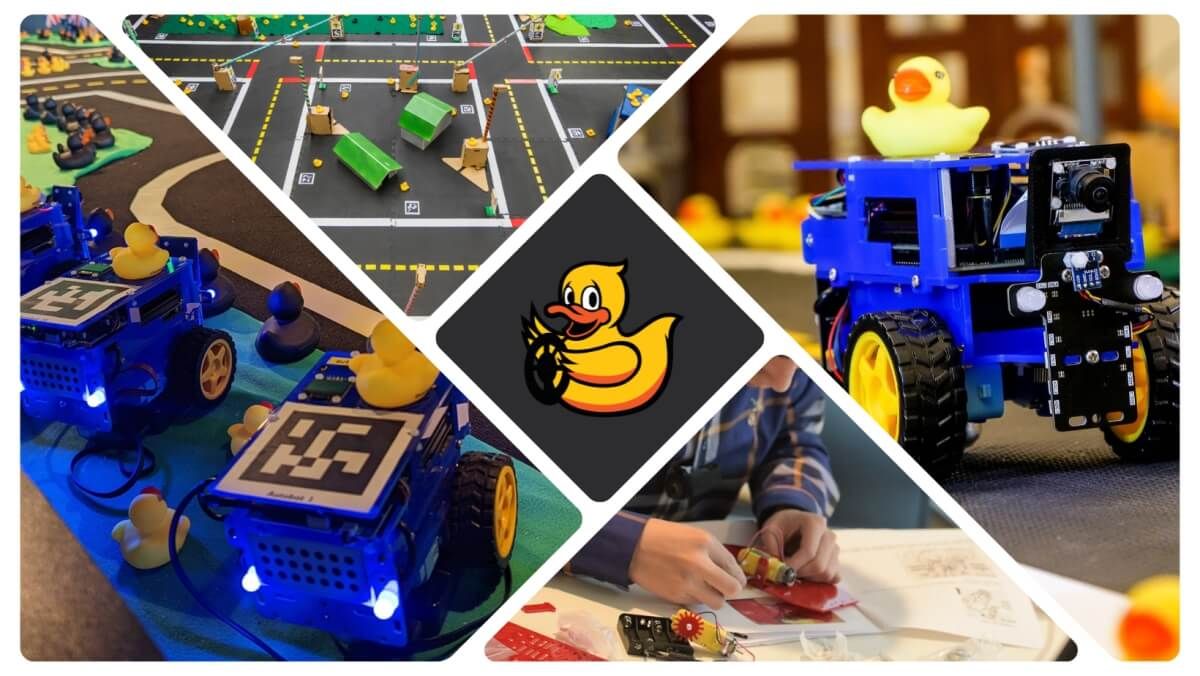
Duckietown Robotics
United States
Educational robotics platform provider offering autonomous vehicle kits and AI curricula used by 250+ universities worldwide.
EasyMile
France
Toulouse, France autonomous-vehicle software company founded 2014; EZTow and EZDolly systems automate industrial tow tractors and cargo movers at airports.
Robotics needs a service framework.
RSF defines a common language for robot service capability, lifecycle operations, certification pathways, and service-provider networks.
Join the RobotToday community on LinkedIn
Daily robotics news, in-depth analysis, conference highlights, and discussions with professionals worldwide.


