

Industry Briefing
A single destination for timely, editor-curated robotics news from around the world.

Community-Based Data Collection Jobs Enable Earning Through Household Tasks
In Tai'an, Shandong Province, a unique community training program for data collectors is underway, organized by Shandong Shucai Valley and local employment departments. Since June, over ten communities have hosted training sessions, allowing residents to learn how to operate data collection devices. One participant, 46-year-old Chen Junxi, became a home data collector, recording daily household activities to create training videos for AI companies. This initiative is significant as it provides flexible job opportunities for individuals unable to work outside the home, such as caregivers. Currently, over 200 residents in Tai'an are engaged in this work, which requires no fixed hours or professional background. The training ensures quality data collection, meeting the demands of AI companies for real-world data, which is crucial for effective machine learning. Looking ahead, Shandong Shucai Valley plans to expand its data collection efforts, including the addition of 2,000 devices, potentially creating new job opportunities in the community. The sustainability of this model will depend on the ongoing demand for real-world data from AI companies, particularly in home, retail, and traditional craft settings.
Data Collection AI Training Community Employment Remote Work
Chinese Cities Develop Innovative Approaches to Train Robots for Household Tasks
In Tai'an, a 59-year-old community resident, Zhu Chuan-zhen, demonstrates folding clothes repeatedly while wearing a sports camera. This seemingly ordinary household task is becoming a training material for robots. There are no educational restrictions or technical background requirements; the only necessity is to perform household chores to standard. Over 60 residents are engaged in this role, known as 'data collectors', with plans to deploy thousands of collection devices and create over 600 jobs. The Tai'an district has established a complete data annotation ecosystem, transitioning from data collection to intelligent labeling and model training. Meanwhile, in Shangyu, a quadruped robot navigates through high-temperature spray towers, equipped with a 'mechanical eye' for continuous monitoring. Previously, workers had to cover temperature and vibration readings every four hours, but now robots handle inspections, allowing workers to focus on detailed management. In Guiyang, the cost advantage is significant, with lower rental and labor costs compared to first-tier cities. As a hub for data processing, Guiyang hosts one of the world's largest data center clusters, supporting model training. These three cities—Tai'an, Shangyu, and Guiyang—are paving distinct paths for the embodied intelligence industry using their unique resources while major cities debate the design of humanoid robots.
Data Collection Robotics Training AI Applications Smart Manufacturing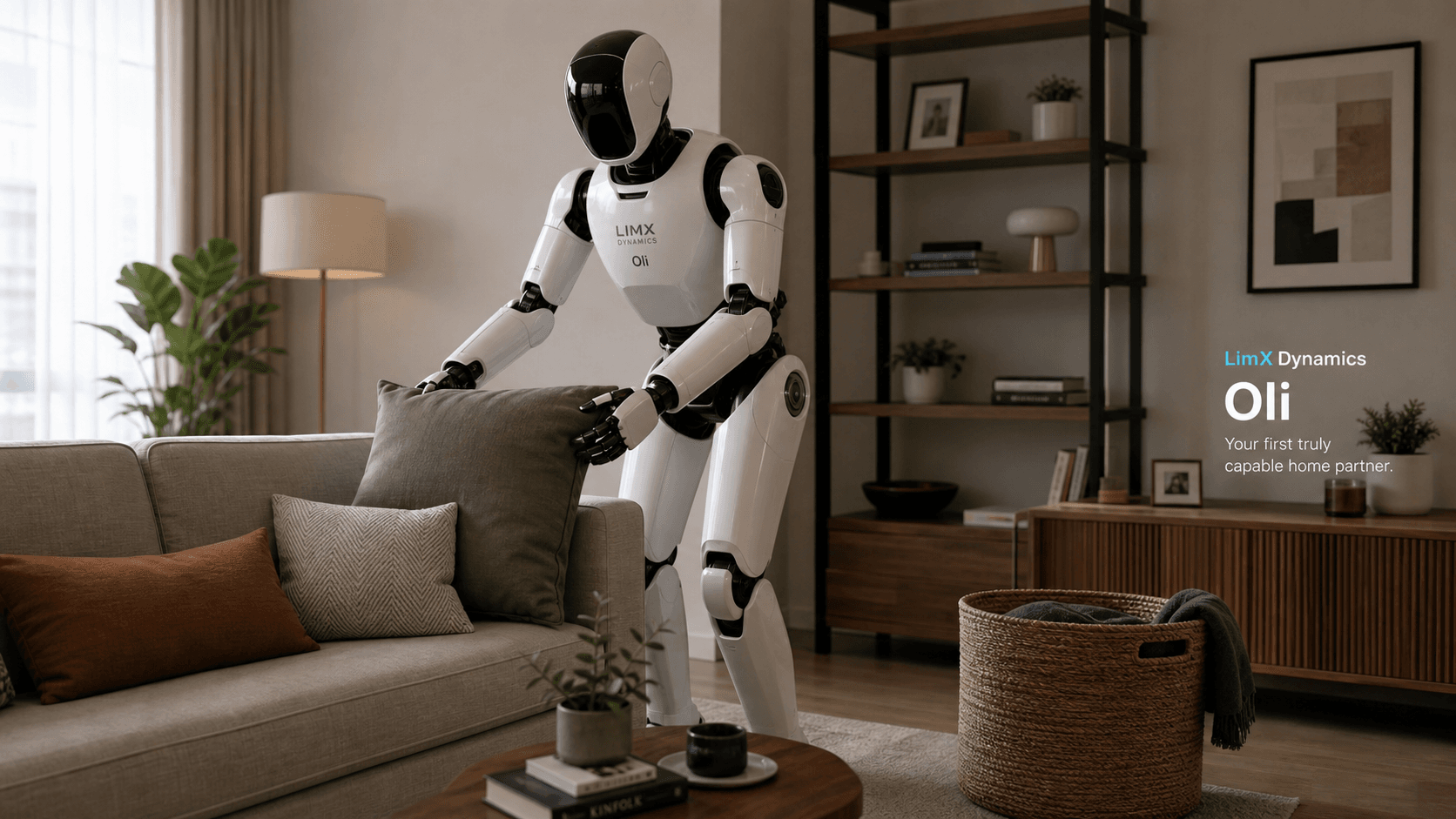
LimX Dynamics' Oli Humanoid Completes Household Tasks with Advanced COSA 0.5 Brain System
LimX Dynamics has announced that its Oli humanoid robot has successfully autonomously completed a range of household chores. This achievement utilizes the COSA 0.5 brain system, which features a three-tier S2-S1-S0 architecture, marking a significant advancement in humanoid robotics. This development is noteworthy as it positions LimX Dynamics' Oli as the second humanoid robot globally to achieve Figure-level capability in performing end-to-end household tasks. The ability to autonomously manage household chores represents a leap forward in the application of robotics in everyday life, potentially transforming how domestic tasks are approached. Looking ahead, the implications of this technology could lead to broader adoption of humanoid robots in various settings, including homes and service industries. No further timeline was disclosed at the time of publication.
Technology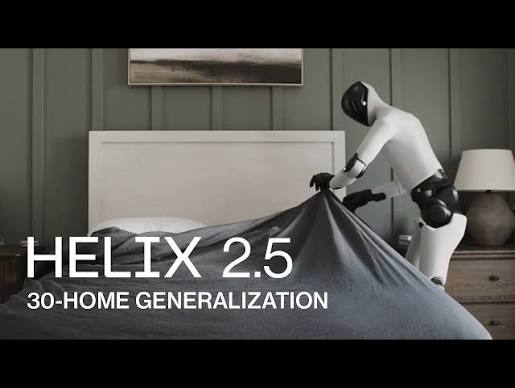
Figure Launches Helix 2.5: Robots Perform Household Tasks in Unfamiliar Environments
Figure has introduced the Helix 2.5 model, enabling robots to autonomously handle household chores. The company rented 30 homes in the San Francisco Bay Area, where the robots began tidying up without any additional training upon arrival. The Helix 2.5 aims to explore whether humanoid robots can enter an unfamiliar home and immediately start working independently. This development is significant as it addresses the challenge of zero-shot generalization, where robots operate in new environments without prior data collection or mapping. Traditionally, robots required extensive preparation to adapt to new settings. However, Helix 2.5's design allows for minimal adjustments to a universal base model, demonstrating improved performance in unfamiliar households. Moving forward, it will be important to monitor whether the 56% success rate in task completion remains consistent over extended periods in real homes and if other household tasks can be generalized in a similar manner beyond the three tested behaviors.
Household Robots AI Robotics Autonomous Systems
Survey Shows 42% of Respondents Would Trust Humanoid Robots with Household Tasks
A recent survey conducted by Live Science revealed that 42% of over 600 participants would allow humanoid robots to handle household chores. This interest reflects a growing acceptance of robots in daily life, although many still express skepticism about their capabilities. For instance, 36% of respondents indicated they would not trust robots with their dishes, while others preferred to wait for neighbors to test the technology first. The survey highlights a significant gap between the capabilities of humanoid robots being developed and the expectations of potential users. While companies are racing to create robots that can navigate everyday environments, users are concerned about the robots' ability to make nuanced decisions, such as determining which dishes are dishwasher-safe. The comments from participants reveal doubts about robots' dexterity and reliability in performing tasks like dusting or moving furniture. Looking ahead, the results suggest that the first household chore robots may successfully master could be simpler tasks that require fewer judgments. As the technology evolves, there may be more suitable applications for robots in structured environments, such as commercial nurseries, rather than in homes where tasks are more complex and varied. No further timeline was disclosed at the time of publication.
Humanoid Robots Household Automation AI Technology
Challenges in Developing Human-Like Robotic Hands for Household Tasks
Humanoid robots can perform complex movements like backflips, yet struggle with simple tasks such as folding shirts or picking up sponges. This paradox arises because while backflips involve predictable sequences, household tasks are fraught with uncertainty due to the variability of objects and environments. The human hand's dexterity, which combines mechanics, sensing, and control, is difficult to replicate in robots. The challenge lies in the need for robots to understand their grip and the properties of objects they manipulate. A modern robotic hand may have multiple motors, but it requires advanced sensors and software to adjust grip strength and position dynamically. Recent research from Zhejiang University highlights the importance of tactile sensing, achieving an 85% success rate in complex tasks by integrating visual and tactile information with reinforcement learning. Researchers at Ohio State University emphasize that household robots must coordinate their entire body and environment for effective manipulation. Unlike factory robots, which operate in controlled settings, household tasks involve unpredictable variables. This complexity makes the development of robotic hands capable of performing everyday tasks a significant hurdle in humanoid robotics.
AI and Robotics
1X Unveils NEO Robot Hand with Unmatched Precision for Household Tasks
1X has introduced the NEO robot hand, showcasing its ability to perform intricate tasks with remarkable precision. The hand features 25 degrees of freedom and utilizes a tendon-driven structure, mimicking human muscle and tendon systems, allowing for smooth and natural movements. The NEO hand can perform tasks such as separating grapes, twisting light bulbs, and pulling zippers, demonstrating capabilities that closely resemble human dexterity. The significance of the NEO robot hand lies in its potential applications as a household assistant, capable of performing chores, caring for the elderly, and aiding in rehabilitation. Its design incorporates numerous sensors that enable it to not only grasp objects but also assess how to grip them without causing damage. This advancement marks a critical step towards creating robots that can seamlessly integrate into daily life. Looking ahead, the NEO hand's uncanny resemblance to human hands raises questions about the 'uncanny valley' effect, where human-like robots elicit discomfort. As 1X aims to position the NEO as a versatile home assistant, the balance between functionality and human likeness will be crucial in its acceptance. No further timeline was disclosed at the time of publication.
Robotics Dexterous Manipulation AI Technology Human-Robot Interaction
Stardust AI Launches Lumo-2: Innovative Robot Action Model for Home Automation
On July 15, Stardust AI introduced its second-generation embodied base model, Lumo-2, which is the industry's first household latent world-action model. This launch includes the physical AI symbiotic agent, Agent Philia, enhancing their full-stack architecture of AI models, embodied operating systems, and rope-driven entities. The company will showcase its 'trinity' multi-scenario implementation solutions at the World Artificial Intelligence Conference in Shanghai from July 17 to 20. Lumo-2 autonomously performs 22 complex household tasks, demonstrating industry-leading capabilities in task range and complexity. This model addresses the challenges faced by robots in open environments, such as the inability to explain actions and the high costs of training complex skills. By predicting future scenarios before generating actions, Lumo-2 aims to overcome these bottlenecks and improve the practical execution of robotic tasks. Looking ahead, Stardust AI plans to enhance the scalability of Lumo-2 by expanding training data diversity and exploring efficient data engineering paradigms. The team is also focused on advancing real-world interactive learning to enable robots to adapt and evolve autonomously in dynamic environments. No further timeline was disclosed at the time of publication.
Household Robotics Physical AI AI Models Robotic Automation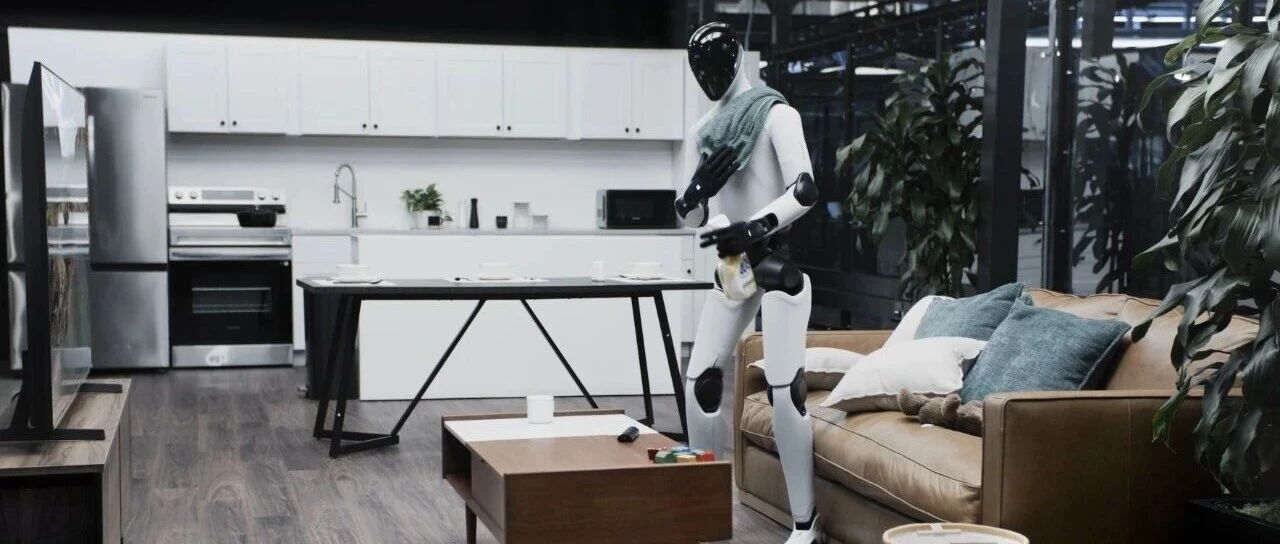
Fully Autonomous! Figure 03 Transforms Household Tasks with One Innovative Approach
The humanoid robot Figure 03 has recently demonstrated its advanced capabilities by autonomously executing a variety of complex household tasks, including cleaning and organizing, without any human assistance. This impressive performance, which took place during a technology showcase, highlights the robot's integration of the cutting-edge Helix 02 system, enabling it to learn and coordinate its actions effectively. The demonstration signifies a notable advancement in the field of humanoid robotics, reflecting ongoing efforts to enhance automation in everyday life.
Humanoid Robots Robotics Technology AI Home AutomationRobotics needs a service framework.
RSF defines a common language for robot service capability, lifecycle operations, certification pathways, and service-provider networks.
Join the RobotToday community on LinkedIn
Daily robotics news, in-depth analysis, conference highlights, and discussions with professionals worldwide.







