Industry Briefing
A single destination for timely, editor-curated robotics news from around the world.

Graphite Study Reveals AI Models Exhibit Distinctive Writing Patterns
A recent study by marketing firm Graphite has uncovered that advanced AI models still exhibit unique writing characteristics, identifying 13,000 phrases that occur at least twice as frequently in AI-generated text compared to human writing. Researchers analyzed 10,000 articles published prior to the launch of ChatGPT, using them as a control group to evaluate the differences in word choice and sentence structure across various AI models. The findings highlight the ongoing challenge of AI writing, with Anthropic’s Claude Opus 5.5 notably favoring the term 'dependable' and explaining concepts with a frequency up to 116 times greater than human authors. OpenAI’s Astra relies heavily on hedging language and corrective framing, appearing over 100 times more often than in human prose. Despite efforts to refine these models, Graphite's chief AI officer Greg Druck noted that the overall number of writing tells remains constant, suggesting that as certain habits are eliminated, new ones arise. Looking ahead, it will be important to monitor how different AI models evolve in their writing styles. Druck indicated that while Claude models are gradually aligning more closely with human writing patterns, GPT models are diverging further. This raises questions about the control AI labs have over these idiosyncrasies as they scale their models.
AI Models & LLMs ChatGPT Claude Graphite insights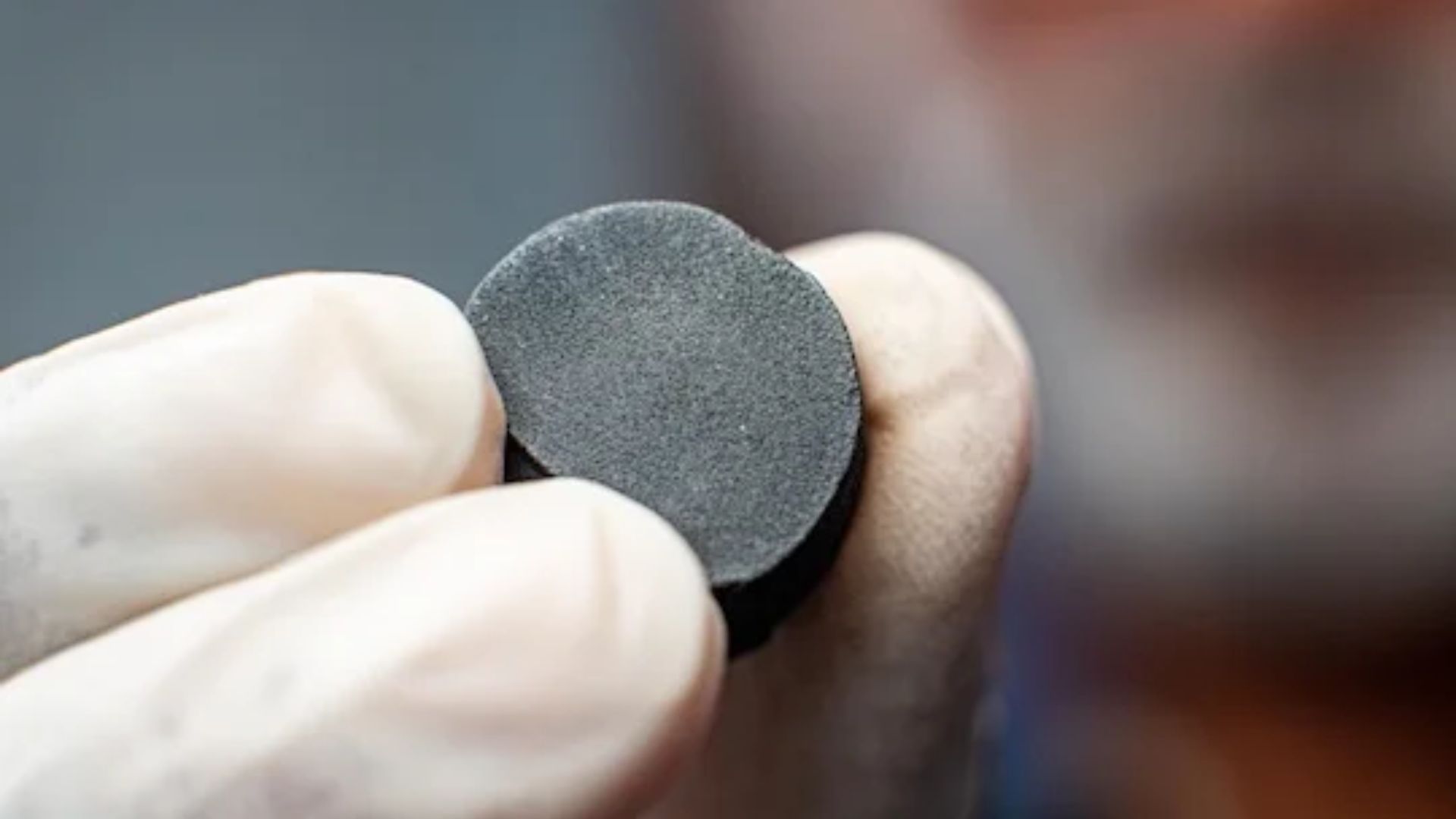
Rice University Develops Technique to Stabilize Diamond During Thermal Processing for Aerospace Applications
Researchers at Rice University have developed a new manufacturing technique that stabilizes diamond during thermal processing at low pressures, resulting in a durable composite material. This advancement, detailed in Materials Today, demonstrates how combining powder materials can overcome previous manufacturing challenges, particularly in creating tougher materials for aerospace and defense applications. The significance of this research lies in its ability to transform diamond into graphite in millionths of a second under hypersonic projectile strikes, a rapid phase change that absorbs kinetic energy. Abhijit Biswas, the study's first author, noted that the resulting composite is nearly nonmachinable and tough, making it suitable for extreme conditions faced in various technologies. Looking ahead, the team utilized spark plasma sintering to create a composite where diamond grains are embedded within a cubic boron nitride structure, offering a practical method for large-scale production of diamond-based parts. Future studies may focus on further evaluating the mechanical limits of this composite and its potential applications in high-performance environments. No further timeline was disclosed at the time of publication.
InnovationRobotics needs a service framework.
RSF defines a common language for robot service capability, lifecycle operations, certification pathways, and service-provider networks.
Join the RobotToday community on LinkedIn
Daily robotics news, in-depth analysis, conference highlights, and discussions with professionals worldwide.