Industry Briefing
A single destination for timely, editor-curated robotics news from around the world.

Countering Evolving Drone Threats with Layered Tactical Radar Systems
The threat posed by Shahed-136 one-way attack drones highlights the urgent need for advanced counter-drone strategies. As the unmanned aircraft system (UAS) environment evolves, operational users are adapting to new challenges by employing scalable, layered sensing teams capable of detecting and tracking small, fast, and swarming aerial threats. This approach is crucial for effective air defense in complex scenarios, whether on land or at sea. Ray Bischoff, senior director of business development at Leonardo DRS, emphasizes the importance of integrating various sensor systems, particularly tactical radars, into a networked architecture. This layered defense strategy allows for enhanced coverage and response times, which are critical in high-stakes situations like those in the Strait of Hormuz. By utilizing a combination of technologies, including electro-optic and infrared sensors, the defense systems can maintain functionality even if some sensors are compromised. Looking ahead, the focus will remain on refining these layered systems to address emerging drone threats. The integration of diverse sensor technologies will be key to improving decision-making and operational effectiveness. No further timeline was disclosed at the time of publication.
Sponsored Content Counter-Unmanned Aerial Vehicles (C-UAS) Land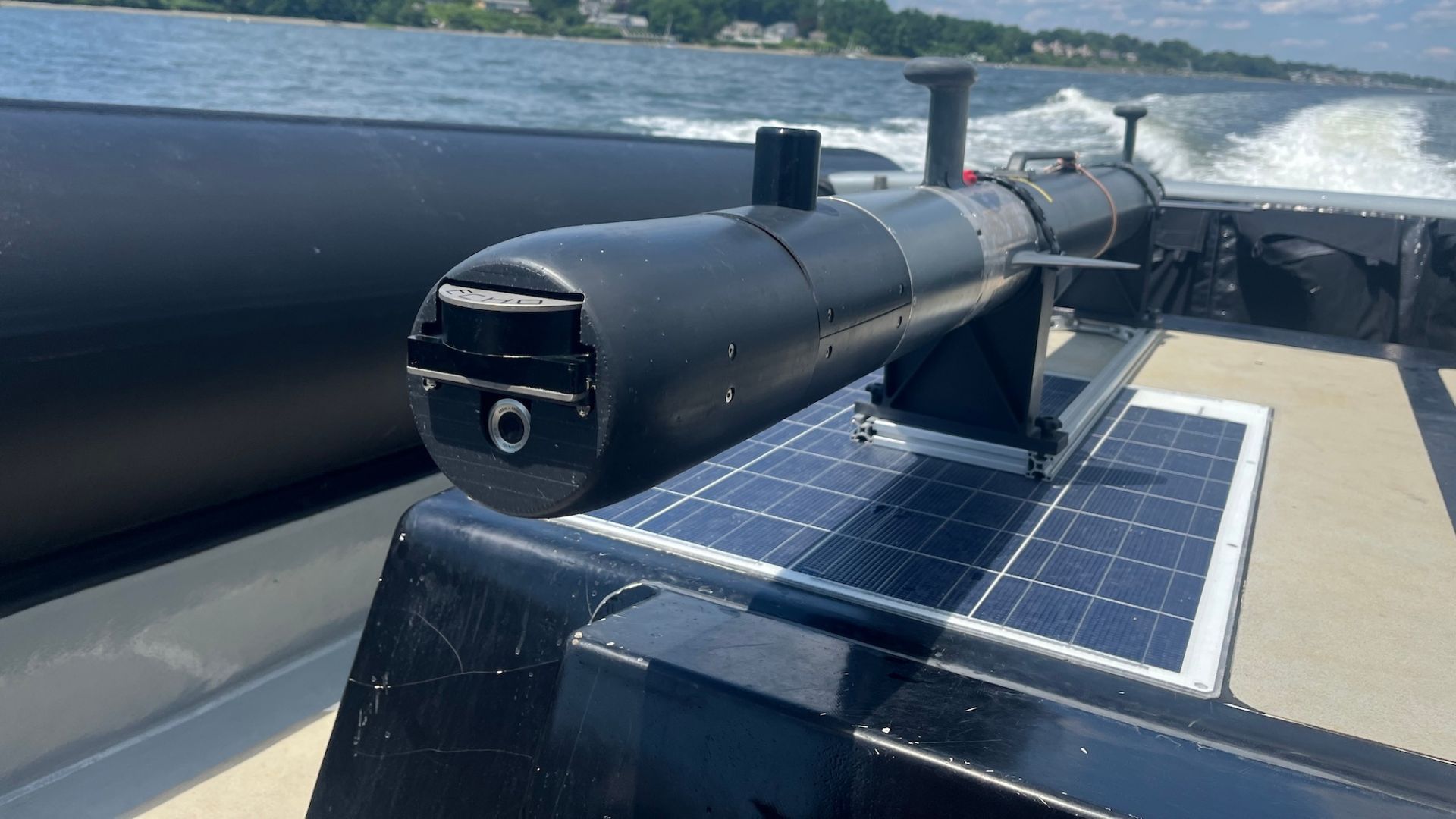
Vatn Systems Launches SIGURD Autonomous System for Naval Mine Detection and Neutralization
U.S. defense startup Vatn Systems has unveiled SIGURD, a compact autonomous system designed to detect and neutralize naval mines. This innovative platform allows military operators to locate underwater mines without the need for large mine warfare vessels, addressing a critical challenge in naval operations. SIGURD is currently being tested by government customers, with deployment expected later this year. The introduction of SIGURD is significant as naval mines remain a cost-effective threat in maritime conflict, capable of disrupting shipping and delaying naval operations. Traditional mine countermeasure missions are resource-intensive, often requiring specialized ships and trained personnel. Vatn's autonomous underwater vehicle aims to streamline this process, enabling quicker responses to mine threats in contested waters. Looking ahead, Vatn Systems is preparing to support U.S. military and allied nations in expanding their autonomous mine warfare capabilities. The demand for such systems is rising, particularly in light of increasing tensions in strategic maritime regions. The successful testing of SIGURD against inert naval mines suggests a promising future for autonomous solutions in mine countermeasures.
Military
SpaceX Proposes 1 Million AI Satellites to Address Ground Data Center Constraints
On January 30, 2026, SpaceX filed with the FCC to launch up to 1 million AI compute satellites, positioning orbital data centers as a solution to the increasing demand for AI computing power. Ground data centers are facing significant challenges, with energy consumption projected to reach approximately 1,050 TWh in 2026, making them the fifth-largest electricity consumer globally. The demand for new data center capacity is outpacing the growth of power generation infrastructure, leading to a critical bottleneck in the grid system. The significance of this initiative lies in the structural constraints faced by ground data centers, including power delivery limitations, high water consumption, and local opposition to new projects. The Uptime Institute's 2026 outlook identifies power as the primary constraint on data center growth, with capacity clearing prices in the PJM grid skyrocketing to $329.17/MW, driven by data center expansion. Additionally, cooling requirements are becoming increasingly unsustainable, with facilities consuming vast amounts of water, further complicating their operational viability. Looking ahead, SpaceX's orbital AI compute initiative aims to circumvent these challenges by leveraging the advantages of space, such as continuous solar power and minimal local opposition. The first AI prototypes are expected to launch in early 2027, with operational deployments planned for 2028. No further timeline was disclosed at the time of publication.
Robotics needs a service framework.
RSF defines a common language for robot service capability, lifecycle operations, certification pathways, and service-provider networks.
Join the RobotToday community on LinkedIn
Daily robotics news, in-depth analysis, conference highlights, and discussions with professionals worldwide.