Industry Briefing
A single destination for timely, editor-curated robotics news from around the world.

Delft to Host Open-Air Exhibition Featuring Humanoid Robot Portraits
From August 1 to November 1, 2026, the city center of Delft will transform into an open-air gallery showcasing portraits of humanoid robots and androids at approximately thirty locations. This exhibition, part of the theme year 'The robots are coming,' aims to highlight the impact of robotics on daily life by integrating art and technology into the urban landscape. Unlike traditional museum exhibits, the artworks will be displayed in shop windows, studios, and eateries throughout the historic city center. The walking route begins at the Huis van Delft, adjacent to the Delft train station, guiding visitors to various locations where QR codes provide additional information about each robot, the researchers, and the technology involved. A free map of the route will be available at the VVV Delft and participating businesses. Photographer Wanda Tuerlinckx, known for her work with humanoid robots since 2016, captures these portraits using a 19th-century camera, creating a striking contrast between past and future. This exhibition aims to make robotics visible and accessible, demonstrating that technology belongs not only in laboratories but also in public spaces, fostering a broader understanding of robotics developments.
Nieuws algemeen Humanoids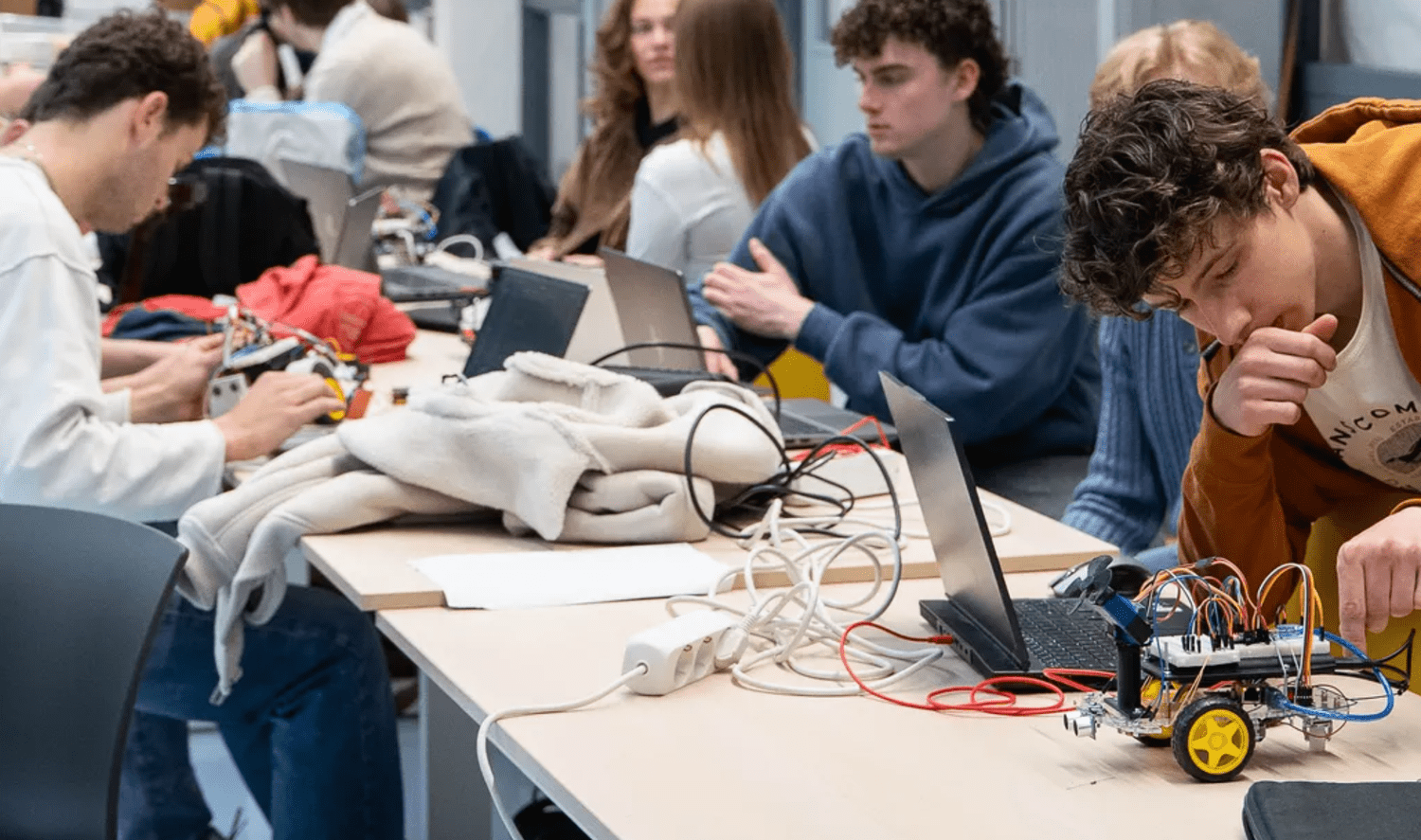
TU Delft Team Wins Dutch Education Award 2026 for Innovative Robotics Project
A team of educators from TU Delft has been awarded the Dutch Education Award 2026 for their project 'Robotics: I can do it!'. The award includes a grant of €1.2 million aimed at further developing and expanding this educational innovation. The project centers around MIRTE, a modular robotics environment that allows students to learn robotics step by step. This approach enables students to gradually build their knowledge, starting with simple tasks and progressing to more complex applications, fostering active learning and problem-solving skills. Initiator Martin Klomp highlighted the award as a significant recognition for the project, which aims to expand the platform's accessibility to a broader audience, including secondary education. This initiative seeks to introduce more young talent to robotics and AI in an approachable manner.
Nieuws algemeen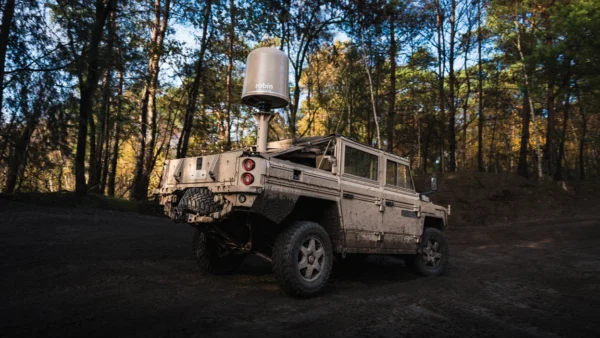
Robin Radar Systems Expands Capacity with New Headquarters in Delft, Netherlands
Robin Radar Systems has inaugurated a new 9,000-square-meter headquarters in Delft, Netherlands, significantly increasing its operational capacity. This facility will enhance radar research, engineering, production, testing, and customer service, complementing a recently opened operations center in Northern Virginia. The expansion aligns with the company's impressive 60% year-over-year growth over the past three years, with over 800 radar systems now installed globally. The new headquarters is strategically located near Delft University of Technology, facilitating access to engineering talent. Robin Radar aims to boost series production through partnerships and expects to employ over 300 people by the end of 2026. The facility also enhances customer support, increasing service capacity fourfold, which is crucial as European governments emphasize regional supply chains for defense technologies. Looking ahead, Robin Radar is focused on advancing its IRIS drone detection radar, which has seen improvements based on operational feedback. Notable enhancements include a Long Range Mode that extends the detection range from five to 12 kilometers and new maritime capabilities for operation aboard large vessels. The company is poised to meet the growing demand for counter-drone systems across various sectors, including defense and critical infrastructure.
Drone News Drone News Feeds Dual Use News C-UAS Counter UAS
Delft University Develops Whisker-Based Sensors for Drones to Navigate in Darkness
Researchers at Delft University of Technology have created a lightweight tactile sensor inspired by animal whiskers, enabling tiny autonomous drones to navigate in low-visibility environments. This innovation allows drones to explore areas filled with darkness, dust, or smoke without relying on heavy sensors. The ability for drones to navigate through challenging environments is significant for various applications, including search and rescue operations, environmental monitoring, and industrial inspections. By mimicking the sensory capabilities of rats and mice, these drones can effectively maneuver in tight spaces and complex terrains. Future developments in this technology could enhance the operational capabilities of drones in various sectors. As research progresses, it will be important to monitor advancements in sensor technology and potential applications in real-world scenarios. No further timeline was disclosed at the time of publication.
Robotics
TU Delft Develops Drone Using Touch Sensors for Perching on Branches
Researchers at TU Delft have created an innovative drone that utilizes tactile sensors to perch on branches, moving beyond traditional camera reliance. This technology allows the drone to detect and adjust its position as it approaches a branch, enabling it to grip securely and conserve battery power by shutting down its motors once perched. The significance of this development lies in its potential to enhance drone operations in complex environments like forests, where conventional vision-based systems often struggle. By employing touch sensing, the drone can locate and grip branches effectively, which could lead to longer operational periods in cluttered settings. Looking ahead, the drone's control architecture, which includes a series of dynamic states for flight and perching, will be crucial for its adaptability. No further timeline was disclosed at the time of publication.
AI and RoboticsRobotics needs a service framework.
RSF defines a common language for robot service capability, lifecycle operations, certification pathways, and service-provider networks.
Join the RobotToday community on LinkedIn
Daily robotics news, in-depth analysis, conference highlights, and discussions with professionals worldwide.