Industry Briefing
A single destination for timely, editor-curated robotics news from around the world.

Haocun Technology Launches Innovative Gesture and Haptic Data Gloves for Embodied Intelligence
Haocun Technology has introduced a new generation of data gloves designed to enhance embodied intelligence by addressing the critical gap in human hand haptic data collection. This innovation aims to provide robots with the ability to perceive force, material, and deformation, which is essential for their interaction with the physical world. The significance of this development lies in its potential to overcome the limitations of existing data collection solutions in the industry. Current methods either lack tactile feedback or suffer from poor accuracy in gesture recognition, making them inadequate for training advanced embodied algorithms. Haocun's gloves utilize proprietary MEMS inertial sensors and a distributed flexible tactile sensing matrix to achieve millisecond-level synchronous data collection of joint angles and tactile feedback. Looking ahead, Haocun Technology's gloves could set a new standard in the field of embodied intelligence by providing a unified, high-precision tool for simultaneous tactile and pose data collection. This advancement may facilitate the development of more sophisticated robotic systems capable of real-world interactions. No further timeline was disclosed at the time of publication.
Haptic Technology Gesture Recognition Robotics Data Collection Embodied Intelligence
Ericsson and AT&T Demonstrate Drone Detection Using 5G Cellular Data Technology
Ericsson and AT&T recently showcased their drone-tracking solution at AT&T Stadium in Arlington, Texas, utilizing 5G signals from existing cellular towers. This demonstration highlighted the Integrated Sensing and Communication (ISAC) technology, which can detect drones in low-altitude airspace, addressing gaps in traditional radar systems. The system employs artificial intelligence to identify potential threats and track drones effectively. The significance of this technology lies in its ability to enhance airspace awareness for law enforcement and infrastructure owners, especially following major events like the FIFA World Cup. By leveraging existing cellular infrastructure, the ISAC system offers a cost-effective solution for drone detection and tracking, which is crucial for public safety and defense applications. Looking ahead, Ericsson and AT&T envision various real-world applications for their technology, particularly in securing high-value properties and facilitating commercial drone deliveries. The integration of ISAC with 5G networks could promote the growth of the low-altitude economy, making it a vital tool for both public safety and commercial use. No further timeline was disclosed at the time of publication.
Cellular Networks Drone News Drone News Feeds drone security News safety and security
Starmind's Satellite Technology Achieves 880 Billion Liters in Annual Water Savings
Starmind has announced that its satellite technology can save approximately 880 billion liters of cooling water annually at full scale. This figure is equivalent to the annual household water use of around 6.5 million Americans. The technology operates by utilizing a closed-loop liquid cooling system that eliminates the need for water during its operational life, contrasting sharply with traditional ground data centers that consume vast amounts of water for cooling. The significance of this achievement lies in the growing water consumption crisis faced by data centers, particularly as AI expansion drives demand. In 2025, U.S. data centers consumed nearly one trillion liters of water, highlighting the urgent need for sustainable solutions. Starmind's approach not only addresses direct water usage but also avoids indirect water consumption associated with electricity generation, marking a substantial shift in how computing can be conducted in a resource-efficient manner. Looking ahead, Starmind's deployment strategy includes a projected buildout of 100 GW of orbital compute per year, which could displace an additional 735 billion liters of ground water demand annually. The first tranche of 10,000 satellites is already operational, offsetting approximately 8.8 billion liters of water per year. No further timeline was disclosed at the time of publication.
SpaceX Proposes 1 Million AI Satellites to Address Ground Data Center Constraints
On January 30, 2026, SpaceX filed with the FCC to launch up to 1 million AI compute satellites, positioning orbital data centers as a solution to the increasing demand for AI computing power. Ground data centers are facing significant challenges, with energy consumption projected to reach approximately 1,050 TWh in 2026, making them the fifth-largest electricity consumer globally. The demand for new data center capacity is outpacing the growth of power generation infrastructure, leading to a critical bottleneck in the grid system. The significance of this initiative lies in the structural constraints faced by ground data centers, including power delivery limitations, high water consumption, and local opposition to new projects. The Uptime Institute's 2026 outlook identifies power as the primary constraint on data center growth, with capacity clearing prices in the PJM grid skyrocketing to $329.17/MW, driven by data center expansion. Additionally, cooling requirements are becoming increasingly unsustainable, with facilities consuming vast amounts of water, further complicating their operational viability. Looking ahead, SpaceX's orbital AI compute initiative aims to circumvent these challenges by leveraging the advantages of space, such as continuous solar power and minimal local opposition. The first AI prototypes are expected to launch in early 2027, with operational deployments planned for 2028. No further timeline was disclosed at the time of publication.

Starmind's Orbital Compute vs. Terrestrial Data Centers: Analyzing Resource Advantages
Starmind's orbital compute technology presents a significant advantage over traditional ground-based data centers by eliminating constraints related to land, water, and grid permitting. While terrestrial data centers are currently cheaper and faster to construct, with U.S. data center spending reaching $85.3 billion in 2026, Starmind's approach focuses on addressing the growing resource limitations faced by hyperscale facilities. The significance of Starmind's technology lies in its ability to sidestep the increasing challenges of land and water usage. For instance, a 100 MW data center can consume approximately 530,000 gallons of water daily for cooling, while Starmind's AI1 utilizes deployable liquid radiators that require no water. This structural advantage could resonate with investors as the demand for AI computing continues to escalate, potentially leading to annual water withdrawals of up to 1.7 trillion gallons by 2027. Looking ahead, Starmind's next milestones include the launch of AI1 prototypes scheduled for early 2027. However, the technology's claims regarding cooling efficiency and operational reliability remain unverified until real flight data is available. As the industry evolves, the competition between orbital and terrestrial solutions will become increasingly relevant, particularly in the context of resource management and sustainability.

Tesla Reports Safety Data Ahead of Critical EU Vote on Full Self-Driving Technology
Tesla, Inc. (NASDAQ:TSLA) announced that its Full Self-Driving (FSD) technology recorded 4.1 times fewer collisions than manually driven vehicles in five European countries. This data, derived from over 100 million kilometers of driving between April and August, comes as Tesla intensifies lobbying efforts for broader FSD deployment ahead of an EU vote. The findings indicate three highway collisions and nine non-highway collisions for FSD-equipped cars, compared to 137 and 490 for manually driven vehicles. The significance of this data lies in its potential to influence EU regulators as they consider wider FSD approval. Tesla's recent sales recovery, with second-quarter deliveries reaching a record 480,126 and revenue hitting $28.2 billion, adds urgency to this push. The company aims to leverage its safety statistics to bolster public and regulatory confidence in FSD, especially as it faces scrutiny over the validity of its comparisons. Looking ahead, the outcome of the EU vote could have substantial implications for Tesla's market position and financial health. Approval would not only enhance FSD's market potential but also impact Tesla's valuation, which increasingly relies on AI-driven revenue streams. However, the company still faces challenges, including regulatory hurdles and competition from established autonomous driving operators like Waymo and Baidu's Apollo Go.

Blum-Novotest to Showcase Innovative Measuring Technology for Automation at IMTS 2026
Blum-Novotest, a prominent supplier of advanced measuring and testing technology, will present key innovations at IMTS 2026 in Chicago, IL. The company aims to demonstrate how its products can enhance automation in machining processes, contributing to the concept of lights-out manufacturing. The significance of Blum-Novotest's participation lies in its commitment to advancing automation in the manufacturing sector. By showcasing its innovative solutions, the company emphasizes the importance of precision and efficiency in machining, which are critical for achieving fully automated production environments. As IMTS 2026 approaches, industry professionals should watch for Blum-Novotest's product demonstrations and insights into how their technology can facilitate seamless automation. No further timeline was disclosed at the time of publication.
SpaceX Launches Starmind Project for 1 Million AI Satellites by 2028
SpaceX has officially named its orbital AI infrastructure project 'Starmind,' which aims to deploy a constellation of up to 1 million satellites. This initiative, confirmed by Elon Musk on June 22, 2026, will enable AI inference directly in space, utilizing solar energy rather than terrestrial power sources. The first satellite, designated AI1, was unveiled on June 8, 2026, and is designed to operate in sun-synchronous orbits. The significance of Starmind lies in its potential to overcome the limitations faced by ground-based data centers, such as land, power, and water constraints. By running AI computations in orbit, Starmind can provide a more efficient solution to the growing demand for AI computing power. The project leverages the existing Starlink infrastructure for data transmission, distinguishing its function from Starlink's internet relay capabilities. Looking ahead, SpaceX plans to begin hardware deployment with the AI1 satellite, while full-scale production and deployment of the satellite constellation are targeted for 2028. As of now, no Starmind satellites have been launched, and further engineering challenges remain to be addressed, particularly regarding the scalability of the satellite design.

SpaceX Unveils AI1 Satellite Specs for Starmind Constellation with Key Thermal Challenges
SpaceX has introduced the AI1 satellite, the inaugural component of its Starmind constellation, which stands 20 meters tall and has a wingspan of 70 meters. This orbital compute node is designed to deliver computing power equivalent to one NVIDIA GB300 server rack, utilizing a unique cooling system with deployable liquid radiators. The satellite's specifications were revealed during a presentation on June 8, 2026, ahead of SpaceX's IPO. The significance of the AI1 satellite lies in its role as a compute platform rather than a traditional satellite, focusing on running AI inference workloads. The satellite's cooling system, which is critical for its operation in the vacuum of space, is designed to reject heat through infrared radiation. However, independent engineers have raised concerns about the feasibility of the thermal and mass claims made by SpaceX, suggesting that the cooling requirements may exceed practical limits. Looking ahead, SpaceX plans to launch two AI1 prototypes in early 2027, with full-scale production expected to commence later that year at its Gigasat facility in Bastrop, Texas. The ongoing debate regarding the satellite's thermal management capabilities will be crucial to monitor as the project progresses, with no further timeline disclosed at the time of publication.
SpaceX's Starmind Faces Feasibility Challenges for 1 Million Satellite Deployment
On January 30, 2026, SpaceX submitted a request to the FCC to launch up to 1 million satellites as part of its Starmind orbital compute constellation. This ambitious plan is unprecedented, as the total number of satellites ever launched globally is in the low tens of thousands. The proposal seeks a waiver from standard deployment milestones, citing reliance on the Starship's full reusability for success. The significance of this request lies in the technical and logistical challenges it presents. Experts warn that low Earth orbit may not support the proposed number of active satellites without risking a debris cascade. SpaceX's own IPO prospectus acknowledges unresolved dependencies related to Starship's launch cadence and reusability, which are critical for the orbital AI compute strategy. Looking ahead, the timeline for achieving the necessary launch cadence and manufacturing capacity remains uncertain. SpaceX's Gigasat facility in Texas aims for volume production by late 2027, but this would require unprecedented output levels. No further timeline was disclosed at the time of publication, leaving the feasibility of the Starmind project in question.
SpaceX's Starship V3 Plans for 1 Million Starmind Satellites by 2030
SpaceX's Starship V3 is set to revolutionize satellite deployment, aiming to launch 1 million Starmind satellites by 2030. The spacecraft can carry over 100 tonnes to low Earth orbit (LEO), significantly more than the Falcon 9's capacity. As of May 2026, Starship has completed 12 flights, with the next mission scheduled for late July 2026, focusing on operational payloads including AI1 prototypes in early 2027. This ambitious plan is crucial for expanding orbital compute capacity, targeting an annual addition of 100 GW through a million tonnes of satellite hardware. SpaceX's strategy hinges on achieving a launch cadence of approximately 12,000 flights, equating to about three launches per day. The company has invested over $15 billion in the Starship program, with expectations to begin payload deliveries in the second half of 2026, starting with Starlink V3 satellites. Looking ahead, the successful deployment of the Starmind constellation will depend on Starship's ability to meet its cost targets of $10–20 million per flight. If achieved, this would make launching satellites more economical than building ground data centers. The next significant milestone will be the launch of AI1 prototypes in early 2027, with full-scale deployments commencing in 2028 from the new Gigasat factory in Texas.

SpaceX's Starmind Plans 1 Million AI Satellites Amid Collision Risks
SpaceX has announced its ambitious Starmind project, which aims to deploy 1 million AI satellites in orbits between 500 and 2,000 km. This initiative, confirmed by Elon Musk on June 23, 2026, follows a merger with xAI, valuing the combined entity at $1.25 trillion. The satellites will function as orbital data centers, processing AI workloads powered by solar arrays and linked by optical lasers. The significance of Starmind lies in its potential to add 100 gigawatts of AI compute capacity annually, contingent on the successful operation of the Starship launch system. However, the project raises concerns regarding space debris, as the current orbital environment is already congested, with a 20% increase in collision risk reported since 2024. The European Space Agency has highlighted that the density of debris in low Earth orbit is now comparable to that of active satellites, complicating the operational landscape for new entrants like Starmind. Looking ahead, the first operational orbital AI deployments are targeted for 2028, with test launches expected in early 2027. However, the project faces scrutiny regarding its impact on space debris, as even a 1% failure rate could significantly increase the number of uncontrollable objects in orbit, exacerbating existing risks. No further timeline was disclosed at the time of publication.

Tesla's Optimus Robots to Support Starmind Satellite Production, Not Maintenance
Tesla's Optimus robots will not be used to repair Starmind satellites in orbit, as confirmed by recent statements from Elon Musk. Instead, these robots are intended to assist in the construction and operation of the Terafab chip manufacturing facility in Texas. The AI1 satellites, designed to disintegrate upon reentry, highlight the company's swap-and-replace strategy rather than traditional maintenance practices. This approach is significant as it reflects a broader trend in satellite management, where mass-produced satellites are replaced rather than repaired. The economics of servicing missions are prohibitive, with the cost of launching a replacement satellite being significantly lower than conducting a repair mission. This model aligns with SpaceX's operational history, where rapid replacement of satellites is more efficient than attempting to maintain them in orbit. Looking ahead, the focus will remain on the production capabilities of the Gigasat factory, which is expected to support the continuous replacement of satellites. No further timeline was disclosed at the time of publication, but the demand for rapid satellite turnover suggests a robust future for Optimus robots in terrestrial manufacturing rather than in-space servicing.

SpaceX IPO Provides Indirect Investment Opportunity in Starmind Project
Starmind does not have a standalone stock or ticker; investors can gain exposure through SpaceX (ticker: SPCX), which began trading on Nasdaq after its IPO on June 12, 2026. Starmind is integrated within SpaceX, contributing to the company's AI and space initiatives, and its performance directly influences SPCX shares. The significance of Starmind lies in its role as a division of SpaceX, which encompasses other projects like Starlink and Starship. As of early July 2026, SPCX shares are trading between $149 and $150, significantly lower than their 52-week high of $225.64. The project’s milestones, such as AI1 prototype updates, can impact SpaceX's stock performance, making it essential for investors to monitor these developments closely. Looking ahead, the early 2027 launch of AI1 prototype satellites is a critical milestone that could provide verifiable data affecting Starmind's valuation and, consequently, SPCX stock. No further timeline was disclosed at the time of publication, but the upcoming events will be pivotal for investors tracking the relationship between Starmind and SpaceX's stock performance.
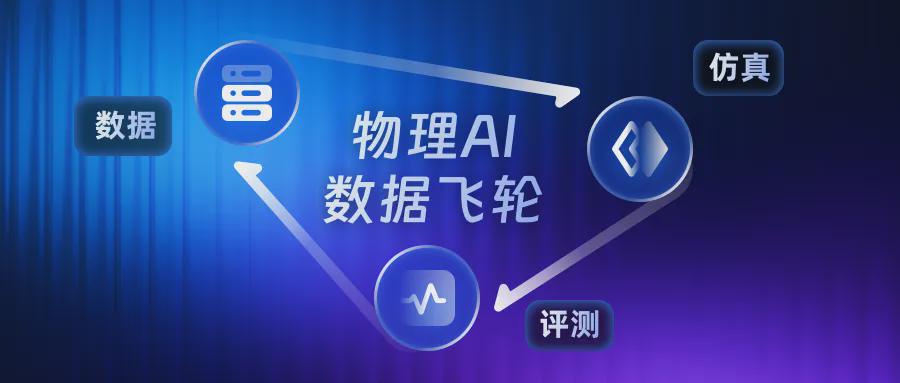
The Shift in Physical AI: Qunke Technology Develops a Simulation Data Production Line
Qunke Technology has introduced a pioneering solution to tackle the pressing shortage of high-quality 3D training data, which is vital for the advancement of the physical AI industry. As leading companies in embodied intelligence shift their focus from model architecture to data infrastructure, Qunke's innovative simulation data production line aims to fill this gap. The company’s efforts have been recognized at the European Conference on Computer Vision (ECCV), where three of its groundbreaking research papers were accepted. These contributions are expected to set new benchmarks in the fields of spatial intelligence and data synthesis, further propelling the development of AI technologies.
Embodied Intelligence Simulation Data 3D Training Data AI Benchmarking
Huaqin Technology and Zhengxing Innovation Reach Strategic Cooperation to Build an Industrial Physical Intelligence "Data Foundation and Smart Brain" Together.
Huaqin Technology and Zhengxing Innovation have announced a strategic cooperation aimed at developing a comprehensive industrial physical intelligence framework, which they refer to as a "Data Foundation and Smart Brain." This partnership, revealed on October 10, 2023, is set to take place in China, where both companies will leverage their technological expertise to enhance data-driven decision-making processes within the industrial sector. The collaboration seeks to address the growing demand for advanced data analytics and intelligent systems, enabling businesses to optimize operations and improve efficiency. By integrating their resources and knowledge, Huaqin Technology and Zhengxing Innovation aim to create innovative solutions that will drive the future of industrial intelligence.
Robotics Automation AI
Mibee Technology and Zhangjiang Group Form Strategic Partnership for Embodied Data Infrastructure
Mibee Technology has entered into a strategic cooperation agreement with Zhangjiang Group to advance embodied intelligence data technology. This collaboration, announced recently, seeks to tackle significant industry challenges, including data shortages and the high costs associated with data collection. By combining Zhangjiang's innovative ecosystem with Mibee's expertise in data services, the partnership aims to foster the growth of the robotics industry in Shanghai. The initiative reflects a commitment to enhancing technological capabilities and addressing critical issues within the sector.
Embodied Intelligence Data Infrastructure Robotics AI Technology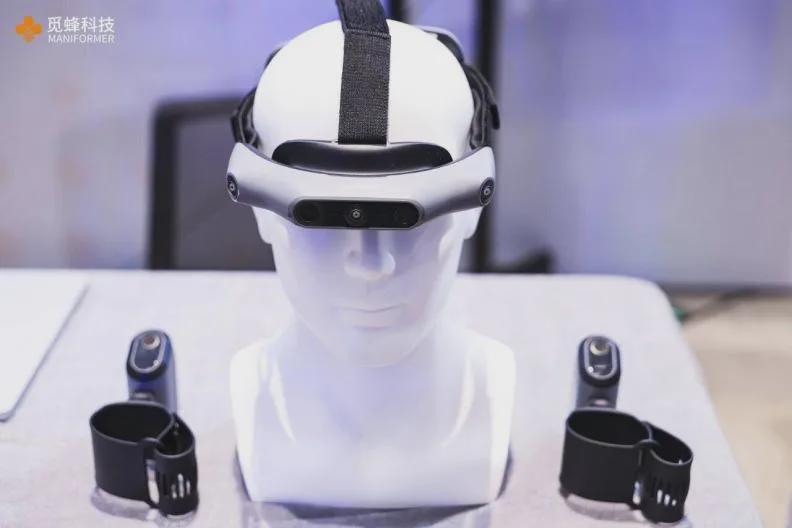
Bee Technology Aims to Solve Robotics Data Challenges Starting with a Cup
Bee Technology is making strides in the robotics sector by tackling the challenges of teaching robots to execute physical tasks, such as picking up objects. The company has recently obtained substantial funding to advance its MEgo series, which encompasses both hardware and data processing technologies. This initiative aims to establish a robust data supply chain essential for developing embodied intelligence in robots. By prioritizing high-quality physical AI data, Bee Technology is positioning itself as a key player in the industry, targeting businesses that depend on reliable data for training and optimizing their robotic models.
Embodied Intelligence Robotics Data Infrastructure AI Data Collection MEgo Hardware Data Processing Technology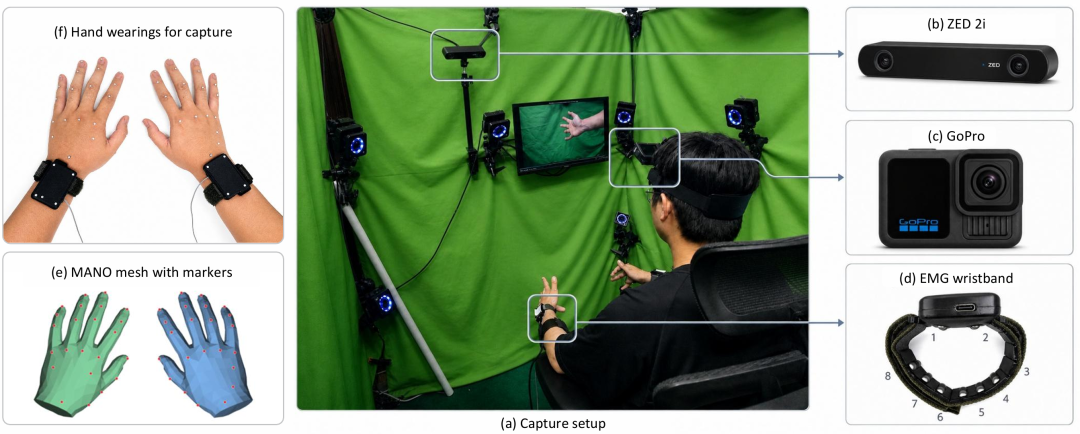
Tsinghua University and Shouyi Technology Launch EgoEMG Dataset for Hand Pose Estimation
Researchers from Tsinghua University and Shouyi Technology have unveiled the EgoEMG dataset, marking a significant advancement in the field of hand pose estimation. This innovative dataset is the first of its kind to publicly integrate electromyography (EMG), visual, depth, and motion data, providing a comprehensive resource for studying hand movements. Released in October 2023, the dataset aims to enhance embodied intelligence by offering precise data on hand operations. Its development is expected to facilitate progress in robotic dexterity through multimodal learning techniques, ultimately bridging existing gaps in the understanding of human-like manipulation in robotics.
Hand Pose Estimation EMG Technology Multimodal Data Robotics Artificial Intelligence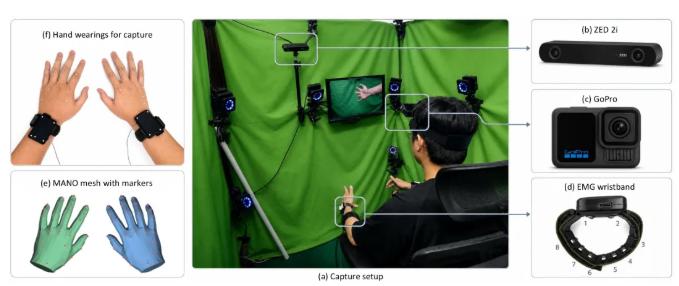
Tsinghua University and Shouyi Technology Launch EgoEMG Dataset for Hand Pose Estimation
A groundbreaking dataset, known as EgoEMG, has been launched through a collaboration between Tsinghua University and Shouyi Technology. This dataset is notable for being the first public resource to offer synchronized multimodal data specifically designed for hand pose estimation, incorporating both electromyography (EMG) and visual signals. Released in October 2023, EgoEMG aims to address existing challenges in hand perception for robotics. By providing comprehensive data that reflects human hand movements, the dataset seeks to enhance the capability of machines to learn and perform dexterous tasks through human demonstration. This initiative represents a significant step forward in the field of robotics, potentially improving the interaction between humans and machines in various applications.
Hand Pose Estimation Multimodal Data Robotics EMG Technology
NVIDIA and Coherent Announce Strategic Partnership to Develop Optics Technology to Scale Next-Generation Data Center Architecture
NVIDIA and Coherent Corp. have entered into a multiyear strategic agreement aimed at enhancing advanced optics technologies. This collaboration will focus on expanding manufacturing capacity and advancing research and development efforts to support the evolution of next-generation artificial intelligence. The partnership, announced today, underscores both companies' commitment to pushing the boundaries of technology in a rapidly evolving market. By leveraging their combined expertise, NVIDIA and Coherent aim to drive innovation that will significantly impact the AI landscape.

Semiconductor Digest: Co-Packaged Optics: Test Challenges for Data Center Technology of the Future
AI-driven data centers are pushing the boundaries of speed and efficiency, prompting a growing demand for technologies that can provide higher bandwidth while consuming less power. In response to this need, researchers are increasingly turning to silicon photonics (SiPh), a technology that utilizes light to transmit data, significantly enhancing data transfer rates and reducing energy consumption. As data centers continue to expand and evolve, the integration of SiPh is seen as a crucial step towards achieving sustainable and high-performance computing solutions. This shift is expected to play a vital role in meeting the escalating demands of AI applications and cloud services, which require rapid data processing and transmission capabilities. The advancements in silicon photonics are anticipated to revolutionize the infrastructure of data centers, making them more efficient and environmentally friendly.
Robotics needs a service framework.
RSF defines a common language for robot service capability, lifecycle operations, certification pathways, and service-provider networks.
Join the RobotToday community on LinkedIn
Daily robotics news, in-depth analysis, conference highlights, and discussions with professionals worldwide.