

Industry Briefing
A single destination for timely, editor-curated robotics news from around the world.

Robotic Assistance in Localizing and Extracting Compound Odontoma: A Case Study
A recent case report published in the Journal of Field Robotics details the use of robotic assistance in the localization and extraction of a compound odontoma. This innovative approach highlights the potential of robotics in enhancing precision during dental procedures. The significance of this case lies in its demonstration of how robotic technology can improve surgical outcomes in dentistry. By utilizing robotic systems, practitioners can achieve greater accuracy and efficiency, potentially leading to better patient experiences and reduced recovery times. Looking ahead, the integration of robotics in dental surgery may pave the way for more advanced applications and techniques. As the field evolves, further studies and reports will be essential to evaluate the long-term benefits and effectiveness of robotic-assisted procedures in dentistry. No further timeline was disclosed at the time of publication.
FIELD REPORT
Yushu Technology's IPO Marks a Significant Step in Humanoid Robot Commercialization
Yushu Technology has made its debut as the first publicly listed humanoid robot company in the A-share market. The company's IPO process has garnered significant attention from the capital market, highlighting its commercial value, technological strength, and market position. This event signifies a substantial shift in the humanoid robot industry from technology exploration to commercialization, providing a reference model for the sector's development. The financing journey of Yushu Technology reflects the evolution of the humanoid robot industry, transitioning from early-stage startups to a scalable production system. Each round of financing demonstrates investor confidence in the humanoid robot sector and the company's competitive capabilities. Yushu Technology has expanded its product line beyond humanoid robots to include quadruped robots, dexterous hands, and joint modules, enhancing its resilience and creating opportunities across various applications. The significance of Yushu Technology's IPO extends beyond fundraising; it sends a clear market signal that humanoid robots are evolving from laboratory showcases to a viable industry with clear business models and profit potential. As more companies enter the market and the humanoid robot supply chain matures, a trillion-dollar market is gradually taking shape. Yushu Technology's IPO journey is just the beginning of this grand narrative.
Humanoid Robots Robotics Industry Commercialization AI Technology
Hai Robotics Implements HaiPick System 3 for LPP Logistics' E-Commerce Fulfilment in Romania
LPP Logistics, the logistics division of LPP Group, has successfully deployed Hai Robotics' HaiPick System 3 at its new fulfilment centre near Bucharest, Romania. This initiative aims to enhance the retailer's e-commerce operations across Southeastern Europe, including Romania, Bulgaria, Serbia, Greece, and Hungary, in response to increasing online demand. The deployment of the HaiPick System 3, which integrates 278 automated case-handling robots and 670 autonomous mobile robots, addresses LPP Logistics' need for improved storage density and increased order processing capabilities. The system can handle over 9,400 totes per hour and is designed to process more than 80,000 customer orders daily, significantly boosting operational efficiency while maintaining continuity. Looking ahead, the fulfilment centre's design allows for scalability, enabling the addition of more robots and workstations as demand grows. This flexibility is crucial for LPP Group, which operates five fashion brands and requires a logistics network that can adapt to a diverse and expanding product range. No further timeline was disclosed at the time of publication.
Features Warehouse robots ACR robots automated case-handling robots autonomous mobile robots e-commerce fulfilment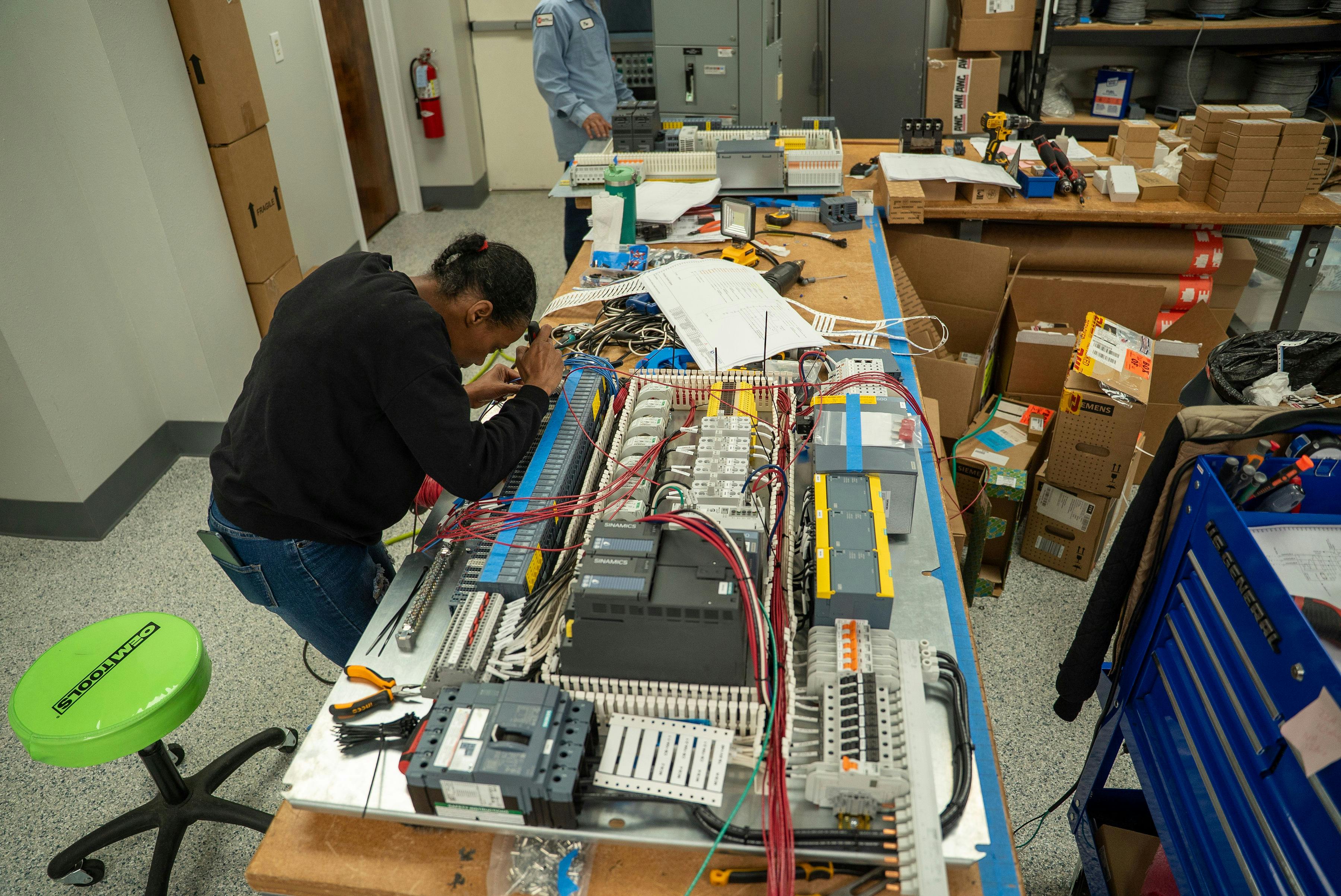
Solid State Automation and Controls Cuts Motor Control Center Delivery Time by 50 Weeks
Solid State Automation and Controls (SSAC) faced a significant challenge when a customer required a Motor Control Center (MCC) for a new facility, with a traditional lead time of 14 months. The facility needed to be operational in just eight months, prompting SSAC to innovate a solution. They designed the custom Motor Control Complex, MC-PLEX, in collaboration with Rittal, successfully delivering it in 22 weeks, thus saving 50 weeks compared to the standard timeline. This achievement is crucial as it highlights SSAC's ability to adapt and meet urgent customer needs in the building materials and logistics industry. By leveraging a modular enclosure and busbar platform, SSAC not only fulfilled the immediate requirement but also laid the groundwork for a more efficient and flexible product line. The company’s commitment to customer trust through expertise and accountability was pivotal in overcoming the traditional limitations of MCC delivery. Looking ahead, SSAC's innovative approach to the MCC design and delivery process may set a new standard in the industry. Their collaboration with Rittal and the use of advanced design tools like Eplan could lead to further enhancements in efficiency and flexibility for future projects. No further timeline was disclosed at the time of publication.
Factory / Digital Transformation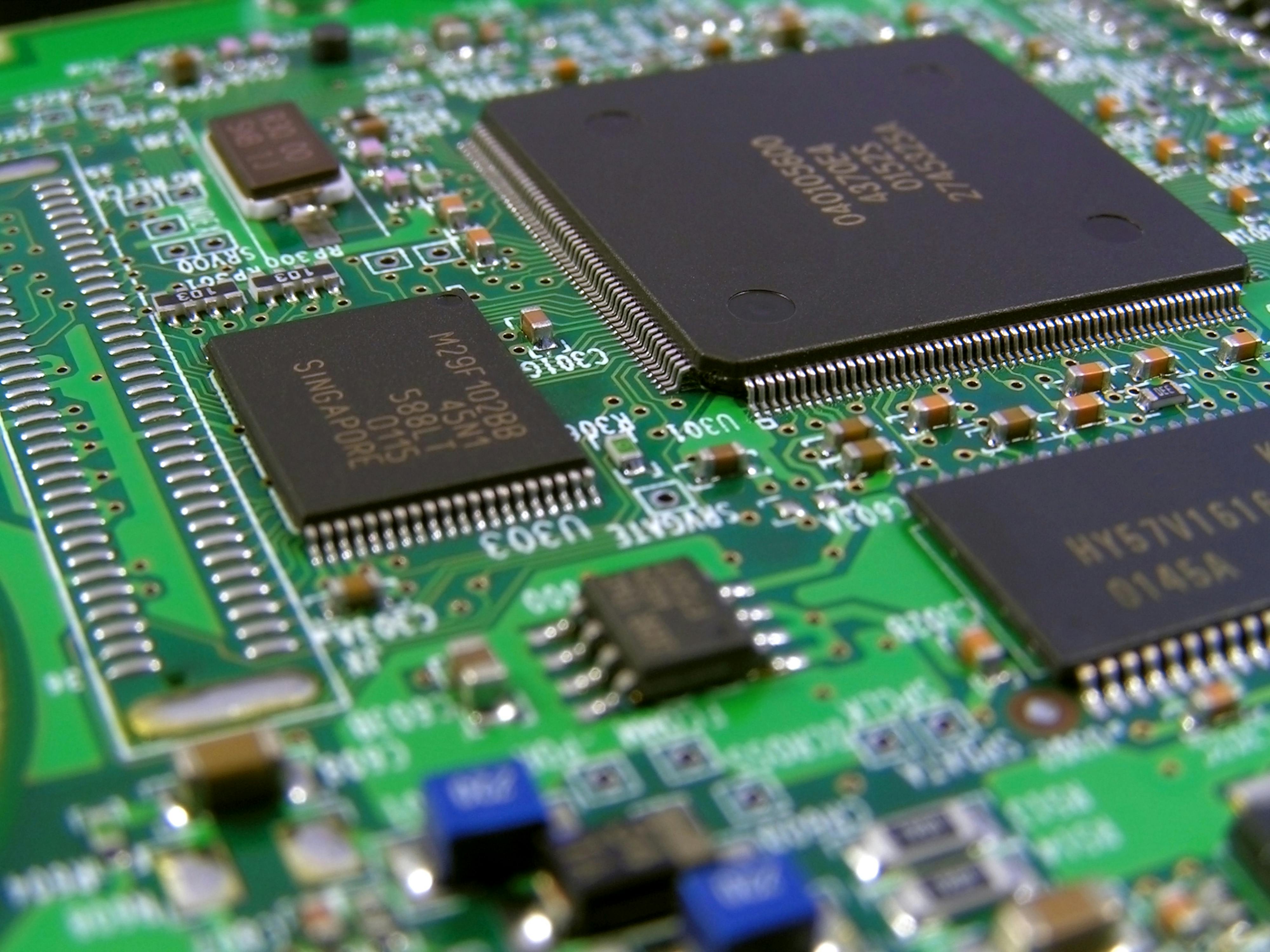
Atlas Core of Engineers Enhances Semiconductor Resiliency with PROFINET Networking Solutions
Atlas Core of Engineers, an industrial-controls firm, is collaborating with semiconductor companies to improve operational resiliency through advanced automation. By retrofitting existing facilities and establishing new ones, Atlas aims to minimize downtime in a sector where interruptions are intolerable. Ahmad Jodeh, the firm's owner, emphasizes the importance of PROFINET technology in overcoming the limitations of traditional PROFIBUS systems, particularly in terms of bandwidth and troubleshooting. The semiconductor industry is undergoing significant changes, driven by global competition and technological advancements. U.S. manufacturers are investing heavily in domestic chip production, spurred by incentives from the CHIPS and Science Act. This shift is prompting companies to enhance their automation capabilities to maintain competitiveness, with PROFINET playing a crucial role in achieving higher efficiency and reliability in operations. As semiconductor firms transition to PROFINET, they are leveraging its network redundancy features to ensure continuous operation. This capability allows for the establishment of multiple communication routes, which is vital in preventing downtime. The ongoing evolution in the semiconductor landscape highlights the need for innovative solutions that can adapt to rapid changes while ensuring operational integrity.
Factory / Digital Transformation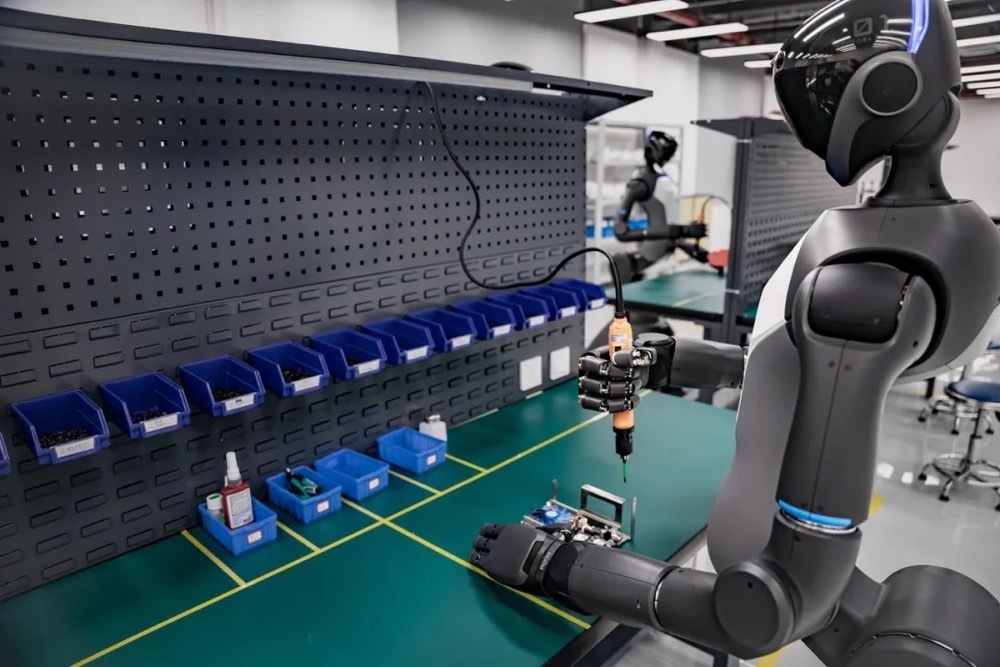
A Design Specifications Template for Wearable Haptic Interfaces: A Case Study for Robotic Gripper Applications
A recent study published in the Journal of Field Robotics highlights advancements in autonomous robotic systems designed for agricultural applications. Researchers from various institutions collaborated to explore the integration of artificial intelligence and machine learning in enhancing the efficiency of farming practices. The study, released in early October 2023, emphasizes the growing need for innovative solutions in agriculture due to increasing global food demands and labor shortages. The research team conducted extensive field tests in multiple agricultural settings to evaluate the performance of these autonomous systems. By employing advanced algorithms, the robots demonstrated improved capabilities in tasks such as planting, harvesting, and monitoring crop health. The findings suggest that these technologies could significantly reduce labor costs and increase productivity, addressing critical challenges faced by the agricultural sector. This initiative aims to provide farmers with reliable tools that can adapt to various environmental conditions and crop types, ultimately contributing to sustainable farming practices. The study's outcomes are expected to influence future developments in agricultural robotics, paving the way for more efficient and environmentally friendly farming solutions.
RESEARCH ARTICLE
Watch: Blue Diamond Growers’ IBP Journey With SAP: A Case Study
Blue Diamond Growers has successfully consolidated and digitized its demand planning processes across two distinct business units to enhance alignment with its SAP ERP suite. This initiative, aimed at improving operational efficiency, was undertaken to streamline workflows and ensure better data integration. The project reflects the company's commitment to leveraging technology for improved decision-making and resource management. By implementing this system, Blue Diamond Growers seeks to optimize its supply chain and respond more effectively to market demands, ultimately driving growth and competitiveness in the industry.

Pose Estimation Accuracy Improvement Using Different Orientation Representations With Neural Networks: Case Study for the VIVE HTC Tracker
In a recent study published in the Journal of Field Robotics, researchers from a leading robotics institute have unveiled innovative advancements in autonomous navigation systems. This groundbreaking research, conducted in October 2023, aims to enhance the efficiency and safety of robotic applications in various fields, including agriculture and disaster response. The team focused on developing algorithms that enable robots to better interpret their surroundings and make real-time decisions. By integrating advanced sensor technology and machine learning techniques, the researchers demonstrated how these systems could significantly improve the robots' ability to navigate complex environments. The motivation behind this research stems from the increasing demand for autonomous solutions that can operate in unpredictable conditions. As industries seek to leverage robotics for tasks that are hazardous or labor-intensive, the need for reliable navigation systems becomes paramount. The study involved extensive field tests, where the robots were deployed in diverse scenarios to assess their performance. The results indicated a marked improvement in navigation accuracy and obstacle avoidance, showcasing the potential for these technologies to revolutionize how robots are utilized in real-world applications. This research not only contributes to the academic field but also has practical implications for industries looking to adopt autonomous systems. By addressing the challenges of navigation in dynamic environments, the findings pave the way for more effective and safer robotic operations in the future.
RESEARCH ARTICLE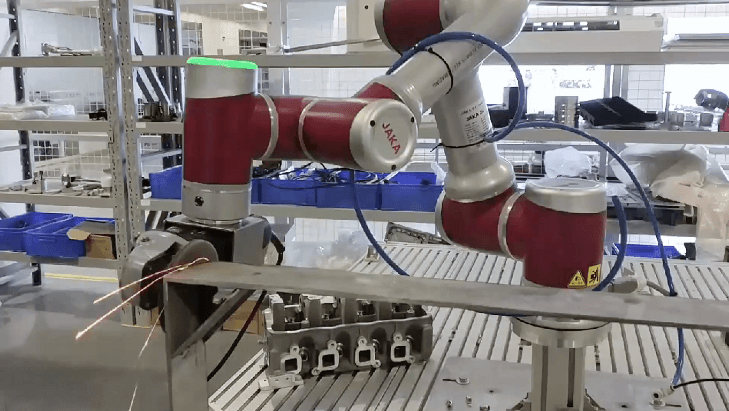
Collaborative Robots in Manufacturing Case Study: Achieving Near-Zero Defects in Finishing
A manufacturing company has successfully integrated collaborative robots, specifically the JAKA S12, into its production workflow to enhance finishing processes. This implementation, which began recently, aims to reduce errors and improve quality in polishing operations, a critical area where uniformity is essential. The JAKA S12 features advanced capabilities such as zero installation and configuration, along with a built-in force sensor that allows for real-time adjustments in pressure and trajectory during polishing tasks. By automating these processes, the company has achieved near-zero defect rates, even amidst complex production demands and varying product designs. This technology not only optimizes workflow but also fosters effective human-robot collaboration, enabling operators to program intricate movements through user-friendly interfaces. As a result, workers can focus on high-value tasks while minimizing physical strain and errors associated with repetitive polishing. The company’s experience highlights the significant benefits of integrating robotics into manufacturing, demonstrating that such innovations can enhance precision and consistency in finishing applications. By maintaining high-quality standards and adapting quickly to production changes, the company underscores the potential of collaborative automation to transform modern manufacturing environments without compromising workforce involvement.
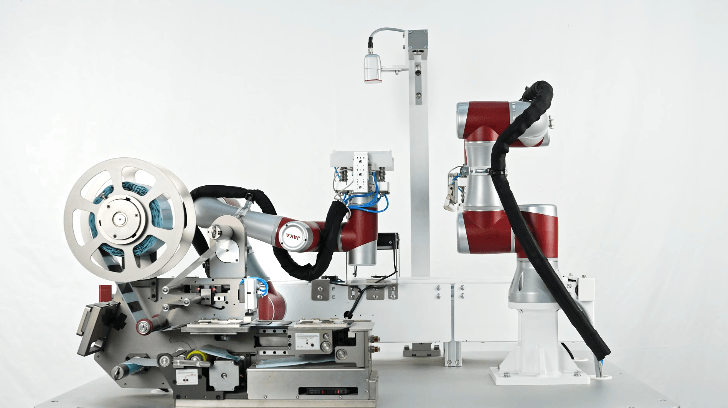
Case Study: Achieving 24/7 Operation with Productive Robots
Manufacturers increasingly require continuous production to ensure stable output and reliable delivery schedules. JAKA, a leader in automation solutions, is addressing this need by designing industrial robot arms that support uninterrupted workflows while prioritizing safety and consistency. The company emphasizes that achieving true 24/7 operations hinges on the reliability of equipment under prolonged, high-intensity conditions. In a recent implementation, JAKA deployed its Pro12 robots to enhance production lines that operate day and night with minimal intervention. These robots are specifically engineered to withstand challenging environments, featuring IP68 protection that allows them to function effectively in dusty and humid conditions without additional shielding. Their maintenance-free integrated joint design ensures long-term precision, crucial for continuous operations. The deployment process was streamlined, even in space-constrained settings, allowing for easy integration into existing production layouts. Throughout the continuous operation, JAKA's robots demonstrated consistent motion control, significantly reducing unplanned downtime and minimizing routine maintenance typically associated with traditional automation setups. This initiative highlights JAKA's commitment to helping manufacturers achieve reliable, long-term automation solutions that adapt to real-world production needs. By focusing on thoughtful system integration and proven robot technology, JAKA aims to support production teams in building stable, manageable systems capable of sustained output over extended periods.
Robotics needs a service framework.
RSF defines a common language for robot service capability, lifecycle operations, certification pathways, and service-provider networks.
Join the RobotToday community on LinkedIn
Daily robotics news, in-depth analysis, conference highlights, and discussions with professionals worldwide.







