Recently, Zhi Ping Fang unveiled NeuroVLA, an innovative brain-inspired embodied intelligence system, marking a significant advancement in robotics. This system features a unique three-tier architecture that mimics the human brain, comprising the cortex for semantic understanding and task planning, the cerebellum for high-frequency motion coordination and dynamic correction, and the spinal cord for rapid motion execution and safety reflexes. Experimental results indicate that NeuroVLA can reduce robotic motion jitter by over 75% and achieve reflex responses within 20 milliseconds following a collision, all while significantly lowering system power consumption. This breakthrough aims to enhance the efficiency and safety of robotic operations, positioning NeuroVLA at the forefront of intelligent robotics technology.



Zhi Ping Fang launches NeuroVLA, a brain-like embodied intelligence system.
Robotics needs a service framework.
RSF defines a common language for robot service capability, lifecycle operations, certification pathways, and service-provider networks.
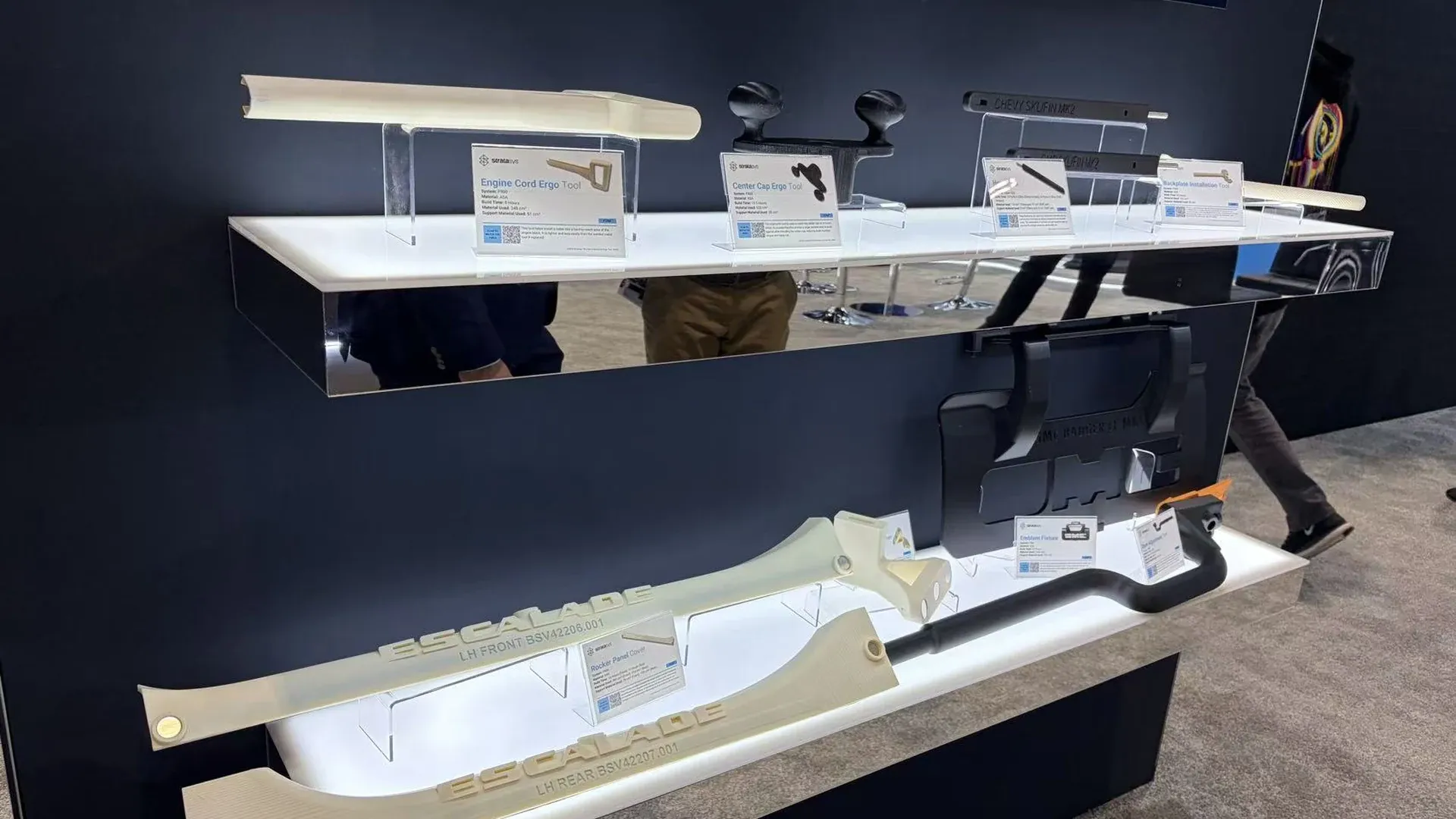
Stratasys at IMTS 2026: GM Scales Additive to 20+ Plants
Stratasys is rolling additive out across 20+ GM plants while Toyota prints robot grippers. Booth build data, the F870, and where the cost case breaks.
Market and Business News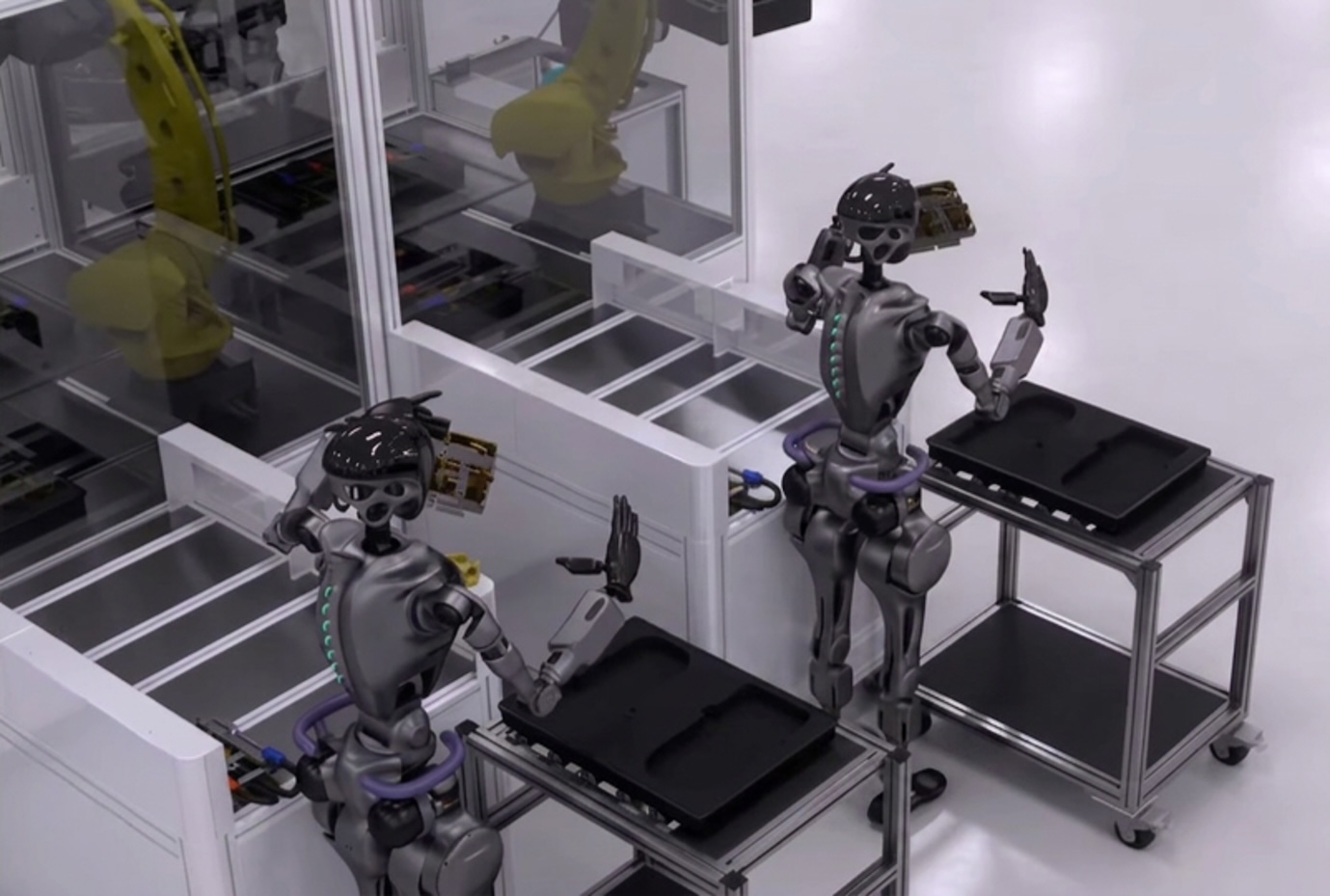
Symbotic Becomes Member-Sponsor of Stanford Robotics Center's Industrial Affiliates Program
Symbotic has officially joined the Stanford Robotics Center (SRC) Industrial Affiliates Program as a member-sponsor. This membership grants Symbotic access to Stanford's esteemed research community, fostering collaboration aimed at advancing innovations in robotics, autonomy, and artificial intelligence. The significance of this partnership lies in the po...
Business Industry News
IMTS 2026 Preview: Record Orders and the Automation Story
IMTS 2026 opens in Chicago with 1,788 exhibitors and record H1 machine tool orders. What the USMTO data says about automation, and the booths to see.
Market and Business News
ROBOTTODAY WEEKLY September 7 – 11, 2026
This week in robotics: JD.com plans to deploy three million robots across its logistics network, XPeng commissions its IRON humanoid production line, FANUC and Google launch an AI arc-welding agent, and Unitree shares fall 53% from their post-IPO high. September 7–11, 2026.
RobotToday Weekly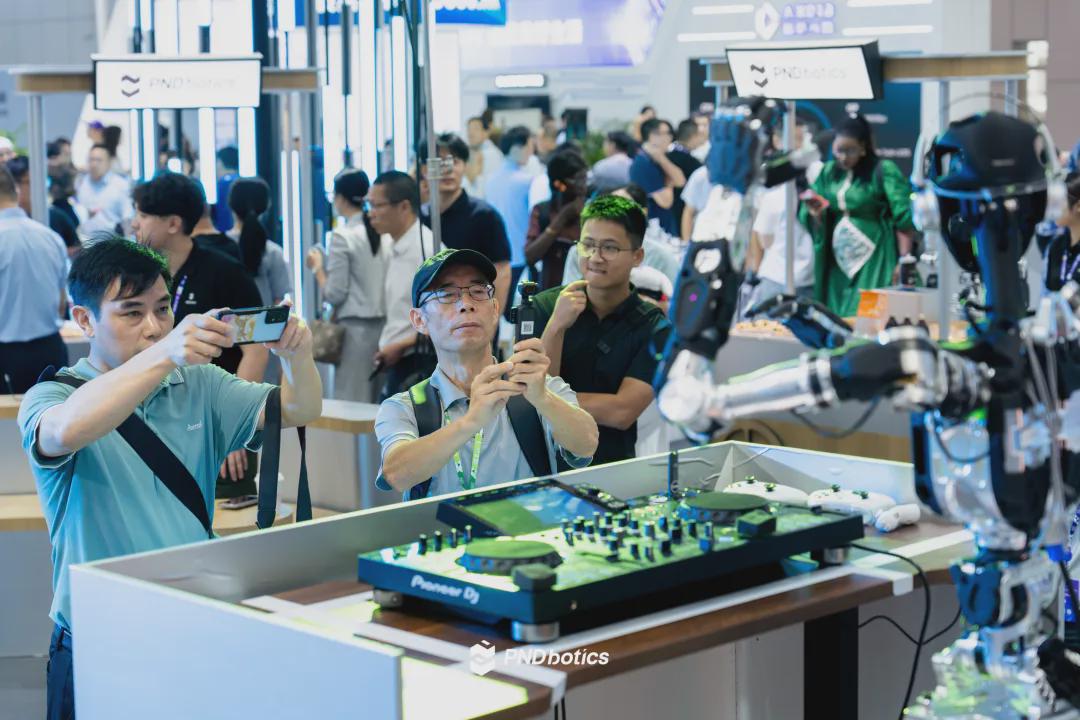
PNDbotics Showcases Humanoid Robots for Real-World Industrial Applications
PNDbotics is exploring the application of humanoid robots in real industrial tasks at the Future Factory exhibition, held from September 11 to 13 at the Ningbo International Exhibition Center. The showcase emphasizes the robots' ability to understand tasks, recognize environments, and adapt execution strategies in dynamic production settings. This initiat...
Humanoid Robots Industrial Automation Robotics Technology
Agentic AI Emerges as Essential Partner for Industrial Automation Leaders
Industrial automation leaders are increasingly exploring the integration of AI into their operations, focusing on its role rather than its presence. Agentic AI is positioned as a digital co-worker that complements existing automation, MES, and ERP systems, enhancing the capabilities of planners. This technology simplifies complex tasks such as managing ma...
Leaders / Operations Software
Understanding Quadruped Robot Specifications: Consumer vs. Industrial Applications
Quadruped robots have increasingly adopted a standardized design, characterized by four legs and a stable gait. This convergence is evident in promotional videos showcasing their ability to navigate various terrains and recover from disturbances. The significance of this trend lies in the implications for both consumer and industrial markets. As these rob...

Maven Robotics Secures $100 Million in Series A Funding to Innovate Industrial Automation
Maven Robotics has officially launched with $100 million in Series A funding, taking a unique technological approach by utilizing a wheeled chassis combined with dual arms to tackle monotonous palletizing tasks in warehouse logistics. CEO Hamza Derbas stated that bipedal robots are 'meaningless' in industrial scenarios due to their complexity, unreliabili...
Warehouse Automation Robotics Industrial Automation
Maven Robotics Secures $100 Million Series A Funding for Industrial Robotics Development
Maven Robotics has successfully raised $100 million in Series A funding to enhance its industrial robotics platform aimed at logistics and manufacturing. The funding round included participation from RoboStrategy, LocalGlobe, Vine Ventures, and XTX Ventures. Maven is focused on developing a general-purpose robotics system that will expand its applications...
AI AI Funding & Investment Robotics
Anthropic Disrupts Five Cases of Claude Misuse for Potential Bioweapons Research
Anthropic reported that it intervened in five instances where researchers misused its AI model, Claude, in ways that could have facilitated biological weapons development. These incidents occurred between December 2025 and August 2026, highlighting the challenges of distinguishing legitimate scientific research from potentially harmful activities. The sig...
AI and Robotics
Sixth Graders Program Robots to Breakdance, Highlighting Shift in Robotics Education
At Punahou School in Hawaii, a group of sixth graders successfully programmed wheeled robots to perform breakdancing moves. This project involved translating complex physical movements into sequences of commands that machines can understand, encompassing concepts like coordinate transformation and feedback control. With the right educational tools, these ...
Robotics Education Programming Algorithm Development
Ailoys Brings Acoustic Industrial AI to IMTS 2026
Berlin's Ailoys brings acoustic industrial AI to IMTS 2026, Booth 237629. Edge sensors catch process drift on existing machines before scrap appears.
Market and Business NewsSAISON ROBOT/LingYu Robotics 灵御智能
China
LingYu Robotics to Showcase Teleoperation and Embodied AI Solutions at Automate 2026 Subscribe for the Latest Automate Show Updates Copyright © 2013-2026 A3 Automate.
Yuanqi Innovation (Xiamen) Robot Co., Ltd. 元启创新(厦门)机器人有限公司
China
yuanqirobot.com resolves to a Xiamen-based robot company; directory lists it as Qingdao YuanQi Intelligent Robot Tech — city mismatch requires verification.

OM Robot Technology Co. Ltd. 东莞全向机械科技有限公司
China
Chinese manufacturer of mecanum wheels, omnidirectional wheel bases, and mobile robotic platforms for AGV applications.

BioRobotics Laboratory, Korea University of Technology and Education
Korea, Republic of (South)
South Korean university research laboratory focusing on haptics, exoskeletons, rehabilitation robotics, and autonomous ground vehicles.
Human Engineering Research Laboratories (HERL)
United States
VA–Univ. of Pittsburgh research center founded 1994, developing wheelchair robotics and assistive mobility tech for veterans and people with disabilities.

Robotics Education & Competition Foundation
United States
The REC Foundation is a US nonprofit that runs VEX-based robotics and drone competitions reaching 1.1 million students across 70 countries.

ADEK Industrial Computers
United States
US-based industrial PC manufacturer building custom rugged rack-mount, panel, and embedded computers for robotics, SCADA, and HMI applications since 1993.

Aichi Robot Industrial Promotion Council
Japan
Japanese industry council promoting robotics development and diffusion in Aichi Prefecture, one of Japan's largest robot manufacturing hubs.

Arctek Robótica Industrial
Brazil
Brazilian industrial robotics system integrator in Curitiba, Parana, specializing in robotic welding, automated handling, palletizing, and custom automation.
Pendulum Systems
United States
Seattle AI software company delivering device-native alt-PNT navigation for GPS-denied environments across drones, defense, and supply chains.

Physik Instrumente (PI) GmbH
Germany
German precision motion leader founded 1970; makes piezo actuators, nanopositioning stages, hexapod robots for semiconductor, photonics, and medical markets.

PBA Systems Pte Ltd
Singapore
Singapore precision motion specialist (est. 1999); direct drive motors, nano-precision gantry stages, and mechatronic systems for semiconductor packaging.
Join the RobotToday community on LinkedIn
Daily robotics news, in-depth analysis, conference highlights, and discussions with professionals worldwide.







Leave a comment