

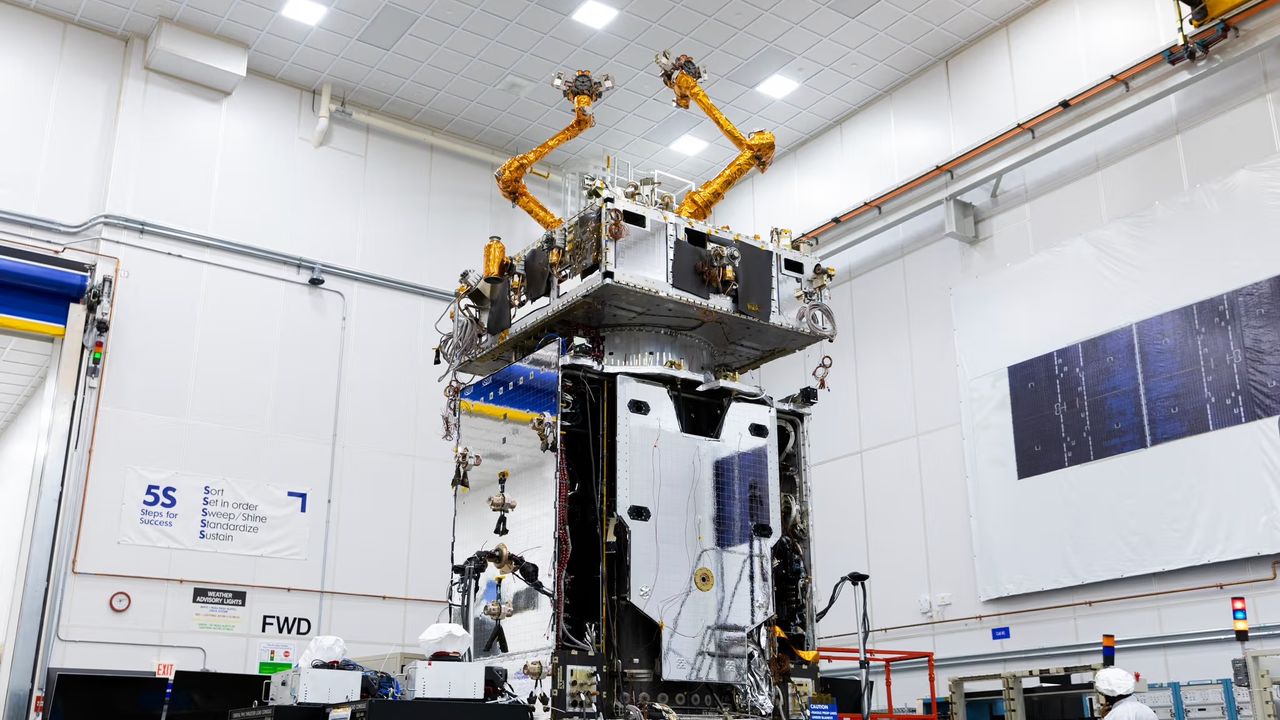
SpaceX is set to launch a groundbreaking satellite-servicing mission today, July 21, using a Falcon 9 rocket from Cape Canaveral Space Force Station. The mission, named MRV-MEV, will deploy a Mission Robotic Vehicle (MRV) and three Mission Extension Pods (MEPs) to geostationary orbit (GEO) at an altitude of 22,236 miles (35,786 kilometers). The MRV, equipped with two robotic arms, will attach the MEPs to client satellites, extending their operational lives.
This mission is significant as it marks the first launch of MEPs, which are designed to provide up to eight years of life extension for satellites in GEO. The MRV will not only install MEPs but also has capabilities to relocate, inspect, repair, and upgrade satellites in orbit. This advancement in satellite servicing technology is expected to enhance the resilience of space assets, as noted by Northrop Grumman, the parent company of SpaceLogistics, which operates the spacecraft.
Looking ahead, the MRV will remain in GEO after installing the MEPs, awaiting future missions. The successful deployment of this technology could pave the way for more complex satellite servicing operations, building on Northrop Grumman's previous experiences with the Mission Extension Vehicle projects. No further timeline was disclosed at the time of publication.
Editor's Note
The launch of the MRV-MEV mission represents a significant advancement in satellite servicing technology, which is crucial for extending the operational lifespan of satellites in geostationary orbit. This capability not only enhances the resilience of space assets but also opens new avenues for future missions and technological advancements in the aerospace sector. The integration of advanced robotics and the ability to refuel satellites in orbit could reshape how satellite operators manage their fleets.




























Leave a comment