

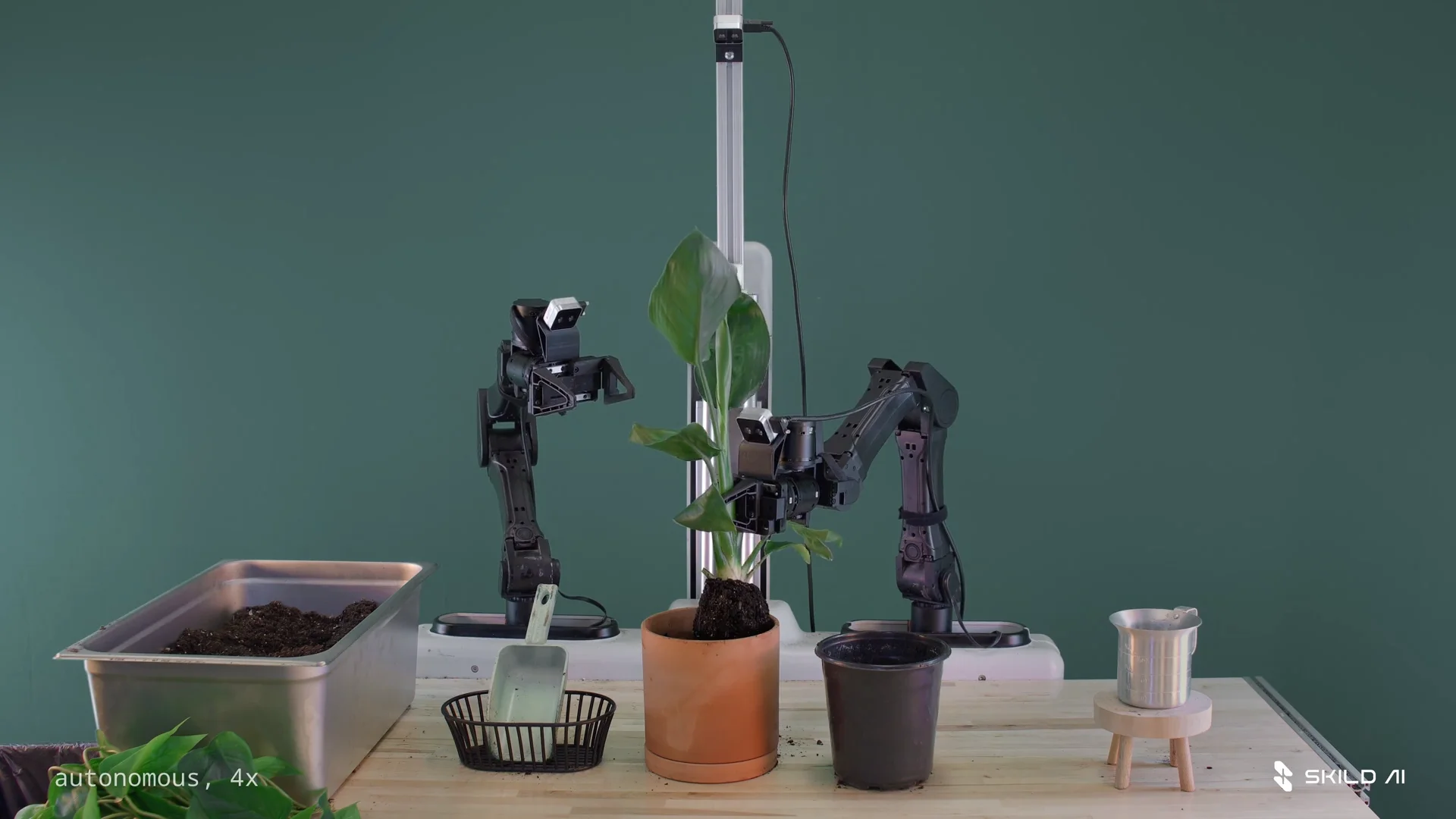
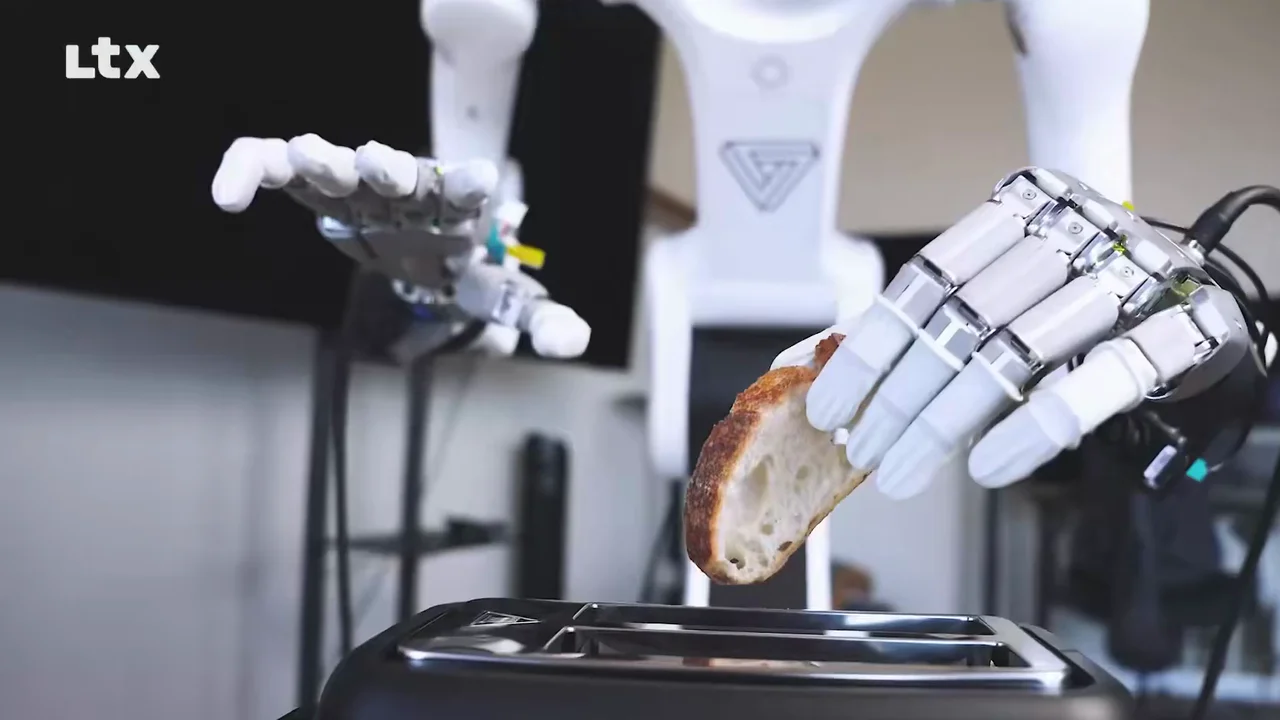
Skild AI has introduced S1, an advanced embodied foundation model designed for complex manipulation tasks using in-context prompting. This innovative approach replaces traditional text commands and extensive task-specific fine-tuning with a single video demonstration, enabling the system to perform multistep physical routines immediately. This development challenges the conventional reliance on extensive teleoperation data for training specialized policies for each task.
The significance of S1 lies in its potential to revolutionize robot learning by moving away from the 'BERT era' of pretraining and heavy post-training. Skild AI argues that true foundation models should allow robots to learn new behaviors during inference without altering their underlying weights. S1 builds on the company's previous work in locomotion, adapting its capabilities to manipulation tasks that are often too complex to describe in natural language.
Looking ahead, S1's ability to learn from visual demonstrations rather than text instructions opens new possibilities for dexterous manipulation. The model's capacity to filter out human errors during demonstrations and execute tasks with precision sets it apart from existing systems. No further timeline was disclosed at the time of publication.
Editor's Note
The introduction of Skild AI's S1 model marks a significant shift in the robotics landscape, particularly in how robots learn and adapt to complex tasks. By leveraging in-context learning, this technology could streamline the training process and reduce reliance on extensive data collection. As the industry moves towards more intuitive interaction methods, the implications for manufacturing and automation could be profound.
























Leave a comment