Education & Research Software & Algorithm Provider Motion & Navigation Perception & Vision Robot Manufacturer
Robbyant Unveils LingBot-Depth 2.0 with Enhanced Spatial Perception for Robotics
Original from InterestingEngineering.com: Chinese AI firm launches next-gen spatial perception models for robots

Robbyant Unveils LingBot-Depth 2.0 with Enhanced Spatial Perception for Robotics

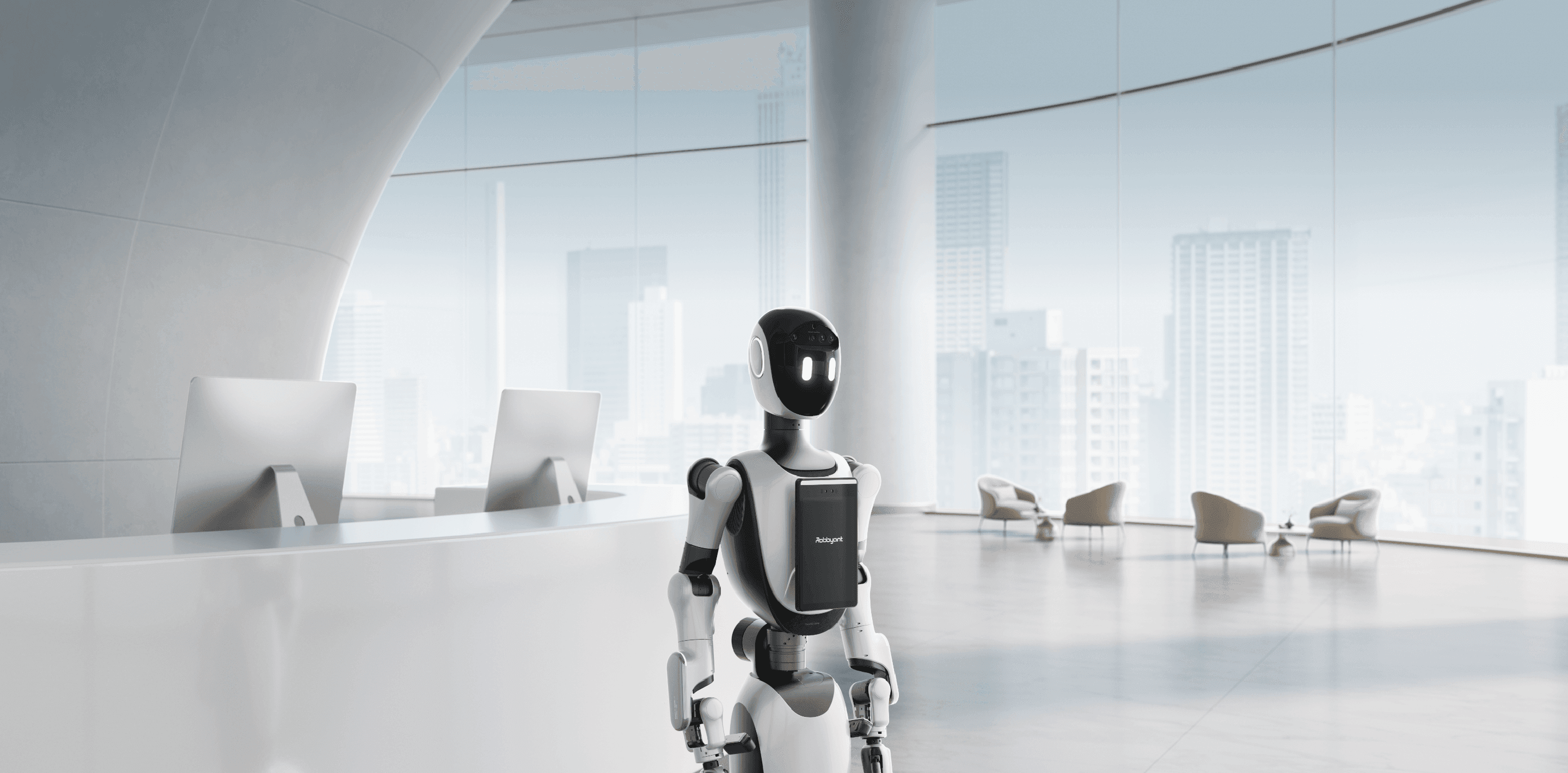
Chinese AI company Robbyant has launched LingBot-Depth 2.0, a next-generation spatial perception model designed to enhance robotic navigation in complex environments. This model builds on the previous LingBot-Depth, utilizing the Masked Depth Modeling technique and trained on 150 million samples, achieving top results in 12 out of 16 depth completion benchmarks. Notably, it reduces depth error by over 50%, improving accuracy in challenging indoor settings.

The significance of LingBot-Depth 2.0 lies in its ability to accurately perceive transparent and reflective surfaces, areas where traditional depth cameras often struggle. The model's advancements are attributed to LingBot-Vision, a visual foundation model that employs a unique “boundary structure” pre-training objective, enabling sub-pixel-level boundary localization. Despite being trained on a smaller dataset of 160 million images, it demonstrates robust performance across various robotic vision applications, enhancing object boundary detection and tracking.

Looking ahead, Robbyant's collaboration with Orbbec aims to integrate LingBot-Depth 2.0 into new hardware solutions for robotics data collection. The RGB-D EGO device, part of Orbbec’s Robot-Free Data Collection Hardware Platform, will feature a customized version of the model. Future updates are expected to further enhance depth completion and spatial structure understanding, providing a solid foundation for training embodied AI systems in real-world scenarios. No further timeline was disclosed at the time of publication.

Editor's Note

The launch of LingBot-Depth 2.0 highlights a significant trend in the robotics industry towards enhancing spatial perception capabilities. As companies like Robbyant innovate in depth sensing technologies, we may see a shift in how robots interact with complex environments. This could lead to increased adoption of advanced perception models across various sectors, including logistics and autonomous vehicles.

RobotToday Initiative

Robotics needs a service framework.

RSF defines a common language for robot service capability, lifecycle operations, certification pathways, and service-provider networks.

Share

Related Articles/News

Ant Group Launches LingBot-VA 2.0 with Advanced Spatial Awareness and Vision Models

Ant Group Launches LingBot-VA 2.0 with Advanced Spatial Awareness and Vision Models

On July 10, Ant Group introduced LingBot-VA 2.0, the first embodied native action model in the industry. This release marks the culmination of their full-stack 2.0 model series, featuring advancements in spatial perception and real-time interaction. The launch has generated significant buzz across international platforms like Reddit and Hugging Face, indi...

Robotics AI Machine Learning
Physical AI Landscape: From Digital Intelligence to the Embodied Physical World

Physical AI Landscape: From Digital Intelligence to the Embodied Physical World

A comprehensive industry analysis of Physical AI — covering Embodied AI, Field AI, Factory AI, VLM, World Model, VLA, and the VLA vs WAM architecture debate. Includes 20+ companies, 28 references, and the RobotToday Physical AI Landscape diagram. July 2026.

Artificial Intelligence
Ant Group Launches Open Source LingBot-Vision: A Breakthrough in Robotic Vision Technology

Ant Group Launches Open Source LingBot-Vision: A Breakthrough in Robotic Vision Technology

Ant Group's Robbyant has introduced the LingBot-Vision model, a groundbreaking visual perception technology designed for robots. This innovative model, which operates with just 1.1 billion parameters, significantly outperforms traditional systems in depth estimation and object boundary recognition. By enhancing robots' ability to comprehend intricate envi...

Robotic Vision Depth Perception AI Technology
Ant Group Unveils Groundbreaking Spatial Perception Model for Robots

Ant Group Unveils Groundbreaking Spatial Perception Model for Robots

Ant Group's Robbyant has unveiled LingBot-Depth 2.0, an advanced spatial perception model designed to enhance robot vision in complex environments, such as those involving glass and mirrors. This innovative model, which operates with just 1.1 billion parameters, demonstrates superior performance compared to larger models while requiring less training data...

Robotics AI Computer Vision
Ant Group's LingBot Vision: Robots Can Now Understand Glasses and Transparent Water Columns

Ant Group's LingBot Vision: Robots Can Now Understand Glasses and Transparent Water Columns

Ant Group has unveiled its latest advancements in robotics technology with the launch of LingBot-Vision and LingBot-Depth 2.0, sophisticated visual models designed to enhance robots' ability to perceive transparent and reflective objects. This development, announced recently, marks a significant improvement over traditional models by emphasizing the under...

Robotic Vision AI Machine Learning
Robbyant Upgrades and Open-Sources LingBot-VLA 2.0 as a Next-Generation Universal Brain for Embodied AI

Robbyant Upgrades and Open-Sources LingBot-VLA 2.0 as a Next-Generation Universal Brain for Embodied AI

While the embodied AI industry is witnessing rapid advancements in hardware and control systems, the lack of a truly universal brain remains a primary bottleneck for industrial-scale deployment. LingBot-VLA 2.0 addresses this critical gap by dramatically expanding its pre-training data and architectural capabilities.

LingBot-VLA 2.0: Open-Source Universal Brain for Robots

LingBot-VLA 2.0: Open-Source Universal Brain for Robots

Robbyant open-sources LingBot-VLA 2.0, a vision-language-action model trained on 60,000 hours of data for cross-morphology, whole-body robot control.

Artificial Intelligence
Glass crashes slashed? Ant Group embodied AI unit claims breakthrough in robot sensing

Glass crashes slashed? Ant Group embodied AI unit claims breakthrough in robot sensing

Robbyant, the embodied artificial intelligence arm of Chinese fintech giant Ant Group, launched a new vision model that it claims can help robots overcome a long-standing challenge: accurately perceiving glass, mirrors and transparent objects. The unit of Hangzhou-based Ant Group on Tuesday unveiled its next-generation spatial perception model, LingBot-De...

ABB Robotics completes its AI-powered Visual SLAM AMR portfolio with new autonomous forklift

ABB Robotics completes its AI-powered Visual SLAM AMR portfolio with new autonomous forklift

ABB Robotics completes its AI-powered Visual SLAM AMR portfolio with new autonomous forklift Visit http://go.abb/robotics for further information -The new Flexley Stack F712 extends ABB Robotics’ AI-powered Visual SLAM technology to autonomous forklifts, enabling pallet transport and high-density storage. -Customers can now deploy mixed fleets of Visual S...

Palladyne AI Executes $4.2 Million U.S. Air Force Contract to Advance Swarming Capabilities for Integrated Cross-Domain Operations

Palladyne AI Executes $4.2 Million U.S. Air Force Contract to Advance Swarming Capabilities for Integrated Cross-Domain Operations

Palladyne AI Executes $4.2 Million U.S. Air Force Contract to Advance Swarming Capabilities for Integrated Cross-Domain Operations Visit http://www.palladyneai.com for further information Palladyne AI’s SwarmOS™ platform to support satellite integration, marking a major expansion of its multi-domain autonomy and ISR capabilities across space, air, maritim...

Robbyant Unveils LingBot-Depth 2.0 and LingBot-Vision to Redefine Robotic Spatial Perception

Robbyant Unveils LingBot-Depth 2.0 and LingBot-Vision to Redefine Robotic Spatial Perception

Building upon the success of LingBot-Depth, which pioneered the Masked Depth Modeling (MDM) technique to resolve depth sensing challenges for transparent and reflective surfaces, LingBot-Depth 2.0 represents a massive scale-up in training data and performance.

Orbbec Unveils Robot-Free Data Collection Hardware Platform to Help Customers Capture Real-World Demonstrations for Physical AI at Scale

Orbbec Unveils Robot-Free Data Collection Hardware Platform to Help Customers Capture Real-World Demonstrations for Physical AI at Scale

Leveraging its deep expertise in and broad product portfolio of robotics and AI vision, Orbbec is one of the few industry providers that combines advanced multi-sensor calibration and synchronization technologies, a full-stack vision product portfolio, and global-scale manufacturing and delivery capabilities.

Related Suppliers

Orbbec

The product is a web-based application utilizing a microservices architecture, enabling scalable deployment and efficient resource management. It employs RESTful APIs for data interchange and leverages containerization technologies like Docker for consistent environments. The application integrates with cloud services for storage and processing, ensuring high availability and redundancy. Security protocols, including OAuth 2.0, are implemented for user authentication.

MRDVS Technology 迈尔迪斯

MRDVS provides Industrial 3D Cameras (ToF, Structured Light) and AI Vision Solutions for robotics. They focus on empowering robots with superior 3D visual perception for applications like bin-picking, obstacle avoidance, and SLAM navigation in industrial and warehouse environments.

Cleanix Robotics Co., Ltd.

xLean Robotics develops embodied AI cleaning solutions using reinforcement learning and self-evolving intelligence. The flagship xLean TR1 is a dual-form transformable floor washing robot with 17,000 Pa Dual-Motor DirectSuction™, VortexMatrix separation, 360° LiDAR + RGB-D sensing, real-time dirt detection via green-laser sensor, adaptive cleaning strategies, and 1-second robot-to-handheld transformation for autonomous whole-home and manual spot cleaning on hard floors.

Commercial Service Robots

Perceptron, inc.

Perceptron Inc. is a research company building physical AGI foundation models for spatial perception. Its Spatial Phase Imaging technology provides a universal perception layer for the physical world, targeting robotics, autonomous systems, and any application requiring high-precision real-world spatial understanding.

Paracosm (acq by Occipital)

Paracosm developed 3D scanning and spatial mapping software acquired by Occipital. The technology enabled capture and processing of indoor environments into 3D models, with applications in robotics perception and augmented reality development.

Nerian Vision Technologies

Nerian Vision Technologies is a manufacturer of 3D sensor systems for depth perception. Our sensor systems are based on passive stereo vision. By implementing state-of-art image processing algorithms in hardware, our devices are able to provide rich 3D information at low latencies and at a low power consumption.

LIPS Corporation

LIPSedge™ cameras utilize advanced 3D imaging technologies such as active stereo, time-of-flight, and structured light for precise depth perception and dimensioning. The LIPSense™ platform offers intelligent sensing solutions, including body pose tracking and touchless interfaces. LIPSMetric™ provides static and handheld dimensioning solutions. Integration with NVIDIA Isaac and ROS frameworks enhances robotic automation capabilities. Comprehensive SDKs and technical support facilitate development.

LARC Robotics

LARC Robotics: Spin-off from Interventional Systems (CEO Pedro Costa); focused on simplifying percutaneous renal access in PCNL for kidney stones. CE-marked/FDA-cleared for 2D/3D fluoroscopy-guided procedures; clinical validation ongoing (e.g., first robotic-assisted PCNL cases in Austria; studies like NCT07211555). Expanding to ultrasound guidance/digital platform. Still in development/early clinical; procedures undisclosed (early adoption). Stealth/undisclosed funding; revenue $0. Urology (percutaneous renal access in PCNL for kidney stones)

Supertec Machinery Inc.

Supertec Machinery, Inc. was established in 1954, originated from the motor components supplied and transformed to research and design in grinding machine. For nearly 60 years of experience and techniques in manufacturing industry, Supertec has matured and specializes in Grinding machine such as CNC Cylindrical Grinder, Surface Grinder and Centerless Grinder, marked under the popularly recognized name "SUPERTEC" with Taiwanese CNC mark and CE certification.

Integrated Engineering Software, Inc.

INTEGRATED Engineering Software develops simulation software using Boundary Element Method (BEM), FEM, and FDTD solvers for electromagnetic and charged particle analysis, including tools like MAGNETO, LORENTZ, and AMPERES.

Software & Algorithm Provider System Integrator Industrial

Friendly Robotics (Robomow)

Friendly Robotics manufactures the Robomow brand of autonomous robotic lawn mowers for residential and semi-commercial use. Products feature floating mower decks, boundary wire navigation, and scheduling for various lawn sizes.

AIRY3D

AIRY3D is the developer of DEPTHIQ, a 3D computer vision platform that can convert any 2D camera sensor into a single 3D sensor for generating both 2D images and depth maps that are inherently correlated. It offers dramatic savings in hardware, size, and computational load, enabling faster, cheaper, and smaller 3D solutions for human and machine vision applications in object, facial and gesture recognition, body detection in the areas of industrial and robotics, security, automotive.