

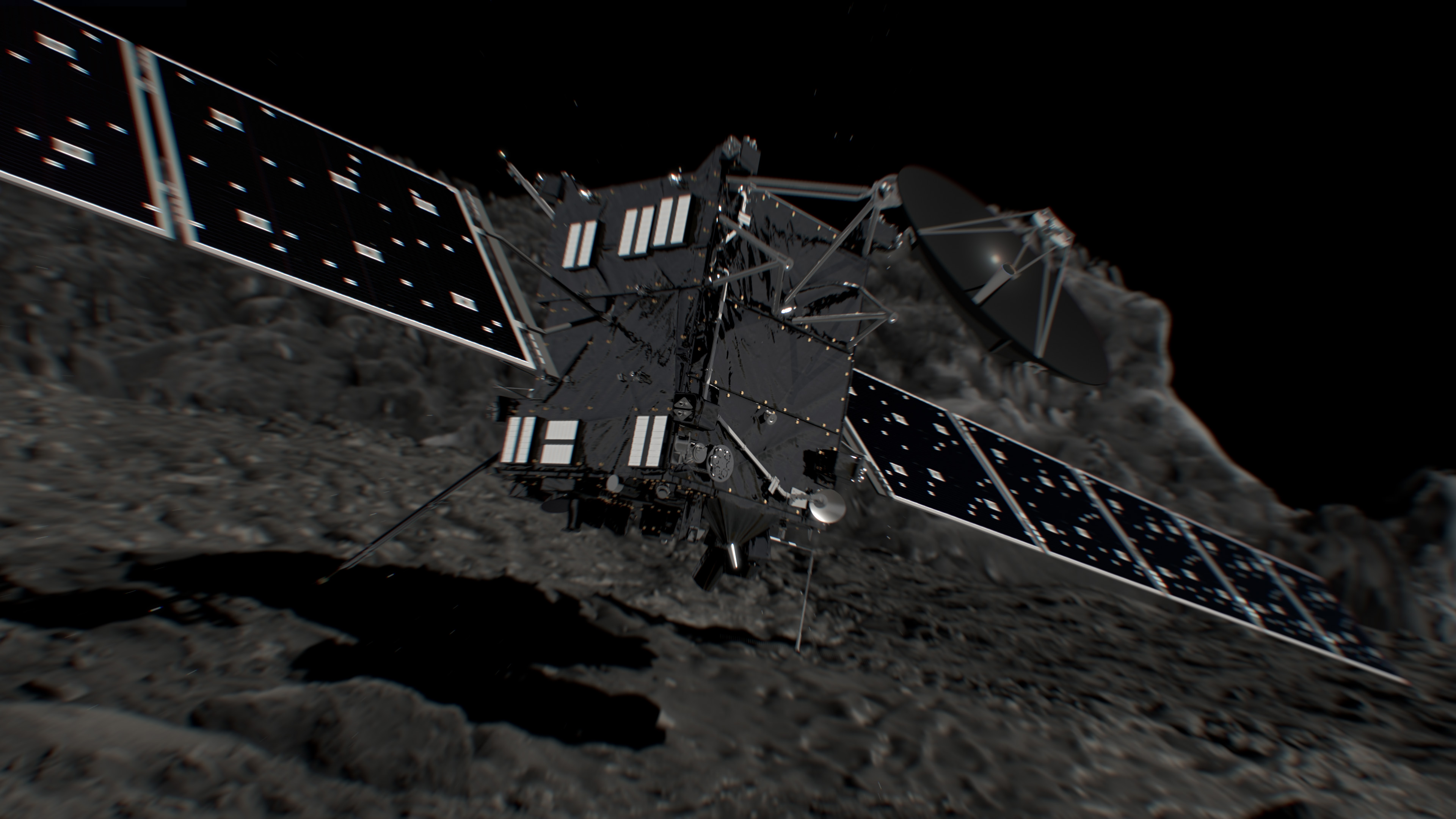
On September 30, 2016, the European Space Agency's Rosetta spacecraft intentionally crashed into Comet 67P, concluding its groundbreaking mission. Launched in 2004, Rosetta spent a decade pursuing the comet, which orbits between Earth and Jupiter, and spent two years studying it after arriving in August 2014.
The Rosetta mission was historic as it was the first to orbit a comet and observe its evolution as it approached the sun. The spacecraft captured remarkable images and data about the comet's composition, while the Philae lander, deployed by Rosetta, made a notable landing despite its challenges. The mission's end was necessitated by the comet's trajectory, which would take it too far from the sun for Rosetta's solar panels to function effectively.
As Rosetta made its slow-motion descent at approximately 2 mph, mission scientists monitored the event from Darmstadt, Germany. This mission not only advanced our understanding of comets but also marked a significant achievement in space exploration, showcasing the capabilities of the ESA and the importance of long-term space missions. No further timeline was disclosed at the time of publication.
Editor's Note
The Rosetta mission exemplifies the advancements in space exploration and the importance of long-duration missions in understanding celestial bodies. As the industry continues to evolve, the lessons learned from Rosetta's journey will inform future missions targeting other comets and asteroids, enhancing our knowledge of the solar system's formation and evolution.
Copyright Notice
This briefing is an independently written summary based on publicly available reporting and is provided for industry information and news discovery. The original report and source publication are credited and linked where applicable. RobotToday does not claim ownership of third-party source material.
Rights concerns? If you believe any material in this briefing infringes your copyright or other rights, please contact [email protected] with the relevant URL and details. We will review the matter and take appropriate action where warranted.































Leave a comment