

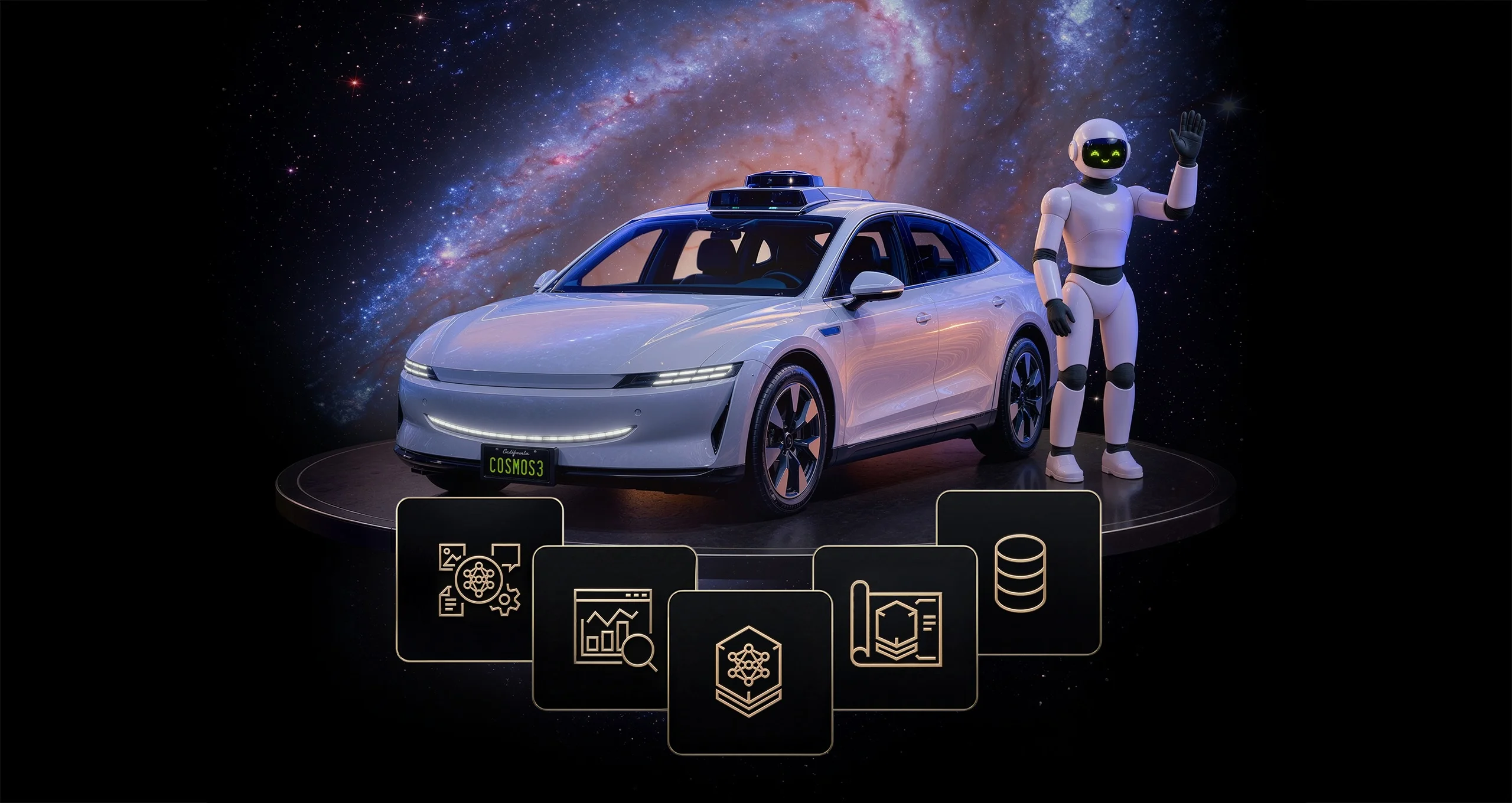
At COMPUTEX in Taipei, NVIDIA unveiled Cosmos 3, a groundbreaking open world foundation model designed to integrate vision reasoning, physical simulation, and action prediction. This launch represents a significant shift in the robotics industry, moving from language-centric frameworks to video-first World Action Models (WAMs), as emphasized by Jim Fan, NVIDIA’s Lead of Embodied Autonomous Research.
Cosmos 3 addresses the critical challenge of physical AI by enabling robots and autonomous vehicles to operate effectively in unstructured environments with limited training data. The model employs a mixture-of-transformers architecture that combines reasoning and generation blocks, allowing for accurate outputs in various formats, including numerical action data essential for complex robotic tasks.
As NVIDIA releases Cosmos 3 across three tiers, developers can customize the model to suit specific applications. The model has already demonstrated its capabilities by topping leaderboards in simulated environments, indicating its potential to redefine standards in robotics and AI applications. No further timeline was disclosed at the time of publication.
Editor's Note
NVIDIA's introduction of Cosmos 3 marks a pivotal moment in the robotics sector, emphasizing the need for advanced models that prioritize physical interactions over traditional language-based approaches. This shift could enhance the development of more capable autonomous systems, impacting various applications from industrial automation to consumer robotics.


























Leave a comment